


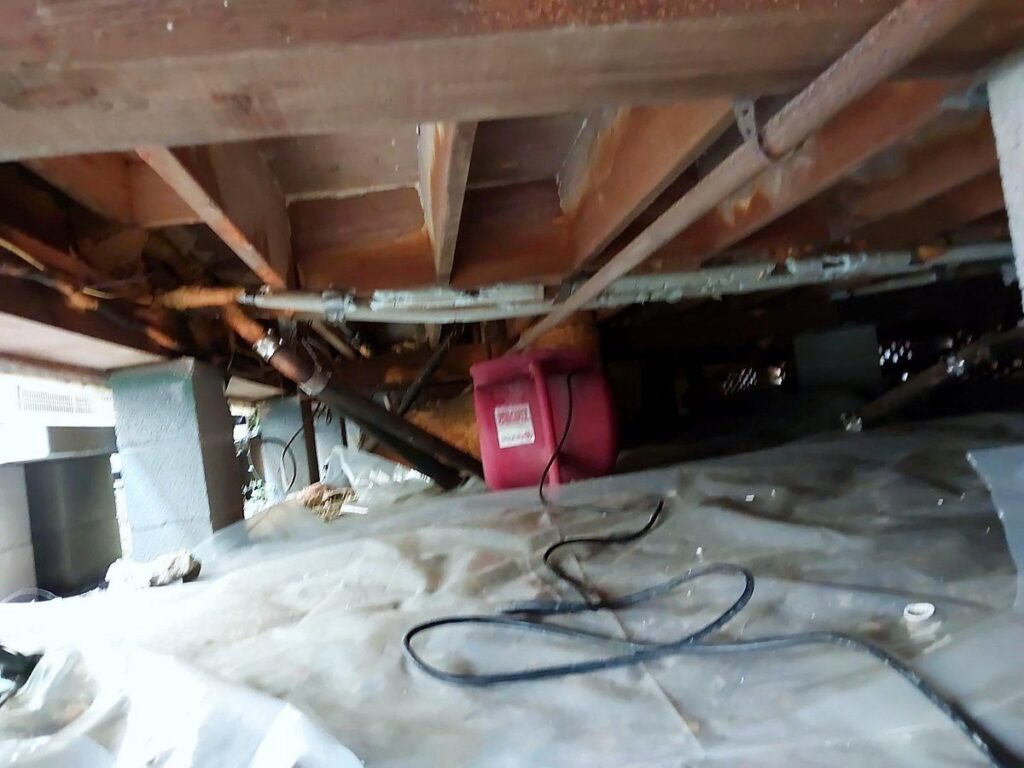
You crawl in with a flashlight to look for the shutoff valve before a cold snap. The air is clammy, the plastic on the ground is beaded with water, and the wood above your head feels damp. In one corner, there’s a fuzzy white patch on a joist that you’ve never noticed. Crawl space condensation in Saugus homes is easy to miss in winter, because you rarely go down there. A quick check now can save you a bigger problem in spring.
Read on to learn why crawl spaces sweat in cold weather and how to check yours. We also explain what to do about mold and how to keep the space drier.
Why Do Crawl Spaces Get Condensation in Winter?
Condensation forms when warm, moist air touches a cold surface. In winter, a crawl space has plenty of cold surfaces.
Cold Foundation Walls and Rim Joists
Concrete block, poured walls, and the wood band where the house sits on the foundation get cold from the outside air. Moist air from the soil or the house can bead up on them.
Damp Soil
Bare dirt, or a torn or loose vapor barrier, lets ground moisture rise into the space all year.
Pipes and Ducts
Cold water lines can sweat. Heating ducts with gaps or loose joints can leak warm, humid air that condenses on nearby wood.
Air Leaks
Gaps around vents, access doors, and pipes let outside air in. Air from the house can also drift down through floor gaps.
The result is often the same: damp wood, wet insulation, and a musty smell that drifts up into the rooms above. That’s what crawl space condensation in Saugus homes usually looks like by late winter, if nobody has checked since fall.
How Cold Does It Get Near Saugus?
Cold enough that crawl spaces see many freezing nights. Boston Logan International Airport, about seven miles south, has the closest full set of coastal climate records. Its NOAA 1991–2020 climate normals show about 92 nights a year at or below 32°F. The normal January low is about 23°F.
That long stretch of cold keeps foundation walls and rim joists chilled for months.
Why Should Saugus Homeowners Pay Attention?
Many Saugus homes are single-family houses from the middle of the last century.
Per the U.S. Census Bureau’s ACS 2020–2024 estimates, Saugus has around 11,402 housing units (±353), with a median build year of 1962 (±2). Close to 72 percent were built before 1980, and about 66 percent are single-family detached homes (tables B25034, B25035, and B25024). Older crawl spaces may have bare dirt floors, thin or missing vapor barriers, and little insulation on the rim joists.
How Do You Check Your Crawl Space?
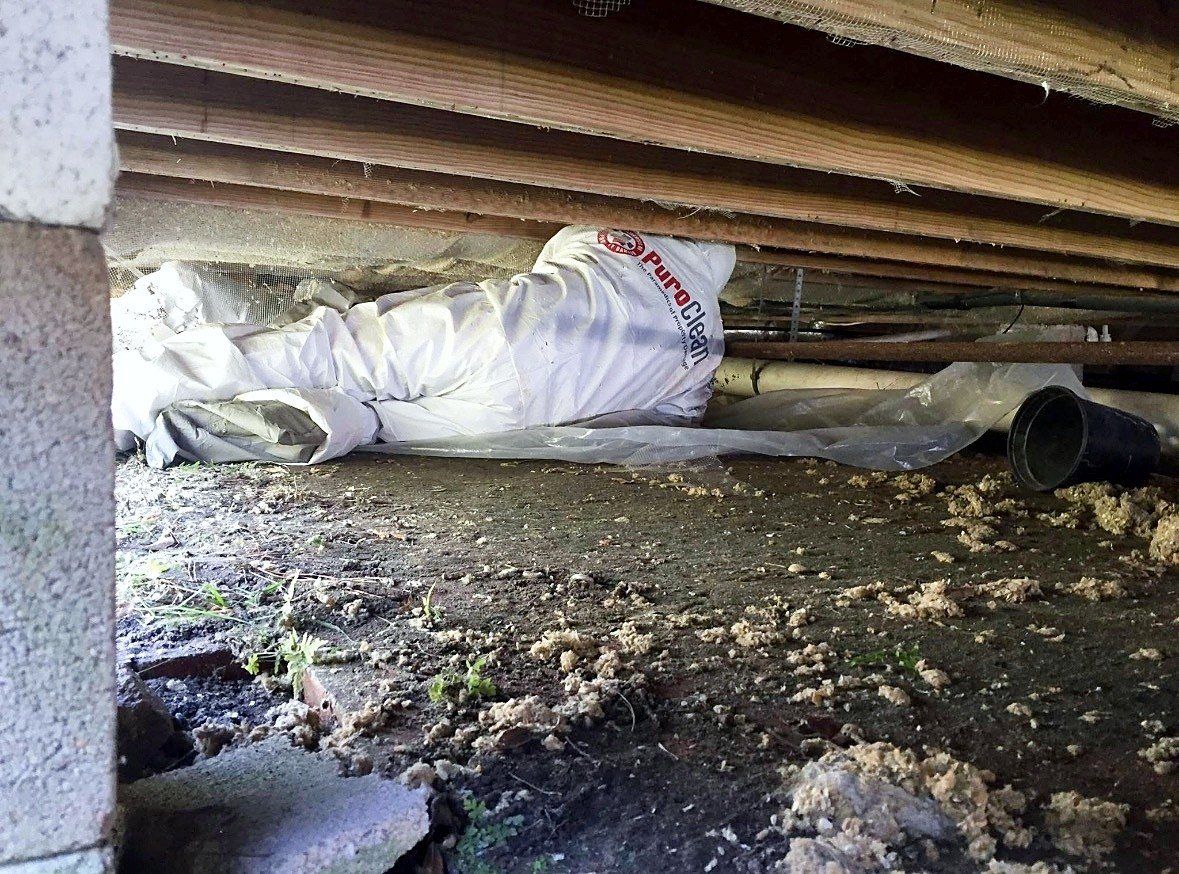
Pick a dry day, bring a good flashlight, and wear old clothes, gloves, and a mask. If the space is tight or you’re unsure about going in, ask a pro.
| What to check | What a problem looks like | What it may mean |
|---|---|---|
| Ground cover | Puddles, torn plastic, or bare dirt | Soil moisture is getting into the space |
| Foundation walls | Beads of water, white crusty deposits | Condensation or water seeping through |
| Rim joists and sill | Dark, damp, or soft wood | Cold surface condensation or air leaks |
| Floor joists and subfloor | Staining, fuzzy spots, or a musty smell | Possible mold growth |
| Insulation between joists | Sagging, wet, or fallen batts | Too much moisture in the space |
| Pipes and ducts | Dripping, rust, or loose joints | Sweating pipes or leaking ducts |
| Vents and access door | Open gaps or broken covers | Cold, damp air getting in |
A cheap humidity meter left in the crawl space for a few days can tell you a lot. Readings that stay high are a sign the space needs attention.
What Does the EPA Say About Moisture and Mold?
The EPA’s brief guide to mold, moisture, and your home says the key to mold control is moisture control. It says wet materials should be dried within 24 to 48 hours to help prevent mold growth. It also recommends keeping indoor humidity below 60 percent, ideally between 30 and 50 percent.
The same guide says that if the moldy area is less than about 10 square feet, you can usually handle the job yourself. In a crawl space, a professional is often the better choice even for smaller areas. The space is tight and hard to clean well.
What Should You Do If You Find Mold?
Don’t panic, and don’t start scrubbing. A few steps first:
- Take photos of what you see and where.
- Find the moisture source. Mold comes back if the space stays damp.
- Don’t spray bleach in the crawl space and leave it. It won’t fix the moisture.
- Keep the access door closed so spores don’t drift into the house.
- Call a pro for an assessment if the area is more than a small spot.
Our mold removal service follows ANSI/IICRC S520. That standard describes three conditions. Condition 1 is normal background levels. Condition 2 means settled spores from a nearby source, with no visible growth. Condition 3 means active growth. The goal of remediation is to return affected areas to Condition 1.
How Does Professional Crawl Space Work Go?
Every job starts with an inspection and moisture readings. From there, a typical plan includes:
1. Fixing or noting the moisture source, such as a leak, a loose duct, or a gap.
2. Setting up containment and air filtration if mold is present.
3. Removing wet insulation and debris.
4. Cleaning affected wood with HEPA vacuuming and approved cleaners.
5. Drying the space with dehumidifiers and air movers.
6. Checking that wood moisture is back to normal before the space is closed up.
If water got into the space from a leak or a storm, our water damage restoration service handles the drying.
How Can You Keep the Crawl Space Drier?
Small fixes can make a big difference with crawl space condensation in Saugus homes.
- Cover bare soil with a heavy vapor barrier, overlapped and sealed at the seams.
- Seal gaps at the rim joist, around pipes, and at the access door.
- Insulate cold water lines that sweat.
- Have an HVAC pro seal leaky duct joints.
- Make sure gutters and downspouts carry water away from the foundation.
- Keep the ground sloping away from the house.
- Ask a pro whether a crawl space dehumidifier makes sense for your home.
Whether to keep foundation vents open or closed depends on how the space is built. A contractor who looks at your crawl space can advise you.
Example: A Saugus homeowner goes into the crawl space in January to check a pipe and finds the rim joist wet along the north wall. White spots have started on the subfloor above. This is a made-up scenario for illustration, not a client job.
What About Insurance?
Damage from long-term humidity or condensation is often treated as a maintenance issue. A sudden leak, like a burst pipe, may be handled differently. Coverage depends on your policy, so check with your agent or adjuster before work starts. We can provide photos, moisture readings, and an estimate written in Xactimate, which is widely used.
Frequently Asked Questions
Is Some Condensation in a Crawl Space Normal?
A little on a cold pipe during a humid spell may not be a concern. Water on the walls, wet wood, or puddles on the vapor barrier are signs the space has too much moisture.
Can Crawl Space Mold Affect the Rooms Above?
Air from a crawl space can move up into the house. That’s one reason a musty smell on the first floor is worth checking. If anyone in your home has health concerns, talk with a doctor.
How Often Should I Check My Crawl Space?
A quick look in late fall and again in late winter is a good habit. Also check after heavy rain or a plumbing leak.
Does Crawl Space Condensation in Saugus Mean I Need Encapsulation?
Not always. Many homes do fine with a sealed vapor barrier, air sealing, and better drainage. A pro can look at your space and explain the options.
What Should I Do If a Pipe Leaks in the Crawl Space?
Shut off the water at the main valve and call a plumber. Then have the space dried quickly. Wet insulation and soaked soil can keep humidity high for weeks if they’re left alone.
Do You Serve Saugus?
Yes. Our Wakefield team serves Saugus and the nearby area. Visit our Saugus service area page.
Get Help With Crawl Space Condensation in Saugus
Found damp wood or mold under your floors? PuroClean of Wakefield can take a look any time, 24/7. We’re locally owned and operated, with an owner, Frank Greenwood, who holds IICRC WRT and ASD certifications along with our team. Our business is also EPA Lead-Safe Certified. Reach us at (781) 486-3200. Our shop sits at 80 New Salem Street, Bay 1, Wakefield, MA 01880. We work across Saugus, Lynn, Melrose, Revere, Wakefield, and nearby towns.