


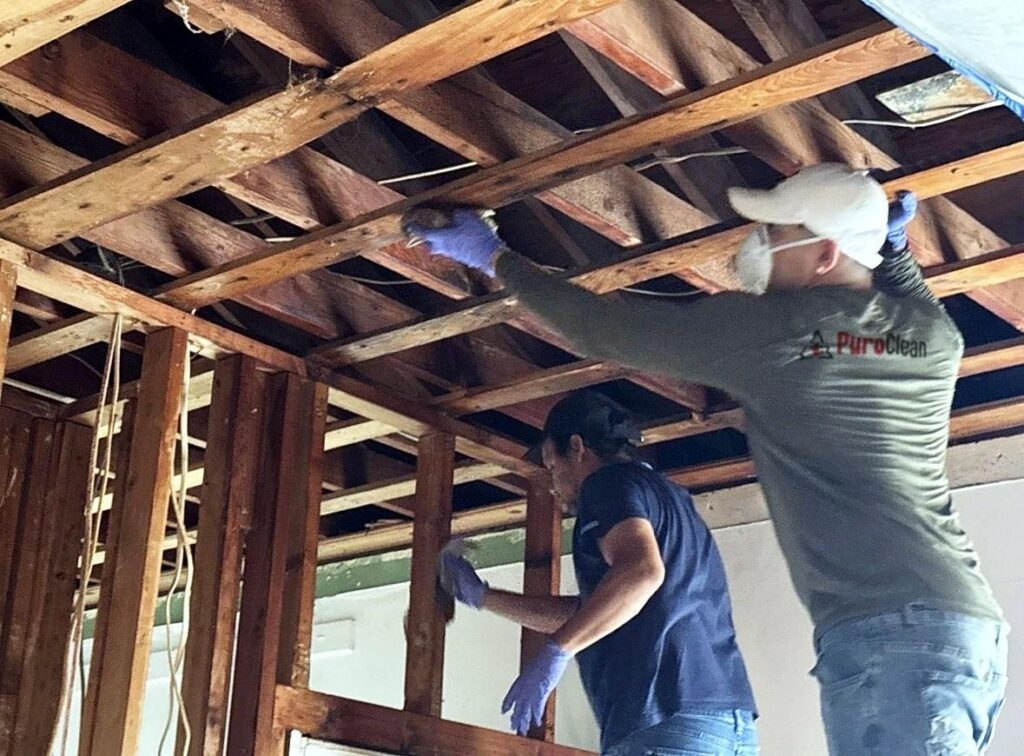
When water gets into an office, the drying phase is only half the job. Once ceilings, walls and floors come out, someone has to plan how the space gets rebuilt, in what order and with whom. Handling commercial water damage in Providence well means thinking about that rebuild from the first day. Below, you’ll see how mitigation hands off to reconstruction. You’ll also learn what older buildings may need and how to keep tenants informed.
Two Phases: Mitigation, Then Reconstruction
Answer first: first you stop and dry the damage, then you rebuild what was removed.
Mitigation is everything done to limit the loss. That includes stopping the water, extracting it, removing wet materials and drying the structure. Reconstruction is the rebuild: new drywall, ceilings, flooring, paint and finishes.
The two phases overlap in planning even if the work happens in sequence. Decisions made during removal, such as how much drywall to cut, shape the rebuild. Having one team or a close partnership handle both can reduce gaps and repeat visits.
Common Causes in Providence Office Buildings
Answer first: aging pipes, roofs and sprinklers cause much of the trouble.
- Old supply and drain lines in buildings with decades of renovations
- Roof leaks on flat roofs after heavy rain or snowmelt
- Fire sprinkler heads hit or frozen in unheated areas
- Restroom and kitchenette overflows on upper floors
- HVAC drain pans and condensate lines above drop ceilings
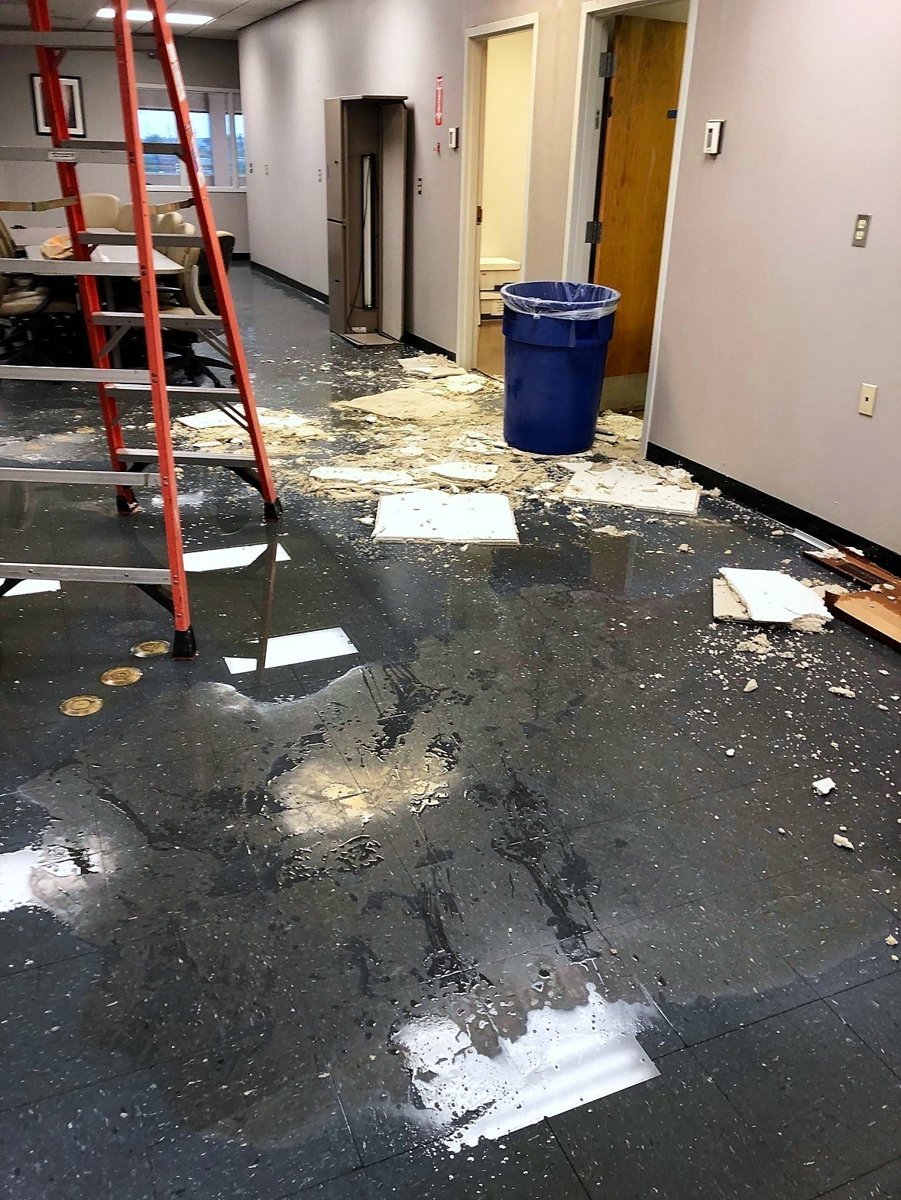
In a multi-story building, water travels down. A single leak on the third floor can reach the lobby.
What EPA Guidance Says About Wet Building Materials
Answer first: dry fast, and remove porous materials that stay wet.
The EPA’s guide to mold remediation in schools and commercial buildings gives cleanup strategies for water damage in the first 24 to 48 hours. Its table sorts materials by type. Ceiling tiles, carpet backing, insulation and drywall that stay wet often need to be removed and replaced. Nonporous surfaces such as metal and sealed concrete generally respond to cleaning.
The chapter also warns against running an HVAC system that you know or suspect is moldy. In a building where a leak reached the ductwork, that step matters before staff return.
Older Buildings Bring Extra Steps
Answer first: age changes what can be cut, removed and replaced.
Providence has some of the oldest building stock in the state. More than half of the city’s housing units, about 54.5 percent, date to 1939 or earlier. That figure comes from Census ACS 2020–2024 table B25034. Many commercial spaces sit in buildings of a similar age, including converted mills and mixed-use blocks.
Older buildings can mean:
- Plaster and lath instead of drywall
- Paint that may contain lead, so test before sanding or demolition
- Pipe insulation, floor tile or joint compound that should be tested for asbestos
- Wood floors and trim that owners want to keep
- Historic district rules for exterior or visible changes
Brick and stone walls can also hold moisture longer than framed walls, so drying may take extra time. Testing early keeps the schedule moving. Results can change how crews handle demolition and disposal.
Building a Reconstruction Plan
Answer first: a written plan helps owners, tenants and adjusters stay on the same page.
A good plan usually covers:
- A scope of work listing what was removed and what will be rebuilt
- Photos and moisture records showing the space was dry before closing walls
- Materials and finishes, matched to what was there before where possible
- A sequence, such as electrical, then drywall, then paint and flooring
- Permits and inspections required by the city
- Who approves changes, and how they’re priced
East Providence and Providence each have their own permit offices. Your contractor can tell you which permits apply.
Who Does What After Commercial Water Damage in Providence
Answer first: several roles touch every project, and naming them early prevents confusion.
A typical commercial loss involves the building owner or manager and one or more tenants. Insurance adjusters, the mitigation crew and a general contractor join in. Trades such as electricians, plumbers and roofers often follow, along with city inspectors near the end. Each one needs the right information at the right time. Ask each party for one point of contact. Share a single folder for photos, reports and approvals. Decide early who signs off on the scope and on any changes, so work doesn’t stall while people wait for answers.
Working Around Tenants and Staff
Answer first: plan the work so the business can keep going where possible.
Rebuilds create dust and noise. Ways to limit the impact on daily operations include:
- Sealing off work areas with plastic walls and negative air
- Scheduling loud work early, late or on weekends
- Moving staff to dry parts of the building in phases
- Posting updates for tenants on other floors
- Naming one contact on your side for daily questions
Some businesses rent temporary space during a rebuild. Keep receipts in case that cost is part of your claim.
Rain and Roof Risk in Rhode Island
Answer first: heavy rain days are common here, and they stress older roofs.
NOAA’s 1991–2020 normals for T.F. Green Airport show about 47.5 inches of precipitation a year. On average, the station logs close to 13 days a year with an inch or more. On an older flat roof, one clogged drain during a storm like that can soak several suites.
Rebuilds are a good time to fix what caused the leak. Ask the roofer or plumber for a written note on the repair so your file shows the source was addressed.
Choosing Finishes That Handle Water Better
Answer first: the rebuild is a chance to make the next leak less costly.
When ceilings and floors have to be replaced anyway, owners can choose materials that recover better. Some examples:
- Moisture-resistant drywall in restrooms, kitchenettes and mechanical rooms
- Carpet tile instead of broadloom, so damaged squares can be swapped out
- Luxury vinyl plank or sealed concrete in high-risk areas
- Raised shelving in storage rooms to keep files and stock off the floor
- Water sensors tied to building alerts near risers and water heaters
Your contractor or architect can help balance cost, look and code needs. Ask your insurer how upgrades are handled, since a policy may only pay for like-kind replacement.
Keeping the Schedule Realistic
Answer first: drying, testing, permits and materials all affect timing.
Rebuilds rarely move in a straight line. Walls can’t close until moisture readings confirm the framing is dry. Lead or asbestos results may change the removal plan. Permits and inspections add steps, and some finishes have long lead times. Plan for that by ordering long-lead items early and keeping a running list of open decisions. A weekly meeting with the contractor, building manager and a tenant representative can keep everyone aligned.
Handling commercial water damage in Providence buildings often involves landlords, tenants and several trades at once. Clear roles and a shared calendar go a long way.
Claims and Documentation
Answer first: commercial claims often involve more than one policy and party.
The building owner’s policy may cover the structure, while a tenant’s policy may cover contents, improvements and lost income. Leases often spell out who repairs what. Your agent can explain how each policy may apply.
Keep these together:
- Photos before, during and after removal
- Daily moisture logs and the final dry readings
- The scope of work and any change orders
- Invoices for cleanup, rebuild and temporary space
- Notes on days or hours the business couldn’t operate
Example: A Providence law office on the second floor of an older building loses its ceiling after a roof drain backs up. Drying takes days, and the rebuild includes plaster repair and new lighting. This example is invented for illustration.
Frequently Asked Questions
How Long Does Rebuilding After Commercial Water Damage in Providence Take?
It varies widely. Small repairs can take days, while larger rebuilds with permits may take weeks or more.
Can the Same Company Dry and Rebuild?
Often, yes. One team handling both phases can make scheduling and documentation simpler.
Do We Need Lead or Asbestos Testing?
In older buildings, it’s a good idea before demolition. Results guide how crews remove materials.
Can Original Wood Floors Be Saved?
Sometimes. It depends on how long they were wet and how they respond to drying.
Do You Work With Businesses in East Providence?
Yes. Our commercial clients include offices in East Providence as well as Providence, Cranston, Warwick, West Warwick and East Greenwich.
Plan Your Rebuild After Commercial Water Damage in Providence
PuroClean of Rhode Island is a veteran-owned company led by owner Chris Sanford, who served in the US Navy. Our credentials include IICRC certification and EPA Lead Safe certification. In 2019 the SBA honored the business as its Veteran Owned Small Business of the Year for Rhode Island and New England. Property managers and business owners can reach the office around the clock by dialing (401) 737-4329. The shop is located on Hathaway Street in Cranston (80 Hathaway Street, Cranston, RI 02907).