


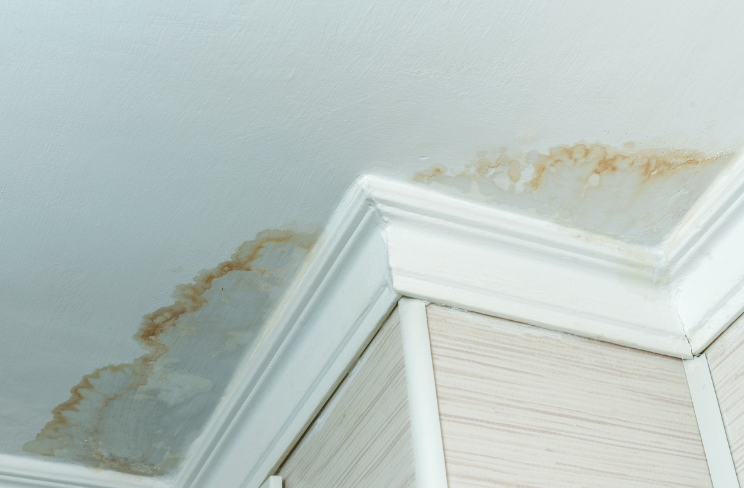
Yes, a roof leak can cause hidden water damage in a Lancaster home even when only a small ceiling stain or occasional drip is visible. Water entering through the roof can travel along roof decking, rafters, insulation, ceiling cavities, and wall framing before it becomes visible inside the living space.
CDC/NIOSH specifically notes that water leaks in buildings can create hidden dampness, including wet insulation above ceilings, and that prolonged moisture can allow mold to grow on building materials.[1]
PuroClean of West Antelope Valley provides professional roof leak water damage cleanup in Lancaster for properties affected by hidden moisture, ceiling damage, wet insulation, wall damage, and other problems caused by roof intrusion.
Can a Roof Leak Cause Hidden Water Damage?
Yes. Roof leak water damage is often hidden because the point where water enters the roofing system may be several feet away from the place where damage eventually becomes visible.
After water passes through the roof covering, it may move across or through:
- Roof decking
- Rafters and trusses
- Attic insulation
- Ceiling joists
- Drywall
- Wall cavities
- Electrical and HVAC penetrations
This movement can allow moisture to remain concealed before a visible stain, drip, musty odor, or damaged surface develops.
CDC/NIOSH identifies roof leaks and other water incursions as common sources of dampness and specifically notes that the source may be less obvious when the affected materials are hidden.[1]
How Far Can Roof Leak Water Travel?
Water does not always fall straight down from the location where the roof is leaking.
It can follow:
- Roof decking
- Wood framing
- Insulation
- Ceiling assemblies
- Pipes or wiring penetrations
- Wall framing
For example, a roof leak above one side of a room may produce a ceiling stain several feet away if the water travels along a rafter or another building component before dripping onto the ceiling below.
This is why a visible ceiling stain does not necessarily identify the exact point where water entered the roofing system.
Where Hidden Roof Leak Moisture Can Collect
Roof leak water can collect in places that are difficult to inspect from the occupied portion of the home.
Common hidden areas include:
- Behind ceiling drywall
- Inside attic insulation
- Between roof decking and structural framing
- Inside upper wall cavities
- Behind baseboards
- Around recessed lighting
- Near HVAC vents and penetrations
- Inside closets
- Behind cabinets
Even when the visible surface feels dry, concealed materials may still contain elevated moisture.
The EPA emphasizes that indoor moisture problems should be corrected promptly because mold can begin growing when spores land on damp building materials.[2]
Signs of Hidden Roof Leak Water Damage
Hidden water damage does not always produce active dripping.
Possible signs include:
- Yellow or brown ceiling stains
- Paint bubbling or peeling
- Soft drywall
- Sagging ceiling material
- Musty odors
- Dark staining on attic framing
- Wet or compressed insulation
- Discoloration near vents or skylights
- Recurring stains after rain
- Wall paint or texture damage below the ceiling
If stains continue to appear or worsen after storms, the problem may involve recurring roof intrusion rather than a single isolated water event.
A persistent musty or moldy odor can also justify further investigation. EPA guidance notes that a moldy odor may indicate mold growth somewhere in the building.[3]
Roof Leaks and Ceiling Water Damage
Ceilings are commonly affected by roof leaks because water entering the attic can reach drywall, insulation, framing, and other materials directly above the living space.
Ceiling drywall may:
- Absorb water
- Stain
- Soften
- Sag
- Lose structural integrity
Wet insulation above the ceiling can also hold moisture against drywall and framing and make it more difficult for the assembly to dry naturally.
If a roof leak has damaged the ceiling, see our ceiling water damage cleanup in Lancaster service.
Our guide to ceiling water damage and mold in Lancaster also explains why moisture trapped above drywall can create secondary problems.
Can Roof Leak Water Travel Into Walls?
Yes. Once roof leak water enters the ceiling assembly, it can travel downward into wall cavities.
Water may follow:
- Wood framing
- Drywall edges
- Insulation
- Electrical penetrations
- Plumbing penetrations
A homeowner may eventually notice damage at the top of a wall, around a window, near a baseboard, or even on flooring below the original roof leak.
Because much of this moisture can remain concealed, drying the visible ceiling surface alone may not address the complete affected area.
What Happens When Attic Insulation Gets Wet?
Wet attic insulation can make a roof-leak restoration project more complicated because it can retain moisture and conceal wet building materials underneath or around it.
Depending on the type of insulation and amount of water, wet insulation may:
- Hold moisture against framing
- Slow ceiling drying
- Compress or lose effectiveness
- Conceal wet building materials
- Contribute to persistent dampness
CDC/NIOSH uses wet insulation in a ceiling as an example of hidden water damage that may not be immediately obvious from inside the occupied room.[1]
Some materials may be capable of drying under appropriate conditions, while others may need to be removed when they are heavily saturated, contaminated, damaged, or unable to dry effectively.
Can Hidden Roof Leak Moisture Cause Mold?
Yes. Hidden roof leak moisture can create conditions that support mold growth when drywall paper, wood, dust, insulation, or other organic materials remain damp.
The EPA explains that mold spores are naturally present in indoor environments and may begin growing when they land on wet surfaces. Controlling moisture is therefore the primary method for controlling indoor mold growth.[2]
The risk can increase when:
- The roof has leaked repeatedly
- The attic has limited airflow
- Wet insulation remains in place
- The leak went unnoticed
- Moisture remains inside walls or ceilings
This is one reason recurring roof leaks should not be treated only as cosmetic ceiling-stain problems.
PuroClean of West Antelope Valley provides professional mold removal and remediation when water damage has already contributed to mold growth.
Why the First 24 to 48 Hours Matter
The EPA recommends drying wet or damp materials within approximately 24 to 48 hours after a leak or spill when possible to help prevent mold growth.[4]
That does not mean every roof leak produces mold after a precise number of hours. Temperature, humidity, airflow, material type, and the amount of moisture all affect conditions inside the building.
The practical takeaway is that hidden roof leak moisture should be located and dried promptly rather than waiting for visible mold or significant material deterioration to appear.
This is particularly important when moisture is trapped in:
- Insulation
- Ceiling cavities
- Drywall
- Wall cavities
- Wood framing
How Professionals Find Hidden Water Damage
Professional water-damage inspections may use several tools and methods to determine where moisture has traveled.
These may include:
- Moisture meters
- Thermal imaging
- Visual inspection
- Material evaluation
- Inspection of adjoining rooms and surfaces
Moisture meters can help evaluate drywall, wood, flooring, cabinets, and other materials that may still contain elevated moisture.
Thermal imaging may also help identify temperature patterns associated with possible moisture, although suspected areas should generally be confirmed with additional inspection methods.
The objective is to determine the actual moisture footprint rather than treating only the stain visible from inside the room.
How Hidden Roof Leak Water Damage Is Dried
Structural drying begins after the roof leak has been repaired, temporarily controlled, or otherwise prevented from continuing to introduce water into the structure.
1. Identify the Moisture Path
Technicians evaluate where water entered and how far it traveled through the attic, ceiling, walls, or flooring.
2. Remove Standing Water
If water has reached lower rooms or flooring, professional extraction may be needed before structural drying begins.
PuroClean of West Antelope Valley provides emergency water extraction in Lancaster for larger indoor water losses.
3. Evaluate Wet Materials
Drywall, insulation, flooring, wood framing, and other materials are evaluated to determine whether they can be dried effectively.
4. Access Concealed Moisture When Necessary
Some materials may require selective removal when they prevent access to wet areas or cannot be effectively restored.
5. Establish Air Movement and Dehumidification
Professional air movers and dehumidifiers can help moisture evaporate from wet building materials and remove that moisture from the indoor air.
EPA moisture-control guidance specifically recommends acting quickly after leaks and using measures such as dehumidification and increased airflow to reduce excess indoor moisture.[4]
6. Monitor Moisture Levels
Moisture readings can be taken throughout the drying process to determine whether affected materials are returning toward appropriate moisture levels.
When to Call a Water Damage Professional
Professional evaluation is especially useful when a roof leak may have affected more than the visible ceiling surface.
Consider calling a restoration professional when:
- Ceiling stains keep returning
- The roof has leaked more than once
- Drywall is soft or sagging
- Insulation may be wet
- Musty odors are present
- The source of the moisture is unclear
- Water has traveled into walls
- Water has reached flooring below
- Visible mold has developed
- You cannot determine how far the moisture traveled
EPA guidance also recommends consulting a professional when mold or water damage is extensive or when the water involved is contaminated.[5]
The main concern is not simply whether the roof has stopped leaking. It is whether the materials already exposed to water have been identified and properly dried.
Hidden Roof Leak Water Damage FAQs
Can a small roof leak cause major water damage?
Yes. A small recurring roof leak can repeatedly wet insulation, drywall, wood framing, and other materials. Over time, the affected area may become much larger than the original visible stain.
Can I have roof water damage without an active drip?
Yes. Moisture can remain inside roof, ceiling, insulation, and wall assemblies after visible dripping stops. CDC/NIOSH notes that water-damaged materials can be hidden even when the original leak is not obvious.[1]
Can roof leak water travel down inside a wall?
Yes. Water can follow framing, drywall edges, insulation, and penetrations from the ceiling into wall cavities before becoming visible farther down the wall.
Will hidden roof leak moisture dry on its own?
Some moisture may evaporate naturally, but concealed areas often have limited airflow. Wet insulation, drywall, wood, and other materials can remain damp after exposed surfaces appear dry. EPA guidance recommends drying wet building materials promptly rather than relying on natural evaporation alone.[4]
Can a roof leak cause mold behind walls or ceilings?
Yes. When roof leak moisture remains inside concealed areas, it can create conditions that support mold growth on drywall paper, wood, insulation, dust, and other materials. Mold growth is strongly associated with persistent indoor moisture.[2]
How do professionals find hidden water damage?
Restoration professionals may use moisture meters, thermal imaging, visual inspection, and knowledge of how water moves through building assemblies to identify areas that may remain wet even when the visible surface appears dry.
References
- Centers for Disease Control and Prevention / NIOSH — Mold in the Workplace. Guidance on water leaks, hidden dampness, wet ceiling insulation, prolonged moisture, and indoor mold growth.
- U.S. Environmental Protection Agency — What Is Mold?. EPA explanation of mold spores, moisture, damp building materials, and the importance of controlling indoor moisture.
- U.S. Environmental Protection Agency — What Does Mold Smell Like?. EPA guidance regarding musty or moldy odors as possible indicators of indoor mold growth.
- U.S. Environmental Protection Agency — A Brief Guide to Mold, Moisture and Your Home. Guidance on moisture control, roof and plumbing leaks, dehumidification, and drying wet materials within approximately 24–48 hours.
- U.S. Environmental Protection Agency — The Key to Mold Control Is Moisture Control. Guidance on drying wet materials, correcting water sources, replacing affected absorbent materials when necessary, and seeking professional help for extensive water damage.
Concerned About Hidden Roof Leak Water Damage in Lancaster?
If a roof leak has caused ceiling stains, wet insulation, musty odors, damaged drywall, or other signs of water intrusion in your Lancaster property, the visible damage may not show the full extent of the problem.
PuroClean of West Antelope Valley can evaluate where the water traveled, identify hidden moisture, remove excess water when necessary, and establish a professional drying plan.
Learn more about our roof leak water damage cleanup in Lancaster service.