


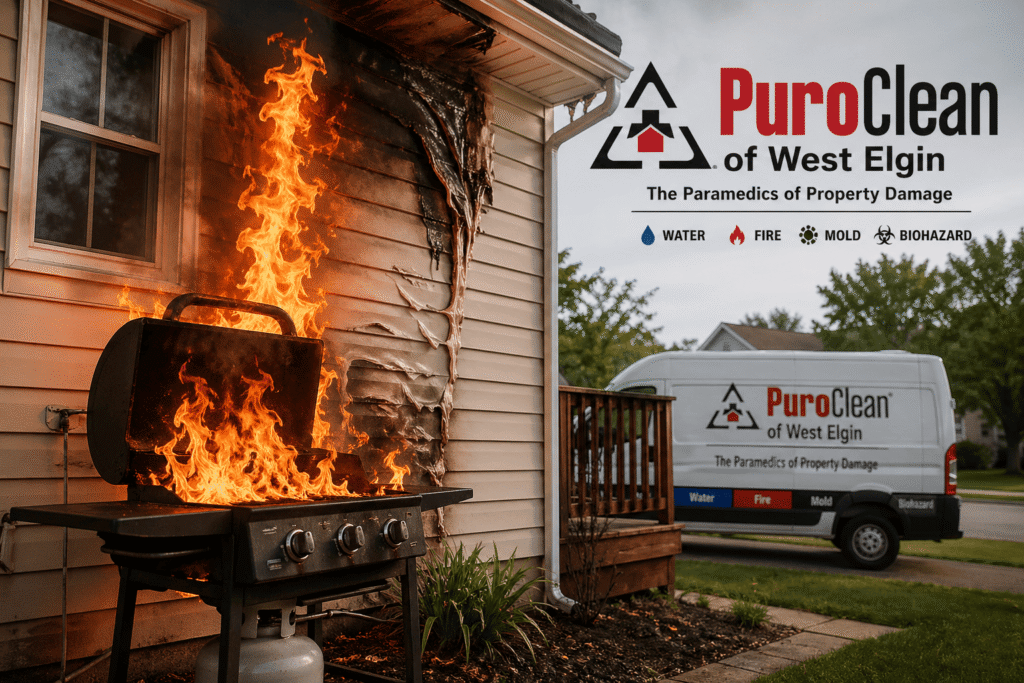
Grill Smart, Stay Safe: The Hidden Fire Risks of Outdoor Barbecuing
Barbecuing is a staple of summer in Elgin—family gatherings, weekend cookouts, and the smell of food on the grill are part of what makes homeownership enjoyable. But what many homeowners don’t realize is that outdoor grilling can quickly turn into a serious fire hazard if not handled properly. At PuroClean of West Elgin, we’ve seen firsthand how preventable grill-related incidents can lead to costly property damage.
Here’s what you need to know to protect your home, your family, and your investment.
1. Grease Fires: Small Flame, Big Damage
Grease buildup is one of the leading causes of grill fires. When grease accumulates in the drip pan or on grill grates, it can ignite suddenly—often producing high, uncontrollable flames.
What makes this especially dangerous is proximity to your home. If your grill is placed too close to siding, decks, or railings, that flame can spread quickly.
Key risk:
Vinyl siding, which is common in many homes, has a relatively low melting point. A grease flare-up can:
Melt or warp siding within seconds
Expose underlying materials to heat and flame
Lead to structural fire spread if not contained immediately
Even if the fire doesn’t spread, the cosmetic and structural damage can be extensive—and expensive to repair.
2. Grill Placement Matters More Than You Think
A common mistake is placing the grill too close to the house for convenience. This dramatically increases the risk of fire damage.
Best practices:
Keep grills at least 10 feet away from your home
Avoid placing grills under overhangs or soffits
Never grill on enclosed porches or in garages
Heat radiating from a grill—even without open flames—can deform siding and create long-term damage.
3. Improper Disposal of Hot Coals
Charcoal grills introduce another often overlooked hazard: hot coal disposal.
Many homeowners assume coals are extinguished once they look gray or ashy. In reality, coals can retain dangerous heat for hours—or even days.
What can go wrong:
Disposing of coals in plastic bins can cause melting or ignition
Placing them near the home can ignite nearby combustible materials
Wind can reintroduce oxygen, reigniting seemingly “dead” coals
Proper disposal method:
Place coals in a metal container with a lid
Douse thoroughly with water
Store the container away from the home until completely cool
4. Hidden Damage After a Grill Incident
Even if a fire is quickly extinguished, damage may not always be visible at first glance.
You may be dealing with:
Heat-compromised siding or insulation
Smoke intrusion into walls or attic spaces
Moisture issues from fire suppression efforts
This is where professional inspection becomes critical. Undetected damage can lead to mold growth, structural deterioration, or long-term indoor air quality concerns.
5. Prevention is Simple—Restoration is Not
Grill-related fires are largely preventable with consistent maintenance and awareness:
Clean your grill regularly to prevent grease buildup
Inspect propane lines and connections for leaks
Never leave a lit grill unattended
Keep a fire extinguisher nearby
When Things Go Wrong, We’re Here to Help
At PuroClean of West Elgin, we specialize in fire, smoke, and water damage restoration. Whether it’s melted siding from a grease flare-up or structural damage from a fire incident, our team is equipped to respond quickly and restore your property efficiently.
If you’ve experienced grill-related damage—or want a professional assessment after a close call—don’t wait for hidden issues to escalate.
Contact PuroClean of West Elgin
📞 224.642.1124
📧 [email protected]
Grilling should be enjoyable—not a liability. A few preventative steps can make all the difference between a great cookout and a costly restoration project.