


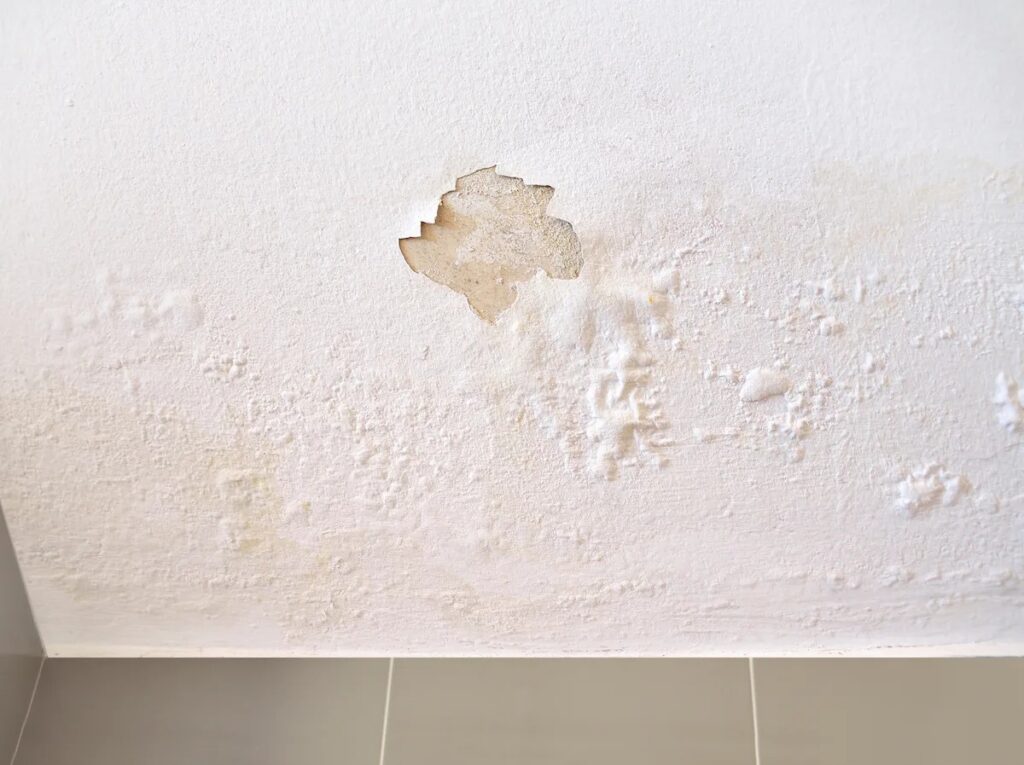
When water invades a property—whether from a burst pipe in a Northeast Queens row house, a sudden commercial drain backup in Long Island City, or a flooded basement in Whitestone—the traditional instinct was often gut renovation. The standard response was to rip out the drywall, tear up the flooring, and start from scratch.
But modern property restoration has evolved, and aggressive demolition is no longer the only option. At PuroClean of Whitestone, we prioritize a highly specialized approach known as restorative drying, with a heavy emphasis on drying in place.
Serving communities from Whitestone, Flushing, and Bayside to Astoria and across the five boroughs, our team utilizes advanced psychrometrics—the science of structural drying—to save your property’s structural elements and contents right where they are. Instead of automatically tearing your property apart, we rely on physics and precision equipment to avoid unnecessary, invasive structural tear-outs.
What is “Drying in Place?”
Simply put, drying in place is the technical practice of drying structural materials, finishes, and contents without removing them from their installed positions.
We don’t guess if a wall or subfloor is dry; we provide scientific verification. Using precise moisture mapping, non-invasive thermal imaging, and professional-grade moisture meters, our certified technicians monitor the exact moisture content of bound materials (like solid hardwood flooring, plaster, and wall studs) to return them to baseline dry standards.
However, this isn’t a one-size-fits-all approach. Whether an NYC structure can be safely dried in place depends heavily on the water quality category, as defined by IICRC S500 standards:
- Category 1 (Clean Water): Broken domestic water supply lines, melting snow, or overflowing sinks. This is the prime candidate for high-efficiency drying in place.
- Category 2 (Gray Water): Water with significant chemical or physical contamination (e.g., washing machine or dishwasher discharge). Drying in place can often be achieved here but requires rigorous sanitization and professional monitoring.
- Category 3 (Black Water): Sewage backups, local coastal flooding, or any water containing pathogenic agents. Because of severe health hazards, porous materials like carpets and drywall cannot be dried in place and must be safely removed under strict containment.
The Core Advantages of Restorative Drying in NYC
When a Category 1 or managed Category 2 water loss occurs in a New York property, choosing a science-based restorative drying strategy over traditional demolition offers clear, undeniable benefits:
1. Minimal Disruption to Dense NYC Living
Demolition creates massive amounts of dust, noise, and airborne debris—a major headache in compact Queens neighborhoods, multi-family homes, and co-ops. Drying in place utilizes high-velocity axial air movers and low-grain refrigerant (LGR) dehumidifiers. This advanced equipment works quietly and efficiently behind the scenes, often allowing families to remain safely in their homes and businesses to keep their doors open.
2. Preserving Historic and High-End Materials
From the classic hardwood floors of Bayside colonial homes to pre-war plaster walls in Astoria and custom commercial built-ins, original architectural materials are incredibly difficult and expensive to replace. Advanced drying setups—such as specialty injectidry systems that push targeted airflow into hidden wall cavities, or heavy-duty floor mat systems—draw deep, bound moisture out of dense assemblies, salvaging the original construction.
3. Substantial Cost and Time Savings
Tearing out materials means paying for both the demolition and the subsequent build-back, stretching projects out for weeks. A successful dry-in-place strategy typically wraps up within 3 to 5 days. This drastically shortens the overall lifecycle of an insurance claim, meaning a faster return to normal for the property owner and a lower overall indemnity payout.
The PuroClean Blueprint for Restorative Drying
True restorative drying is a highly monitored, daily mathematical process. Here is how our local, certified rapid-response team approaches a dry-in-place project in the NYC metro area:
1.Comprehensive Moisture Mapping: Day 1 Protocol.
We deploy infrared thermal cameras and penetrating/non-penetrating moisture meters to trace the exact boundaries of the migration path through floors, ceilings, and crawlspaces. This establishes our baseline data points.
2.Psychrometric Calculation & Setup: Day 1 Equipment Deployment.
We don’t just drop fans randomly. We calculate the specific humidity, grain depression, and dew points to determine exactly how many pints of water must be removed daily. Equipment is placed strategically to maximize evaporation without stalling out the local micro-environment.
3.Daily Monitoring and Adjustments: Days 2–4 Inspections.
Our local team returns every 24 hours to re-test the precise tracking points. As the relative humidity drops, we adjust the positioning of air movers to target remaining stubborn pockets of moisture in the building’s infrastructure.
4.Final Certification and Documentation: Dry-Out Confirmed.
Once all structural elements match the dry standard of unaffected reference materials on the property, the equipment is pulled. We provide a fully documented drying log verifying the structure is scientifically stable and safe from secondary issues like structural mold growth.
If you experience water intrusion, a pipe burst, or structural dampness in Northeast Queens, Long Island, or the surrounding NYC metro area, remember that demolition isn’t your only option. Contact PuroClean of Whitestone immediately so our certified local specialists can assess if a fast, non-invasive dry-in-place strategy is right for your property.
Call Us Now at (718) 878-8008 we have dedicated On Call Crews available 24/7