When a traumatic event, severe workplace accident, or unexpected medical emergency takes place on a property, the physical and emotional aftermath can be overwhelming. Beyond the immediate shock and distress, property owners are quickly confronted with a challenging reality: biological contamination requires specialized, professional intervention.
Biohazardous environments—whether resulting from industrial equipment injuries, serious home accidents, or trauma scenes—present significant health risks. Standard cleaning products and everyday janitorial methods are simply not designed to neutralize dangerous pathogens, isolate infectious materials, or restore safety to compromised spaces.
Understanding the critical science behind biohazard remediation services and knowing how specialized restoration teams operate helps property owners navigate difficult situations safely, discreetly, and thoroughly.
Understanding Biohazards: What Lies Beneath the Surface
The term “biohazard” refers to any biological substance that poses a threat to human health. In the context of property damage and emergency cleanup, biohazardous waste typically includes blood, bodily fluids, human or animal tissue, and infectious materials resulting from severe injuries, unattended deaths, or chemical contamination.
Attempting to clean biological spills without professional training poses severe health hazards, primarily due to microscopic pathogens:
- Bloodborne Pathogens: Blood and bodily fluids can carry dangerous viruses such as Hepatitis B (HBV), Hepatitis C (HCV), and Human Immunodeficiency Virus (HIV). These pathogens can remain viable on environmental surfaces for extended periods.
- Bacterial Contaminants: Infectious bacteria can rapidly multiply in organic matter, spreading across porous subfloors, grout lines, and structural framing.
- Aerosolized Microorganisms: Improper cleaning techniques—such as scrubbing without containment or using high-pressure sprayers—can aerosolize bloodborne particles, dispersing toxic contaminants into the air and central HVAC systems.
Because biological fluids naturally penetrate porous materials like carpet padding, subflooring, drywall, and unsealed concrete, surface-level wiping leaves dangerous contaminants hidden beneath the surface.
The Professional Biohazard Remediation Process
Restoring a property after a traumatic accident involves a strict, multi-step protocol governed by Federal Occupational Safety and Health Administration (OSHA) standards and guidelines from the Institute of Inspection, Cleaning and Restoration Certification (IICRC).
1. Site Assessment and Containment
Before remediation begins, certified technicians evaluate the extent of biological penetration using specialized moisture-mapping and inspection tools.
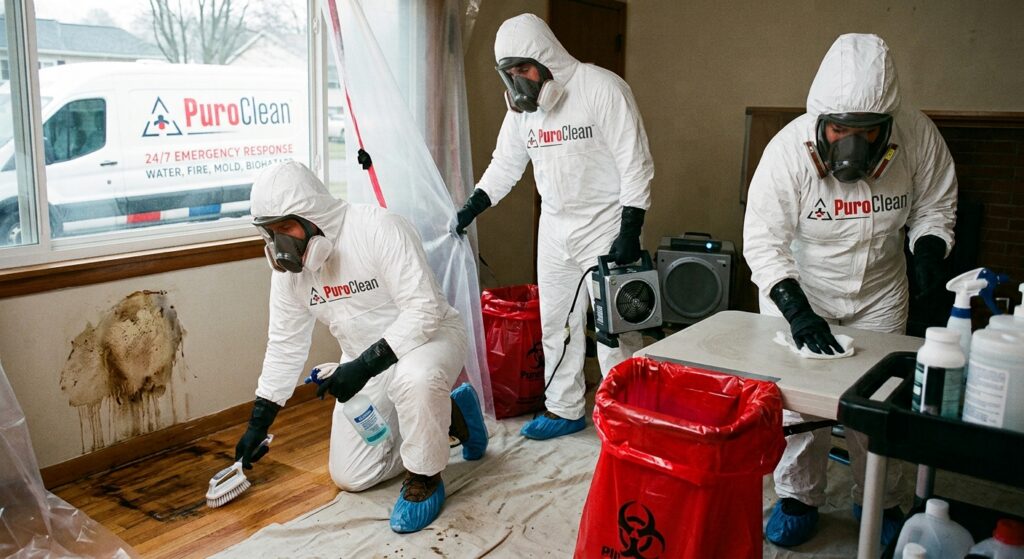
- Containment Barriers: Technicians install heavy-duty plastic sheeting and negative pressure air scrubbers fitted with HEPA filters. This prevents airborne spores, pathogens, and odors from migrating to unimpacted rooms or public hallways.
- Personal Protection: Remediation specialists equip themselves with full Personal Protective Equipment (PPE), including liquid-impermeable Tyvek suits, double-gloved nitrile protection, rubber boots, and full-face respirators equipped with P100 organic vapor filters.
2. Safe Removal and Regulated Biohazard Disposal
Physical cleanup requires meticulously separating salvageable structural elements from unsalvageable porous materials:
- Extraction: Any standing liquids or bulk biological materials are extracted using specialized commercial equipment.
- Demolition of Unsalvageable Items: Highly porous materials that have absorbed blood or fluids—such as drywall, carpet, underlayment, and ceiling tiles—are carefully cut away and removed.
- Regulated Waste Handling: All biohazardous material is sealed in red, biohazard-marked containment bags and rigid containers, then transported for lawful incineration according to state and federal medical waste regulations.
3. Deep Cleaning, Hospital-Grade Disinfection, and Deodorization
Once bulk contaminants are removed, structural surfaces undergo intense sanitization:
- Multi-Stage Washing: Structural framing, concrete, and non-porous surfaces are scrubbed with industrial detergents to remove bio-films.
- Broad-Spectrum Disinfectants: Technicians apply EPA-registered, hospital-grade virucides and disinfectants engineered to neutralize resistant bacteria and bloodborne viruses on contact.
- Thermal Fogging & Ozone Treatment: To eliminate lingering odor molecules trapped in porous materials, specialized Ultra-Low Volume (ULV) foggers or hydroxyl generators are deployed, neutralizing odors at the molecular level rather than simply masking them.
Material Porosity and Structural Recovery
Proper remediation requires a clear understanding of how different building materials respond to biological fluids:
| Material Type | Examples | Remediation Action |
| Non-Porous | Sealed tile, stainless steel, glass | Scrubbed, disinfected, and chemically sanitized in place. |
| Semi-Porous | Hardwood framing, unsealed concrete | Deeply extracted, scrubbed, sanitized, and treated with specialized sealants. |
| Porous | Drywall, carpet padding, insulation | Safely removed, bagged, disposed of as medical waste, and replaced. |
Ignoring material porosity during cleanup often leads to persistent foul odors, wood decay, and ongoing health risks for future occupants.
How PuroClean Supports Property Owners When Accidents Happen
Facing the aftermath of a severe accident or traumatic event requires more than just technical expertise; it requires compassion, discretion, and rapid response.
PuroClean provides professional, 24/7 biohazard remediation services to help homeowners, business managers, and property supervisors navigate challenging situations safely.
Compassionate and Discrete Service
PuroClean technicians arrive in unbranded or discreetly marked vehicles upon request, respecting your privacy during sensitive times. We work efficiently and respectfully to minimize disruption for families, employees, or tenants.
Certified OSHA and IICRC Compliance
Our remediation specialists are fully trained in bloodborne pathogen exposure control protocols, hazard communication, and personal safety standard operating procedures. We handle every detail in strict compliance with local, state, and federal environmental laws.
Comprehensive Property Restoration
PuroClean does not stop at sanitization. Beyond removing biohazards and eliminating odors, our teams coordinate complete structural drying and repair services, ensuring your space is fully restored to a safe, clean, and healthy environment.
When unexpected traumatic accidents occur, trying to handle the cleanup yourself is unsafe. Trust PuroClean to handle the remediation with care, professionalism, and thoroughness—restoring your property and your peace of mind.