


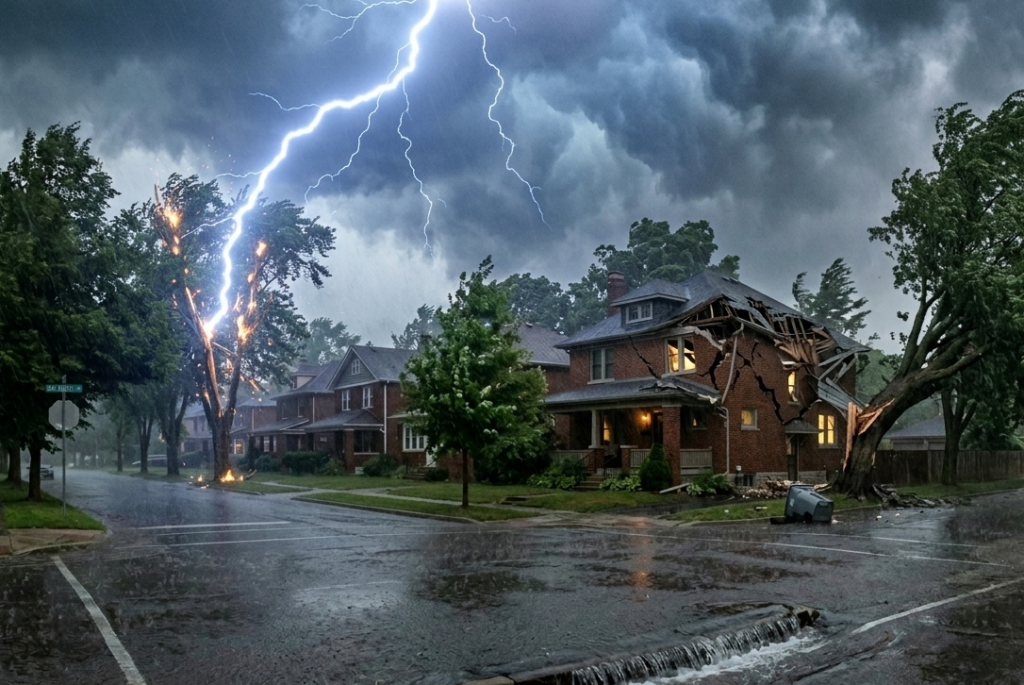
We are officially moving through mid-June, and in Pennsylvania, that means one thing: the arrival of severe summer storm season. While the early mornings are often bright and clear, the rising heat and heavy regional humidity create a perfect recipe for volatile, fast-moving afternoon thunderstorm cells.
As we saw just last week across our local communities, these pop-up storms can dump multiple inches of rain in under an hour, trigger sudden flash flood warnings, and pack damaging wind gusts exceeding 60 mph.
When a deluge of that magnitude hits, your home’s exterior defense systems are pushed to their absolute limits. If there is a hidden vulnerability in your roof, gutters, or foundation drainage, a torrential June downpour will find it instantly. At PuroClean of Reading, our emergency property recovery teams see firsthand how a lack of simple, proactive seasonal preparation can turn a heavy storm into an invasive, multi-room water disaster.
You cannot control the Pennsylvania summer weather, but you can control how prepared your property is to handle it. Before the next dark line of clouds rolls over the horizon, take an hour this weekend to audit and secure these four high-risk zones.
1. Test Your Sump Pump (And Add a Battery Backup)
Your sump pump is the single most important line of defense protecting your basement from rising groundwater. During a severe storm, the water table beneath your home can surge rapidly, requiring your pump to run continuously for hours at a time.
- The Vulnerability: Sump pumps fail for two primary reasons during a summer storm: mechanical burnout from being overworked, or a total loss of power when a severe thunderstorm knocks out the local electric grid. If your pump stops running for even thirty minutes during a torrential downpour, a finished basement can quickly fill with several inches of groundwater.
- The Action Plan: Pour a bucket of water directly into your sump pit to ensure the float switch activates properly and successfully pumps the water out. More importantly, if you do not already have a battery backup system installed, consider this your highest priority. A robust battery backup ensures that even if the power goes out in West Reading during a midnight storm, your pump keeps running smoothly.
2. Clear Your Roof Drainage Systems
Your roof collects hundreds of gallons of water during a heavy downpour. Your gutters and downspouts are designed to act as a structured highway system, safely channeling that massive volume of water away from your living space and foundation.
- The Vulnerability: If your gutters are packed with spring twigs, oak tassels, and organic debris, the water has nowhere to go. It will back up under your shingles, seep past the fascia board, and cause sudden ceiling leaks in your upper floors. Alternatively, if your downspouts are clear but drop water directly at the base of your foundation walls, that water will saturate the soil and push its way right through porous basement concrete via hydrostatic pressure.
- The Action Plan: Safely clear all debris from your gutter runs. Check that your downspout extensions are firmly connected and discharging water a minimum of 6 to 10 feet away from your home’s foundation onto a downward slope.
3. Clear Out Window Wells and Low-Lying Drainage
Many homes in our area feature below-grade basement windows equipped with semi-circular window wells.
- The Vulnerability: When an afternoon storm drops two inches of rain in forty-five minutes, low-lying window wells quickly act like small swimming pools if the gravel drainage at the bottom is clogged with dirt, leaves, or weeds. Once the water level in the well rises higher than the window sill, it will easily shatter the seal or crack the glass, sending a torrent of mud and storm runoff directly into your lower living space.
- The Action Plan: Clear all loose leaves and debris out of your window wells. Inspect the drains to ensure they aren’t impacted by compacted soil. Installing clear, heavy-duty plastic window well covers is a low-cost, highly effective way to keep debris out while diverting sheet rain away from the glass.
4. Know the Threat of “Category 3” Water
When water damages a home, not all water is created equal. If a clean water pipe under your bathroom sink leaks, it is considered clean water. However, overland floodwaters from a severe summer storm are a completely different story.
- The Threat: Water that rushes into your home from the outdoor yard, overflowing streets, or saturated ground is classified as Category 3 water (Black Water). This water is heavily contaminated with outdoor bacteria, lawn chemicals, sewage remnants, and biohazards.
- The Action Plan: If a flash flood breaches your home, do not attempt to clean it up with standard household towels or shop vacs. Saturated drywall, baseboards, and carpets exposed to Category 3 water cannot simply be dried out—they must be safely cut out, removed, and the entire structure must be professionally sanitized to prevent severe health risks and rapid mold colonization.
Your Professional Partners in Storm Recovery
True storm readiness means knowing exactly who to call when the unexpected happens. When flash flooding or structural storm damage impacts your property, the clock is ticking. Mold can begin to colonize damp building materials in as little as 24 to 48 hours.
As the Paramedics of Property Damage, PuroClean of Reading provides 24/7 emergency water extraction, structural drying, and comprehensive storm damage restoration services throughout Berks County. We utilize industrial-grade dehumidifiers, high-velocity air movers, and specialized moisture-mapping technology to ensure your home is fully dried, sanitized, and safely restored to pre-loss condition.
Don’t wait for the skies to turn gray. Secure your property today. But if a summer storm catches your home off guard, stay safe, call your insurance provider, and call PuroClean immediately to get the professionals on the scene.