


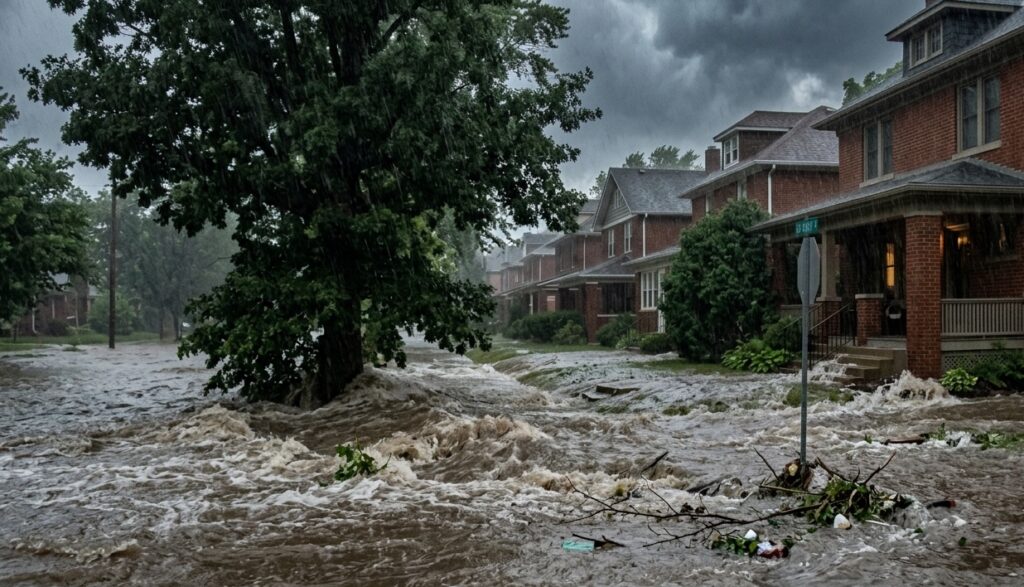
Mid-summer in Pennsylvania brings beautiful, clear mornings that can rapidly deteriorate into volatile atmospheric conditions by afternoon. July is notorious for sudden, violent cloudbursts—intense downpours where multiple inches of rain fall in an incredibly short window of time. Unlike prolonged, steady spring rains, these tropical-style summer deluges drop water faster than the ground can absorb it and much faster than local municipal storm drainage systems can divert it.
When a severe thunderstorm stalls over a neighborhood, streets quickly transform into rushing rivers, yards oversaturate, and low-lying properties face an immediate threat. Within minutes, rising outdoor runoff can breach garage doors, cascade down basement stairwells, or seep through foundation walls.
When a sudden influx of stormwater threatens your home or business, knowing exactly how to execute an emergency flash flood response can mean the difference between a minor cleanup and a catastrophic structural loss. When the skies open up this July, here is your definitive survival guide for navigating a flash flood emergency safely and effectively.
Phase 1: Immediate Safety and Power Shutdown
During a flash flood event, adrenaline runs high, but your absolute highest priority must always be personal safety rather than saving physical possessions. Stormwater breaching a structure introduces immediate, hidden hazards that require cautious navigation.
1. Avoid the Threat of Electrocution
Water and electricity are a lethal combination. If water begins to accumulate in your basement or lower level, never step into the standing water to reach personal items or locate a drain. If the water level rises high enough to reach electrical outlets, baseboard heaters, or major appliances like your washer, dryer, or water heater, the standing water can become statically charged.
- The Action: If you can safely access your main electrical panel without stepping into any water, shut off the circuit breakers to the affected zones immediately. If the electrical panel is located in a basement that is already actively flooding, do not attempt to reach it. Evacuate the lower level and contact your utility provider to pull the meter or disconnect power to the property externally.
2. Recognize the Dangers of Contaminated Water
It is easy to assume that rainwater is clean, but the moment a heavy July downpour hits the pavement, yard, or street, it becomes heavily contaminated overland runoff. This is classified as Category 3 water (Black Water).
- The Threat: As stormwater rushes across the ground, it collects street chemicals, motor oil, animal waste, lawn fertilizers, and frequently mixes with overflowing municipal sewage systems. This water carries pathogenic bacteria, viruses, and toxic chemicals. Treat all incoming floodwater as a biohazard. Wear heavy rubber boots, protective gloves, and eye protection if you must be near it, and never allow children or pets near the flooded zones.
Phase 2: Action Steps During the Deluge
If water is actively entering your property during a heavy downpour, your primary objective is containment and minimization until the storm subsides and professional extraction equipment can arrive.
Deploy Temporary Barriers
If you notice street runoff or driveway pooling beginning to creep toward a low-lying exterior door, garage entry, or basement window well, utilize whatever structural barriers you have on hand. Heavy-duty plastic sheeting weighted down with sandbags, bricks, or bags of soil can temporarily redirect sheet water away from vulnerable thresholds.
Monitor Your Sump Pump
If your basement relies on a sump pump, check that it is cycling properly. During a sudden deluge, the pump may run continuously for hours. Ensure the discharge line outside is clear of debris and pushing water far away from the foundation. If the storm knocks out local grid power, verify that your battery backup system has successfully kicked on to maintain continuous operation.
Document the Breach Logically
If it is safe to do so, take quick photos or video of where the water is entering the structure. Pinpointing whether the water is rising up from a floor drain, seeping through a concrete wall crack, or cascading over a window sill provides invaluable diagnostic information for restoration professionals and insurance adjusters later on.
Phase 3: The Critical Post-Flood Window
Once the storm cell passes and the immediate rush of water stops, the clock begins ticking. Fungal spores and structural rot do not wait. Mold can begin germinating on damp drywall, carpeting, and baseboards in as little as 24 to 48 hours. Managing the aftermath requires a structured approach to prevent severe water damage from settling into the bones of your home.
| Step | Action Item | Critical Detail |
| 1 | Contact Insurance | Call your provider immediately to start a claim; take extensive photo evidence before moving anything. |
| 2 | Remove Salvageable Items | Move high-value, unimpacted items out of the damp environment to dry upper levels. |
| 3 | Professional Extraction | Do not rely on household shop-vacs; contaminated groundwater requires commercial extraction. |
| 4 | Structural Sanitization | All affected porous materials must be treated with industrial-grade antimicrobials. |
Why Professional Mitigation is Non-Negotiable
Attempting a DIY cleanup after a flash flood event is highly risky. Standard retail fans and wet-dry vacuums simply do not possess the capacity to draw deeply trapped moisture out of wall cavities, subfloors, and structural framing. Furthermore, simply “drying out” surfaces contaminated by Category 3 stormwater leaves behind toxic bacterial residues embedded in your drywall and flooring.
When a sudden July downpour breaches your perimeter, it is essential to contact the professionals immediately. As the Paramedics of Property Damage®, PuroClean provides rapid, comprehensive emergency property recovery services. Our highly trained teams arrive equipped with industrial-grade submersible pumps, high-volume water extractors, and advanced moisture-mapping technology to locate hidden pockets of water behind walls and under floors.
We safely handle the removal of unsalvageable porous materials, thoroughly sanitize the entire space with specialized antimicrobial agents, and deploy heavy-duty dehumidifiers to ensure your property is completely dry, safe, and restored to pre-loss conditions.
Don’t let a sudden summer cloudburst permanently compromise your property. Stay alert to weather warnings, plan your emergency steps ahead of time, and know that if the unexpected happens, professional help is available 24/7.