


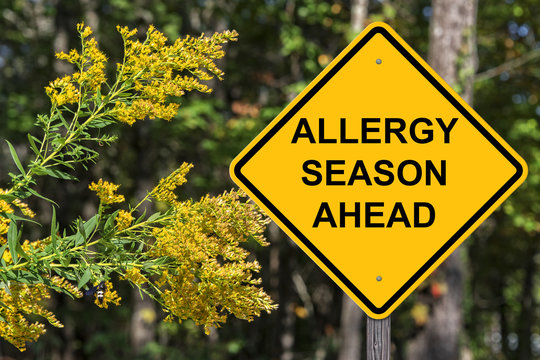
As the birds start chirping and the cherry blossoms begin to pop across Berks County, a familiar sound fills the air: sneezing. For millions of people, April marks the beginning of “allergy season.” We blame the oak trees, the budding grass, and the yellow dust covering our cars.
But what if the source of your watery eyes and persistent cough isn’t outside at all?
At PuroClean, we see a consistent spike in calls during April and May, and it’s rarely about the yard. While pollen is certainly a factor, spring is also the unofficial kickoff for indoor mold season. If you find yourself reaching for the antihistamines only when you’re inside your house, it’s time to look closer at your indoor air quality.
The Science of the “Spring Spike”
Mold spores are opportunistic. They exist in a dormant state during the dry, freezing winter months. However, as April arrives, two things happen that create a “perfect storm” for mold colonization:
- Rising Humidity: Spring air is naturally damp. When that humid air enters your home through open windows or porous foundations, it provides the one thing mold needs most to “activate”: moisture.
- The Thaw-and-Rain Cycle: Heavy spring rains saturate the ground around your foundation. If your basement has even a microscopic crack, that hydrostatic pressure pushes moisture inward. Combined with rising indoor temperatures, your basement or crawlspace suddenly becomes a high-speed incubator for mold.
Is it Pollen or Mold? How to Tell the Difference
Differentiating between spring allergies and mold exposure can be tricky because the symptoms often overlap. However, there are a few “tells” that suggest your home—not the trees—is the culprit:
- The “Location Test”: Do your symptoms magically clear up when you go to work or run errands, only to return the moment you sit on your couch? Pollen is everywhere, but indoor mold concentrations are localized.
- The “Musty Clue”: Pollen doesn’t have a smell. If you notice a faint earthy, damp, or “old book” odor in certain rooms, you aren’t smelling spring; you’re smelling microbial volatile organic compounds (mVOCs) produced by active mold.
- The “Weather Connection”: Pollen counts are usually highest on dry, windy days. Conversely, mold symptoms often flare up during or immediately after a heavy rainstorm when indoor humidity levels peak.
Hidden Harbor: Where Spring Mold Hides
In our experience with mold remediation in Reading, PA, mold rarely sits out in the open where it’s easy to spot. During the spring, it tends to hide in “transition zones”:
- Window Sills and Tracks: Condensation from spring rain often pools in window tracks. If you see black speckling around the frame, that mold is hitching a ride on the breeze every time you open the window for “fresh air.”
- Behind Baseboards: If your gutters were clogged over the winter, water may be seeping behind your siding and pooling at the base of your walls.
- The HVAC System: Before you turn on your AC for the first time, remember that dust and moisture may have settled in your ducts over the winter. Turning on the fan can blast dormant spores throughout every room in the house.
3 Steps to Reclaim Your Indoor Air Quality This April
If you suspect your “allergies” are actually a mold issue, don’t just buy a bigger box of tissues. Take these proactive steps to clear the air:
1. Control the Humidity Invest in a high-quality hygrometer (they are inexpensive and available at any hardware store). Aim to keep your indoor humidity between 30% and 50%. If your basement is creeping above 60%, a professional-grade dehumidifier is your best defense against a spring mold outbreak.
2. Audit Your Drainage Walk around the exterior of your home during a rainstorm. Are your downspouts carrying water at least 10 feet away from the foundation? Are your gutters overflowing? Stopping water from reaching your foundation is the most effective way to prevent basement mold.
3. Schedule a Professional Air Quality Assessment If you can’t see the mold but you can feel it, it’s time for professional help. A PuroClean air quality assessment can identify hidden moisture pockets behind walls or under flooring using infrared technology. We don’t just look for mold; we look for the reason the mold exists.
Final Thoughts: Breathe Easier This Spring
You deserve to enjoy the change of seasons without feeling miserable in your own home. By understanding the link between indoor air quality and the spring thaw, you can take control of your environment.
Don’t let “mold season” masquerade as hay fever. If you’re concerned about what’s lingering in your air, give the experts at PuroClean a call. We’ll help you identify the source, remediate the problem, and get you back to enjoying the blossoms—from the safety of a clean, dry home.