


Key Takeaways
- Learning how to safely remove mold involves using protective gear, controlling moisture, and taking precautions to limit the spread of spores and protect your health.
- Mold thrives in damp, poorly ventilated areas, often caused by leaks, flooding, high humidity, or condensation.
- Small patches may be manageable by homeowners, but larger or hidden mold requires professional assessment and specialized equipment.
- Certified mold remediation services use advanced containment, HEPA filtration, and safety protocols for effective removal and prevention.
- Preventing future mold growth involves controlling moisture, improving ventilation, and conducting regular inspections of vulnerable areas.
Mold growth in your home or business can pose serious health risks and damage building materials if not addressed promptly. Understanding how to safely remove mold is essential, but it’s not always as simple as scrubbing visible spots. Mold can hide in walls, insulation, or HVAC systems, spreading spores that affect indoor air quality and overall safety.
In this article, we’ll explore practical steps for mold removal and explain why hiring professional mold remediation services in Zephyrhills is often the smarter choice. Professionals have the expertise, equipment, and safety protocols to handle both visible and hidden mold, ensuring thorough cleanup and long-term prevention.
What Is Mold, and Why Does It Grow?
Mold is a type of fungus that naturally occurs indoors and outdoors. It reproduces by releasing tiny spores into the air. When these spores land on damp or wet surfaces — such as after a leak or flood — they can begin to grow and circulate quickly. Over time, mold can weaken building materials, stain surfaces, and contribute to poor indoor air quality.
Common triggers for mold growth include:
- Water leaks from roofs, plumbing, or appliances
- High indoor humidity
- Flooding and poor ventilation
- Condensation on cold surfaces
If left unchecked, mold not only spreads but can also cause unpleasant odors and potential allergy or respiratory symptoms.
How to Safely Remove Mold: Step-by-Step Basics
Before we explore why professionals are recommended, learning how to safely remove mold starts with basic precautions. These simple steps help reduce exposure, limit spreading spores, and address minor growth while you assess the situation.
1. Protect Yourself and the Area
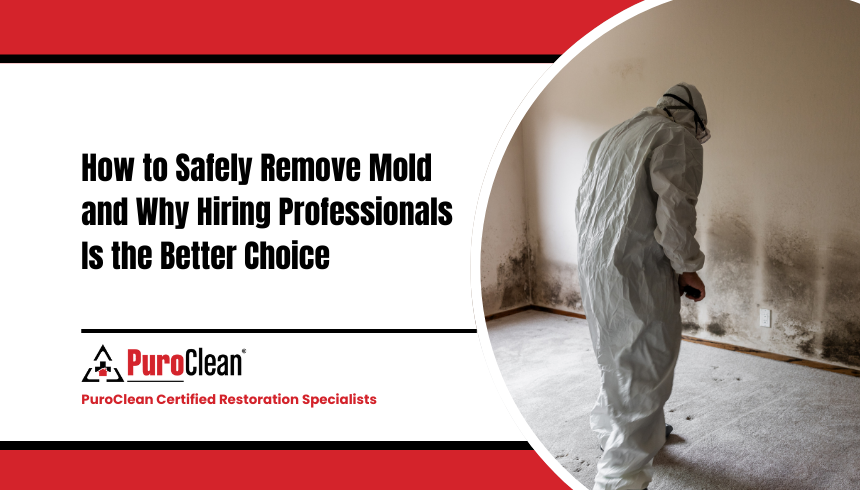
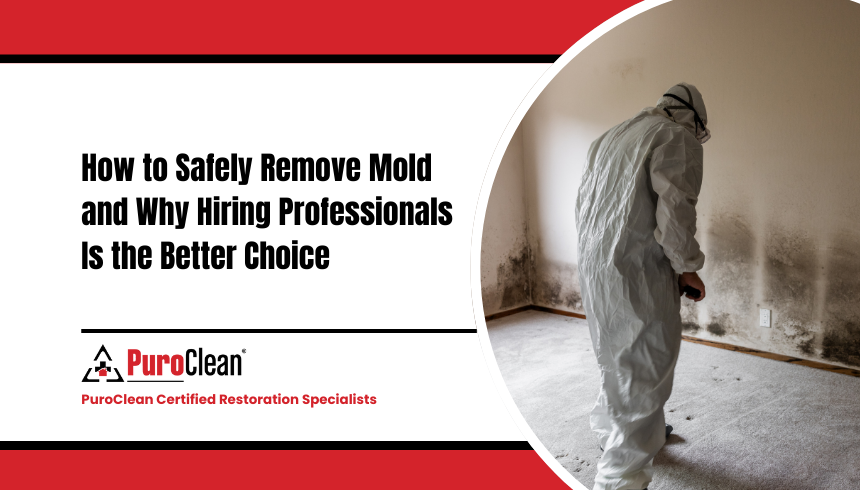
Mold removal involves disturbing mold colonies, which can release spores into the air. Always wear:
- Gloves (non-latex, vinyl, or nitrile)
- Eye protection
- A respirator or mask designed to filter mold spores
The CDC recommends these protective measures to reduce exposure risk when cleaning mold.
2. Contain the Moldy Space
To contain the moldy space, isolate the affected area so airborne spores cannot reach clean rooms. Close doors, seal return vents, and place plastic sheeting when possible. Limiting circulation helps prevent contamination from spreading during early cleaning or inspection.
3. Dry Moisture Sources
To dry moisture sources, identify what allowed dampness to form—leaks, spills, humidity, or condensation—and correct it immediately. Dry soaked surfaces, ventilate the space, and use fans or dehumidifiers. Removing persistent moisture is essential because mold cannot grow or return without a water source.
4. Clean and Remove Mold
Use appropriate cleaning solutions and scrub surfaces thoroughly. While bleach can temporarily lighten mold stains, it doesn’t effectively kill mold spores and isn’t recommended as a standalone solution. Professionals use industry-standard disinfectants, HEPA filtration, and specialized tools to remove and treat affected areas thoroughly.
Why Hiring Professionals Is the Better Choice
While homeowners can handle tiny surface patches, larger or hidden mold demands specialized skills, safety protocols, and equipment to stop recurring growth and structural damage. Here are the key reasons professionals deliver safer, lasting results.
1. Proper Mold Assessment and Source Identification
Professionals don’t just remove visible mold — they find and eliminate the moisture source causing it. Without this step, mold often returns. Certified technicians use thermal imaging, moisture meters, and other tools to locate hidden dampness and mold pockets.
2. Advanced Containment and Removal Techniques
PuroClean remediation experts follow strict industry standards to contain the affected area and prevent spores from spreading during cleanup. This often involves setting up negative air pressure with HEPA filters and performing thorough cleaning beyond what typical household methods can achieve.
3. Health and Safety Compliance
Professionals are trained to handle mold safely, protecting both occupants and themselves. They know when materials must be removed versus when they can be treated and restored, minimizing unnecessary demolition while ensuring effective remediation.
4. Comprehensive Restoration and Prevention
Mold removal is often part of broader restoration needs — like water damage cleanup or structural drying. PuroClean’s experts are equipped to tackle related issues, from water remediation to odor removal, ensuring your property is restored to its pre-loss condition and reducing the risk of future mold problems.

Frequently Asked Questions
Can mold grow even if I can’t see it?
Yes. Mold can hide behind drywall, cabinets, carpeting, and insulation. It may also grow inside HVAC systems. Hidden mold often reveals itself through musty odors, soft drywall, or unexplained allergy symptoms, which is why proper inspection matters before cleanup.
Does homeowners’ insurance cover mold removal?
Coverage depends on the cause. Insurance may pay for mold linked to a sudden covered water event—like a burst pipe—but usually excludes mold from ongoing leaks, humidity, or neglect. Reviewing your policy or asking your insurer helps clarify eligibility.
How to safely remove mold and prevent recurrence?
After removal, eliminate moisture sources, improve ventilation, and dry surfaces completely. Learning how to safely remove mold includes taking preventive measures to keep humidity low and performing regular inspections, reducing the likelihood of future mold growth in your home.
How long does mold removal usually take?
The timeline varies by size and accessibility. Small areas may take hours, while larger contamination, structural drying, or demolition can take several days. If laboratory testing or clearance inspections are required, the overall remediation timeline may extend further.
Final Thoughts
Mold growth can threaten both your health and property if left unchecked. Understanding how to safely remove mold is important, but professional mold remediation services in Zephyrhills offer the expertise, equipment, and safety measures needed for thorough cleanup. Hiring experts ensures effective removal, prevents recurrence, and protects your home, family, and peace of mind for the long term.
If you’re dealing with mold or suspect hidden growth, contact us at PuroClean Certified Restoration Specialists in Zephyrhills today. Our trained professionals provide fast, safe, and effective mold remediation to restore your home and ensure a healthier environment for you and your family.