


Sleep is essential for good health, but it can also be a source of infection. With the recent spread of COVID-19, sanitizing your bedding has never been more critical. Pillows are one of the most common sources of bacterial and viral infections due to their proximity to our faces and breathing patterns.
In this article, we’ll discuss how to sanitize pillows after COVID exposure in order to keep yourself and those around you safe. By following these simple steps, you will not only make sure that your family remains healthy but also protect those around you from potentially dangerous germs and viruses. So let’s get started!
Definition of Sanitizing
Sanitizing is a process of cleaning and disinfecting surfaces, objects, or materials to make them safe for use. It involves reducing the presence of bacteria, germs, and other hazardous agents on an object’s surface to prevent contamination. Sanitization is typically used in healthcare settings but can also be employed in homes and businesses to reduce the spread of disease-causing microorganisms.
The main difference between sanitizing and disinfection is that while both processes involve reducing microbial levels, only disinfection kills the majority of pathogens present on an object’s surface. Disinfectants are often more powerful than sanitizers; however, they may not always be necessary depending on how contaminated an item has become.
In order to properly sanitize something after exposure to COVID-19 or another virus, it is important to understand what type of material you are working with as well as its level of contamination. With this knowledge, you can then determine which products and methods will best suit your needs for proper sanitization.
Materials Needed
Now that you understand the definition of sanitizing, it’s time to gather the materials needed for this task. To sanitize your pillows after potential exposure to COVID-19, you will need the following materials:
- Pillowcases: It’s a good idea to have extra pillowcases on hand for the sanitization process.
- Vacuum: A vacuum cleaner equipped with a HEPA filter is essential for removing dust particles on pillows before washing them.
- Laundry detergent: Choose a laundry detergent that is suitable for your pillow’s fabric and is effective in killing germs and bacteria.
- Hot water: Hot water helps to kill germs and viruses effectively. Always check the care label found on your pillows to ensure they can withstand hot water.
- Bleach or disinfectant: If your pillow is made of a material that can tolerate bleach, you can use a bleach solution for disinfection. Alternatively, you can use a disinfectant spray or wipes recommended for fabric surfaces.
- Washing machine: A washing machine will be needed to launder your pillows properly.
- Dryer or sunlight: You will need a method to dry your pillows thoroughly. A dryer is the most convenient option, but if your pillow is unsuitable for machine drying, you can air dry them in direct sunlight.
Cleaning Process
Cleaning and sanitizing your pillows after potential exposure to the COVID-19 virus is cr1ucial for maintaining a safe and healthy environment. To ensure proper hygiene and reduce the risk of contamination, it’s important to follow these essential steps for pillow cleaning:
Step 1: Remove pillowcases and vacuum
Start by removing the pillowcases from your pillows. Use a vacuum cleaner equipped with a HEPA filter to thoroughly vacuum the pillows. This will help remove dust, dirt, and any other particles from the surface.
Step 2: Check care labels and pre-treat stains (if applicable)
Check the care labels on your pillows for any specific instructions or restrictions. Some pillows may have special care requirements or cannot withstand hot water or certain cleaning agents. Follow the manufacturer’s recommendations.
If your pillows have any visible stains, you can pre-treat them by applying a small amount of laundry detergent directly to the stains and gently rubbing it in. Let it sit for several minutes before proceeding to the next step.
Step 3: Launder the pillows
If your pillows are machine-washable, place them in the washing machine. Add an appropriate amount of laundry detergent and set the machine to a hot water cycle. Hot water helps to kill germs effectively. If your pillows cannot tolerate hot water, use the highest temperature recommended on the pillow’s care label.
Step 4: Add disinfectant or bleach (if applicable)
If your pillows can tolerate bleach, you can add a small amount (follow the bleach manufacturer’s instructions for dilution) to the washing machine along with the detergent. The bleach will help disinfect the pillows. Alternatively, you can use a disinfectant spray or wipes specifically designed for fabric surfaces. Follow the instructions on the product for proper application.
Step 5: Rinse and spin
Once the washing cycle is complete, rinse and spin the pillows to remove any remaining detergent, bleach, or disinfectant.
Step 6: Dry the pillows
If your pillows can be safely dried in a machine, place them in the dryer using a low to medium heat setting. It’s important to ensure they are thoroughly dried before using them again. To help restore their fluffiness, consider adding a few dryer balls or clean tennis balls to the dryer. These will assist in maintaining the pillow’s shape during the drying process. However, if your pillows are not suitable for machine drying, you can air dry them in direct sunlight. Sunlight has natural sanitizing properties.
Step 7: Replace the pillowcases
After your pillows are thoroughly dry, replace the pillowcases with clean ones. It’s a good practice to wash and replace your pillowcases frequently to maintain cleanliness.
Step 8: Clean and disinfect your vacuum
To prevent cross-contamination, clean and disinfect your vacuum cleaner, especially if it has come into contact with potentially contaminated pillows. Empty the vacuum bag or canister, wipe down the surfaces with a disinfectant, and clean or replace the filter if necessary.
These simple yet effective measures can go a long way towards preventing contamination from the COVID-19 virus when cleaning your pillows. Furthermore, they are recommended by health professionals as part of an overall strategy for covid-19 prevention in households across the country.
Drying Process
After the sanitization process, it is important to ensure that your pillows are properly dried. This is done by air drying, machine drying (tumble dry), or natural drying. The type of drying you choose depends on the material and construction of the pillow.
| Type | Advantages | Disadvantages |
| Air Drying | No risk of shrinkage; conserves energy; maintains shape | Slowest method; can take up to 24 hours per pillow |
| Machine Drying (Tumble Dry) | Fastest method; reduces wrinkles/curls from fabric; no need for ironing | Can cause shrinking/mattress damage if not monitored closely or set at low temperatures |
| Natural Drying | Safer for delicate fabrics compared with machine drying; removes odors naturally. | Longer time commitment since multiple steps are required, such as sunning and airing out |
It is also recommended to use a fan while air-drying your pillows in order to speed up the process. Additionally, make sure that all parts of the pillow have been completely dried before using them again. If any moisture remains when using the pillows, bacteria can spread more quickly, which could lead to an infection. Therefore, be patient and thorough when undertaking this step of cleaning your pillows after exposure to COVID-19.
Pillow Maintenance Tips
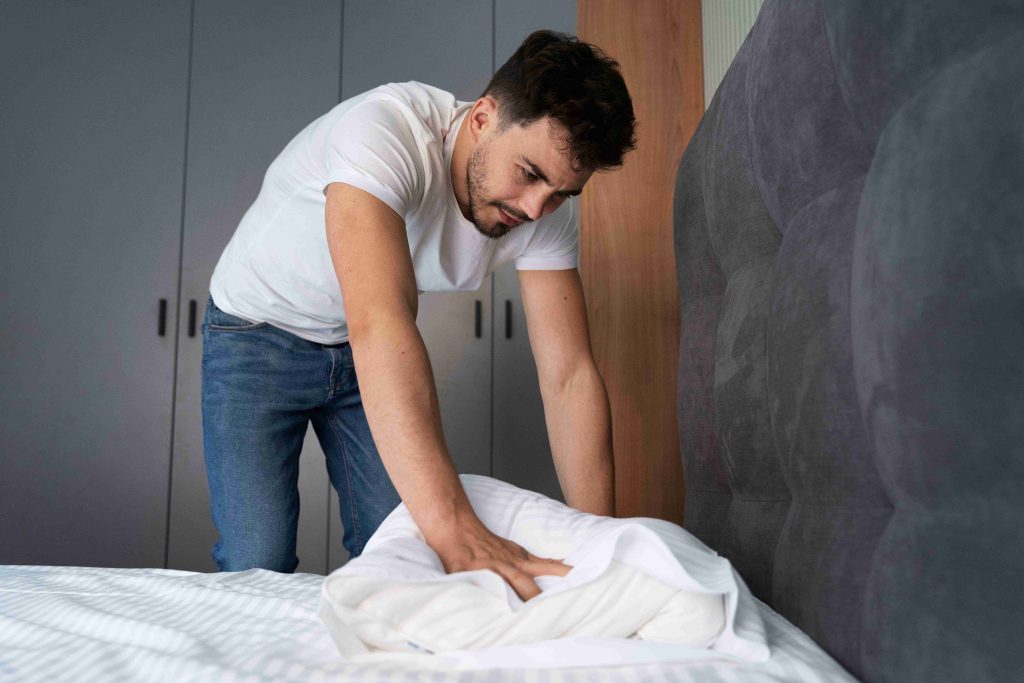
To protect your investment further and maximize their lifespan, regular maintenance should be performed on your pillows – including cleaning and checking for tears or wear & tear every few months, along with periodic deep cleanings. By following these simple procedures, you will help keep yourself safe from potential illnesses caused by contaminated materials and extend the life of your pillow investment.
- Regular cleaning: Clean your pillows every few months, even if you haven’t been exposed to any illnesses. Regular cleaning helps remove dust, allergens, and sweat that can accumulate over time. Follow the cleaning instructions specific to your pillow’s material and type.
- Spot cleaning: Treat any stains promptly to prevent them from setting in. Use a mild detergent or stain remover suitable for your pillow’s fabric. Gently blot the stained area with a clean cloth or sponge, and avoid rubbing vigorously to prevent spreading the stain.
- Checking for tears or wear & tear: Inspect your pillows regularly for any signs of damage, such as tears, loose seams, or flattened areas. If you notice any significant wear and tear, it may be time to replace the pillow to maintain proper support and hygiene.
- Pillow protectors: Consider using pillow protectors to shield your pillows from spills, stains, dust mites, and other allergens. Pillow protectors are typically breathable and washable, making them an additional barrier between your pillow and potential contaminants.
- Rotation: Rotate your pillows regularly, especially if you sleep in the same position every night. This helps distribute the weight and pressure evenly, reducing the chances of lumps or flattening in specific areas.
- Sunning: Occasionally, take advantage of a sunny day and expose your pillows to direct sunlight. Sunlight can help naturally freshen and disinfect pillows. However, be mindful of any care instructions that may advise against sun exposure for certain pillow types.
- Fluffing: Fluff your pillows regularly to maintain their shape and loft. This is particularly important for down or feather-filled pillows. Gently knead or fluff them by hand to restore their fluffiness and provide optimal support.
- Follow care instructions: Make sure to follow the care instructions provided on the pillow’s label. Different pillow materials and constructions may require specific care methods to maintain their integrity.
Wrapping Up
It’s important to know how to sanitize pillows after covid exposure to keep your pillows clean and free of dirt, dust, and germs. Sanitizing them after exposure to COVID-19 is an essential part of staying healthy. By following the steps outlined above—gathering materials, cleaning, disinfecting, and drying—you can help protect yourself and those around you from potential illnesses associated with coronavirus.
For expert restoration, cleaning, and sanitizing services, contact PuroClean. Our team is here to help you restore your property to its best condition. Reach out to us today!