 PuroClean Certified Restoration Specialists

Key Takeaways
- Many common household products contain the most dangerous chemical ingredients that can harm your health, pets, and home.
- Chemicals like bleach, ammonia, formaldehyde, phthalates, and triclosan can irritate the skin, lungs, or eyes and may cause long-term health problems.
- Even small amounts of hazardous chemicals can accumulate over time, so it’s important to recognize and avoid them.
- Safer alternatives such as vinegar, baking soda, castile soap, essential oils, and proper disinfectants can clean effectively without harmful risks.
- For spills, chemical buildup, or strong exposure, it’s safest to call professionals experienced in chemical cleanup.
Many of us use everyday cleaning products without thinking twice about what’s in them. But some of the most dangerous chemical ingredients are found in common items like bleach, air fresheners, and surface sprays. While they may help your home feel clean, these substances can irritate your skin, affect your breathing, or leave behind harmful residues.
When spills occur or chemical exposure accumulates over time, the risks can go beyond what regular cleaning can manage. In these situations, it’s helpful to know when to seek assistance from professionals who offer restoration services in Zephyrhills. This blog will guide you in identifying which of the most dangerous chemicals to avoid, understanding their potential dangers, and choosing safer, family-friendly alternatives.
What Makes a Household Chemical Dangerous?
Not all chemicals are harmful, but some can pose serious risks depending on how they are used, how toxic they are, and how long you’re exposed to them. Even small amounts of the most dangerous chemical ingredients can build up over time and cause health issues.
Here are some common signs that a household chemical may be dangerous:
- Toxic ingredients that can irritate your eyes, skin, or lungs
- Flammable or explosive properties that increase fire risk
- Reactive combinations, like bleach and ammonia, which can create toxic gases
- Long-term exposure risks, such as damage to the nervous system or respiratory problems
- Harm to children, pets, or those with allergies or asthma
- Damage to property, including floors, counters, and indoor air quality
Understanding these risks is the first step toward creating a safer, healthier home. That’s why replacing hazardous products with safer alternatives matters.
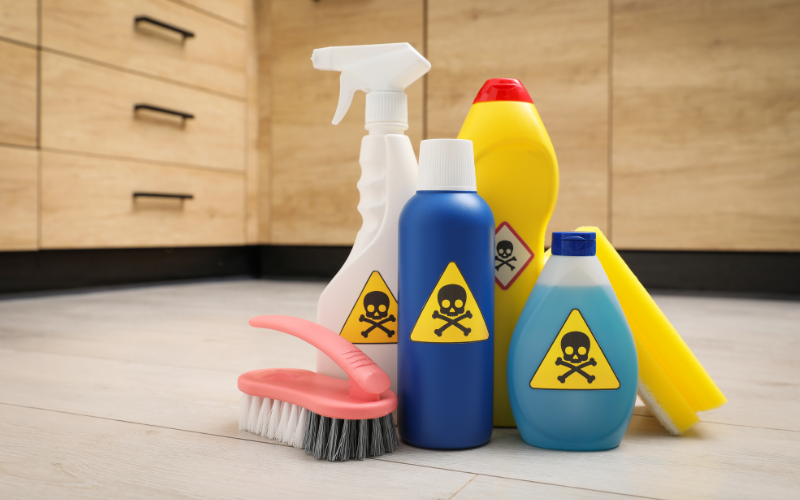
Top 5 Most Dangerous Chemicals Commonly Found in Homes
Many of us have products in our homes that seem harmless but actually contain ingredients that can be risky. Below are five of the most dangerous chemical substances often found in household items, along with how they can affect your health and your home.
- Bleach (Sodium Hypochlorite)
Bleach is found in many disinfectants, toilet cleaners, and mold removal products. While it is effective at killing germs, it can also cause skin burns, eye irritation, and breathing problems. The danger increases if bleach is accidentally mixed with other products like ammonia, which creates toxic fumes that are unsafe to inhale.
- Ammonia
Ammonia is commonly used in window cleaners, oven sprays, and floor cleaners. It has a strong odor and releases fumes that can irritate your lungs and eyes. When combined with bleach, ammonia becomes extremely hazardous, producing a poisonous gas that can be life-threatening in enclosed spaces.
- Formaldehyde
Formaldehyde is often found in air fresheners, household cleaners, and even some types of furniture made from pressed wood. It is a known respiratory irritant and has been classified as a potential carcinogen when people are exposed to it for long periods.
- Phthalates
Phthalates are hidden in many scented products like candles, air fresheners, and personal care items. These chemicals are linked to hormone disruption and reproductive health problems. The tricky part is that they are not always listed on product labels, which makes them easy to overlook.
- Triclosan
Triclosan is an ingredient in some antibacterial soaps, toothpaste, and other cleaning items. It may seem helpful, but it can contribute to antibiotic resistance and harm aquatic life once it goes down the drain. Long-term exposure may also pose health concerns for people.
These chemicals are more common in homes than most people realize. Learning what they are and where they show up is a key step in removing them and protecting your household from unnecessary harm.
Helpful Tips and Safer Alternatives to Common Household Chemicals
Once you know what to look out for, replacing harmful products becomes much easier. You don’t have to give up a clean home to stay safe. Choosing healthier alternatives helps protect your family, pets, and even your property from the effects of the most dangerous chemical ingredients found in many store-bought cleaners.
Here are a few smart tips and swaps to help you get started:
- Always check the labels. Look for terms like “non-toxic,” “biodegradable,” or “natural.” Be cautious of products with warnings like “hazard,” “corrosive,” or “flammable.”
- Try vinegar and baking soda for cleaning. These common items work well for scrubbing kitchen and bathroom surfaces without harmful fumes.
- Use castile soap for everyday chores. This gentle, plant-based soap is great for cleaning counters, dishes, and even floors.
- Skip synthetic air fresheners. Freshen your space with essential oils, open windows, or simmer citrus peels and herbs on the stove.
- Go for safer disinfectants. Hydrogen peroxide and rubbing alcohol (used correctly) can clean without the risks associated with bleach.
- Dispose of chemical products responsibly. Never pour them down the drain or throw them in your regular trash. Use your local hazardous waste services, or consider hiring professionals if you’re unsure.
When chemical buildup, spills, or contamination happen, it’s not always safe to handle on your own. In these situations, it’s best to call a professional who specializes in biohazard cleanup for chemical exposure to make sure your home is thoroughly and safely cleaned.
Frequently Asked Questions
Can I just throw old cleaning products in the trash?
Not always. Many cleaning products contain hazardous ingredients and should never be poured down the drain or tossed in the regular trash. Some may contain the most dangerous chemical compounds found in household items, which require special handling. Always check with your local waste facility or consult professionals trained in biohazard cleanup if you’re unsure.
Are natural or green cleaning products always safe?
Not necessarily. While they tend to be safer, it’s still important to read the label. Some “green” products may contain fragrances or preservatives that can cause allergic reactions.
What are the signs that chemical exposure is affecting my health?
Symptoms like headaches, dizziness, nausea, eye irritation, coughing, or skin rashes can all be signs of chemical exposure. If these symptoms improve when you leave the area, it could be linked to one of the most dangerous chemical ingredients found in everyday cleaning products. Long-term exposure may lead to more serious health concerns, especially for people with asthma or other sensitivities.
How do I clean safely if I have asthma or allergies?
Choose fragrance-free and hypoallergenic cleaning products, and wear gloves or a mask when using them. Ventilate the area well and avoid spray products, which can linger in the air. If strong fumes or spills occur, consider calling a professional experienced in chemical spill cleanup.
Final Thoughts
It’s easy to overlook the risks hiding in everyday cleaning supplies and household products. But as we’ve seen, even a small amount of the most dangerous chemical can cause health problems, damage your home, or create an unsafe environment for your family. Replacing toxic products with safer alternatives is one of the simplest ways to create a healthier space.
Dealing with chemical spills or lingering fumes in your home can be overwhelming, and sometimes it’s just not safe to handle alone. When you need a fast, professional response to protect your space and your health, contact us at PuroClean Zephyrhills. We’re here to help with trusted restoration services that bring your home back to clean, safe, and livable, quickly and with care!
 PuroClean Certified Restoration Specialists