


Table of Contents
Knowing how to clean your dryer vent can help your dryer work more efficiently and reduce a preventable fire hazard in your home. The basic process involves disconnecting the dryer, removing the vent hose, clearing lint from the hose and wall duct, cleaning the lint trap area, and checking the exterior vent before reconnecting everything.
For homeowners in Wolf Creek, GA, adding dryer vent cleaning to a regular home-maintenance routine can help prevent lint buildup and identify damaged or restricted venting before it becomes a larger problem.
Why Is Dryer Vent Cleaning Important?
Every time you dry clothes, lint passes through the dryer’s filtration and ventilation system. The lint trap captures much of it, but some particles can travel into the dryer duct and gradually accumulate.
According to the U.S. Fire Administration (USFA), failure to clean is one of the leading factors associated with residential clothes dryer fires. The USFA provides additional guidance on preventing clothes dryer fires, making it a useful external safety resource for homeowners.
Keeping the dryer vent clear can provide several benefits:
- Lower fire risk. Removing combustible lint reduces the amount of material that could ignite if the dryer overheats.
- Better airflow. A clear exhaust path allows hot, moist air to leave the appliance properly.
- Shorter drying times. Restricted airflow can make clothes take longer to dry.
- Less strain on the dryer. A dryer that does not have to work through a clogged vent may operate more efficiently.
Signs Your Dryer Vent May Need Cleaning
You do not always need to see lint inside the duct to know there may be a problem. Changes in how the dryer operates can provide warning signs.
| Normal Dryer Operation | Possible Clogged Dryer Vent |
|---|---|
| Clothes dry within the usual cycle | Clothes require multiple cycles |
| Dryer feels normally warm | Dryer or laundry feels unusually hot |
| Exterior vent has steady airflow | Little or no airflow outside |
| Minimal lint around the dryer | Lint accumulates behind or around appliance |
| No unusual odor | Hot or burning smell develops |
If you notice overheating, a burning smell, or another serious electrical or fire concern, stop using the appliance until it can be inspected.
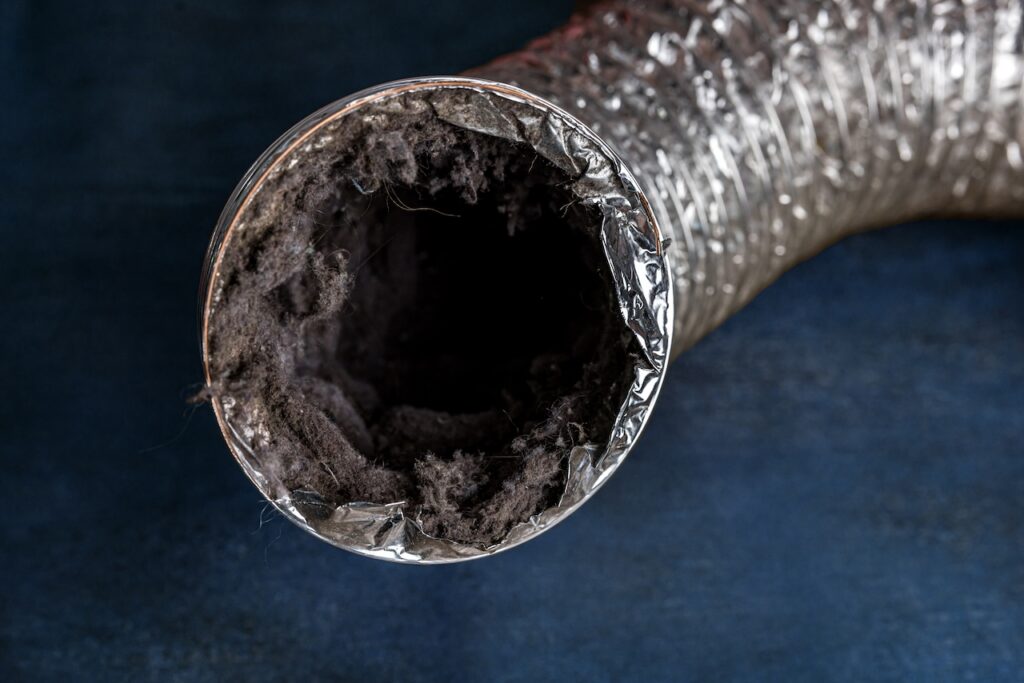
Vent hoses can fill with debris and become a hazard if not properly maintained.
How to Clean Your Dryer Vent Step by Step
For many accessible residential dryer vents, basic cleaning can be completed with a dryer vent brush, vacuum, screwdriver, and a few simple precautions.
1. Gather Your Dryer Vent Cleaning Tools
Before moving the appliance, gather what you need. A typical dryer vent cleaning setup includes a flexible vent brush or dryer vent cleaning kit, vacuum cleaner with a hose attachment, screwdriver, and flashlight.
Having everything ready helps you avoid leaving the dryer disconnected longer than necessary.
2. Disconnect the Dryer
Turn the dryer off and unplug it from the electrical outlet before working behind it.
For a gas dryer, additional care is required. If moving the appliance could affect the gas connection or you are unsure how to safely shut off and restore the gas supply, contact a qualified professional instead of disconnecting it yourself.
3. Pull the Dryer Away From the Wall
Carefully move the dryer far enough from the wall to access the exhaust duct.
Avoid crushing, stretching, or sharply bending the vent hose. Damaged or compressed venting can restrict airflow even after the lint has been removed.
4. Disconnect and Clean the Vent Hose
Loosen the clamp or fastener connecting the vent hose to the dryer.
Once disconnected, use a vent brush to remove lint from inside the hose. A vacuum attachment can help collect loosened debris around both openings.
Inspect the hose while cleaning it. If you notice significant damage, crushing, or deterioration, replacement may be safer than simply reconnecting it.
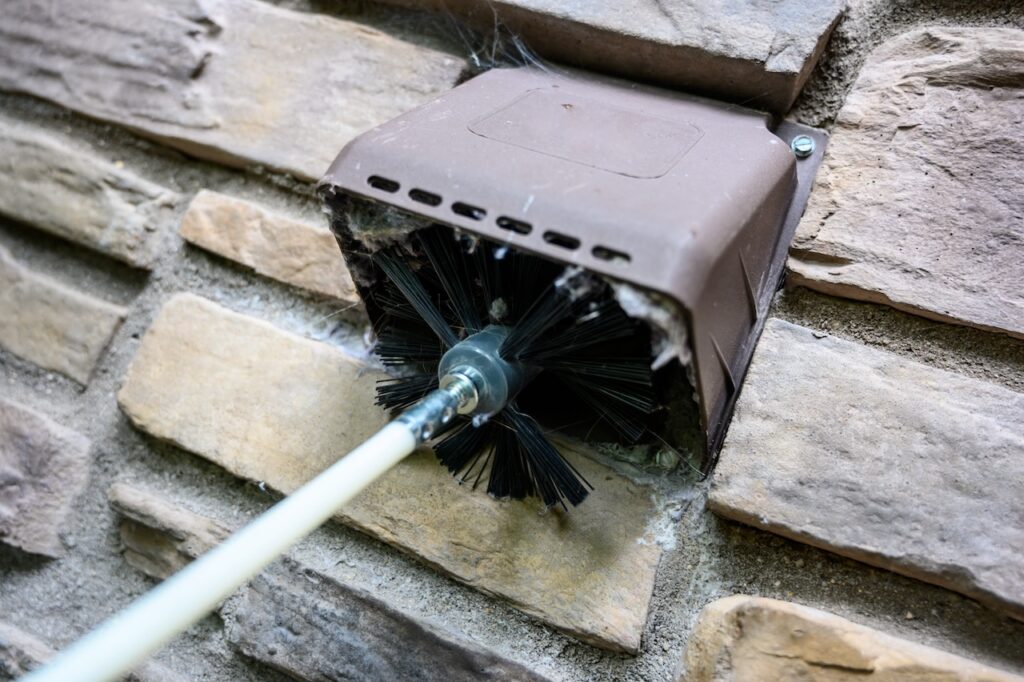
Remove the vent’s cap to dust and vacuum the area inside.
5. Clean the Wall Dryer Vent
Insert the dryer vent brush carefully into the wall duct and rotate or move it gently to loosen accumulated lint.
Work progressively deeper rather than forcing the brush into the duct. Vacuum any material you can safely reach at the opening.
Long, complicated, or inaccessible duct systems may require professional cleaning equipment.
6. Check the Exterior Dryer Vent
Locate the exterior exhaust opening and remove visible lint, leaves, or debris that may be blocking airflow.
The vent flap should be able to open when the dryer operates and close when it is off. A damaged or obstructed exterior vent can contribute to poor airflow even when the interior duct is clean.
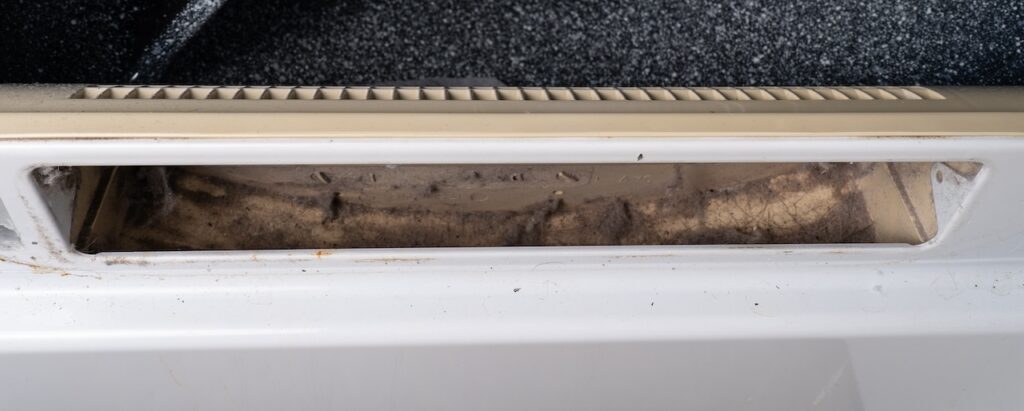
Cleaning the lint trap is crucial, as is cleaning the area underneath the trap.
7. Clean the Lint Trap Area
Remove the dryer lint screen and clear all visible lint.
You can also carefully vacuum around the accessible lint trap opening. Cleaning the lint screen after each load remains one of the easiest ways to reduce the amount of lint entering the ventilation system.
8. Reconnect and Test the Dryer
Reconnect the dryer vent securely and move the appliance back into position without crushing or sharply bending the duct.
Restore power and run the dryer briefly. Check the exterior vent to confirm that warm air is flowing normally.
How Often Should You Clean Your Dryer Vent?
There is no single schedule that applies to every home because lint accumulation depends on dryer usage, duct length, vent configuration, and the types of laundry being dried.
For many households, checking and cleaning the dryer vent approximately once a year is a reasonable maintenance routine. Homes that use the dryer frequently or have long duct runs may need more frequent attention.
Regardless of schedule, inspect the system sooner if:
- Clothes begin taking significantly longer to dry.
- The dryer becomes unusually hot.
- Airflow from the exterior vent becomes weak.
- You notice excessive lint around the appliance.
- A burning or unusually hot odor appears during operation.
When Should You Call a Professional?
Basic dryer vent cleaning can sometimes be handled by homeowners, but some situations should be left to professionals.
Consider professional assistance when the vent travels a long distance through walls or ceilings, the duct has multiple bends, the exterior outlet is difficult to reach, or airflow remains weak after basic cleaning.
You should also stop using the dryer and seek help if you suspect an electrical problem, overheating, gas-related issue, or previous fire damage.
Dryer Vent Cleaning and Fire Prevention
Learning how to clean your dryer vent is only one part of reducing fire hazards around laundry appliances.
The U.S. Fire Administration recommends keeping the dryer and surrounding area clear of combustible materials, cleaning the lint filter regularly, and ensuring exhaust systems are properly maintained. Their clothes dryer fire-safety resources are a useful authority to link to for additional homeowner guidance.
Smoke alarms should also be installed and maintained according to local fire-safety recommendations.
Need Help After Fire or Smoke Damage in Wolf Creek, GA?
Regular dryer maintenance can reduce risk, but household fires can still happen unexpectedly. If your Wolf Creek or Atlanta-area home experiences dryer-related, electrical, kitchen, or other fire damage, PuroClean can help with professional fire and smoke damage restoration.
Our trained technicians can assess the property, address smoke and soot contamination, and help guide the restoration process. Call (404) 682-5400 for assistance after fire or smoke damage.
Frequently Asked Questions
Q: How often should I clean my dryer vent?
A: Many homeowners should inspect and clean the dryer vent about once a year, but heavily used dryers or long ventilation systems may require more frequent cleaning. Longer drying times and weak exhaust airflow are signs that the vent should be checked sooner.
Q: How do I know if my dryer vent is clogged?
A: Common signs include clothes taking longer to dry, excessive heat, weak airflow from the exterior vent, lint collecting around the dryer, or a hot or burning odor. Stop using the appliance if you suspect overheating or another fire hazard.
Q: Can I clean a dryer vent myself?
A: Accessible dryer vents can often be cleaned using a vent brush and vacuum. However, long ducts, complicated vent systems, gas connections, or persistent airflow problems may require professional assistance.
Q: Can a clogged dryer vent cause a fire?
A: Lint is combustible, and accumulated lint can increase fire risk when combined with high temperatures or equipment problems. The U.S. Fire Administration identifies failure to clean among the important factors associated with residential dryer fires.
Q: Does cleaning the lint trap clean the dryer vent too?
A: No. The lint trap captures much of the lint created during drying, but some particles can still travel into the exhaust duct. Both the lint filter and ventilation system require maintenance.
Key Takeaways
- Learn how to clean your dryer vent by disconnecting the appliance, clearing the hose and duct, and inspecting the exterior vent.
- Lint buildup can restrict airflow and contribute to dryer fire risk.
- Longer drying times, excessive heat, and weak exterior airflow can indicate a clogged vent.
- Clean the lint filter after each load and inspect the full vent system regularly.
- Long or difficult-to-access dryer ducts may require professional cleaning.
- The U.S. Fire Administration is a useful authority for additional dryer and home fire-safety guidance.
- If a dryer fire causes property damage in Wolf Creek, GA, PuroClean can provide fire and smoke damage restoration services.