 PuroClean of Wolf Creek
Table of Contents
Mold growth can sometimes go undetected for many years, especially if hidden within walls, ceilings, or floors. More often than not, mold growth can be attributed to excess moisture and humidity in the air, water damage, and warm temperatures with little airflow. When mold growth becomes visible or has an odor, it’s essential to contact your local mold remediation specialist. Handling widespread mold growth safely, effectively, and efficiently is crucial to preventing the problem from resurfacing and protecting your family’s health.
This case study and guide will explain how mold grows, what happens when an infestation covers large sections of a property, and why professional remediation is essential for restoring your home and protecting your family’s health.
Case Study: Severe Mold Growth Covering 40 Square Feet in Fayetteville, GA
This past April, PuroClean of Wolf Creek responded to a call about a widespread mold problem in a Fayetteville home. The homeowner reported musty odors and visible discoloration across several rooms.
When our certified technicians arrived, we discovered that mold growth had spread over 40 square feet, affecting the kitchen, basement, and laundry room. The moisture originated from a long-standing leak behind the basement wall, combined with Georgia’s naturally humid air.
Our team immediately followed established IICRC (Institute of Inspection Cleaning and Restoration Certification) standards to ensure safe, efficient remediation.
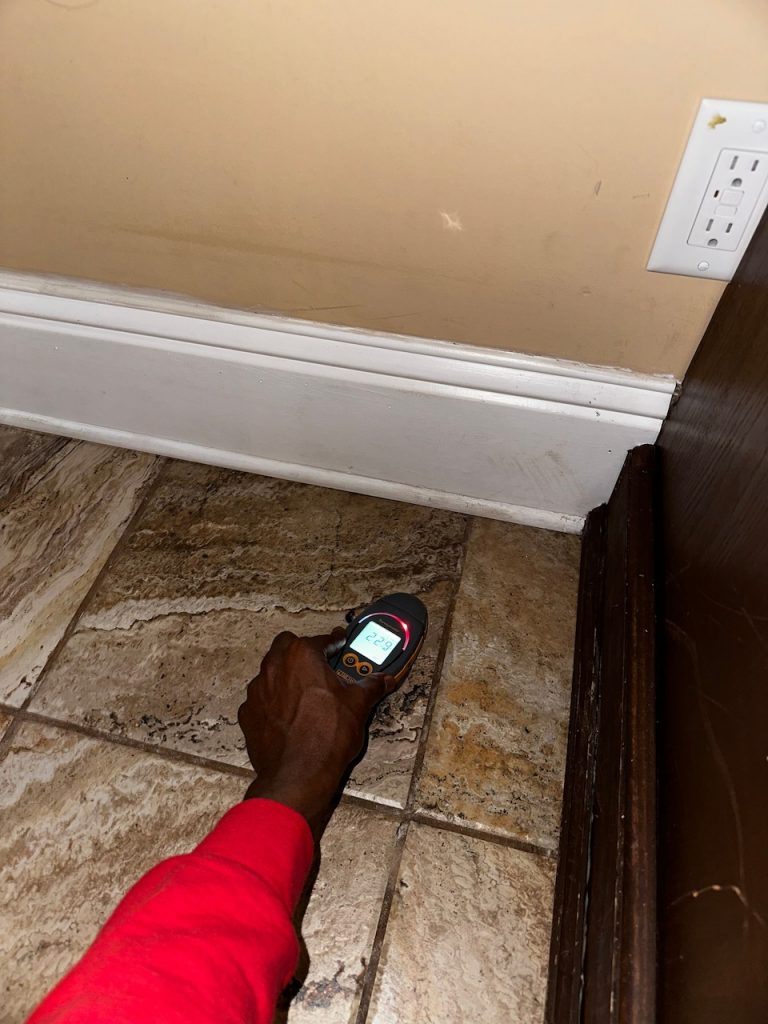
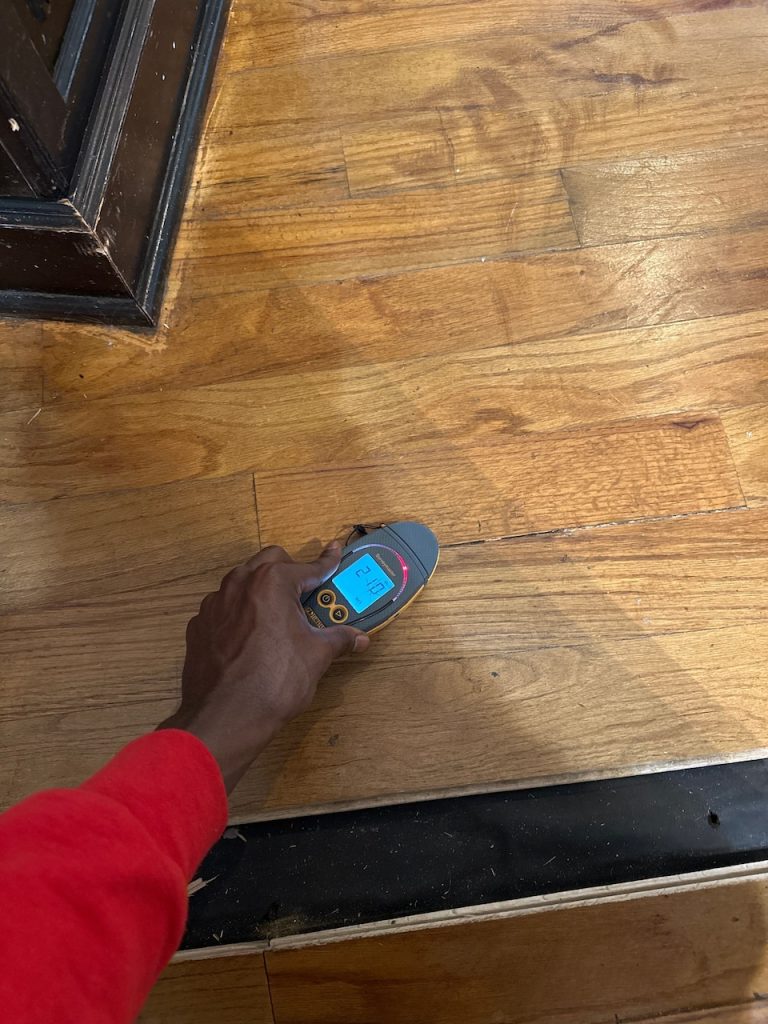
We used moisture meters to determine the moisture levels and possible mold growth beneath the flooring.
Step 1: Initial Assessment and Containment
We began by donning full personal protective equipment (PPE) — including respirators, gloves, and protective suits — to prevent exposure and cross-contamination. Using infrared cameras and moisture meters, our technicians identified moisture pockets inside walls, ceilings, and flooring.
Once we mapped the affected areas, we set up containment barriers using plastic sheeting and negative air pressure systems. This isolated the contaminated sections from the rest of the house, ensuring that mold spores wouldn’t spread through HVAC ducts or open doorways during cleanup.
We also installed HEPA air filtration devices to capture airborne mold particles in real time.
Step 2: Mold Removal and Cleaning
After containment, we removed compromised building materials — including drywall, insulation, and baseboards — that showed signs of deep mold penetration. These items were double-bagged and transported to an approved disposal facility, as per EPA and industry standards.
Next, our crew conducted a thorough HEPA vacuuming of all exposed surfaces to remove residual spores. We then applied an EPA-registered disinfectant to every affected surface to neutralize remaining microorganisms and prevent regrowth.
To ensure the property was safe, we ran HEPA air scrubbers for several hours after treatment and performed an air quality test, which showed passing results.
The remediation phase ended with a final inspection confirming that the property was safe, mold-free, and ready for reconstruction.
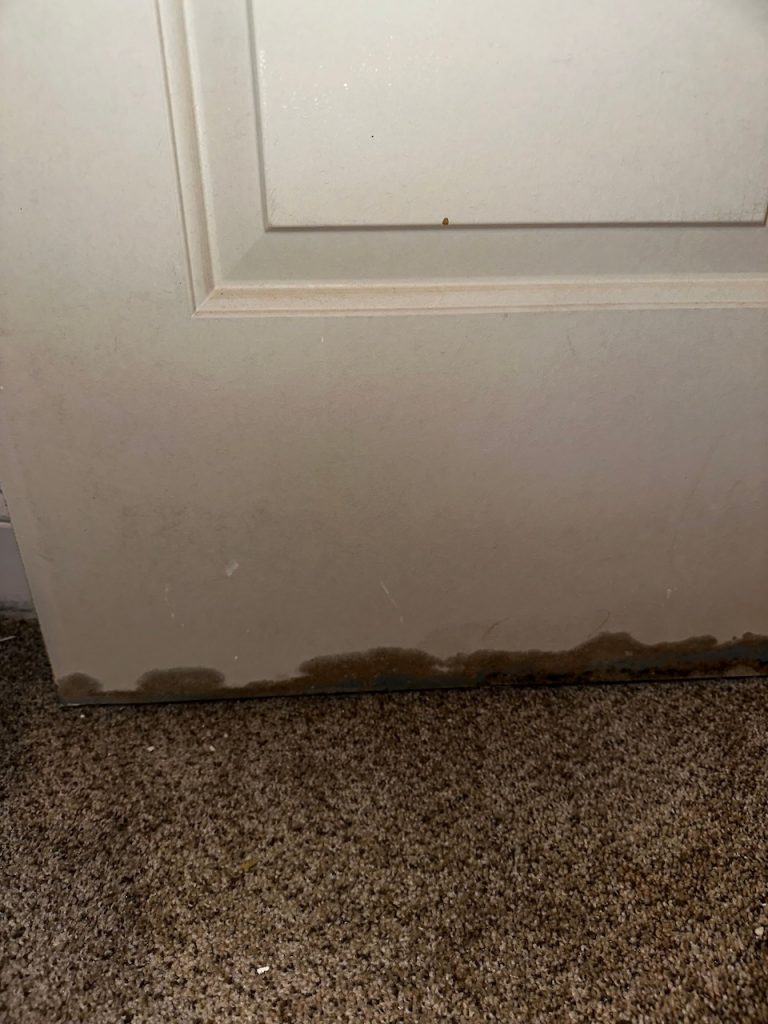
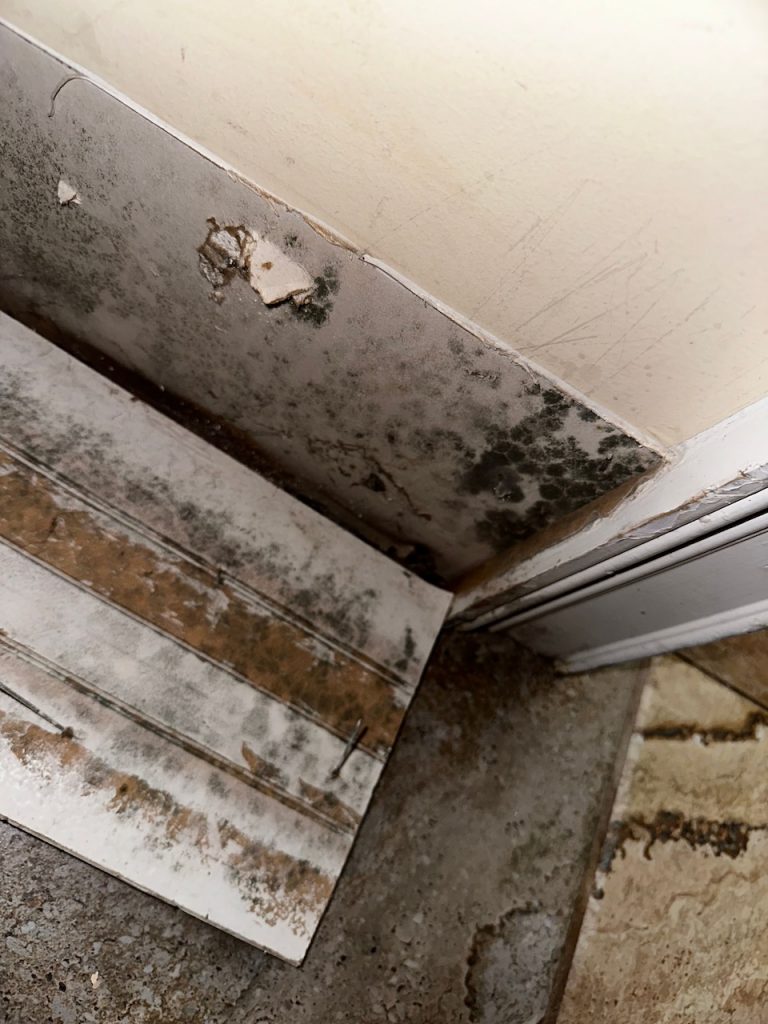
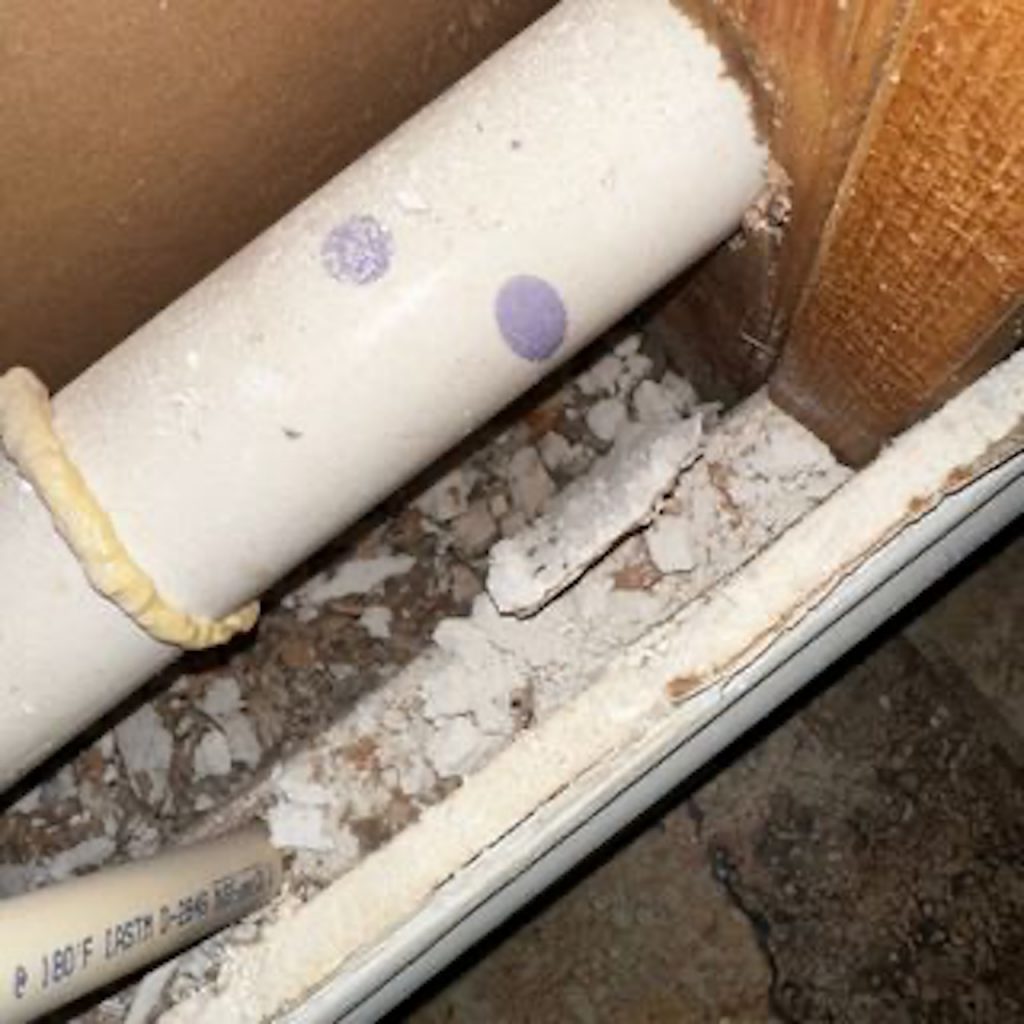
A closer look at the mold growth in the kitchen, basement, and laundry room.
Step 3: Dehumidification and Prevention
Even after mold removal, controlling moisture and humidity is critical to preventing future growth. In this Fayetteville project, we installed industrial-grade dehumidifiers to stabilize humidity levels and advised the homeowners to maintain indoor humidity between 30–50%.
We also recommended regular HVAC filter changes and the use of mold-resistant paint in previously affected rooms — a proactive step for long-term protection in Atlanta’s humid conditions.
Why Professional Mold Remediation Is Essential
While DIY methods may appear cost-effective, large-scale mold growth demands professional attention. Without specialized tools and containment procedures, attempting to clean extensive mold can release thousands of spores into the air, worsening contamination.
Key Reasons to Hire Certified Experts:
- Accurate Source Detection: Professionals use moisture meters and thermal imaging to locate hidden leaks or trapped humidity behind walls.
- Safe Removal Practices: Certified technicians follow IICRC and EPA standards to eliminate mold safely.
- Advanced Equipment: HEPA filters, air scrubbers, and negative air machines ensure complete air purification.
- Prevention and Documentation: Experts provide post-remediation testing and documentation for insurance and resale purposes.
At PuroClean of Wolf Creek, we combine advanced technology with local expertise to help homeowners in Atlanta, Fayetteville, and surrounding communities restore their homes after any size mold infestation.
Preventing Mold Growth in Atlanta Homes
The best way to control mold growth is to stop it before it starts. Atlanta’s naturally humid subtropical climate provides the perfect breeding ground for mold spores, especially during long summers and heavy rain seasons. Homeowners can significantly reduce the risk of mold by taking consistent, proactive steps to control moisture and improve ventilation throughout their properties.
- Keep indoor humidity between 30–50% year-round. High humidity is one of the leading causes of mold growth. Use a dehumidifier or smart thermostat to monitor and maintain ideal levels. This is particularly important during Atlanta’s summer months, when moisture levels in the air tend to rise sharply.
- Fix leaks in plumbing, roofs, and basements immediately. Even a small drip can create the perfect conditions for mold to grow behind walls or under floors. Regularly check under sinks, around windows, and near your water heater for signs of moisture. Prompt repairs can prevent major damage and costly remediation later.
- Use ventilation fans in kitchens, bathrooms, and laundry areas. These rooms generate a large amount of moisture from cooking, bathing, and washing. Turn on exhaust fans during and after use to help release humid air outside rather than letting it settle on walls and ceilings.
- Clean and inspect gutters to prevent water intrusion. Clogged or damaged gutters can cause rainwater to pool near your foundation, eventually seeping into basements or crawl spaces. In Atlanta, where heavy storms are common, routine gutter maintenance is a simple but effective step for preventing water-related mold problems.
- Schedule periodic professional inspections after heavy rain or flooding. Mold can start forming within 24–48 hours after water exposure. If your home experiences a leak, flood, or severe storm, schedule an inspection with a certified restoration professional like PuroClean of Wolf Creek. We use advanced tools such as infrared cameras and moisture meters to detect hidden dampness before it turns into a mold problem.
Finally, choose mold-resistant building materials whenever possible. Products like mold-resistant drywall, insulation, and paint offer long-term protection and are particularly beneficial in moisture-prone areas such as basements, bathrooms, and laundry rooms. Taking these precautions helps Atlanta homeowners stay ahead of potential mold growth and ensures a cleaner, safer, and more comfortable living environment year-round.
Contact Us
Mold growth can compromise your home’s safety, air quality, and structure — often before you even notice it. When left untreated, it spreads fast and creates costly damage that simple cleaning cannot fix.
If you discover or suspect mold in your Atlanta home, don’t wait. Contact PuroClean of Wolf Creek — your local, IICRC-certified experts in mold remediation, removal, and prevention.
Our team uses advanced testing tools, HEPA filtration, and EPA-approved disinfectants to eliminate mold safely and effectively. Whether the infestation is small or widespread, we’ll restore your property and peace of mind.
Call PuroClean of Wolf Creek today at (404) 682-5400 or visit our website to schedule an inspection and breathe easier in a healthier home.
FAQs About Mold Growth and Remediation
1. How quickly can mold grow after water damage?
Mold can begin developing within 24 to 48 hours after moisture exposure. The faster the area is dried, the lower the risk of an outbreak.
2. Is all mold dangerous?
Not all mold species are toxic, but all can trigger allergic reactions or respiratory irritation. Black mold (Stachybotrys chartarum) is particularly concerning.
3. Can mold come back after remediation?
If the underlying moisture problem isn’t resolved, yes. Professional remediation focuses on both removal and prevention.
4. How long does mold remediation take?
Most residential projects take 2–5 days, depending on contamination size and air-drying needs.
5. Does homeowner’s insurance cover mold remediation?
Coverage varies, but many policies include mold cleanup if caused by a covered water damage event. Always confirm with your provider.
Summary
- Mold thrives in Atlanta’s humid environment, often hidden behind walls or floors.
- Large infestations require professional containment and HEPA air filtration.
- PuroClean of Wolf Creek follows IICRC and EPA standards for complete remediation.
- Prevention includes controlling humidity, fixing leaks, and using mold-resistant materials.
- For reliable, fast, and safe mold removal, trust PuroClean of Wolf Creek.
Read more on the subject:


 PuroClean of Wolf Creek