24/7 Emergency Services in Auburn, Maine
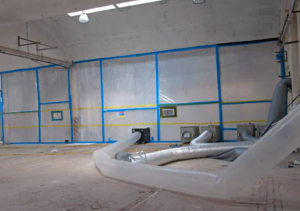
For property managers, mold is a liability and an indoor air quality problem—not a surface-level cleaning task. PuroClean of Auburn identifies the moisture source, contains the work area with negative air, and documents clearance so you can make defensible re-occupancy decisions.
In commercial buildings, mold is often a symptom of unresolved moisture in concealed cavities, shared assemblies, or lower-level areas—creating recurring complaints and health-liability risk. Treating visible growth without correcting the source can lead to re-growth, expanded scope, and disruption for tenants and operations. Professional remediation focuses on containment, air quality control, and clearance documentation to support risk-managed re-entry.
When drainage overload or seepage affects lower levels, moisture can migrate into wall cavities, flooring systems, and insulation where it’s not immediately visible. We locate and document moisture pathways, isolate affected zones with containment and negative air, and remediate impacted materials so residents and staff aren’t exposed to uncontrolled dust and spores.
Local humidity conditions can slow drying and allow secondary microbial growth in concealed spaces even after an initial cleanup. We verify drying with targeted moisture monitoring, address the moisture source, and use protocol-based remediation—then provide clearance-oriented documentation to support indoor air quality concerns.
In shared-wall properties, moisture can remain trapped in insulation and assemblies between suites, increasing the chance of missed wet materials and cross-complaints. We define a controlled scope, coordinate access, and maintain containment integrity so unaffected areas stay protected during remediation.
commercial and mixed-use spaces, multi-tenant/shared-wall properties
We build a remediation plan around scope control: isolating affected areas, maintaining negative air pressure, and using controlled pathways for debris removal to protect occupants and adjacent spaces. For property managers, this supports tenant continuity by keeping unaffected zones cleaner and reducing complaint risk. Work can be sequenced by area to align with access windows and tenant coordination, while maintaining documentation and communication throughout the project.
For commercial stakeholders, we provide documentation that supports decision-making and claim conversations: photos, scope notes, and moisture findings tied to the remediation plan and post-work condition. We can communicate progress in a structured cadence so owners, managers, and other parties understand what was affected, what was removed/cleaned, and what verification steps were completed. If insurance is involved, this record helps reduce back-and-forth and supports a clearer path to closure.
In the Auburn-area market, humidity can slow drying and increase secondary mold risk when moisture is trapped behind finishes or within subfloor/wall cavities—making verification and targeted drying more important, not less. Lower-level seepage patterns also mean mold can originate away from the first visible staining, so source-driven scoping helps prevent repeat events and tenant re-complaints. These conditions make professional containment and clearance-oriented documentation particularly valuable for multi-tenant properties.
PuroClean of Auburn brings a commercial-first remediation workflow designed around liability control, indoor air quality protection, and defensible re-occupancy decisions. Our team follows professional remediation protocols with disciplined containment and negative air practices to protect adjacent spaces and occupants. To start planning a controlled, documented response, contact us at (207) 531-1200.
What Our Customers Say:
Find answers to common questions about our services
We help define affected vs. unaffected areas, establish controlled access pathways, and coordinate with property management on notifications and entry schedules. Containment boundaries and negative air are used to reduce migration risk into common areas and neighboring suites. Communication is structured so tenants know where work is happening and what precautions are in place.
We can provide a project record that typically includes photos, notes on findings and scope, and moisture/verification information tied to the work performed. The goal is to support owner reporting, tenant communications, and (when applicable) insurance conversations. Documentation also helps justify re-occupancy decisions and reduces repeat disputes about what was addressed.
Cleaning usually focuses on visible surfaces, which can leave the underlying moisture problem and concealed growth unaddressed. Professional remediation is a controlled process: identify and correct the moisture source, establish containment with negative air, remove/clean impacted materials using appropriate methods, and verify the space is ready for re-occupancy. This approach is designed to reduce re-growth and liability.
The moisture source must be identified and addressed as part of the remediation plan—either before or in parallel—because remediation without moisture correction is temporary. We prioritize a source-driven scope so work isn’t repeated. Where immediate permanent repair isn’t possible, we document interim controls and verification steps to reduce the chance of amplification.
We focus on scope control and isolation so unaffected areas can remain in use where safe and appropriate. Containment, negative air, and controlled debris handling help protect adjacent operations. Phasing by area and coordinated access windows can reduce disruption for tenants and staff.
Often, yes—especially when tenant access and noise/dust sensitivity are key concerns. We’ll review building rules, access logistics, and containment needs to determine what scheduling options make sense. The priority remains maintaining containment integrity and safe work practices regardless of schedule.
A single water loss can ripple through your entire business — affecting tenants, disrupting workflows, and risking long-term structural damage. We deploy 24/7 with commercial-grade equipment and expertise to protect your property and keep your business running. You don’t have time for guesswork — you need a team that arrives fast, understands commercial environments, and gets your facility stabilized without delay.
Call Our Commercial Response Team at
(207) 531-1200
Contact Us
PuroClean of Auburn
(207) 531-1200
328 Rodman Road, Auburn, ME 04210


© 2026 PuroClean. All Rights Reserved.