



Walking through your front door should provide a sense of relief and comfort. It is the place where you unwind, share meals with family, and rest. However, when that first breath of indoor air carries a heavy, earthy, or pungent odor, that comfort quickly vanishes. A musty smell is more than just a nuisance. It is a biological red flag that something is wrong within the structural environment of your home.
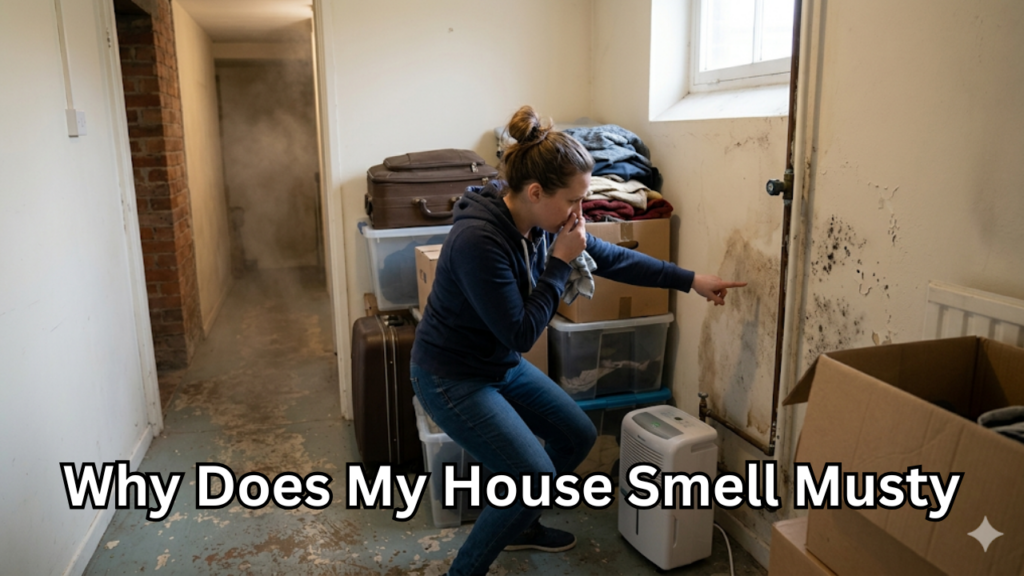
For homeowners in Baldwin and the surrounding communities, moisture management is a constant battle. Between the humid summer air and the damp winters, your property is frequently exposed to conditions that favor microbial growth. While many people attempt to mask these odors with candles, sprays, or plug-in air fresheners, these are temporary fixes for a potentially permanent problem. Understanding the source of the “old basement” smell is the first step in protecting both your property value and your health.
What Exactly Is That Musty Smell?
To solve the problem, you first have to understand what you are actually smelling. That distinct, damp odor is not just “old air.” It is the scent of Microbial Volatile Organic Compounds, or mVOCs. These are chemical compounds produced by mold, mildew, and bacteria as they go through their metabolic cycles.
Think of it this way: when mold is actively growing and consuming organic material like your drywall, wood framing, or carpet backing, it releases gases as a byproduct. When you catch a whiff of a musty scent, you are literally smelling the byproduct of a biological colony thriving in your home. This is why the smell persists even after you open the windows for an hour. As long as the colony is active, the gas production continues.
Read Also: Does Insurance Cover Water Damage in Nassau and Long Island Baldwin?
The Difference Between Musty and Moldy
While people often use these terms interchangeably, there is a subtle distinction in the industry:
Moldy: This is a sharper, more pungent odor. It can smell like rotting wood or fermented socks. This usually indicates an active, established colony that is deep into its growth cycle.
Musty: Often associated with the early stages of decay or high humidity. It smells like damp cardboard or a wet dog. It suggests that the environment is “ripe” for mold but might not have a massive visible colony yet.
Common Culprits: Where Is the Smell Coming From?
If your home has developed a persistent odor, the source is likely hidden. Mold and mildew do not enjoy the spotlight. They thrive in dark, stagnant, and damp areas. Here are the most common places we find the root cause of musty odors in Baldwin homes.
1. The Hidden World of the Crawlspace
Many homes in our area are built on crawlspaces. Because these areas are out of sight, they are often out of mind. However, a dirt floor or an improperly sealed crawlspace is a massive source of moisture. Ground moisture evaporates and rises into the floor joists and insulation. This creates a perfect breeding ground for mold. Because of the stack effect, air from the crawlspace is naturally pulled upward into the living areas of your home. If your crawlspace smells, your living room eventually will too.
2. Leaky Windows and Poor Flashing
Sometimes the source is inside your walls. If windows were not flashed correctly during installation, rainwater can seep into the wall cavity every time it storms. This moisture gets trapped between the exterior siding and the interior drywall. You might not see a puddle on the floor, but the insulation becomes a damp sponge. Over time, this leads to “ghost odors” where a room smells terrible but looks perfectly clean.
3. High Indoor Humidity
In the height of a New York summer, the humidity can be stifling. If your Air Conditioning (AC) system is oversized or not functioning correctly, it may cool the air without properly dehumidifying it. When indoor humidity stays above 60 percent, porous materials like books, curtains, and upholstery begin to absorb moisture from the air. This creates a surface level “must” that can permeate an entire floor of a home.
4. Slow Plumbing Leaks
Not every leak is a burst pipe. A pinhole leak in a supply line or a slow drip under a kitchen sink can go unnoticed for months. By the time you notice a slight warping of the cabinet base or a faint smell when you open the cupboard, the mold has likely already taken hold of the drywall behind the cabinetry.
Read Also: Signs You Have Hidden Water Damage Behind Walls
When Is a Musty Smell a Serious Problem?
It is easy to dismiss a musty smell as a quirk of an older home. However, there are specific signs that indicate the situation has moved from a minor inconvenience to a serious structural or health risk.
The Appearance of Visible Growth
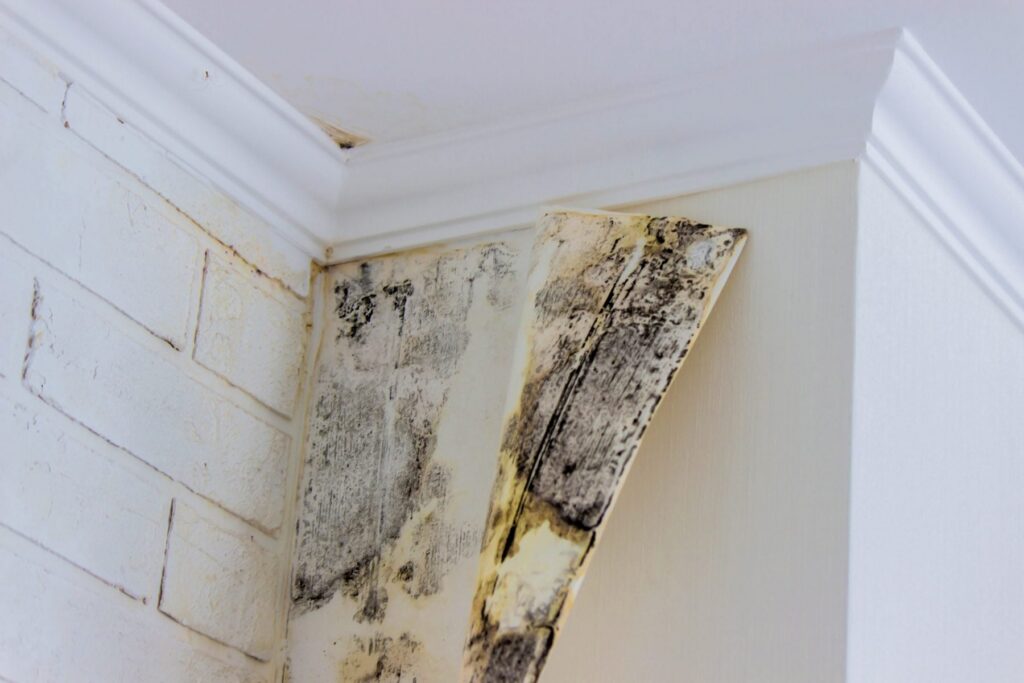
If you see black, green, or white fuzzy patches on your walls, baseboards, or ceiling, the “musty smell” has officially graduated to a mold infestation. Visible mold is often just the tip of the iceberg. For every square inch of mold you see on the surface, there could be significantly more growing on the backside of the drywall.
Physical Health Symptoms
Your body is often a better sensor than your nose. If you or your family members experience the following symptoms only when inside the house, the air quality is likely compromised:
- Frequent sneezing or nasal congestion.
- Itchy, watery eyes.
- Unexplained headaches that clear up when you go to work or outdoors.
- Increased frequency of asthma attacks.
- Skin rashes or irritation.
Warping and Structural Damage
Moisture that causes odors also causes physical decay. If you notice that your hardwood floors are cupping, your wallpaper is peeling, or your drywall feels soft to the touch, the moisture levels are high enough to compromise the integrity of your home. Rotting wood framing can lead to expensive structural repairs if the moisture source is not stopped immediately.
The Danger of DIY Solutions
When faced with a musty smell, many homeowners reach for a bottle of bleach. This is one of the most common mistakes in property restoration. While bleach can kill mold on non-porous surfaces like tile or glass, it is ineffective on porous materials like wood or drywall.
Mold has “roots” called hyphae. Bleach is mostly water. When you spray bleach on a wooden joist, the chlorine stays on the surface while the water soaks in, actually feeding the mold roots deep inside the material. Within a few weeks, the mold returns stronger than before.
Furthermore, “fogging” a room with store bought deodorizers only masks the mVOCs. It does nothing to address the moisture source or the living colonies. To truly eliminate the smell, you must follow the industry standard: Identify, Contain, Remove, and Dry.
How Professionals Address the Odor
When you call a professional restoration team like PuroClean of Baldwin, we do not just bring in a fan and a bottle of cleaner. We use a scientific approach to “olfactory restoration” and mold remediation.
Moisture Mapping
We use infrared cameras and moisture meters to find the water. We can see through walls to identify exactly where a leak is located or where insulation is damp. By finding the “why” behind the smell, we ensure it does not come back.
Professional Grade Air Scrubbing
We utilize HEPA air scrubbers that cycle the air in your home several times per hour. These machines pull microscopic mold spores and odor causing gases out of the air, passing them through a multi stage filtration system.
HEPA Vacuuming and Controlled Removal
If mold is present, it must be physically removed. We use HEPA vacuums to capture spores without spreading them to other rooms. If materials like drywall or carpet are too contaminated to save, we remove them under negative pressure containment to protect the rest of your home.
Advanced Deodorization
For lingering odors, we may use technology such as Hydroxyl generators or Ozone machines (in unoccupied spaces). These tools work at a molecular level to break down the compounds causing the smell, rather than just covering them up.
Read Also: Sump Pump Failure: What Baldwin Homeowners Should Know
Preventive Measures for Baldwin Homeowners
Once the smell is gone, you want to keep it that way. Maintenance is the best defense against musty odors.
- Maintain Humidity: Keep your indoor humidity between 30 and 50 percent. Use a hygrometer (a cheap tool available at hardware stores) to monitor levels.
- Check Your Sump Pump: Ensure your sump pump is working correctly, especially before the rainy season. A basement flood is the fastest way to ruin your indoor air quality.
- Clean Your Gutters: Clogged gutters cause water to pool at your foundation. This water eventually finds its way into your basement or crawlspace.
- Improve Ventilation: Use exhaust fans in bathrooms and kitchens. Ensure your clothes dryer is vented correctly to the outside, not into an attic or crawlspace.
Conclusion: Take a Breath of Fresh AirA musty smell is a message from your home that it needs help. Ignoring it can lead to mounting repair costs and potential health issues for your loved ones. You do not have to live with the “old house” smell.If you have noticed a persistent odor in your basement, attic, or living area, it is time to bring in the experts. At PuroClean of Baldwin, we specialize in identifying the root cause of odors and providing permanent solutions. Our team is trained to handle moisture problems of all sizes with the latest technology and a commitment to your safety.
Do not let mold and moisture take over your sanctuary. Address the problem today so you can breathe easy tomorrow. If you are ready to restore the freshness of your home, contact us for a professional assessment. We are here to help you navigate the process from initial inspection to final deodorization.
Connect With Us on Social Media!


