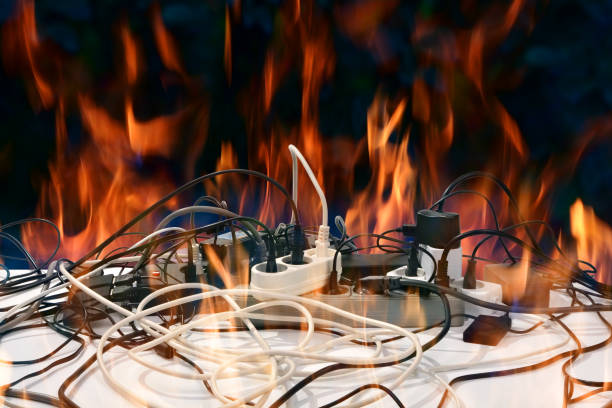
Holiday decorating starts in earnest after Thanksgiving, and extension cords end up behind trees, sofas, and rugs. One overloaded or damaged cord can turn into an extension cord fire hazard in minutes. Most homeowners never check their cords until something smells hot.
The risk is real in Bloomington. If a cord fire damages your home, PuroClean of Bloomington offers 24/7 fire damage restoration, including smoke and soot cleanup.
This guide covers seven warning signs of an extension cord fire hazard. It also explains safe cord habits, holiday light tips, and what to do if a cord overheats.
Quick answer: Unplug any cord that feels hot, smells like burning plastic, or shows cracks, scorch marks, or exposed wires. Never run cords under rugs or chain them together. Use extension cords only for temporary needs, and never with space heaters.
Why Cord Safety Matters Before the Holidays
Bloomington knows this risk too well. A fatal house fire on Eastholme Avenue in November 2025 was traced to an electrical cord buried under debris. Fire officials also found no smoke alarms in the home.
The U.S. Fire Administration estimates about 47,000 home electrical fires happen each year. Half involve home wiring or lighting equipment. Electrical fire deaths peak in December and January, right when holiday lights and heaters come out.
An extension cord fire hazard often builds slowly. Heat damages the insulation over weeks, and then one more plug pushes the cord past its limit. Spotting the early signs gives you time to act.
7 Warning Signs of an Extension Cord Fire Hazard
1. The Cord Feels Warm or Hot
A cord should never feel more than slightly warm. Heat means the cord is carrying more power than it was built for. Unplug it right away and check what is plugged in. A hot cord is the clearest extension cord fire hazard you can find.
2. Scorch Marks or Discoloration
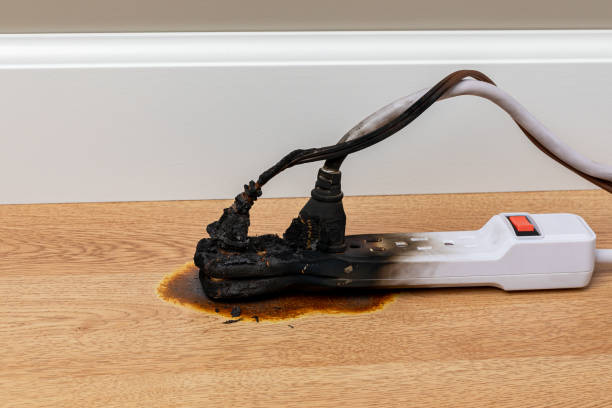
Look at the plug, the outlet, and the cord jacket. Brown or black marks mean heat has already damaged the plastic. Melted or misshapen plugs are another red flag. Replace the cord and have an electrician check the outlet.
3. A Burning Smell
A sharp smell like burning plastic or rubber needs attention fast. Follow your nose to outlets, power strips, and cords behind furniture. Unplug anything near the smell. If the odor stays, shut off the circuit and call an electrician.
4. Cracks, Fraying, or Exposed Wires
Old cords dry out and crack, especially in cold garages and attics. Pets may chew cords, and furniture can crush them. Any exposed copper creates an extension cord fire hazard and a shock risk. Throw the cord away rather than taping it.
5. Buzzing, Crackling, or Flickering Lights
Electricity should be silent. Buzzing or crackling at a plug points to a loose or damaged connection. Flickering lights on the cord can mean the same thing. Stop using that cord and outlet until they are checked.
6. Loose Plugs or Bent Prongs
A plug that wobbles or falls out of the outlet creates heat at the contact point. Bent or missing prongs are just as risky. Never remove the third prong to fit a two-prong outlet. A loose fit is a quiet extension cord fire hazard.
7. Cords Hidden Under Rugs or Furniture
Cords under rugs trap heat and get crushed by foot traffic. You cannot see the damage until it is too late. Cords pinched behind heavy furniture face the same problem. Any hidden cord can become an extension cord fire hazard.
Safe vs Risky Cord Habits
Small habits make a big difference. Use this table to check your home:
| Habit | Safe or risky | Why |
| Using a cord for holiday lights for a few weeks | Safe | Extension cords are meant for temporary use |
| Plugging a space heater into an extension cord | Risky | Heat-producing appliances can overload cords |
| Chaining two cords together | Risky | Connections add heat and resistance |
| Using outdoor-rated cords outside | Safe | They resist moisture and cold |
| Running a cord under a rug | Risky | Heat builds up and damage stays hidden |
| Stapling a cord to a baseboard | Risky | Staples can cut the insulation |
| Using a cord rated for the load | Safe | The cord can handle the power safely |
If you need a cord every day in the same spot, you likely need another outlet. A licensed electrician can add one safely. That removes a long-term extension cord fire hazard from your home.
Holiday Lights and Outdoor Cords
Holiday displays put more cords to work than any other time of year. They also face rain, snow, and freezing nights. A few checks lower the risk of an extension cord fire hazard outside:
- Use only cords and lights labeled for outdoor use.
- Plug outdoor lights into GFCI-protected outlets.
- Keep connections off the ground and away from snow and puddles.
- Check light strings for broken bulbs and damaged wires.
- Turn off lights before bed and when you leave home.
- Store light strings loosely so wires do not kink or crack.
Indoors, keep cords away from tree water, curtains, and paper decorations. A timer helps make sure lights do not run all night. Light cords chewed by pets are an extension cord fire hazard too, so check them often.
What to Do If a Cord Overheats or Sparks
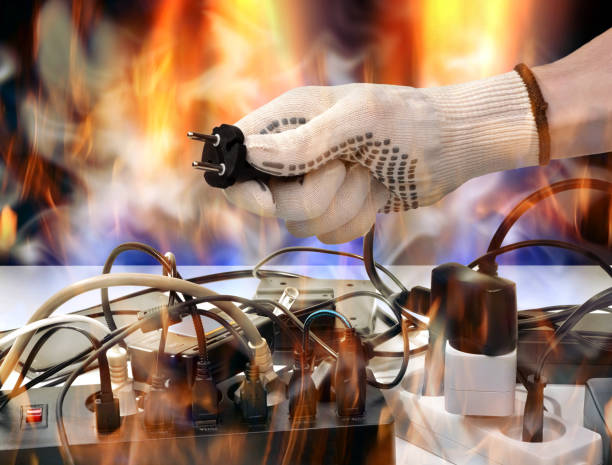
Act fast if you see sparks, smoke, or melting plastic. Follow these steps:
- Do not touch a smoking cord. Shut off the breaker for that circuit first.
- Unplug the cord once the power is off, if it is safe to do so.
- Use a Class C or multipurpose extinguisher on a small electrical fire. Never use water.
- Get everyone out if flames spread, and call 911 from outside.
- Have an electrician inspect the outlet and wiring before using it again.
Even a small cord fire can leave soot inside walls and on nearby surfaces. Smoke odor can also spread through ducts. Treat every sparking cord as an extension cord fire hazard, even if it seems fine afterward.
After a Cord Fire: Smoke and Soot
Electrical fires often burn plastic, which leaves oily, dark soot. That residue can stain walls and leave a sharp odor. Wiping it the wrong way can smear it deeper.
Professional fire restoration usually includes the steps below. Each one targets damage that an extension cord fire hazard can leave behind:
- Soot removal matched to the type of residue
- Deodorization that targets odor at the source
- Contents cleaning for furniture, fabrics, and electronics
- Water extraction and drying if firefighters used water
Our guide to holiday cooking fires covers another big fire risk this season. Both risks rise as families gather and cook more.
How to Prevent an Extension Cord Fire Hazard
Prevention starts with using cords the right way. The Electrical Safety Foundation International recommends these habits:
- Choose a cord long enough for the job instead of chaining cords together.
- Buy cords certified by a testing lab such as UL, ETL, or CSA.
- Match the cord rating to indoor or outdoor use and the device’s power needs.
- Keep cords out of walkways and away from rugs and furniture.
- Never nail, staple, or pinch cords against walls.
- Insert plugs fully so no prongs are exposed.
Test your smoke alarms this week as well. Working alarms give your family time to escape if a fire starts. Then walk through each room and look for any extension cord fire hazard you missed.
PuroClean of Bloomington Is Ready 24/7
PuroClean of Bloomington helps families across Bloomington-Normal after electrical and house fires. We remove soot, eliminate smoke odor, and document damage for your insurance claim. Call (309) 433-0900 any time, day or night.
Frequently Asked Questions
What makes an extension cord fire hazard?
Overloading, damage, and heat buildup are the main causes. Cords under rugs or chained together add to the risk.
Can I plug a space heater into an extension cord?
No. Plug heaters and other heat-producing appliances directly into a wall outlet.
How do I know if a cord is overloaded?
The cord feels warm, the plug gets hot, or breakers trip. Unplug some devices and move them to another circuit.
Is a power strip safer than an extension cord?
A power strip with a built-in breaker adds protection. It still should not power heaters or chain into another strip.
How long can I leave an extension cord plugged in?
Extension cords are meant for temporary use. If you need one every day, add an outlet.
Does insurance cover a fire from an extension cord?
Many policies cover sudden accidental fires. Call your insurer and take photos before you start cleaning.
Final Thoughts on an Extension Cord Fire Hazard
An extension cord fire hazard is easy to miss and easy to fix. Check cords for heat, damage, and hidden spots before you decorate. Replace anything worn, and keep heaters on wall outlets.
If a fire damages your home, call PuroClean of Bloomington at (309) 433-0900. We are ready 24/7.