


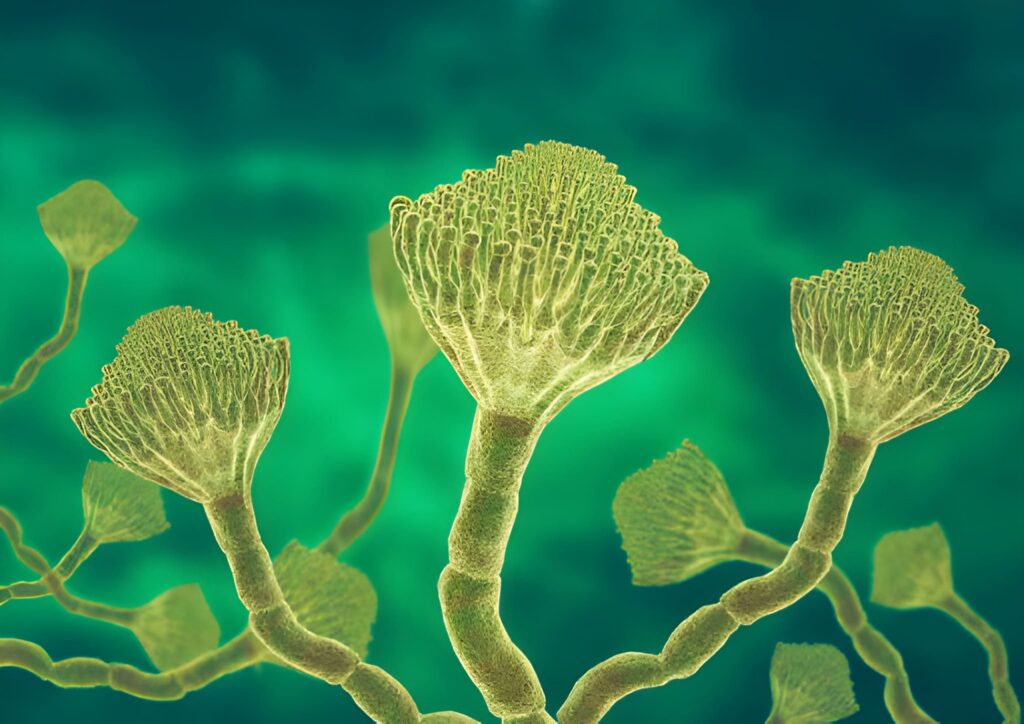
If you’ve been told your home may have mycotoxins — or you’re dealing with lingering symptoms, musty odors, or mold problems that never seem fully resolved, this guide explains what mycotoxins are, why they’re so difficult to eliminate, and how to get rid of mycotoxins in the home — especially for people with mold sensitivity or heightened health concerns.
However, it’s important to understand one thing clearly:
Mycotoxins are not the same as mold, and getting rid of them requires a very specific approach.
We’ll cover
What Are Mycotoxins?
Mycotoxins are microscopic toxic compounds produced by certain types of mold as a byproduct of their growth. Unlike mold spores, mycotoxins are not living organisms — they are chemical toxins that can remain behind even after visible mold has been disturbed or removed.
This is why some people continue to experience problems even after a basic mold cleanup or surface treatment. The mold may be gone, but the toxic residue can still be present in dust, porous materials, and HVAC systems.
Why Mycotoxins Are So Hard to Eliminate
One of the biggest misconceptions about mycotoxins is that they can be “killed” or neutralized with household cleaners, foggers, or air fresheners. Unfortunately, this approach often makes things worse.
Here’s why mycotoxins are difficult to deal with:
- They can bind to dust particles and spread throughout the home
- They can persist after mold is disturbed or improperly cleaned
- They often remain embedded in porous materials like drywall, carpet, insulation, and soft furnishings
- They are not always detected by standard mold testing alone
Because of this, surface cleaning alone is rarely enough — and improper cleanup can actually increase exposure by redistributing contaminated dust.
How to get rid of mycotoxins in the home:
Step One: Eliminate the Moisture and Mold Source
Mycotoxins do not exist in a vacuum. They are the result of active or past mold growth, which means moisture is always part of the equation.
Effective remediation starts with:
- Identifying and correcting water intrusion, leaks, or humidity issues
- Addressing condensation, poor ventilation, or HVAC imbalances
- Ensuring indoor humidity is consistently controlled
Without moisture control, no remediation — no matter how thorough — will hold long-term.
Step Two: Proper Containment and Controlled Removal
Homes with suspected mycotoxin issues require controlled remediation, not demolition-style tear-outs or casual cleaning.
Professional remediation should include:
- Physical containment to prevent cross-contamination
- Negative air pressure to control airborne particles
- HEPA-filtered air scrubbers to capture microscopic debris
- HEPA vacuuming of all affected surfaces
This process is critical because mycotoxins are often attached to extremely fine particles that can easily become airborne during cleanup if not properly controlled.
Step Three: Removal of Contaminated Materials
Some materials simply cannot be cleaned effectively once contaminated. In these cases, removal is the safest and most responsible option.
This commonly includes:
- Water-damaged drywall
- Mold-affected insulation
- Carpeting and padding
- Porous building materials that cannot be fully decontaminated
Attempting to “save” these materials often leads to ongoing exposure and repeated remediation failures.
Step Four: Detailed Cleaning and Post-Remediation Protocols
After mold removal, detailed environmental cleaning is essential to address residual contamination.
This goes far beyond standard cleaning and may include:
- Multiple rounds of HEPA vacuuming
- Damp wiping of all hard surfaces
- Cleaning of HVAC components and duct surfaces as needed
- Targeted air filtration to reduce remaining particulates
For individuals with mold sensitivity, these post-remediation steps are often what make the difference between partial improvement and real relief.
Why Certification and Training Matter — Especially for Mold Sensitivity
Not all mold remediation is created equal.
Homes affected by mycotoxins — particularly when health symptoms are involved — require specialized knowledge, training, and protocols. This is where professional accreditation becomes critical.
Our team holds NORMI (National Organization of Remediators and Microbial Inspectors) accreditation, including advanced training focused on environments where mold sensitivity is a concern.
This means our work is guided by:
- Building science and moisture dynamics
- Controlled remediation methodologies
- Clear remediation verification standards
- Protocols designed to reduce residual contamination — not just visible mold
NORMI-based remediation emphasizes restoring indoor environments to expected, normal conditions, not simply passing a visual inspection.
How We Help Homeowners Dealing With Mycotoxins
If you suspect mycotoxins in your home — or you’ve already tried to address mold and still don’t feel confident in the results — we help by:
- Identifying moisture and mold sources that are often missed
- Implementing controlled remediation to prevent cross-contamination
- Removing affected materials safely and responsibly
- Performing detailed post-remediation cleaning and air control
- Applying protocols aligned with NORMI mold-sensitivity standards
Our role is not to guess, rush, or apply one-size-fits-all solutions. It’s to methodically reduce contamination, protect the living space, and restore confidence in the environment.
The Bottom Line
Mycotoxins are not a surface-level problem, and they cannot be solved with shortcuts. Learning how to get rid of mycotoxins in the home often involves addressing the issues correctly from a root cause.
In summary, how to get rid of mycotoxins in the home requires:
- Moisture control
- Proper containment
- Physical removal of contamination
- Detailed environmental cleaning
- Trained, certified professionals who understand mold sensitivity
If you’re serious about creating a healthier indoor environment — especially after repeated mold issues or unexplained symptoms — working with a NORMI-accredited remediation team ensures the process is handled with the level of care, precision, and accountability it truly requires.
Contact PuroClean of Bradenton today to learn proven strategies on how to get rid of mycotoxins in the home. Call 941-877-2288 for professional help or visit our contact page today.