


If you’ve recently seen headlines about the new CDC’s mold study warning about deadly mold infections, you may be asking yourself:
“Should I be worried about the mold in my home?”
It’s a fair question.
Yes, mold can be harmful to your health. According to the Centers for Disease Control and Prevention (CDC), exposure to mold can cause allergy symptoms, worsen asthma, and irritate the eyes, nose, throat, and lungs.
The recent CDC’s mold study has also highlighted that certain invasive mold infections can be life-threatening for people with severely weakened immune systems.
Simply put, mold can be harmful to your health but the risks depend on who is exposed, how much mold is present, and the underlying health of the individual.
The recent CDC study has understandably raised concerns, but many news articles have left homeowners with more questions than answers. Does finding mold after a roof leak mean your family is in danger? Is every type of mold dangerous? Should you throw everything away if you discover mold in your walls?
This guide explains what the CDC’s research actually found, what it means for Florida homeowners, and why acting quickly after water damage remains one of the best ways to protect both your property and your health.
Why Did the CDC Conduct This New Mold Study?
Researchers wanted to better understand Invasive Mold Diseases (IMDs), serious fungal infections that occur when certain types of mold invade the body rather than simply causing irritation or allergies.
According to the CDC’s study, these infections may be more common than previously recognized because they are not routinely tracked nationwide. Researchers reviewed patients treated across multiple hospitals over several years to better understand how often these infections occur, who is most affected, and the outcomes for those patients.
The goal wasn’t to alarm homeowners. It was to improve the recognition and treatment of severe fungal infections in healthcare settings.
What Is an Invasive Mold Infection?
An invasive mold infection occurs when fungal spores enter the body and begin growing inside organs such as the lungs, sinuses, bloodstream, or, in rare cases, the brain.
These infections almost always occur in people whose immune systems cannot effectively fight the fungus.
What Did the CDC Actually Find?
The study examined patients diagnosed with invasive mold diseases between 2020 and 2024.
Researchers found that approximately one in three patients with these infections died during their hospitalization.
Most of these patients already had significant medical conditions that placed them at exceptionally high risk, including:
- Organ transplants
- Blood cancers such as leukemia
- Bone marrow transplants
- Chemotherapy treatment
- Advanced immune suppression
- Severe illnesses, including some recent COVID-19 infections
The study further highlights how dangerous invasive fungal infections can be for medically vulnerable patients and why early recognition is so important.
Does This Mean the Mold in My Home Is Dangerous?
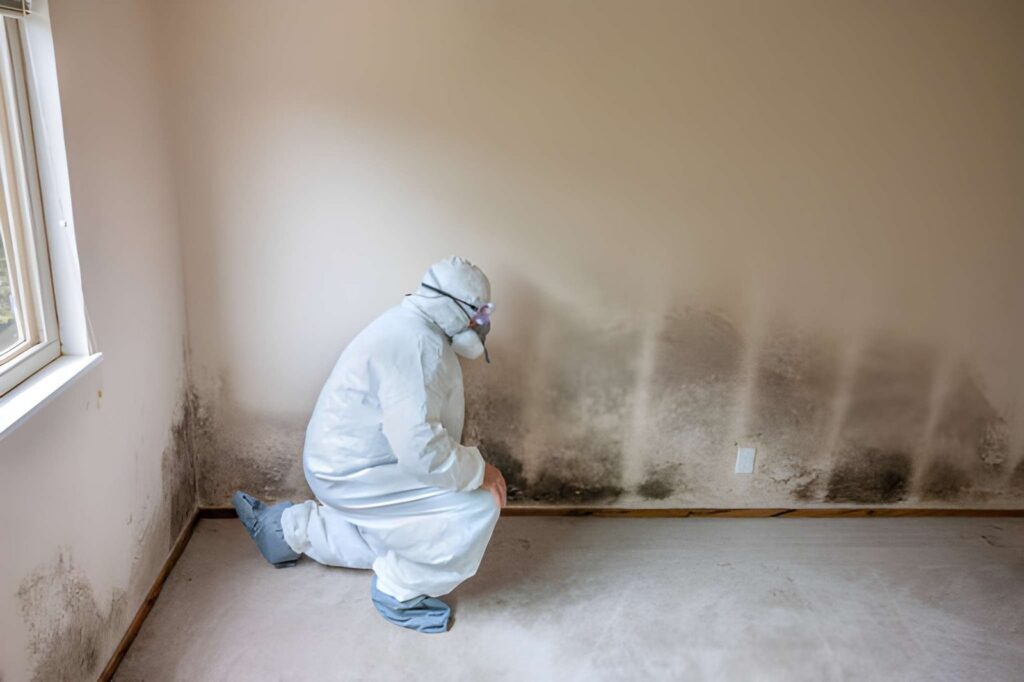
Visible mold almost always tells us something else is wrong. It means moisture has been present long enough for mold to begin growing. Left untreated, mold colonies continue to expand, releasing spores into the indoor environment and increasing exposure over time.
Ignoring mold can allow both the damage and the cleanup costs to grow.
Can Mold Inside My Home Make Me Sick? Yes. According to the CDC’s mold study, exposure to damp or moldy indoor environments has been linked to a variety of health problems.
Common symptoms include:
- Sneezing
- Runny nose
- Nasal congestion
- Persistent coughing
- Wheezing
- Eye irritation
- Skin irritation
- Sore throat
- Asthma flare-ups
Some people experience symptoms almost immediately, while others notice problems only after prolonged exposure. Even if symptoms seem mild at first, persistent moisture inside a home should always be addressed.
Can Mold Cause Long-Term Health Problems?
Yes. Ongoing exposure to mold may contribute to chronic respiratory irritation, recurring allergy symptoms, and worsening asthma.
Researchers continue to study the long-term health effects of prolonged mold exposure, but one recommendation has remained consistent for years:
The CDC’s mold study advises removing mold and correcting the moisture problem that allowed it to grow. Simply cleaning visible mold without fixing the water source often allows it to return.
Who Is Most at Risk From Mold?
Some people are far more vulnerable to mold than others. Higher-risk groups include:
- Adults over 65
- Babies and young children
- People with asthma
- Individuals with chronic lung disease
- Organ transplant recipients
- Cancer patients receiving chemotherapy
- People taking medications that suppress the immune system
If someone in your household falls into one of these groups, addressing mold quickly becomes even more important.
What Types of Mold Was the CDC’s Mold Study Talking About?
The CDC’s mold study primarily focused on fungi such as Aspergillus and members of the Mucorales group.
These organisms exist naturally in the environment and can be found both indoors and outdoors.
Finding Aspergillus in your environment does not automatically mean someone will develop an invasive infection.
In healthy people, the immune system usually removes these spores without causing illness. The concern arises when medically vulnerable individuals cannot effectively fight the infection.
Frequently asked questions about mold
Can Water Damage Increase the Risk of Mold? Absolutely. Mold doesn’t appear without moisture.
That’s why mold commonly follows:
- Heavy Florida rain
- Hurricanes and tropical storms
- Burst pipes
- Roof leaks
- Appliance failures
- Overflowing toilets
- Air conditioning leaks
- Flooding
In Florida’s warm, humid climate, mold can begin growing within 24 to 48 hours if wet materials are not properly dried. That’s why rapid water mitigation is so important. The faster moisture is removed, the less opportunity mold has to spread.
Why Does Florida Have More Mold Problems Than Many Other States?
Florida offers nearly perfect conditions for mold growth.
Our region combines:
- High humidity
- Frequent rainfall
- Hurricane season
- Warm temperatures throughout much of the year
Even small plumbing leaks can become larger mold problems if moisture remains trapped behind drywall or beneath flooring.
That’s one reason professional drying equipment and moisture detection are often necessary after significant water damage.
If My Home Looks Dry, Could Mold Still Be Growing? Yes. Water often hides inside building materials long after surfaces appear dry. Moisture can remain inside drywall, insulation, cabinets, wood framing, ceiling cavities or flooring systems
By the time mold becomes visible, it may have already spread behind finished surfaces.
Professional moisture mapping helps identify hidden moisture before it leads to larger problems.
Can I Just Clean Mold With Bleach? No. Bleach may remove staining from some hard, non-porous surfaces. However, it usually does not solve mold growing inside porous materials such as drywall, insulation, or untreated wood.
More importantly, bleach does not eliminate the moisture that allowed mold to develop in the first place.
Without correcting the underlying water problem, mold often returns.
Does Every Mold Problem Need Professional Remediation? No. Small amounts of surface mold on non-porous materials may sometimes be cleaned safely.
Professional remediation becomes much more important when:
- Mold covers a large area.
- Mold keeps returning.
- The home has experienced flooding.
- Mold is suspected behind walls or ceilings.
- HVAC systems may be affected.
- Occupants have compromised immune systems or significant respiratory conditions.
Every situation is different, but every mold problem deserves investigation to determine why it developed.
What Should I Do If I’ve Had Water Damage?
If your home has experienced water damage, time matters.
The first priority is stopping the source of the water. The next step is thoroughly drying affected materials using proper moisture detection equipment, not simply waiting for surfaces to feel dry.
Professional water damage mitigation typically includes:
- Water extraction
- Commercial dehumidification
- Structural drying
- Moisture mapping
- Ongoing monitoring to verify that building materials reach appropriate drying goals
Acting quickly can dramatically reduce the likelihood of mold developing.
So, Can Mold Be Harmful to Your Health?
Yes. The latest CDC’s mold study reminds us that mold deserves attention, especially for people with weakened immune systems who face a much greater risk of serious fungal infections.
For most healthy people, mold exposure is far more likely to cause allergy symptoms, respiratory irritation, or worsen asthma than to cause invasive disease.
However, mold inside a home should never be dismissed as “just cosmetic.”
Mold is a warning sign that moisture is present where it shouldn’t be. Left unresolved, both the mold and the property damage are likely to worsen.
The encouraging news is that mold usually has one thing it cannot survive without: moisture.
Addressing water damage quickly, drying your property thoroughly, and correcting the source of the water remain the most effective ways to help protect both your home and your indoor environment.
Summary of the New CDC’s Mold Study:
Does the CDC say household mold causes deadly infections?
No. The CDC’s mold study focused on invasive mold diseases affecting primarily hospitalized patients with severely weakened immune systems. The study should not be interpreted as saying that ordinary household mold commonly causes deadly infections in healthy people.
Can mold make healthy people sick? Yes. Mold exposure can cause allergy symptoms, coughing, wheezing, eye irritation, skin irritation, and asthma flare-ups, even in otherwise healthy individuals.
How quickly can mold grow after water damage?
Under the right conditions, mold can begin growing within 24 to 48 hours after water intrusion.
Should I worry about mold after a hurricane or flood?
Yes. Flooding and storm damage significantly increase the risk of hidden moisture and mold growth. Prompt drying and moisture detection are essential to reduce that risk.
When should I call a professional for mold?
If mold covers a large area, returns after cleaning, follows flooding, may be hidden inside walls, or someone in your home has a weakened immune system or serious respiratory condition, it’s wise to have the situation professionally assessed.
Read the full article here: https://www.yahoo.com/news/science/articles/cdc-study-warns-threat-deadly-001510304.html
Need Help After Water Damage or Mold in Bradenton? Call 941-877-2288 today.
At PuroClean of Bradenton, we understand that discovering mold in your home can be stressful, especially after a storm, plumbing leak, or flood. Our IICRC-certified technicians provide 24/7 emergency water damage restoration, structural drying, moisture mapping, and professional mold remediation throughout Bradenton, Lakewood Ranch, Sarasota, Palmetto, Parrish, Ellenton, and the surrounding Gulf Coast communities.
Our goal isn’t just to remove visible mold. It’s to identify and eliminate the moisture source so you can move forward with confidence. If your property has experienced water damage, don’t wait for mold to become a bigger problem. Early action can make all the difference. Call 941-877-2288 today or fill this form to get started.