

Table of Contents
A death cleanup service is a specialized biohazard remediation process that involves the safe removal, disinfection, and deodorization of biological materials left behind after a death, including blood, bodily fluids, tissue, and decomposition byproducts. These services are performed by certified professionals following OSHA, EPA, and state health regulations. They are necessary because human remains contain dangerous pathogens that standard household cleaning cannot neutralize. In Bradenton, FL, PuroClean of Bradenton provides certified, compassionate death cleanup services available 24/7 to residential and commercial properties alike.
What Is a Death Cleanup Service?
Most people hear the phrase “death cleanup” and picture crime scenes from TV dramas. The reality is far more nuanced, and far more common than most people realize.
A death cleanup service is a professional biohazard remediation process that addresses the aftermath of a death; whether that was expected or sudden. This includes natural deaths, unattended deaths discovered days or weeks later, suicides, homicides, or any trauma involving bodily fluids.
What separates a death cleanup professional from a regular cleaning crew is training, certification, and regulatory compliance. These technicians are trained to follow OSHA’s Bloodborne Pathogens Standard, HAZWOPER safety protocols, and state-specific biomedical waste disposal laws.
In Florida, companies that transport more than 25 pounds of biomedical waste from a trauma scene must be permitted by the Florida Department of Health. PuroClean of Bradenton holds that permit and operates in full compliance with state law.
Death cleanup isn’t about scrubbing visible stains. It is a multi-phase process that addresses what the human eye cannot see: microscopic pathogens that survive on surfaces, in walls, in flooring, and even in the air.
Why You Should Never Attempt DIY Cleanup After a Death
This is possibly the most important section of this entire article, so read carefully.
When a loved one passes away; especially if they were not discovered immediately; the biological environment in that space becomes genuinely hazardous. Household bleach, mops, and rubber gloves are simply not equipped to handle what professionals are trained and geared to address.
Here is what most people do not understand: bloodborne pathogens like Hepatitis B, Hepatitis C, HIV, MRSA, and syphilis can survive on surfaces outside the human body for days, even weeks. If a surface is cleaned incorrectly, those pathogens are not neutralized; they are simply spread.
During decomposition, the body releases gases and biological fluids that saturate porous materials rapidly. Carpet padding, subfloor wood, drywall, insulation; all of these can absorb biological matter that bleach wiped on top of the surface will never reach. A surface can look completely clean and still harbor active infectious material underneath.
There are also legal consequences to consider. In Florida, improper disposal of biomedical waste is a violation of Florida Statute 381.0098. Homeowners or landlords who attempt DIY cleanup and then improperly discard contaminated materials (such as placing them in standard trash) can face significant legal and financial liability.
Beyond the physical and legal risks, there is the psychological toll. Cleaning up after someone you loved is not something any human being should have to do alone. It compounds grief in ways that can have lasting emotional consequences. Certified professionals are trained not just in biohazard cleanup, but in performing this work with discretion, respect, and quiet compassion for the family.

The Hidden Health Risks in a Death Scene
Let’s go deeper into the actual science, because understanding this changes everything.
When the human body begins to decompose, it passes through stages: fresh, bloat, active decay, and skeletonization. Each stage releases different biological hazards into the surrounding environment.
During the bloat stage, gases created by bacterial activity cause the body to expand and release purge fluid; a dark, foul-smelling liquid that seeps into any porous surface it contacts. This fluid contains enormous concentrations of bacteria.
In the active decay stage, the body loses mass rapidly and further liquefaction occurs. Fluids can penetrate floor boards, travel through cracks in concrete, and contaminate spaces that are physically separated from where the body was found.
The air itself becomes a vector. Bacteria released during decomposition can become airborne. Anyone entering an unaddressed death scene without proper respiratory protection is inhaling particles that carry serious infection risk; and that risk does not disappear simply because a day or two has passed.
Insects also complicate matters. Flies that enter a decomposition scene and then exit carry pathogens on their bodies. This is why professional teams establish a perimeter and contain the space before any remediation begins.
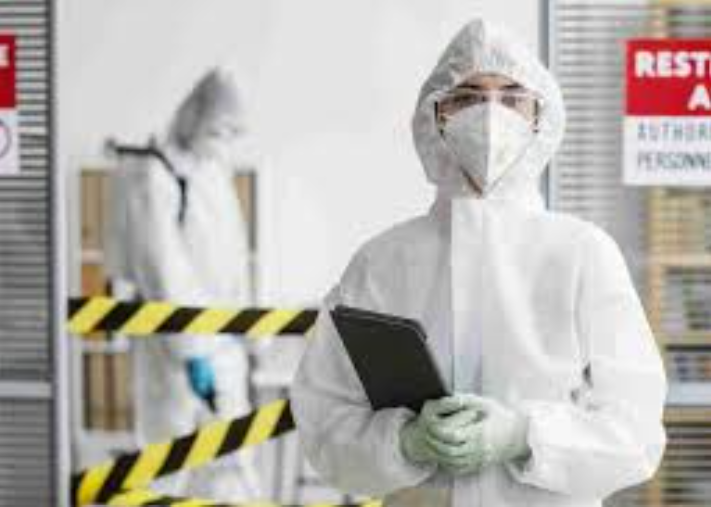
None of this is meant to cause alarm. It is meant to explain why the professionals who perform death cleanup service work in fully sealed protective suits, use respirators rated for biological hazards, and rely on hospital-grade EPA-registered disinfectants that are not available at your local hardware store.
What Certified Technicians Actually Do: Step-by-Step
Understanding what professionals actually do during a death cleanup service removes a lot of the mystery; and reassures families that the process is thorough.
Step 1: Scene Assessment Before a single piece of equipment is unpacked, the team conducts a complete walkthrough. They identify the full scope of contamination, including secondary contamination in spaces adjacent to where the death occurred. This assessment follows OSHA’s approved biohazard standards and determines the plan of action, the equipment required, and the proper disposal protocols.
Step 2: Containment Setup Once the scene is assessed, the team establishes a controlled perimeter. This involves sealing off the affected area using plastic sheeting and negative air pressure machines (air scrubbers) to prevent airborne pathogens from traveling to other parts of the building. No one enters the containment zone without full PPE.
Step 3: Removal of Contaminated Materials Anything that cannot be disinfected is carefully removed and disposed of according to Florida’s biomedical waste regulations. This often includes carpeting, carpet padding, sections of drywall, furniture, and bedding. These materials are sealed in certified biohazard bags and transported to a licensed disposal facility; not a regular dumpster, not a landfill.
Step 4: Deep Cleaning and Disinfection Every remaining surface in the affected area is cleaned using industrial-grade biohazard cleaning agents. Technicians apply EPA-registered hospital-grade disinfectants, following manufacturer-specified contact times to ensure pathogens are fully neutralized; not just reduced.
Step 5: Odor Neutralization This step is often underestimated. The smell associated with decomposition embeds itself into structural materials at a molecular level. Standard air fresheners do nothing. Professionals deploy ozone machines, hydroxyl generators, and thermal foggers to neutralize odor compounds at the source. If odor lingers after cleanup, it is a sign the job was not done properly.
Step 6: Final Inspection and Certification Reputable death cleanup companies perform a final walkthrough with the client and can provide a certificate of treatment confirming the space has been fully remediated. This documentation matters for insurance claims, property sales, and personal peace of mind.
You can read more about what professional biohazard cleaning involves on the PuroClean of Bradenton professional biohazard cleaning services page.

How Long Does a Death Cleanup Take?
This is one of the most common questions families ask; and the honest answer is: it depends.
For a death discovered relatively quickly, where contamination is limited to a small surface area, cleanup can be completed within a few hours. The assessment, containment, cleaning, and certification may all happen in a single day.
For an unattended death where the body was not discovered for several days or weeks, the cleanup timeline expands significantly. Decomposition may have penetrated flooring, subfloors, and wall cavities. Structural removal is often necessary. In these situations, the remediation process can span two to four days, with additional time required for odor neutralization to fully resolve (typically 24 to 48 hours for the chemical neutralization phase).
The total cost of professional death cleanup in Bradenton generally ranges from $1,500 to $5,000 for most scenarios, though severe or extended cases can exceed that. Families should always request an on-site estimate; reputable companies do not quote accurately without seeing the scene first.
For more context, the PuroClean of Bradenton emergency death cleanup page outlines how the team responds and what to expect from the first call onward.
Does Insurance Cover Death Cleanup in Florida?
Many families are surprised to learn that homeowner’s insurance often covers professional death cleanup service; particularly when the death occurred in the home due to an accident, crime, or unattended circumstances.
Coverage depends on how the policy categorizes the incident. Some policies classify biohazard cleanup under property damage; others place it under crime scene remediation. A few policies include explicit exclusions for hazardous materials. This is why it is critical to contact your insurer as soon as possible and to work with a cleanup company that understands the documentation process.
Additionally, Florida’s Crime Victims’ Fund (part of the federal Crime Victims’ Fund, which holds over $12 billion in resources) may provide financial assistance for qualifying individuals who need help covering cleanup costs tied to violent crimes. This fund can also assist with funeral costs and counseling services.
PuroClean of Bradenton has experience working directly with insurance companies to streamline the claims process. Their team provides detailed documentation, before-and-after records, and itemized service reports that make approvals faster and easier for families who are already under tremendous stress.
For insurance-related guidance specific to your situation, contact PuroClean of Bradenton directly or visit their contact page online.

How to Choose the Right Death Cleanup Service in Bradenton
Not every company advertising death cleanup in Bradenton holds the proper permits, training, or regulatory compliance. Here is what to verify before you hire anyone:
Florida Department of Health Registration: Any company transporting biomedical waste must be registered as a biomedical waste generator and transporter. Ask for the permit ID. PuroClean of Bradenton holds permit ID #8056 and serves Charlotte, DeSoto, Hillsborough, Pinellas, and Sarasota counties in addition to Manatee County.
OSHA Bloodborne Pathogens Certification: All technicians must be trained per OSHA’s 29 CFR 1910.1030 standard. This is not optional; it is the federal baseline for anyone handling human biological material professionally.
24/7 Availability: Death does not follow a schedule. A reliable death cleanup service must be reachable and deployable at any hour. PuroClean of Bradenton offers 24/7 emergency response.
Insurance Coordination Experience: A company that understands insurance documentation significantly reduces the administrative burden on grieving families.
Compassion as a Standard: Read reviews. Look for language that reflects empathy, discretion, and respect. Technical competence matters enormously; but so does how a team treats the people it serves in the worst moments of their lives.
PuroClean of Bradenton has earned a trusted reputation in the community. You can read about their Best of Bradenton Award recognition and connect with their team on Facebook, Instagram, or LinkedIn.
You can also find directions to their Bradenton location directly on Google Maps.
They also serve the broader Bradenton and surrounding communities including Abington, Ambler, Blue Bell, Fort Washington, Harleysville, Horsham, Lansdale, Montgomery ville, North Wales, Roslyn, Schwenksville, Skippack, Spring House, and Willow Grove.
Conclusion
The death of someone you love is already one of the hardest experiences a human being can face.
The physical aftermath should not compound that pain. Professional death cleanup service exists precisely so that families do not have to carry that weight; so they can focus on grieving, on each other, and on healing.
Beyond the emotional reality, there is a deeply practical truth: death scenes harbor invisible health risks that only trained professionals with the right tools and certifications can fully neutralize. From Hepatitis B on a carpet fiber to decomposition gases embedded in drywall, the hazards are real; and so is the science that protects against them.
If you or someone you know is facing this situation in Bradenton, FL, you do not have to navigate it alone. Certified help is available right now, 24 hours a day, seven days a week.
So here is a question worth sitting with: If a death occurred in your home today, would you know who to call; and would you feel confident that the space was truly safe again afterward?
For related reading, explore PuroClean of Bradenton’s resources on after-death cleaning service in Bradenton, after-death house cleaning, and trauma cleanup services.