


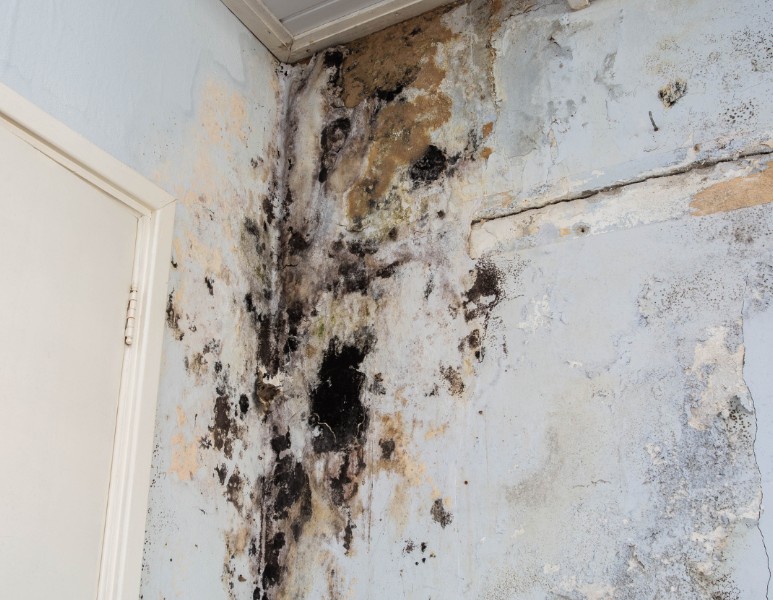
If you have discovered black mold in your home, your first question is probably simple: How do I get rid of black mold in my home?
The answer is not to simply spray the mold with bleach and hope it disappears.
To properly get rid of black mold, you need to remove the mold, identify and correct the moisture problem that caused it, and determine whether affected materials can be cleaned or need to be removed. If the growth is extensive, hidden inside building materials, associated with significant water damage, or affecting a sensitive occupant, professional mold remediation may be appropriate.
The good news is that you do not need to identify the exact type of mold before taking action. CDC guidance recommends removing mold and correcting the moisture problem rather than relying on mold testing to determine whether a particular type is present.
What Is “Black Mold”?
“Black mold” is a common term homeowners use for dark-colored mold. It is not a scientific category that tells you how dangerous a particular mold is.
One mold that is commonly associated with the term is Stachybotrys chartarum, which can produce mycotoxins under certain conditions. However, CDC notes that molds that can produce mycotoxins should be addressed like other molds growing indoors. The color of mold alone cannot tell you what species it is or what health risk it presents.
In other words, you should not ignore black mold, but you also do not need to panic because the mold is black.
Before asking “how do I get rid of black mold in my home”, you need to observe or engage a mold inspector to find out why is the black mold growing, how extensive it is, what materials are affected, and how it should be removed.
How Do I Get Rid of Black Mold in my home?
The basic process is:
- Stop the moisture source.
- Determine how far the mold has spread.
- Protect yourself and others from exposure.
- Remove or clean contaminated materials appropriately.
- Dry the area completely.
- Address hidden mold if necessary.
- Make sure the moisture problem is actually resolved.
EPA identifies moisture control as the key to controlling indoor mold. If you clean up mold without correcting the underlying water or moisture problem, the mold is likely to return.
That is why simply killing visible mold is not the same thing as solving a mold problem.
1. Find Out Why the Black Mold Is Growing
Before cleaning anything, look for the source of moisture.
Common causes include:
- Leaking pipes
- Roof leaks
- Air-conditioning leaks
- Condensation
- Leaking windows or doors
- Poor bathroom ventilation
- High indoor humidity
- Flooding
- Storm or rain intrusion
- Water-damaged drywall
- Plumbing failures
- Hidden leaks inside walls or ceilings
Mold needs moisture to grow. EPA states that controlling moisture is the key to controlling indoor mold.
If you remove the mold but leave the leak, condensation, or elevated moisture behind, you may simply be setting yourself up for another mold problem.
Find the water. Fix the water. Then deal with the mold.
2. Determine How Much Black Mold You Have
A small patch of mold on a hard, nonporous surface is very different from mold covering a wall, growing behind drywall, or appearing throughout several rooms.
EPA says that homeowners can generally handle moldy areas of less than about 10 square feet themselves, provided they follow appropriate cleanup precautions. Larger areas, extensive water damage, or more complicated contamination may warrant professional remediation.
Consider professional help if:
- The affected area is larger than approximately 10 square feet.
- Mold is present in several areas of the home.
- You recently experienced significant water damage.
- Mold is growing inside walls or ceilings.
- Drywall or other porous materials are extensively affected.
- The source of moisture has not been identified.
- Mold keeps coming back after cleaning.
- You suspect mold may be present in the HVAC system.
- Sewage or contaminated water was involved.
- Someone in the home is particularly sensitive to mold or has a respiratory condition.
The size of the visible spot is not always the size of the actual problem.
3. Don’t Start Scrubbing Without Protecting Yourself
Mold cleanup can disturb mold particles and contaminated materials.
CDC recommends protective equipment when cleaning mold, including at least a NIOSH-approved N95 respirator, protective gloves, and eye protection.
People with allergies, immune suppression, underlying lung disease, asthma, or COPD may be at greater risk from mold exposure and should not participate in mold cleanup.
If you are already experiencing health concerns that you believe may be related to mold, talk with an appropriate healthcare professional rather than trying to diagnose the cause yourself.
4. Can I Clean Black Mold Myself?
Sometimes.
If the mold is limited, visible, and growing on a hard surface, cleaning it may be possible.
EPA recommends cleaning mold from hard surfaces with detergent and water and then drying the surface completely.
But there is an important distinction: Cleaning visible mold from a surface is not the same as remediating a larger mold problem.
For example, wiping a small area of mold from a bathroom tile is very different from discovering black-looking growth on drywall after a roof leak.
Porous materials can be particularly difficult because mold can grow into spaces that are difficult or impossible to clean completely. EPA notes that materials such as moldy carpet and ceiling tiles may need to be discarded.
5. Can Bleach Kill Black Mold in my home?
Bleach can kill mold on some surfaces, but killing mold is not the same as removing the mold contamination.
EPA does not recommend the routine use of biocides such as chlorine bleach as a standard mold-cleanup practice. Dead mold can still cause allergic reactions in some people, so simply killing mold does not necessarily solve the problem.
If you use bleach, CDC specifically warns never to mix bleach with ammonia or other cleaning products because dangerous gases can be produced.
For many homeowners, the more important question is not: “What kills black mold?” It is: “How do I safely get rid of black mold in my home and correct the conditions that allowed it to grow?”
6. Don’t Paint Over Black Mold
Painting over mold does not solve the problem. Neither does caulking over it.
EPA and CDC both recommend cleaning up the mold and correcting the moisture problem before painting or sealing the surface. Painting over mold can also result in peeling or other surface problems.
If mold is visible through freshly painted drywall, for example, covering it with another coat of paint is not remediation.
7. What If the Black Mold Is Inside the Wall?
This is where the situation becomes more complicated.
You may see only a small amount of mold on the surface while moisture and mold growth exist behind the wall.
Possible warning signs include:
- A persistent musty odor
- Repeated mold growth in the same location
- Bubbling or stained drywall
- Soft or swollen drywall
- Water stains
- Previous plumbing or roof leaks
- Recent flooding
- Mold appearing around wall penetrations or baseboards
- Unexplained moisture
- Mold returning shortly after cleaning
If you suspect hidden mold, avoid opening large sections of the wall without understanding what is behind them.
EPA specifically recommends considering an experienced professional when hidden mold is suspected.
8. What About Black Mold in the HVAC System?
If you suspect mold contamination in your heating, ventilation, or air-conditioning system, do not treat it like an ordinary surface-cleaning project.
EPA recommends additional evaluation when an HVAC system may be contaminated because operating a contaminated system can potentially distribute mold throughout the building.
This is one situation where getting professional guidance before disturbing the affected area can make sense.
Do I Need a Mold Test to Know If I Have Black Mold?
Usually, no.
If you can see or smell mold, CDC recommends removing it and correcting the moisture problem rather than relying on testing to decide whether action is necessary. CDC does not recommend routine mold testing because there are no established health-based standards that tell you what amount of indoor mold is acceptable.
Testing can sometimes be useful in specific circumstances, but you should not assume that a mold test is required before addressing obvious visible mold.
And a laboratory result does not replace the actual work of finding and correcting the moisture source.
How Do I Know If the Black Mold Is Really Gone?
A successful cleanup is more than making the black spots disappear.
You want to know that:
- The moisture source has been corrected.
- Affected materials have been properly cleaned or removed.
- Visible mold growth has been removed.
- Mold-contaminated materials have been handled appropriately.
- The affected area has been thoroughly dried.
- There are no continuing signs of water intrusion.
- The area does not continue developing mold growth.
EPA notes that cleanup should not be considered finished until the underlying water or moisture problem has been fixed and mold has been removed.
There is also an important distinction between clean and sterile.
It is not realistic to expect a home to contain absolutely zero mold spores. Mold spores are naturally present in indoor and outdoor environments. The goal is to eliminate active indoor mold growth and control the moisture conditions that allow it to grow.
When Should I Call a Professional for Black Mold?
Consider professional mold remediation when the problem is larger than a small, isolated area or when you cannot confidently determine the source and extent of the contamination.
Professional help is especially worth considering when you have:
- Extensive mold growth: Mold covers more than approximately 10 square feet or is present across multiple areas.
- Hidden mold: You suspect mold is inside walls, ceilings, flooring, insulation, or other concealed spaces.
- Significant water damage: The mold followed a major leak, flood, storm, roof failure, or plumbing loss.
- Recurring mold: You clean the mold and it keeps coming back.
- Porous materials: Drywall, insulation, carpet, ceiling materials, or other absorbent materials are extensively affected.
- HVAC concerns: You suspect mold has entered the heating or air-conditioning system.
- Contaminated water: The water involved came from sewage or another contaminated source.
- Sensitive occupants: Someone in the home has significant allergies, asthma, chronic respiratory disease, immune suppression, or another reason to avoid mold cleanup exposure.
What Should I Do If I Find Black Mold Today?
If you have just discovered black mold, don’t immediately start tearing things apart.
Instead:
- Stop the water source if you can do so safely.
- Keep people away from the affected area, particularly anyone who should not be exposed to mold.
- Don’t disturb large amounts of mold unnecessarily.
- Don’t paint over it.
- Don’t mix cleaning chemicals.
- Determine whether the affected materials are porous or nonporous.
- Consider the size and extent of the affected area.
- If the problem is extensive, hidden, recurring, or connected to significant water damage, contact a qualified mold remediation professional.
The sooner the moisture problem is addressed, the easier it generally is to prevent additional mold growth and building-material damage.
What Is the Best Way to Get Rid of Black Mold in my home?
The best approach is not simply to find the strongest product that claims to kill black mold.
It is to remove the mold, address the moisture source, properly handle affected materials, and prevent the conditions that allowed the mold to grow in the first place.
That is the fundamental principle behind effective mold remediation.
If you are in Bradenton, Sarasota, Lakewood Ranch, Siesta Key, or elsewhere in Manatee County and you’re dealing with a significant mold problem, PuroClean of Bradenton can help you determine the appropriate next step.
Our team handles professional mold remediation and works with the appropriate assessment and remediation protocols for the project.
Found black mold in your home? Call 941-877-2288 today or fill this form to get started.
You can also follow us on Facebook and Instagram
Frequently Asked Questions About Black Mold
Is black mold dangerous? Black mold should be taken seriously, but the color of mold alone does not determine its toxicity or health risk. Certain molds can produce mycotoxins, but CDC notes that molds capable of producing mycotoxins should be addressed like other indoor mold growth.
How do I get rid of black mold naturally? There is no special natural remedy that eliminates an established mold problem. The important steps are removing the mold, correcting the moisture problem, and properly drying affected materials.
Can I remove black mold with vinegar? A household product should not be viewed as a substitute for proper mold remediation. Whether mold can be cleaned depends on the surface, extent of growth, moisture source, and materials involved.
Does black mold always mean Stachybotrys? No. Mold comes in many colors, and color alone cannot identify the species. Laboratory identification is not generally necessary before addressing visible mold growth.
Can black mold grow behind drywall? Yes. Mold can grow in concealed areas when moisture is present. If you suspect hidden mold, professional evaluation may be appropriate rather than simply cleaning the visible surface.
Can you completely remove all mold from a house? No practical remediation process can guarantee that a home contains absolutely no mold spores. Mold spores are naturally present in indoor and outdoor environments. The objective is to remove active indoor mold growth and correct the moisture conditions that support it.
Should I test my home for black mold? Routine mold testing is not generally recommended by CDC. If you can see or smell mold, the priority is to remove it and correct the moisture problem.