


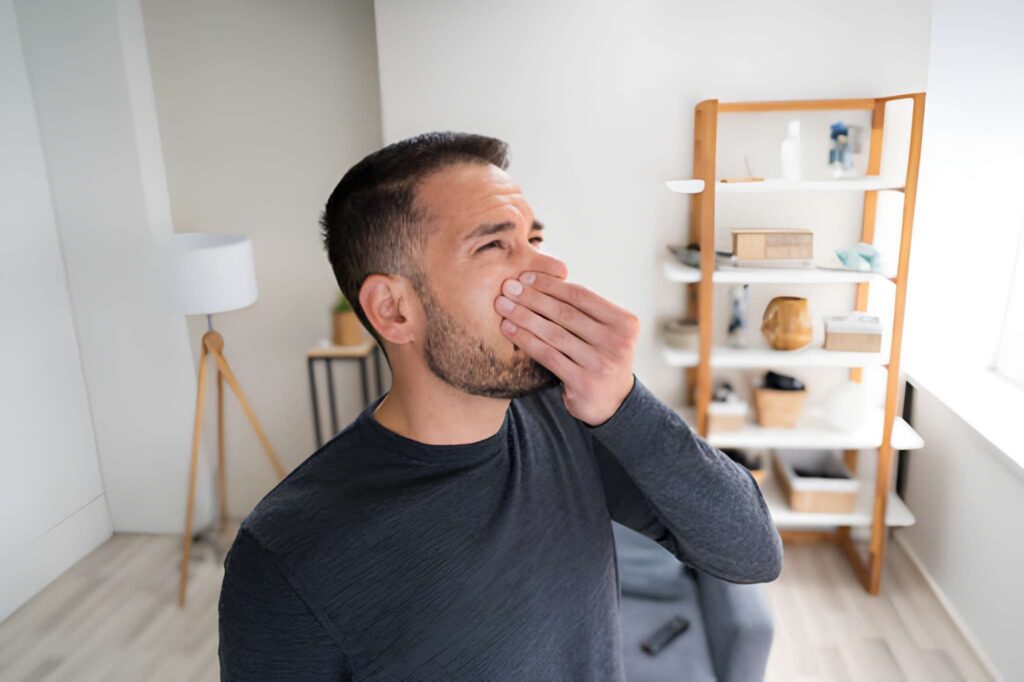
If you’re asking this question, you’re not alone. Many homeowners are shocked to discover that even after engaging “experts” their house still smells musty after mold remediation.
The visible mold may be gone, but the odor, dampness or “off feeling” – and the concern – remains.
This isn’t just frustrating. It raises a bigger question:
Was the mold remediation actually done correctly?
The answer is often more complex than most homeowners are told. A lingering musty smell usually means something was missed, rushed, or handled at a surface level.
Let’s break down the real reasons this happens and what actually resolves it.
Table of Contents
What a Musty Smell Really Means
A musty odor is not just an inconvenience. It’s typically a sign of:
- Residual mold contamination
- Mold byproducts still present in the environment
- Moisture that was never fully addressed
- Contaminated materials that were not removed
- Airborne particles trapped in dust or HVAC systems
Importantly, odor does not require visible mold. Mold-related compounds and microscopic debris can remain long after mold growth is disturbed or partially removed and that may be why your House Still Smells Musty After Mold Remediation.
1. Residual Contamination Was Never Fully Removed
One of the most common reasons a house still smells musty after mold remediation is incomplete physical removal.
Mold remediation is not about “killing” mold. It is about physically removing contaminated materials and particles.
If remediation focused on:
- Spraying antimicrobials
- Fogging alone
- Wiping visible surfaces only
…then contamination may still be present in dust, wall cavities, flooring systems, or insulation.
Even small amounts of remaining contamination can continue to produce odors, especially in humid environments.
2. Porous Materials Were Left Behind
Some building materials simply cannot be cleaned effectively once contaminated.
These often include:
- Drywall
- Carpet and carpet padding
- Insulation
- Pressed wood or fiberboard
- Upholstered furnishings
If these materials were not removed when necessary, they can continue to hold odor-causing compounds even if they look clean.
A musty smell frequently points to contamination trapped inside porous materials, not something visible on the surface.
3. HVAC Systems Were Overlooked
Your HVAC system can act like a distribution network for mold-related odors.
During improper remediation:
- Dust and debris can be pulled into ductwork
- Coils, drain pans, or air handlers can remain contaminated
- Filters may not be sufficient to capture fine particles
If HVAC components weren’t properly addressed, the system can continuously reintroduce odor-causing particles back into the home, especially when the air conditioner runs.
This is one of the most common reasons musty smells “come and go.”
4. Cross-Contamination Occurred During Cleanup
If remediation was done without proper containment and negative air control, mold-related debris may have spread instead of being removed.
This can happen when:
- Work areas aren’t sealed properly
- Dust control isn’t maintained
- HEPA filtration isn’t used consistently
In these cases, mold may be removed from one area – but redistributed into others, including clean rooms, furniture, or HVAC systems.
The result?
A lingering smell with no obvious source.
5. Post-Remediation Cleaning Was Rushed or Skipped
This is a critical step that many companies minimize.
Even after mold is removed, fine particulate matter remains. These microscopic particles can carry odor and cause the home to smell stale or damp.
Proper post-remediation cleaning should include:
- Multiple rounds of HEPA vacuuming
- Damp wiping of hard surfaces
- Detailed cleaning of affected areas
- Air filtration to reduce residual particulates
Without this step, the environment may look clean but still feel and smell wrong.
6. Moisture Problems Were Never Fully Solved
If moisture is still present, odors will persist.
Even small issues such as:
- Elevated indoor humidity
- Condensation inside walls
- Minor leaks
- Poor ventilation
…can allow odor-producing conditions to continue, even without active mold growth.
Odor is often the first warning sign that moisture control is still an issue.
Why Some Homes Need a Higher Standard of Remediation
Not all homes, or homeowners, have the same tolerance for residual contamination.
Homes with:
- Repeated mold problems
- Long-term moisture exposure
- Sensitive occupants
- Ongoing odor concerns
often require a more disciplined, protocol-driven approach.
This is where specialized training and certification matter.
How Our NORMI Mold-Sensitivity Accreditation Makes a Difference
Our team is trained and accredited through NORMI (National Organization of Remediators and Microbial Inspectors), with education that emphasizes:
- Building science and moisture behavior
- Controlled remediation and containment
- Reduction of residual contamination, not just visible mold
- Detailed post-remediation environmental cleaning
- Restoring indoor environments to expected, normal conditions
This higher standard is especially important when homeowners are dealing with persistent odors, repeat remediation failures, or heightened sensitivity to indoor environments.
Rather than relying on shortcuts or surface-level treatments, NORMI-aligned remediation focuses on methodical removal, verification, and environmental normalization.
How We Help When the Musty Smell Won’t Go Away
When homeowners call us after a “failed” remediation, our role is to identify what was missed and correct it properly.
We help by:
- Identifying hidden or residual contamination
- Addressing overlooked porous materials
- Evaluating HVAC-related sources
- Implementing proper containment and dust control
- Performing detailed post-remediation cleaning
- Ensuring moisture issues are truly resolved
Our goal isn’t just to remove mold, it’s to restore confidence in the home’s environment.
The Bottom Line
If your house still smells musty after mold remediation, it’s not in your head and it’s not normal.
A lingering odor usually means:
- Contamination remains
- Moisture issues persist
- Or remediation was incomplete
Addressing it correctly requires experience, discipline, and adherence to higher remediation standards, especially in homes where basic cleanup wasn’t enough.
Working with a NORMI-accredited mold remediation team ensures the process is handled thoroughly with attention not just to what you can see, but to what you can smell, feel, and live with every day.
Contact PuroClean of Bradenton today to stop covering up that musty smell and finally remove it for good.
If your House Still Smells Musty After Mold Remediation, Call 941-877-2288 or visit our contact page today.