


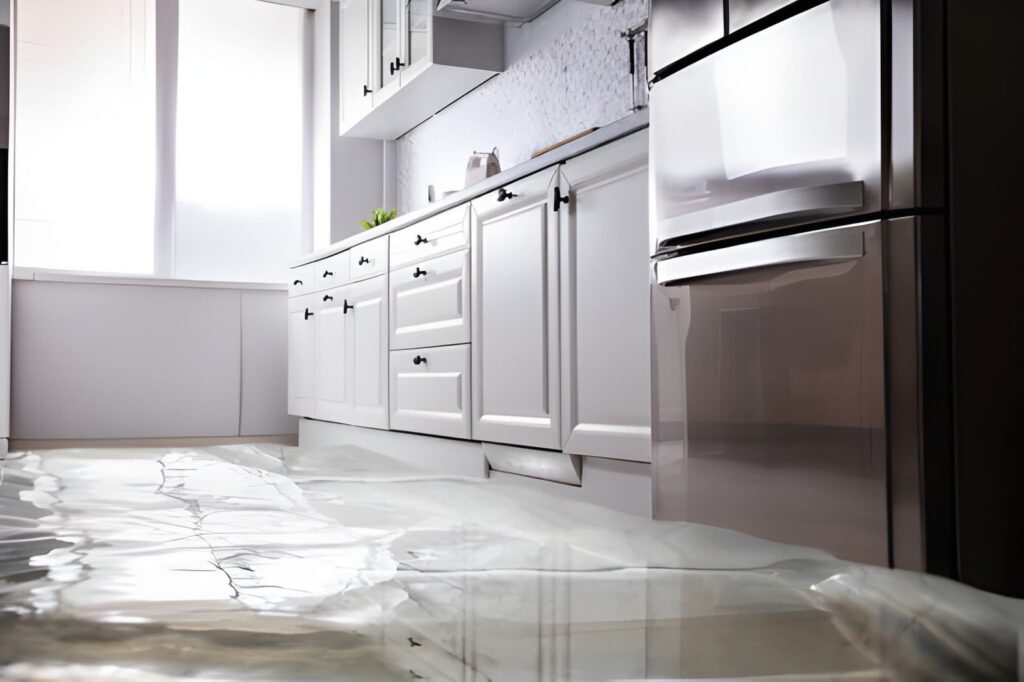
Water does not have to flood your entire house to cause a serious problem.
A broken pipe behind a wall, overflowing toilet, failed water heater, leaking appliance, or storm can put water into places you cannot see. By the time you notice a stain on the ceiling or water beneath the flooring, moisture may already have traveled farther than you realize.
If you need water cleanup in Sarasota, the most important thing is to act quickly and understand that cleanup involves more than simply getting the visible water off the floor.
The goal is to remove the water, find the moisture that may be hidden, dry affected materials properly, and prevent a manageable water loss from turning into a much larger property problem.
What Is Water Cleanup?
Water cleanup is the process of removing water and moisture from a home or business after a leak, plumbing failure, appliance malfunction, storm, flood, or other water-related event.
Depending on the situation, professional water cleanup in Sarasota may include:
- Water extraction
- Removal of standing water
- Moisture detection
- Structural drying
- Dehumidification
- Cleaning affected areas
- Removal of materials that cannot be properly dried
- Moisture monitoring
- Odor control
- Coordination with other professionals when necessary
The key is understanding that water removal and water cleanup are not exactly the same thing.
Removing the puddle you can see is only the beginning.
Water can move underneath flooring, behind baseboards, into drywall, beneath cabinets, and into wall or ceiling cavities. A property can look dry while moisture remains inside building materials.
That hidden moisture is one of the biggest reasons professional water cleanup can be important.
Why You Should Act Quickly After Water Gets Into Your Sarasota Home
When water enters your home, time matters.
The U.S. Environmental Protection Agency recommends drying wet or damp building materials and furnishings within 24 to 48 hours when possible to help prevent mold growth. The EPA also identifies moisture control as the key to controlling indoor mold.
That 24-to-48-hour guideline is not a guarantee that mold will or will not develop. Many factors affect mold growth, including the amount of moisture, the material involved, temperature, and environmental conditions.
But it illustrates an important point:
The sooner you begin addressing water damage, the more opportunity you have to control the moisture before additional problems develop.
Sarasota’s warm, humid climate makes moisture control particularly important after a water loss.
If your property has been affected by water, do not wait several days simply because the area appears to be drying on its own.
Common Causes of Water Damage in Sarasota
Water damage can happen in almost any home, and it does not always begin with a major flood.
Burst or leaking pipes
A broken water line can release a significant amount of water very quickly.
Even a smaller plumbing leak can cause extensive damage if water travels into walls, floors, cabinets, or other concealed areas.
Water heater failures
A leaking or failed water heater can release water into a garage, utility room, closet, or nearby living area.
Because water heaters are often positioned against walls and near other building materials, the damage may extend beyond the area where water is first noticed.
Washing machine leaks
Washing machines depend on water supply and drain connections that can eventually fail.
A damaged hose or connection can release water across a laundry room and underneath flooring.
Dishwasher and refrigerator leaks
Appliances that use water can create problems when supply lines, fittings, seals, or internal components fail.
Water may travel underneath cabinets or flooring before the leak becomes obvious.
Toilet and plumbing overflows
A toilet overflow or plumbing backup can create a particularly unpleasant cleanup situation.
If the water may contain sewage or other contaminants, avoid unnecessary contact and have the situation professionally evaluated.
Air conditioning leaks
Your air conditioning system produces condensation as it operates.
A clogged or malfunctioning condensate drain can allow water to accumulate around ceilings, walls, floors, or equipment.
Roof leaks and storm-related water intrusion
Heavy rain and storms can expose weaknesses in roofing, windows, doors, or other parts of a building envelope.
Water entering from above can travel through ceilings and walls before appearing somewhere else.
This is one reason the location of a water stain does not always tell you where the water actually entered.
What Should You Do If Your Sarasota Home Has Water Damage?
If water has entered your property, focus on safety first.
1. Stop the source if you can do so safely
If a plumbing fixture or appliance is leaking and you can safely shut off the water, do so.
If you cannot identify the source or reaching it would put you at risk, do not attempt to make the repair yourself.
2. Be careful around electricity
Water and electricity can create a serious safety hazard.
Do not enter standing water if electrical outlets, appliances, wiring, or other electrical components may be affected.
If you are unsure whether an area is safe, stay out of it and contact a qualified professional.
3. Protect your belongings when possible
If it is safe, move furniture, electronics, and other belongings away from affected areas.
Do not risk injury or electrical exposure to save possessions.
4. Take photographs
Photograph the affected rooms, flooring, ceilings, walls, furniture, and belongings.
Good documentation can help you keep track of what happened and may be useful when communicating with your insurance company.
The EPA also recommends photographing damage after flooding before beginning cleanup.
5. Get the property assessed
If there is more than a small amount of water, professional assessment can help determine how far the moisture has traveled.
The visible damage may not tell the entire story.
Why Visible Water Is Not the Whole Problem
This is where many homeowners underestimate water damage.
Imagine that a supply line breaks underneath your kitchen sink.
You discover the leak, shut off the water, and clean the floor.
Everything appears fine.
But water may have traveled beneath the cabinets.
It may have reached the flooring underneath the visible area.
It may have entered the wall behind the cabinet.
The surface may dry while moisture remains trapped elsewhere.
The same thing can happen with a ceiling leak.
The stain you see may be several feet away from the point where water actually entered the building.
Professional water cleanup focuses on finding those affected areas rather than simply removing the water that is visible.
How Professional Water Cleanup in Sarasota Works
Every water loss is different, but professional water cleanup in Sarasota generally follows a process designed to identify, remove, and control moisture.
Step 1: Identify the source
Before cleanup can be effective, the source of the water needs to be identified and stopped.
If water continues entering the property, drying efforts will not solve the underlying problem.
Step 2: Assess the affected areas
The property is evaluated to determine where water has traveled and which materials may be affected.
Moisture detection equipment can help identify moisture that is not obvious during a visual inspection.
The EPA notes that moisture meters can be used to determine moisture levels in building materials and monitor drying after water damage.
Step 3: Remove standing water
Standing water is extracted using appropriate equipment.
The faster excess water is removed, the sooner the property can move into the drying phase.
Step 4: Begin structural drying
Water removal does not necessarily mean the property is dry.
Affected materials may still contain moisture.
Air movers and dehumidification equipment can be used to help remove moisture from building materials and the surrounding environment.
Step 5: Monitor the drying process
Drying should not be based solely on whether a surface feels dry.
Moisture levels can be monitored throughout the process to help determine whether affected materials are actually drying.
This matters because a property can appear dry before moisture has been removed from areas underneath surfaces or inside building materials.
Step 6: Clean affected areas
Depending on the source and type of water, affected areas may require cleaning and sanitizing.
A clean-water plumbing leak and a sewage backup should not automatically be treated in the same way.
The source and condition of the water help determine the appropriate cleanup approach.
Step 7: Determine what can be saved
Not every water-damaged material needs to be thrown away.
The appropriate decision depends on the material, the amount of water, the type of water, how long it has been exposed, and whether it can be properly cleaned and dried.
Some materials can be dried and restored.
Others may need to be removed.
The goal is to make that determination based on the actual condition of the property rather than assuming everything is either salvageable or ruined.
Does Water Damage Always Cause Mold?
No.
Water damage does not automatically mean mold will develop.
However, moisture is a critical factor in mold growth.
The EPA explains that mold spores are present in indoor and outdoor environments and that mold can begin growing when spores land on wet surfaces. Controlling moisture is therefore central to mold prevention.
That is why professional water cleanup in Sarasota and mold prevention are closely connected.
The objective is not to panic about mold every time something gets wet.
The objective is to control the moisture quickly and thoroughly.
If materials remain wet, particularly porous materials, they may become more difficult to clean and dry.
What If the Water Came From a Toilet or Sewer?
The source of the water matters.
Water from a clean supply line is different from water associated with sewage, a toilet backup, or other contaminated sources.
If contaminated water is involved, avoid unnecessary contact with it.
Floodwater and sewage can contain contaminants that create additional cleanup and safety concerns. EPA guidance recommends appropriate precautions and protective equipment when dealing with contaminated water and mold cleanup.
A professional can evaluate the situation and determine what type of cleanup is appropriate.
Should You Clean Up Water Damage Yourself?
A small, isolated spill that you can safely clean and completely dry may not require professional restoration.
A significant water loss is different.
Professional water cleanup in Sarasota is worth considering when:
- Water has entered walls or ceilings
- Flooring is saturated
- Water has been standing
- A large area has been affected
- You suspect hidden moisture
- A pipe has burst
- A water heater has failed
- A storm caused water intrusion
- Sewage or contaminated water is involved
- You cannot determine whether everything is dry
- A musty odor develops after the water loss
The EPA notes that professional assistance may be needed to dry an area quickly and thoroughly when the extent of water damage is significant.
The question is not simply, “Can I get the water out?”
It is:
“Can I determine where the water went and whether the property is actually dry?”
Water Cleanup After a Sarasota Storm
Storm-related water damage deserves special attention.
Rainwater can enter through a damaged roof, window, door, or other opening. Once inside, it can move through ceilings, walls, insulation, flooring, and contents.
If your property has experienced flooding, do not assume that drying the visible areas is enough.
EPA guidance for flood cleanup emphasizes quickly drying the home and removing water-damaged items as important steps in reducing mold problems.
If there are electrical, structural, or other hazards, do not enter the affected area until it is safe.
Water Cleanup for Sarasota Businesses
Businesses have many of the same water problems as homeowners, but the consequences can be different.
A water loss can affect:
- Offices
- Restaurants
- Retail stores
- Medical facilities
- Apartment buildings
- Condominiums
- Senior living facilities
- Warehouses
- Professional offices
For a business, water cleanup in Sarasota is not simply about the building.
It is also about minimizing disruption.
Water can damage inventory, equipment, documents, furnishings, flooring, and other contents. The longer affected areas remain unusable, the greater the potential interruption to normal operations.
Professional water cleanup in Sarasota can help identify the affected areas, remove water, begin drying, and establish a plan for moving the property toward normal use.
Why Local Experience Matters for Water Cleanup in Sarasota
Water damage is never convenient.
When it happens, you want someone who understands that you are dealing with more than wet flooring.
You are dealing with your home, your belongings, your routine, and potentially a stressful insurance claim.
PuroClean of Bradenton provides 24/7 water damage restoration and emergency property damage services in Sarasota and surrounding communities. The local team focuses on water removal, drying, and stabilization for residential and commercial properties.
The company serves Sarasota and surrounding communities including Bradenton Beach, Ellenton, Holmes Beach, Palmetto, Parrish, South Bradenton, and West Bradenton.
The Goal of Water Cleanup in Sarasota Is Simple: Get the Moisture Under Control
When water gets into your property, the first instinct is usually to clean up what you can see.
That makes sense.
But the most important part of water cleanup in Sarasota often happens after the puddles are gone.
Where did the water travel?
What materials were affected?
Is there moisture behind the wall?
Is the flooring dry underneath?
Has the humidity inside the property returned to a normal level?
Those are the questions that determine whether a water loss has actually been cleaned up.
For Sarasota homeowners and businesses, water cleanup is ultimately about controlling moisture before a water problem becomes a bigger property problem.
If you have water in your home or business, acting quickly can help limit the damage.
PuroClean of Bradenton provides 24/7 emergency water cleanup in Sarasota.
Call 941-877-2288 when you need help getting the water out and the drying process started.
Frequently Asked Questions About Water Cleanup in Sarasota
How quickly should water cleanup in Sarasota begin?
As soon as it is safe to do so.
The EPA recommends drying wet or damp materials within 24 to 48 hours when possible to help prevent mold growth.
How long does water cleanup take?
There is no universal timeline.
A small water loss may be resolved quickly, while a larger loss involving walls, flooring, ceilings, or other structural materials may require several days of drying and monitoring.
Can water damage be hidden?
Yes.
Moisture can travel underneath flooring, behind walls, inside cabinets, and into ceilings and other concealed spaces.
Do I need professional water cleanup in Sarasota for a small leak?
Not necessarily.
If you can safely stop a small leak, remove the water, and completely dry the affected materials, professional assistance may not be necessary.
However, if the water has entered building materials or you are unsure whether everything is dry, an assessment can be valuable.
What should I do after a burst pipe?
If it is safe, shut off the water source. Protect yourself from electrical hazards, photograph the damage, and contact a water damage professional if significant areas have been affected.
Can water cleanup prevent mold?
Proper and prompt water cleanup can help reduce the conditions that allow mold to grow.
The EPA identifies moisture control and rapid drying as key parts of mold prevention.
Does PuroClean of Bradenton provide 24-hour water cleanup in Sarasota?
Yes. PuroClean of Bradenton provides 24/7 emergency water damage restoration and cleanup services in Sarasota and surrounding areas.
When water gets where it should not, do not wait for the problem to become bigger before taking action.
Stop the source if you can do so safely. Protect yourself from hazards. Document the damage. Then get the moisture under control.
That is where effective water cleanup begins. Our goal isn’t just to remove visible water. It’s to ensure adequate drying across your property. If you have experienced water damage, early action can make all the difference. Call 941-877-2288 today or fill this form to get started.