


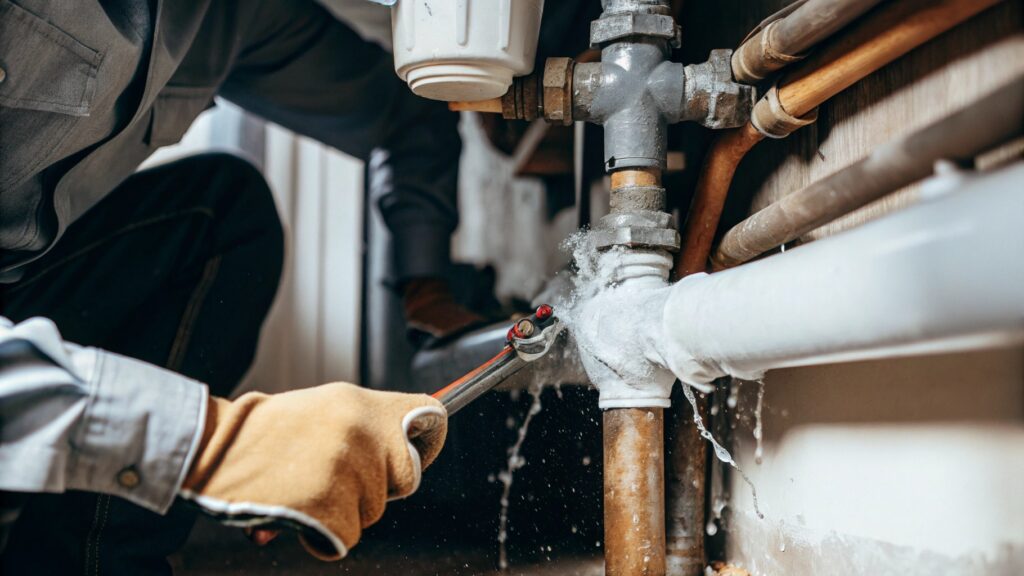
Winter doesn’t have to bring heavy snow to create serious problems inside your home. In Cary, NC, sudden temperature drops often catch homeowners off guard, leading to burst pipes and unexpected indoor flooding. What makes these situations especially stressful is how quickly damage spreads, often before anyone realizes something is wrong. Understanding what happens during these events and how to respond can help homeowners reduce disruption, stress, and long-term repair costs caused by frozen pipe water damage.
Understanding Frozen Pipe Water Damage in Cary Homes
When temperatures drop below freezing, water inside plumbing lines begins to expand, increasing pressure, especially in crawl spaces, garages, and exterior walls. This pressure can cause pipes to crack or burst, releasing water into the home once thawing occurs. The resulting frozen pipe water damage can quickly affect floors, drywall, insulation, and personal belongings.
The Insurance Institute for Business & Home Safety (IBHS) notes that frozen pipes are a leading cause of interior water damage claims. Although winters are generally shorter, sudden arctic air outbreaks still pose a serious risk in transitional climates like North Carolina. In Cary, where extreme cold is uncommon, plumbing along exterior or unconditioned areas is more vulnerable during unexpected freezes.
What Happens When Pipes Freeze and Burst
Frozen pipes don’t usually fail where the ice forms. Instead, pressure builds between the frozen blockage and the faucet, causing the pipe to rupture at its weakest point. Once temperatures rise, water flows freely through the break, spreading behind walls and under floors. In many Cary homes, this type of failure leads to frozen pipe water damage that remains hidden for hours, worsening the overall impact before it’s discovered.
Why Cary, NC Homes Are Vulnerable
Many properties in Cary feature slab foundations, crawl spaces, and attic plumbing, all areas where temperature regulation can be inconsistent. When insulation is insufficient or outdoor air seeps inside, pipes become exposed to freezing conditions. These vulnerabilities make water damage from frozen pipes more common during sudden overnight temperature drops, even when daytime weather feels mild.
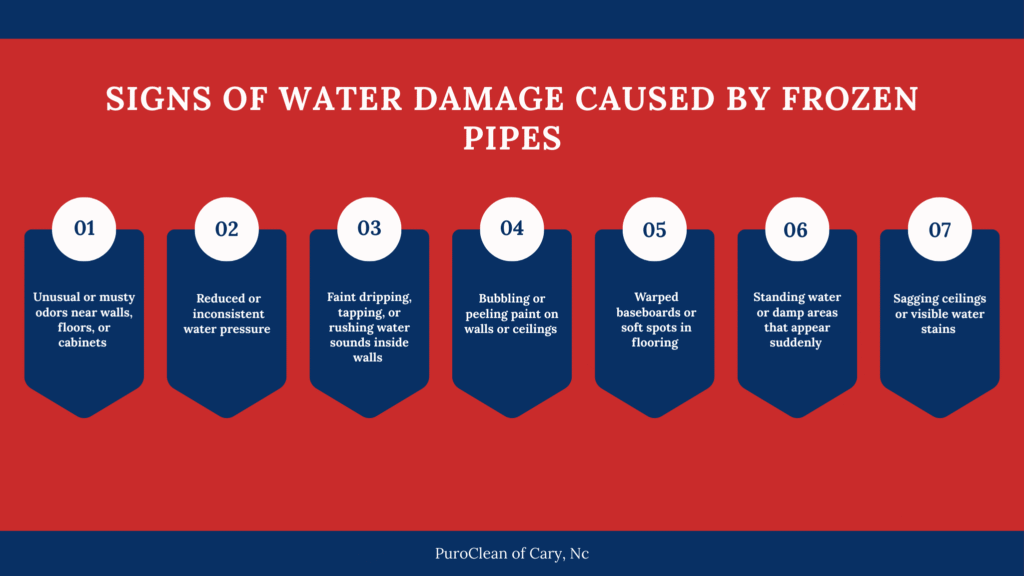
Signs of Water Damage Caused by Frozen Pipes
Recognizing the early and visible signs of pipe-related issues can help reduce repair costs and prevent wider damage. Many warning signals appear gradually before a pipe fully fails.
Common signs to watch for include:
- Unusual or musty odors near walls, floors, or cabinets
- Reduced or inconsistent water pressure
- Faint dripping, tapping, or rushing water sounds inside walls
- Bubbling or peeling paint on walls or ceilings
- Warped baseboards or soft spots in flooring
- Standing water or damp areas that appear suddenly
- Sagging ceilings or visible water stains
The Environmental Protection Agency (EPA) notes that moisture left unaddressed can begin affecting indoor air quality within 24 to 48 hours. Responding early helps limit the spread of moisture and reduces the risk of long-term damage.
Cleanup and Restoration After Frozen Pipe Incidents
Responding quickly after discovering a burst pipe is essential. While shutting off the main water supply helps stop the immediate flow, cleanup and restoration involve more than removing visible water. Proper recovery addresses moisture that seeps into hidden areas, which is common with frozen pipe water damage Cary NC.
Immediate Steps to Take After Discovering Damage
After turning off the water, homeowners should avoid using electrical outlets near wet areas and move belongings to dry spaces if it’s safe to do so. Documenting visible damage can also be helpful for insurance purposes. However, drying the home thoroughly often requires professional equipment designed to handle water damage from frozen pipes without causing further disruption.
Professional Water Removal and Drying Process
Restoration professionals use specialized equipment such as industrial pumps, air movers, and moisture detection tools to remove excess water and monitor drying. This controlled approach targets moisture hidden behind walls, under flooring, and within structural materials. When drying is incomplete, lingering moisture can cause further damage, making thorough water removal essential for safe and effective restoration.
Restoring Affected Areas of the Home
Once drying is complete, damaged materials such as drywall, insulation, or flooring are repaired or replaced. Restoration also includes checking structural components to ensure they haven’t weakened due to prolonged exposure. Addressing frozen pipe water damage properly helps return the home to a safe, livable condition without lingering moisture issues.
Long-Term Effects of Untreated Water Damage
When cleanup is rushed or incomplete, long-term problems can develop quietly. Moisture that remains trapped inside walls or subfloors can cause issues months later, long after the initial incident feels resolved. These outcomes are common with untreated water damage from frozen pipes.
Structural Concerns and Material Weakening
Wood framing can swell and lose strength, while drywall becomes brittle over time. Fasteners may corrode, and flooring adhesives can fail. Even small amounts of residual moisture can significantly reduce the lifespan of building materials and compromise the home’s structural stability.
Indoor Environment and Air Quality Issues
Lingering dampness creates conditions where mold can develop, especially in enclosed or poorly ventilated spaces. Once airborne, spores can circulate through HVAC systems and affect multiple areas of the home. This is why frozen pipe water damage restoration must go beyond surface-level cleanup and include thorough drying and careful inspection of hidden spaces.
Preventing Frozen Pipe Damage in Cary, NC
While no home is immune to winter risks, prevention greatly reduces the chance of emergencies. Taking proactive steps before and during cold weather can protect plumbing systems and minimize the likelihood of water damage from frozen pipes. Similar preventive principles also apply during other weather events, our blog on preventing water damage during heavy rain highlights additional ways homeowners can reduce moisture-related risks throughout the year.
Preparing Your Plumbing Before Winter
Insulating exposed pipes in crawl spaces, attics, and garages is one of the most effective measures. Sealing gaps where cold air enters also helps maintain stable temperatures around plumbing lines. These small improvements significantly reduce the risk of frozen pipe water damage during unexpected freezes.
Smart Habits During Cold Weather
Keeping indoor temperatures consistent, even when away, prevents pipes from reaching freezing conditions. Letting faucets drip slightly during extreme cold helps relieve pressure inside the pipes. These habits are especially helpful in older Cary homes where plumbing may be less protected.
When Professional Inspections Make Sense
A plumbing inspection can identify vulnerable areas before winter arrives. Professionals can recommend insulation upgrades or rerouting options to reduce exposure. Preventive inspections often cost far less than repairs caused by water damage from frozen pipes.
Conclusion
Frozen pipes are more than a seasonal inconvenience; they’re a major source of unexpected home damage in Cary, NC. By understanding how frozen pipe water damage occurs, recognizing early warning signs, and taking preventive action, homeowners can protect their properties and avoid costly repairs. When incidents do happen, prompt cleanup and professional restoration make all the difference in restoring safety and comfort.
FAQs
Q1. How quickly can frozen pipes cause serious damage?
A: Pipes can burst within hours of freezing temperatures, and significant damage can occur as soon as water flow resumes.
Q2. Is frozen pipe damage covered by insurance?
A: Most homeowners’ policies cover sudden pipe bursts, but coverage depends on proper maintenance and timely reporting.
Q3. Can damage occur even after the pipe has thawed?
A: Yes, many leaks begin once ice melts, which is why monitoring for water damage from frozen pipes after a freeze is important.