 PuroClean Certified Restoration Specialists
Why Local Conditions Matter and What Property Owners Need to Know Before Calling for Help
A house fire is one of the most disorienting events a property owner can go through. The immediate danger may pass within hours, but the restoration process that follows is complex, time-sensitive, and significantly shaped by environmental conditions. In Centennial, CO, those conditions include low humidity, high winds, and proximity to wildfire-prone areas along the Front Range. Each of these factors affects how smoke and soot behave, how deeply odors penetrate building materials, and how quickly secondary damage sets in after the fire is out.
At PuroClean Certified Restoration Specialists, we have handled fire damage restoration across Centennial and the greater south Denver area for years. What we see here regularly is distinct from what restoration teams encounter in humid coastal regions, and understanding those differences helps homeowners make faster, better-informed decisions when they need help most.
How Colorado’s Low Humidity Accelerates Smoke and Soot Penetration
Colorado averages some of the lowest relative humidity levels in the contiguous United States. While that dry air is part of what makes the climate so appealing, it creates a significant challenge after a fire. In higher-humidity environments, airborne soot particles tend to settle relatively quickly onto surfaces. In dry conditions, those same particles stay suspended longer and travel farther from the fire’s point of origin.
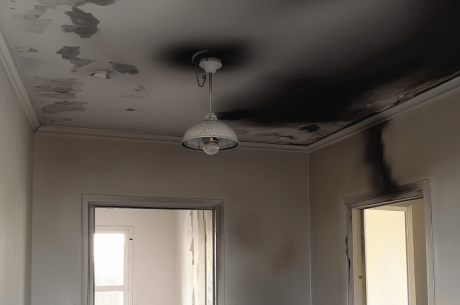
This means smoke and soot residue in a Centennial home can be found in rooms that showed no visible fire damage at all. Fine soot particles penetrate HVAC ductwork, settle into soft furnishings and carpeting, and embed into porous materials like drywall and wood trim well beyond the rooms directly affected by flames.
If the HVAC system was running at any point during or after the fire, soot may have been distributed throughout the entire property. One of the first steps our technicians take on every fire job in Centennial is isolating the HVAC system and conducting a full property walkthrough with specialized equipment to map the true extent of smoke migration.
Wildfire Smoke Residue: A Different Category of Fire Damage

Properties along Colorado’s Front Range corridor face an additional risk that most other states do not. During active wildfire seasons, which have grown longer and more intense in recent years, airborne particulate matter from regional fires can enter homes through ventilation gaps, open windows, and HVAC intake points. This creates a form of contamination distinct from a structure fire.
Wildfire smoke contains a complex mixture of fine particles, volatile organic compounds, and chemical byproducts from burning vegetation, structures, and vehicles. When this material settles inside a home, it bonds to surfaces differently than standard house fire soot and often requires different treatment protocols to fully address. Homeowners who notice persistent odors or surface discoloration after a regional fire event, even without a fire on their own property, may be dealing with wildfire smoke infiltration.
Our team is equipped to assess and treat this type of contamination, including air scrubbing, surface cleaning with appropriate chemistry, and duct cleaning when the HVAC system has been compromised.
The Fire Damage Restoration Process: What to Expect in a Centennial Home
When our crew arrives for a fire damage restoration job in Centennial, the process follows a structured sequence designed to address every layer of damage, not just the visible aftermath.
Safety assessment and structural evaluation. Before any cleaning or restoration begins, we assess whether the property is structurally safe to enter and work in. Fires weaken load-bearing elements, and Colorado’s construction styles, which include many wood-frame homes built from the 1970s through the early 2000s, can present specific vulnerabilities that need to be identified immediately.
Board-up and weatherproofing. Colorado weather does not pause for property emergencies. Afternoon thunderstorms in summer and sudden temperature drops in any season can compound fire damage quickly if broken windows, damaged roofing, or exposed walls are left unprotected. We secure the property against further exposure as an early priority.
Soot and smoke residue removal. Using professional dry and wet cleaning methods matched to each surface type, we remove soot from walls, ceilings, cabinetry, and structural materials. Different soot types, including dry smoke, wet smoke, and protein residue from kitchen fires, each require specific cleaning approaches. Applying the wrong method can permanently set the residue rather than removing it.
Odor elimination. Smoke odor is one of the most persistent challenges in fire restoration. We use thermal fogging, hydroxyl generators, and ozone treatment depending on the extent of odor penetration. In Colorado’s dry conditions, odor molecules can absorb deeply into wood framing and insulation, making this step particularly involved on larger losses.
Content cleaning and pack-out. Personal belongings, furniture, clothing, and documents affected by smoke or soot can often be restored rather than replaced. We inventory, photograph, and where appropriate, pack out contents for professional cleaning at our facility, reducing overall insurance costs and preserving items with personal value.
Reconstruction coordination. Once cleaning and deodorization are complete and air quality readings confirm the property is safe, we coordinate or perform the repairs needed to return the home to its pre-loss condition, from drywall replacement and painting to flooring and cabinetry.
Timing Matters: Why Waiting Increases the Cost of Fire Damage Restoration
Smoke and soot residue begins to chemically bond to surfaces within hours of a fire. Porous materials like drywall, grout, and unfinished wood absorb particles rapidly, and once that bonding occurs, removal becomes significantly more difficult and expensive. Metals exposed to soot can begin to corrode within 48 hours. Upholstery and carpeting that are not treated promptly may require full replacement rather than cleaning.
Acting quickly after a fire is not just about peace of mind. It directly affects what can be saved, how long the restoration takes, and what your insurance claim ultimately reflects. Our 24/7 emergency response line means you can reach a live team member any time a fire event occurs, day or night.
Serving Centennial and Surrounding Communities
PuroClean Certified Restoration Specialists provides fire damage restoration services throughout Centennial and the broader south Denver metro area, including Highlands Ranch, Parker, Lone Tree, Littleton, Castle Rock, and Aurora. Our IICRC-certified technicians understand the regional building stock, insurance landscape, and environmental conditions that shape fire restoration work along the Front Range.
Contact PuroClean Certified Restoration Specialists Today
If your Centennial property has suffered fire or smoke damage, call us immediately at (303) 876-0006 or reach out through our online contact form. We respond quickly, assess thoroughly, and work with your insurance carrier from the first day through the final inspection. Our team is standing by around the clock, ready to help you move from damage to recovery as efficiently as possible.


 PuroClean Certified Restoration Specialists