

Pipe disasters solved quickly and effectively can mean the difference between a minor property repair and catastrophic structural failure. A single ruptured water line can release hundreds of gallons of pressurized water into a home or commercial building in a matter of hours. Whether caused by sub-zero freeze cycles, age-related corrosion, excessive municipal water pressure, or hidden foundation shifts, a severe plumbing failure is one of the most destructive structural emergencies a property owner can face.
When a primary supply line bursts, the resulting inundation compromises structural integrity, destroys high-value personal belongings, saturates subflooring, and creates ideal environmental conditions for hazardous mold growth within 24 to 48 hours.
In a water disaster of this magnitude, hesitating to take action—or relying on DIY cleanup methods—presents severe financial, structural, and health hazards. Water migrates rapidly through porous building materials, wicking up drywall, seeping into wall cavities, and settling into subfloor assemblies. To protect your investment, preserve property value, and ensure complete, certified moisture extraction, you need the fast, experienced restoration team at PuroClean of Park Cities/North Dallas.
This comprehensive guide examines why immediate professional intervention is non-negotiable during a plumbing emergency, how certified restoration technicians systematically resolve severe water damage disasters, and why residential and commercial property owners throughout DuPage County trust PuroClean of Park Cities/North Dallas to mitigate loss and fully restore peace of mind.
________________________________________________________________________________________________________________
The True Danger Behind a Failed Pipe
When property owners encounter a broken line or major leak, the initial instinct is to focus strictly on standing water visible on the floor. However, structural water damage is progressive, dynamic, and far more complex than simple surface pooling.
1. Progressive Structural Weakening and Material Degradation
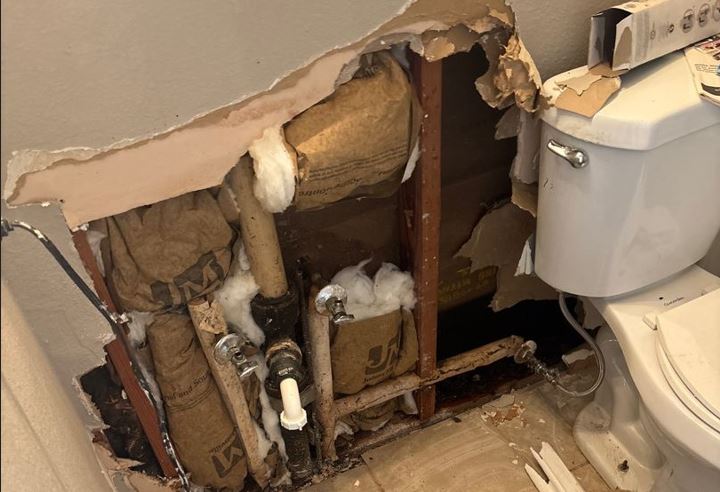
Water rapidly absorbs into porous construction materials, including drywall, plaster, insulation, structural framing timber, particleboard, and subflooring. When a main supply line bursts, thousands of pounds of water weight saturate these critical building components.
Over time, wood framing swells, warps, and loses load-bearing capacity. Drywall absorbs moisture through capillary action, turning spongy and eventually disintegrating under its own weight. Floor joists and subfloors can flex, delaminate, or buckle, creating unsafe structural conditions for building occupants.
2. Rapid Mold and Microbial Spore Germination
Microscopic mold spores exist naturally in both indoor and outdoor air. However, they require three conditions to germinate and colonize: moisture, organic material (such as paper backing on drywall or wood cellulose), and elevated relative humidity levels.
Following a hidden leak or pipe burst, mold colonies can establish within 24 to 48 hours inside wall cavities, under carpeting, beneath hardwood flooring, and inside ceiling insulation. Once established, mold degrades indoor air quality by releasing volatile organic compounds (VOCs) and allergens, requiring specialized containment protocols to remediate safely.
3. Biohazard Exposure and Water Category Classifications
Not all fluid flowing from a damaged pipe is clean municipal water. Industry standards establish three distinct categories of water damage based on contamination levels:
- Category 1 (Clean Water): Water originating from a clean supply line or broken fresh water pipe. While initially sanitary, Category 1 water rapidly degrades into Category 2 within 24 to 48 hours if allowed to remain stagnant in dirty environments.
- Category 2 (Gray Water): Water containing significant chemical, physical, or biological contamination. Examples include overflow from washing machines, dishwashers, or sump pump backups. Gray water poses health hazards if ingested or brought into contact with skin.
- Category 3 (Black Water): Highly contaminated water containing dangerous pathogens, sewage, or toxic chemicals. Examples include sewage line backups, sea/river flooding, or long-standing stagnant water. Category 3 water carries hazardous bacteria, viruses, and parasites that demand strict containment and industrial-grade personal protective equipment (PPE) during cleanup.
________________________________________________________________________________________________________________
Why Professional Restoration is Critical (And Why DIY Approaches Fail)
Handling a large-scale plumbing disaster requires industrial equipment, certified structural drying expertise, and EPA-registered antimicrobials. Consumer-grade wet vacuums, box fans, and standard household cleaning products are fundamentally incapable of extracting deep-seated moisture trapped within complex building assemblies.
Unseen Moisture Migration
When a pipe fails, moisture travels along the path of least resistance—migrating down into subfloors, behind baseboards, through wall cavities, and into lower building levels. Relying on visual inspections or surface feel is deceptive.
PuroClean of Park Cities/North Dallas utilizes state-of-the-art diagnostic technology, including non-invasive thermal imaging cameras (infrared thermography) and calibrated pin and pinless moisture meters. These specialized tools allow technicians to map exact moisture perimeters and detect hidden pockets of saturation behind intact surfaces without causing unnecessary demolition.
Scientific Humidity Control vs. Surface Air Circulation
Household fans merely circulate ambient air across exposed surfaces. They do not lower relative humidity, nor do they pull deeply absorbed moisture out of saturated wall studs, sill plates, or subfloors.
PuroClean of Park Cities/North Dallas deploys commercial Low-Grain Refrigerant (LGR) dehumidifiers and high-velocity directional air movers. This combination establishes controlled psychrometric conditions, maximizing the rate of evaporation while continuously removing airborne water vapor to prevent secondary damage to unaffected structural components.
Comprehensive Contents and Document Restoration
Water damage extends beyond building materials to encompass personal belongings, furniture, electronics, and physical documents. DIY cleanup often results in the unnecessary disposal of salvageable items.
Our technicians evaluate affected contents on-site, applying specialized drying, pack-out, and cleaning techniques to restore cherished personal possessions, business records, and upholstery to pre-loss condition whenever possible.
________________________________________________________________________________________________________________
How PuroClean of Park Cities/North Dallas Solves Pipe Disasters: Our 5-Step Restoration Process
When a plumbing disaster strikes, PuroClean of Park Cities/North Dallas responds with industry-proven restoration protocols designed to stabilize the building and mitigate long-term damage.
1. Emergency Response & Comprehensive Structural Inspection
Our certified emergency team arrives promptly to inspect the source of the pipe failure and evaluate the full scope of water intrusion. Using thermal imaging and moisture meters, we establish exact moisture boundaries across walls, ceilings, and flooring, categorizing the water class and establishing a tailored drying plan.
2. Industrial Water Extraction & Standing Water Removal
Stopping moisture absorption immediately is critical to structural salvage. Using powerful truck-mounted extraction units and heavy-duty submersible pumps, we rapidly remove bulk standing water from carpet, tile, subfloors, and basement spaces. Rapid extraction significantly reduces overall drying times and minimizes structural swelling.
3. Scientific Structural Drying (Psychrometrics)
We apply psychrometric science to manage ambient temperature, specific humidity, and air velocity. By strategic placement of commercial air movers and LGR dehumidifiers, we draw deeply embedded moisture out of porous construction materials without causing excessive shrinkage or structural distortion.
4. Sanitization, Deodorization & Mold Mitigation
Water from ruptured lines can carry environmental impurities and cause persistent damp odors. We treat affected structural surfaces with EPA-registered antimicrobials, disinfectants, and deodorizers to eliminate odor-causing bacteria, prevent mold spore germination, and sanitize all affected areas.
5. Daily Psychrometric Monitoring & Complete Property Restoration
Drying is not complete until objective data proves it. PuroClean of Park Cities/North Dallas technicians take and record daily psychrometric readings and moisture content percentages in affected materials. We monitor the job site until structural materials reach their documented Normal Moisture Content (NMC). Once dry, we perform final repairs and reconstruction to return your property to its original pre-loss state.
________________________________________________________________________________________________________________
Common Causes of Pipe Failures in Commercial & Residential Properties
Recognizing the primary triggers of pipe failure allows property owners to implement preventive maintenance before a catastrophic rupture occurs.
| Cause of Pipe Failure | Primary Structural Impact | Why Professional Restoration is Required |
| Freezing Temperatures | Ice expands inside pipes, creating extreme internal pressure that ruptures metal or PVC lines. | High-volume flooding inside wall cavities, ceiling voids, and attics requiring deep structural extraction. |
| Corrosion & Age | Aging galvanized iron or copper pipe walls degrade, causing pinhole leaks or fitting separation. | Widespread hidden moisture buildup that degrades subfloors and ceiling framing over long periods. |
| High Water Pressure | Continuous excessive pressure stresses pipe joints, valves, and supply lines until failure occurs. | Sudden, high-volume supply line bursts causing multi-story water penetration. |
| Severe Drain Clogs | Unaddressed blockages create localized pressure spikes and wastewater backups. | Contaminated Category 2 or Category 3 water intrusion requiring specialized sanitization and PPE. |
________________________________________________________________________________________________________________
Essential Steps for Pipe Freeze Prevention and Maintenance
While emergency restoration is essential when a disaster occurs, proactive property maintenance can prevent pipe failures altogether:
- Maintain Consistent Heating: Keep indoor temperatures above 55°F (13°C) at all times, even during extended absences or travel.
- Insulate Vulnerable Piping: Wrap unheated pipes in basements, crawlspaces, attics, and exterior walls with foam pipe insulation or heat tape.
- Allow Faucets to Drip: During periods of extreme sub-zero weather, allow exposed faucets to trickle slightly to relieve hydrostatic pressure buildup within the line.
- Install Pressure Reducing Valves (PRV): Monitor residential water pressure; ensure incoming municipal pressure stays between 40 and 70 PSI to avoid stress on joints and appliances.
- Schedule Regular Inspections: Have a licensed plumber inspect aging galvanized or copper piping for signs of pinhole corrosion, mineral buildup, or joint degradation.
________________________________________________________________________________________________________________
Navigating Insurance Claims with PuroClean of Park Cities/North Dallas
Filing an insurance claim following a major plumbing failure can be complex and stressful. Insurance adjusters require exact documentation, detailed line-item cost breakdowns, and verifiable moisture logs to validate coverage under standard property policies.
PuroClean of Park Cities/North Dallas acts as an expert liaison during the insurance process. We use industry-standard pricing software (Xactimate) recognized by major carriers. Our team generates real-time dry-down logs, thermal imaging reports, and photographic proof of damage, submitting documentation directly to your claims adjuster to accelerate claim approvals and streamline reimbursement.
________________________________________________________________________________________________________________
Why Property Owners Choose PuroClean of Park Cities/North Dallas
Restoring a property after a major water line break requires technical precision, commercial equipment, and rapid execution. Homeowners and commercial facility managers rely on PuroClean of Park Cities/North Dallas for several key reasons:
- 24/7/365 Emergency Availability: Water damage does not adhere to regular business hours. Our emergency restoration crews remain on call around the clock to respond immediately when disaster strikes.
- IICRC-Certified Specialists: Our restoration technicians maintain certifications from the Institute of Inspection, Cleaning and Restoration Certification (IICRC) in Water Damage Restoration (WRT), Applied Structural Drying (ASD), and Microbial Remediation.
- Advanced Restoration Equipment: We bring commercial-grade technology to every site, including LGR dehumidifiers, HEPA air scrubbers, high-velocity air movers, and infrared camera systems.
- Direct Insurance Coordination: We document every step of the restoration cycle, sending daily moisture readings and photos directly to your insurance adjuster to ensure smooth claims handling.
- Locally Owned & Operated in Carol Stream: As a local business serving Carol Stream, DuPage County, and surrounding communities, we deliver fast response times backed by national restoration resources.
________________________________________________________________________________________________________________
Frequently Asked Questions About Pipe Water Damage
How long does it take to dry out a property after a pipe burst?
On average, professional structural drying takes between 3 to 5 days. The exact timeframe depends on the volume of water released, the specific porosity of the affected construction materials, ambient humidity conditions, and how quickly professional mitigation begins.
Should I replace or restore drywall affected by a pipe leak?
Drywall saturated with clean (Category 1) water can often be dried in place using high-velocity air movers and LGR dehumidifiers if mitigation begins within 24 hours. However, drywall exposed to Category 3 contamination (sewage or long-standing water), or drywall showing signs of sagging, swelling, or mold growth, must be removed and replaced for safety reasons.
Will property insurance cover water damage from a broken pipe?
Most standard property insurance policies cover sudden and accidental water damage caused by a burst pipe. However, coverage may be limited or denied if the loss was caused by long-term unaddressed maintenance issues or if a property was left unheated during freezing weather. PuroClean of Park Cities/North Dallas provides the detailed dry-down logs and cause-of-loss documentation required by adjusters.
________________________________________________________________________________________________________________
Don’t Let a Failed Pipe Destroy Your Property — Call PuroClean of Park Cities/North Dallas Today
A burst or leaking pipe can feel overwhelming, but immediate professional action minimizes structural loss, stops mold before it starts, and significantly reduces overall recovery costs.
If your home or commercial building has experienced water damage from a broken pipe, contact the certified restoration experts at PuroClean of Northeast Dallas immediately.
- Call Us 24/7: 214-446-5458
- Local Google Business Profile: Visit our official Google Business Profile to view customer reviews, get directions, or speak directly with an emergency technician.
- Learn More: Visit our official Water Damage Restoration Service Page to explore our full range of emergency mitigation and structural drying services.