


Topic Summary: Mold From A Roof Leak
If your attic has mold from a roof leak, fix the leak immediately, remove wet insulation and materials, scrub mold with safe cleaning solutions, ventilate the attic, and dry the area completely. For mold patches larger than 10 square feet, or if mold keeps returning, hire a professional. Prevent future mold by fixing leaks, improving ventilation, and maintaining clean gutters.
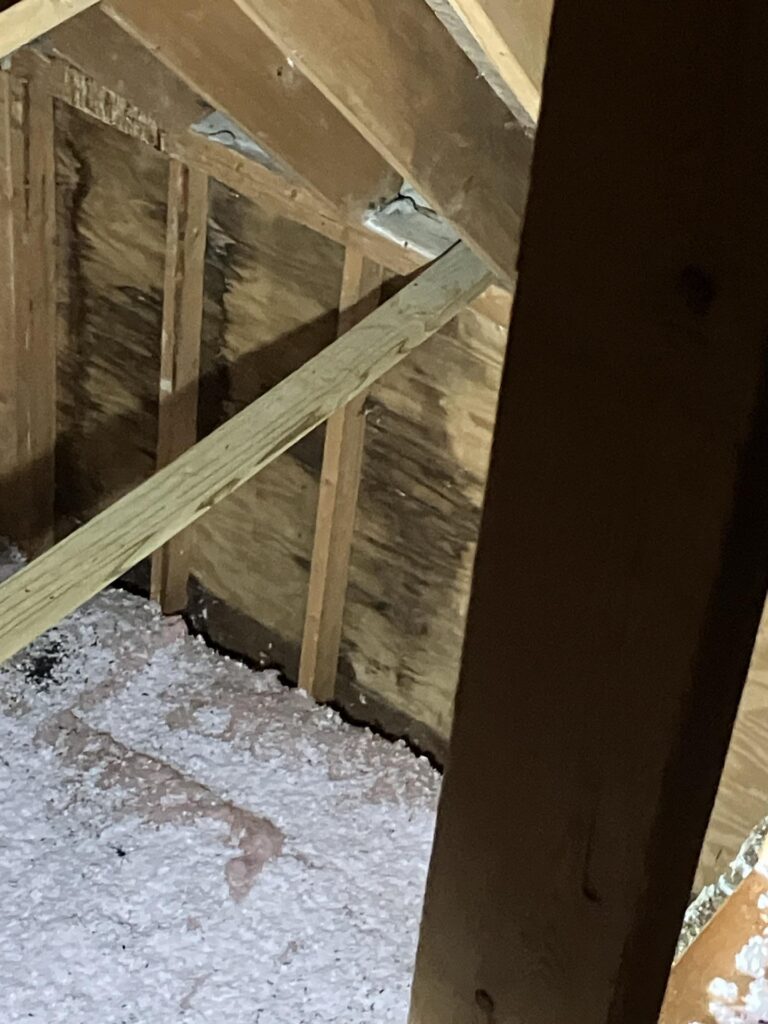
Why Roof Leaks Cause Mold in the Attic
Roof leaks often go unnoticed because water seeps slowly through shingles, flashing, or vents. The attic is the first place water lands, and since it’s warm, dark, and poorly ventilated, it becomes the perfect breeding ground for mold.
Science behind it: Mold needs three things to grow—moisture, food, and warmth. Attics provide all three:
- Moisture from roof leaks
- Food from wood, insulation, and dust
- Warmth from trapped heat
This combination can lead to mold growth in as little as 24–48 hours after a leak.
A Mold From A Roof Leak Story: The Okafor Family’s Attic Disaster
Last winter in Indianapolis, the Okafor family noticed a small brown spot on the ceiling near their daughter Ada’s room. “It’s probably nothing,” they thought. The spot grew slowly, but since the roof wasn’t leaking into the living room, they didn’t worry.
Months later, Ada developed allergies—sneezing, coughing, itchy eyes. Their house smelled musty. When a contractor finally inspected the attic, mold had spread across half the roof decking and insulation. The repair bill? $7,800 for remediation and a partial roof replacement.
If they had acted earlier, sealing the roof and cleaning a small patch would have cost under $800.
Lesson: Delayed action turns small leaks into massive expenses—and affects your family’s health.
How to Tell If You Have Mold in Your Attic from a Roof Leak
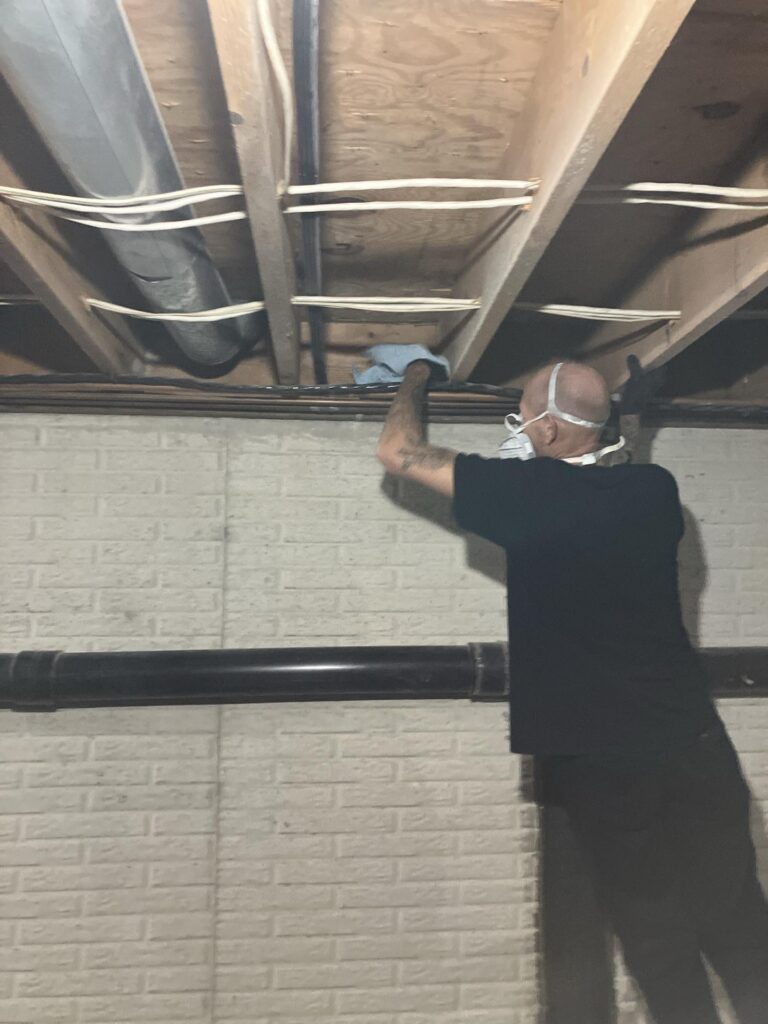
Signs You Can See
- Black, green, or white spots on rafters, insulation, or plywood
- Brown water stains spreading across ceilings
- Paint bubbling or peeling on upstairs walls
Signs You Can Smell
- A strong musty or earthy odor when you enter the attic
- Damp smell coming from ceiling vents
Signs You Can Feel
- Family members with worsening allergies or asthma
- Increased humidity upstairs
Quick Check Tip: After a heavy rain, go to your attic with a flashlight. Look closely around roof penetrations like chimneys, vents, and skylights for darkened or damp wood.
What to Do Immediately If You Find Attic Mold
If you walk into your attic and see mold, follow this 5-step emergency checklist:
- Protect yourself – Wear gloves, goggles, and an N95 mask. Mold spores can irritate your lungs and skin.
- Stop the water – Cover the roof with a tarp if repairs can’t be made right away.
- Isolate the area – Keep attic doors closed to prevent spores from spreading into living spaces.
- Remove wet insulation or items – Anything soggy should go in sealed trash bags.
- Start drying – Place fans in the attic pointing outward to exhaust humid air.
This won’t eliminate the mold, but it will keep it from spreading until you can clean or call for help.
Can You Clean Attic Mold Yourself?
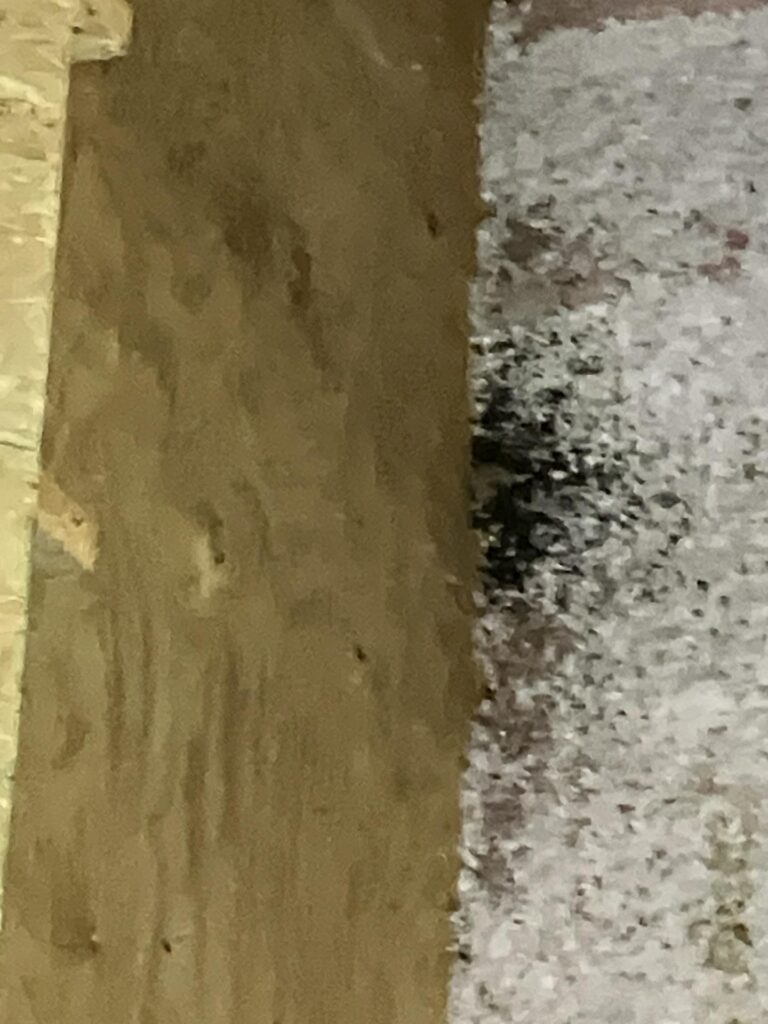
Yes—but only in limited situations. DIY is possible if:
- The mold covers less than 10 sq. ft.
- The leak is already fixed
- You’re comfortable with safety gear
DIY Mold Cleaning Checklist
- Gather Supplies:
- N95 respirator mask
- Rubber gloves
- Goggles
- Scrub brush
- Spray bottle with vinegar or hydrogen peroxide (not bleach—ineffective on wood)
- Rags or disposable wipes
- Plastic sheeting to contain dust
- Prepare the Area:
- Ventilate the attic with fans blowing outwards.
- Lay down plastic sheeting to catch falling spores.
- Scrub Surfaces:
- Spray vinegar or hydrogen peroxide on the moldy area.
- Let it sit for 10 minutes.
- Scrub with a stiff brush until mold is gone.
- Dry the Area:
- Use fans and dehumidifiers for at least 24 hours.
- Seal the Wood:
- Once dry, apply a mold-resistant primer (like Kilz or Zinsser).
Note: If the mold comes back, it usually means moisture is still entering the attic.
When Should You Call a Professional?
Call a mold remediation company if:
- The mold area is larger than a door-sized patch
- Insulation is contaminated
- The mold odor is spreading to living spaces
- Family members are experiencing respiratory issues
What professionals do differently:
- Use HEPA vacuums to capture spores
- Apply antimicrobial sprays
- Run air scrubbers to clean airborne spores
- Safely remove and replace insulation
Found A Mold From A Roof Leak In Your Attic? Call A Mold Removal Specialist in Indiana
Contact PuroClean Disaster Restoration now at (317) 467‑4436 for fast, reliable service.
With over 20 years of experience in mold removal, remediation, and mitigation, our certified team has helped countless Indiana property owners protect their homes and businesses from mold damage.
We’re proud to have earned 100+ five‑star reviews on Google, reflecting our commitment to quality, safety, and customer satisfaction.
Read our verified customer reviews here and see why locals trusts PuroClean for mold restoration in Indiana.
How Much Does Attic Mold Removal Cost?
- DIY small patch (<10 sq. ft.): $50–$200 in supplies
- Professional remediation (small attic): $1,000–$3,000
- Extensive mold (large attic + insulation replacement): $4,000–$10,000
- Roof repair + mold cleanup: $5,000–$15,000
Pro Tip: Many insurance companies cover mold caused by sudden roof leaks—but not from neglect. Always check your policy.
How to Prevent Mold from Coming Back
Prevention is cheaper than remediation. Here’s how:
- Fix roof leaks immediately – Inspect after storms.
- Improve ventilation – Install ridge vents, soffit vents, or an attic fan.
- Keep gutters clear – Prevents water from backing under shingles.
- Check insulation – Damp insulation must be replaced.
- Install vapor barriers – Keeps indoor moisture from seeping into the attic.
- Inspect yearly – A 10-minute check every spring and fall can save thousands.
What Happens If You Ignore Attic Mold?
Ignoring attic mold may seem harmless since you don’t live in the attic, but the consequences are serious:
- Structural damage – Rotting rafters, weakened roof decking
- Health issues – Coughing, asthma, skin irritation
- Energy loss – Wet insulation = higher utility bills
- Lower home value – Mold is a red flag for buyers and inspectors
Reality Check: A $200 roof patch today could save you from a $10,000 bill tomorrow.
FAQs
Q: Is attic mold always dangerous?
Not always toxic, but it can cause allergies and damage your home. Even “common mold” should be removed.
Q: Can attic mold spread into my living space?
Yes. Spores can travel through HVAC systems and air leaks.
Q: Will painting over mold stop it?
No. Mold will bleed through paint unless fully removed first.
Q: What’s the fastest way to kill attic mold?
Hydrogen peroxide or vinegar works for small spots. For larger areas, professional removal is fastest and safest.
Q: Does bleach work on attic mold?
Not well. Bleach only cleans surface mold but doesn’t penetrate wood.
Q: Should I replace insulation if it got wet?
Yes. Wet insulation loses effectiveness and holds mold. Always replace it.
Q: Can a dehumidifier prevent attic mold?
Yes, if the attic is enclosed and has a power source. But ventilation is usually more effective.
Final Takeaway
If you find attic mold caused by a roof leak, remember the Okafor family’s story—small leaks grow into big problems.
The steps are simple but urgent:
- Fix the leak immediately
- Remove and clean moldy materials
- Ventilate and dry the attic
- Call professionals if mold is widespread
- Prevent future growth with regular maintenance
Lesson: Mold in the attic isn’t just “out of sight, out of mind.” It’s a warning sign that demands action—both for your home’s value and your family’s health.