


Key Takeaways for Homeowners
- Ceiling water damage is never purely cosmetic; it signals underlying structural compromise, microbial contamination, or active leaks that worsen exponentially with time.
- Brown rings, sagging drywall, musty odors, peeling paint, and visible mold colonies are not isolated symptoms; they are interconnected indicators of escalating moisture intrusion.
- Central Indiana’s humid continental climate accelerates mold germination to 24-48 hours after water exposure, making rapid IICRC S500-compliant drying protocols essential.
- Delayed response transforms Category 1 clean water into Category 2 or 3 contamination, exponentially increasing remediation costs and health risks.
- PuroClean Disaster Restoration provides immediate moisture mapping, structural drying, and mold prevention for Greenfield, Indianapolis, and surrounding communities. Call (317) 467-4436 now.
What Is the Core Entity Behind Professional Ceiling Water Damage Restoration?
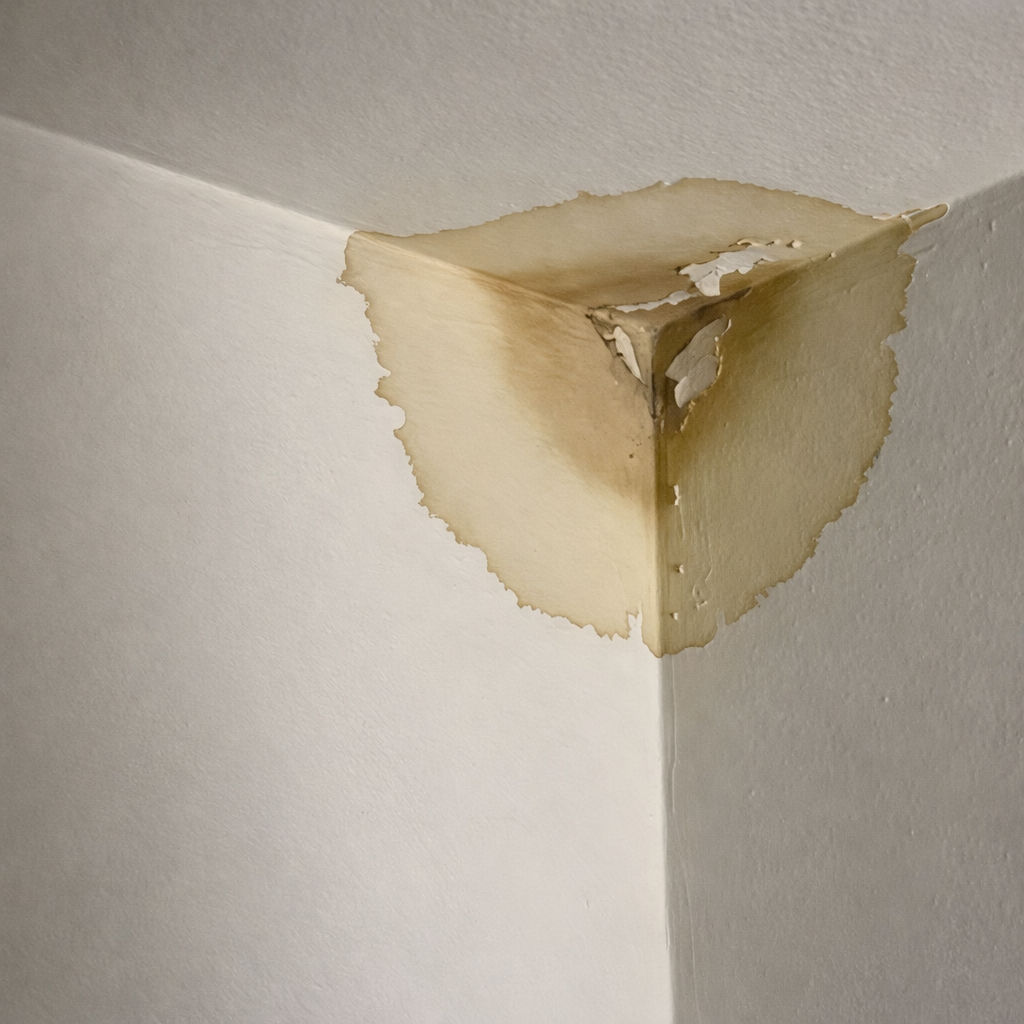
The primary service entity for ceiling water damage restoration is defined by the ANSI/IICRC S500 Standard for Professional Water Damage Restoration and the ANSI/IICRC S520 Standard for Professional Mold Remediation. These procedural standards establish the “standard of care” for qualified and competent contractors, outlining precise protocols for inspection, psychrometric drying, antimicrobial application, and post-remediation verification. When you observe ceiling damage, you are not merely looking at a stain; you are witnessing the visible manifestation of hidden moisture migration, potential mycotoxin-producing fungal colonization, and compromised building envelope integrity. IICRC-certified technicians employ moisture mapping, thermal imaging, and hygrometric analysis to quantify the invisible water load within structural cavities before it triggers secondary damage.
Warning Sign 1: Expanding Brown or Yellow Rings That Grow Larger After Rain
Ceiling discoloration that intensifies or spreads following precipitation is not a surface stain. It is evidence of active water migration through roofing membranes, flashing failures, or plumbing breaches above the ceiling plane. In Greenfield and Indianapolis, where seasonal freeze-thaw cycles stress asphalt shingle roofs and clay tile systems, thermal expansion creates micro-fractures that channel water into attic spaces. Once moisture saturates insulation and contacts drywall paper facing, it wicks outward in concentric patterns. The color shift from yellow to dark brown indicates oxidation of drywall paper and potential Category 2 contamination from attic dust, rodent droppings, or degraded insulation. This is not a DIY painting project. It requires immediate roof leak detection, cavity drying with low-grain refrigerant dehumidifiers, and potential insulation replacement per IICRC S500 structural drying protocols.
Warning Sign 2: Sagging, Bubbling, or Soft Spots in the Ceiling Plane
When drywall or plaster loses structural adhesion to ceiling joists, the gypsum core has absorbed sufficient moisture to compromise its compressive strength. A sagging ceiling is a structural emergency. The weight of saturated drywall can exceed 8 pounds per square foot, creating catastrophic collapse risk for occupants and furnishings below. In Indianapolis-area homes built between 1950 and 1980, many ceilings utilize 1/2-inch drywall without resilient channeling, making them particularly vulnerable to water-induced failure. If you observe bubbling paint, cracked tape seams, or a “pillow” effect where the ceiling pushes downward, evacuate the area immediately. PuroClean technicians deploy temporary shoring, extract standing water from ceiling cavities, and install injection drying systems to restore structural integrity without unnecessary demolition.
Warning Sign 3: Persistent Musty Odors That Worsen With HVAC Operation
A musty smell emanating from ceiling spaces is the olfactory signature of microbial volatile organic compounds (MVOCs) released by active fungal colonies. In Central Indiana’s humid continental climate, where July relative humidity routinely exceeds 75%, attics and ceiling cavities become incubators for Aspergillus, Penicillium, and Stachybotrys chartarum when moisture content exceeds 16% in wood substrates. When your HVAC system cycles, negative pressure differentials can draw spore-laden air from ceiling cavities into living spaces through recessed light fixtures, ceiling fans, and ductwork penetrations. This is not an air freshener problem. It demands HEPA filtration, negative air pressure containment, antimicrobial biocide application, and psychrometric control to achieve IICRC S520-compliant clearance. PuroClean’s certified technicians utilize particle counters and air sampling to verify that indoor fungal ecology returns to background levels before reconstruction begins.
Warning Sign 4: Peeling Paint or Wallpaper Along Ceiling Edges
When paint or wallpaper detaches from ceiling perimeters, it signals chronic humidity elevation or active water intrusion at the wall-ceiling junction. In Indianapolis and Greenfield homes with balloon framing common in pre-1940s construction, wall cavities extend uninterrupted from basement to attic, creating vertical moisture highways. Ice damming during Indiana winters is a frequent culprit: heat loss through inadequate attic insulation melts roof snow, which refreezes at eaves and backs up under shingles, saturating fascia boards and migrating down exterior walls. The resulting moisture wicked into ceiling edges destroys paint adhesion and provides a substrate for mold growth behind crown molding. Proper remediation requires ice dam removal, attic air sealing to R-49 insulation standards, and targeted drying of wall-ceiling assemblies with directed airflow systems.
Warning Sign 5: Visible Mold Colonies or Black Speckling on the Ceiling Surface
Visible mold on a ceiling is never the beginning of the problem; it is the culmination of weeks or months of undetected moisture accumulation. Stachybotrys chartarum, commonly mislabeled “black mold,” requires cellulose-rich substrates with sustained moisture content above 90% relative humidity to proliferate. Once established, it produces trichothecene mycotoxins that can trigger respiratory distress, cognitive fog, and immune suppression in sensitive individuals. In Central Indiana, where summer dew points frequently exceed 70°F, unventilated bathrooms, kitchen soffits, and attic knee walls are high-risk zones. IICRC S520 mandates that visible mold exceeding 10 square feet requires professional containment with 6-mil polyethylene barriers, negative air machines with HEPA filtration, and antimicrobial biocide treatment followed by post-remediation verification (PRV) by an independent Indoor Environmental Professional (IEP). Attempting bleach-based DIY removal disperses spores and worsens contamination.
How Does Greenfield and Indianapolis Climate Amplify Ceiling Water Damage Risks?
Central Indiana’s humid continental climate presents unique challenges for ceiling integrity. Annual precipitation averages 42 inches, with May and June delivering concentrated rainfall that overwhelms aging gutter systems and flat-roof commercial structures common in downtown Indianapolis. The region’s clay-rich soils expand and contract with moisture fluctuations, stressing foundation waterproofing and creating slab leaks that migrate upward through wall cavities to ceiling plates. Additionally, the 2021 International Residential Code (IRC) adoption in Marion and Hancock counties mandates specific vapor retarder placement, yet many homes built before 2010 lack adequate attic ventilation, trapping summer humidity against ceiling drywall. PuroClean understands these localized risk factors. We assess roof pitch, soffit venting, and HVAC duct leakage specific to Central Indiana housing stock to deliver geospatially informed restoration strategies.
Step-by-Step: What to Do When You Discover Ceiling Water Damage
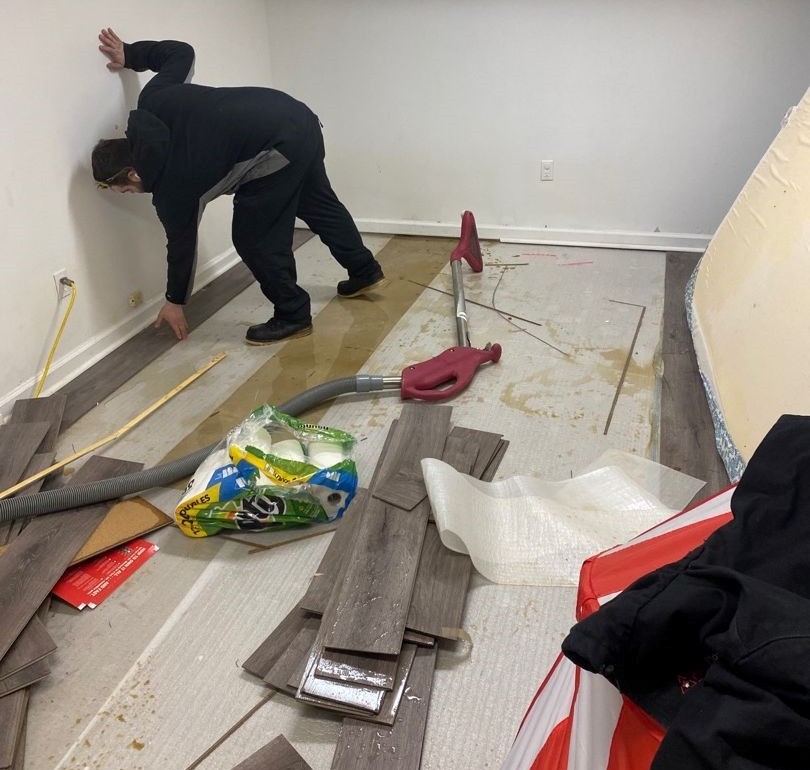
- Step 1: Ensure Safety. Turn off electricity to affected zones at the breaker panel. Wet ceilings and light fixtures create electrocution hazards.
- Step 2: Contain the Area. Move furniture and valuables away from the damage zone. Place buckets under active drips and poke a small hole in sagging drywall to release trapped water.
- Step 3: Document Everything. Photograph and video the damage for insurance claims. Note the date, time, and any weather events preceding discovery.
- Step 4: Call PuroClean Disaster Restoration at (317) 467-4436. Our IICRC-certified technicians arrive within 90 minutes for emergency response.
- Step 5: Moisture Mapping and Thermal Imaging. We identify the water source and map moisture migration patterns invisible to the naked eye.
- Step 6: Structural Drying Protocol. We deploy commercial-grade dehumidifiers, air movers, and injection drying systems per IICRC S500 standards.
- Step 7: Mold Assessment and Remediation. If microbial growth is detected, we implement S520-compliant containment and removal.
- Step 8: Reconstruction and Restoration. We restore your ceiling to pre-loss condition with documented clearance testing.
Frequently Asked Questions
Does home insurance cover mold caused by high humidity in Greenfield or Indianapolis?
Standard homeowners insurance policies typically exclude mold damage resulting from ongoing humidity, poor ventilation, or maintenance neglect. However, if mold develops from a sudden, accidental covered peril such as a burst pipe, storm-damaged roof, or appliance overflow, remediation may be covered up to policy sub-limits, which in Indiana often range from $5,000 to $15,000. PuroClean assists with claims documentation and direct insurance billing to maximize your coverage. We recommend reviewing your policy for “hidden water damage” or “mold remediation” endorsements, which can be added for enhanced protection in Central Indiana’s high-humidity environment.
How quickly can mold grow in a wet ceiling in Indianapolis?
In Central Indiana’s climate, where summer temperatures average 75-85°F with relative humidity above 70%, mold germination can occur within 24 to 48 hours of water exposure. Aspergillus and Penicillium species colonize rapidly on cellulose-based drywall paper facing. By day 5-7, visible colonies emerge. By day 10-14, mycotoxin production may begin. This timeline makes immediate professional drying within the first 24 hours critical to preventing secondary microbial damage.
Why does my ceiling stain keep returning after I paint over it?
Paint is a vapor barrier, not a water barrier. If the underlying moisture source remains active, hydrostatic pressure forces water through paint films, causing blistering and renewed discoloration. Bleach-based cleaners also fail to address embedded moisture in drywall cores or insulation above the ceiling plane. Only professional moisture extraction and source elimination per IICRC S500 protocols permanently resolves recurring stains.
Is a small ceiling leak really an emergency?
Yes. A “small” leak represents a breach in your building envelope. Water follows the path of least resistance, migrating laterally along joists and saturating insulation, electrical wiring, and structural members. What appears minor on a 2-square-foot ceiling patch may conceal 20+ square feet of hidden damage above. Early intervention prevents the exponential cost escalation of structural repair, mold remediation, and content replacement.
Can I just cut out the damaged drywall myself?
DIY removal of water-damaged drywall without proper containment and respiratory protection exposes you to fiberglass insulation fibers, potential asbestos in pre-1980s construction, and concentrated mold spores. Additionally, undetected moisture in ceiling cavities will continue damaging adjacent materials. IICRC-certified technicians utilize personal protective equipment (PPE), negative air pressure, and moisture meters to ensure safe, complete remediation.
Why Choose PuroClean Disaster Restoration for Ceiling Water Damage in Greenfield and Indianapolis?
PuroClean Disaster Restoration is your local IICRC-certified emergency response team, serving Greenfield, Indianapolis, and all surrounding neighborhoods including Carmel, Fishers, Noblesville, and Lawrence. We understand that ceiling water damage is not a tomorrow problem; it is a right-now emergency that threatens your family’s safety, your home’s structural integrity, and your financial investment. Our technicians are trained in the latest ANSI/IICRC S500 and S520 standards, utilizing thermal imaging, moisture mapping, HEPA filtration, and psychrometric science to deliver results that DIY methods and general contractors cannot match.
Do not wait for a sagging ceiling to collapse. Do not ignore a musty smell that signals hidden mold. Do not let a small stain become a $50,000 reconstruction project.
Call PuroClean Disaster Restoration now at (317) 467-4436 for Water damage remediation and mold removal in Greenfield today. We answer 24/7, arrive within 90 minutes, and work directly with your insurance carrier to minimize out-of-pocket costs. Your home is your most valuable asset. Protect it with the restoration professionals who understand Central Indiana’s unique climate, building codes, and housing stock. Call today.