


Key Takeaways for Homeowners
- Mold can begin colonizing within 24 to 48 hours after floodwater intrusion. Speed is the single most important factor in prevention.
- IICRC S500 and S520 standards define the scientific protocols for water damage restoration and mold remediation.
- Greenfield and Indianapolis homeowners face unique risks from clay soils, combined sewer overflows, and freeze-thaw cycles that trap moisture in basements and crawl spaces.
- Professional moisture mapping, HEPA filtration, and negative air pressure containment are not optional luxuries; they are requirements for safe, lasting recovery.
- Home insurance coverage for mold varies dramatically based on cause of loss and policy language. Documentation matters.
If your home has flooded, every minute counts. Call PuroClean Disaster Restoration immediately at (317) 467-4436 for emergency water extraction, structural drying, and certified mold prevention services in Greenfield, Indianapolis, and surrounding neighborhoods.
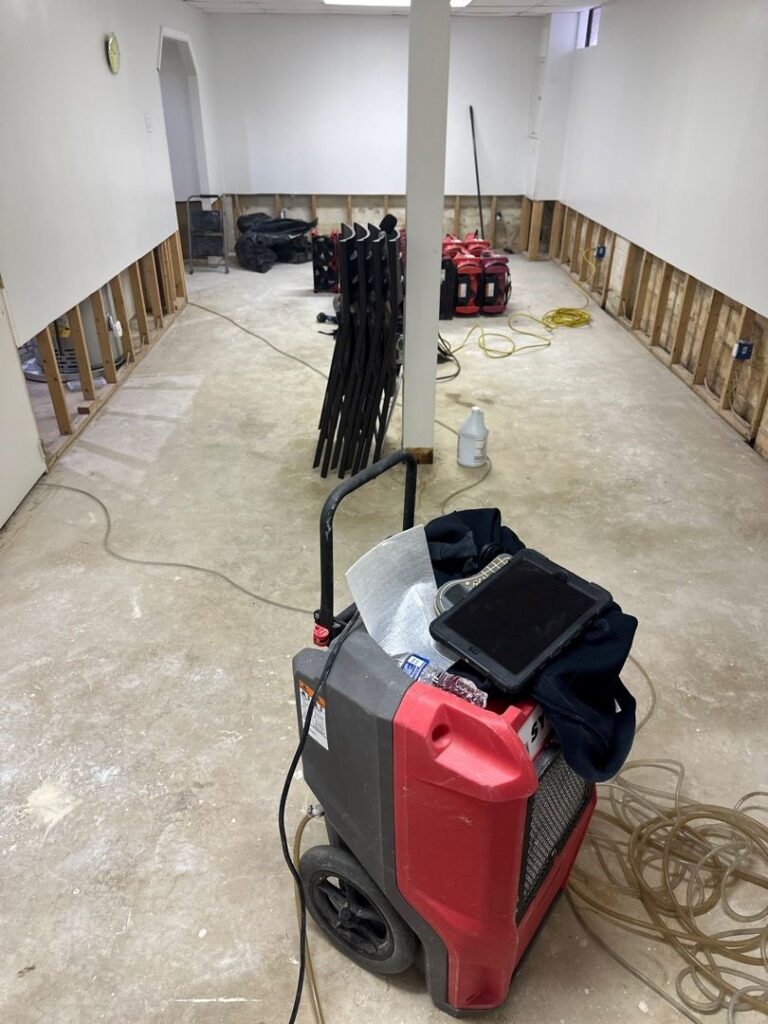
Why Flood Damage in Greenfield and Indianapolis Creates Unique Mold Risks
Greenfield and Indianapolis sit on heavy clay soils with relatively flat terrain. When heavy rainfall events strike, water does not drain quickly. It pools around foundations, seeps into basements, and creates the sustained moisture conditions that mold spores need to germinate. Indianapolis operates one of the largest combined sewer systems in the country, and intense rainfall frequently causes basement sewer backups. The city’s DigIndy tunnel project is working to reduce overflows, but residential basement flooding remains one of the most common mold triggers across Marion County and Hancock County.
The regional housing stock compounds the problem. Many homes in Indianapolis neighborhoods like Fountain Square, Irvington, and the near east side were built in the early to mid-20th century. These properties feature aging brick construction, limestone foundations, and original plumbing systems that are especially vulnerable to water intrusion. In Greenfield, the mix of historic homes and newer subdivisions means mold risk varies block by block, but the underlying clay soil threat is universal.
Indianapolis sees approximately 43.6 inches of annual rainfall with an average humidity near 69 percent. Summer humidity slows drying after leaks, while winter freeze-thaw cycles create ice dam roof leaks that introduce hidden moisture into wall cavities. This climate profile means mold is not just a summer problem. It is a year-round threat that demands year-round vigilance.
What Is the IICRC S500/S520 Standard and Why Does It Matter?
The Institute of Inspection, Cleaning and Restoration Certification (IICRC) sets the global benchmark for water damage restoration and mold remediation. The S500 standard governs water damage restoration, while the S520 standard specifically addresses professional mold remediation.
These standards are not suggestions. They are the authoritative framework that certified restoration professionals use to classify water contamination, determine drying goals, establish containment protocols, and verify that a structure has returned to a safe, pre-loss condition. When you hire a restoration company, verifying IICRC certification is the first step in protecting your property value and your family’s health.
12 Smart Ways to Prevent Mold Growth After a Flood
1. Extract Standing Water Within Hours, Not Days
Mold spores are present in every indoor environment. They only need moisture, organic material, and time to colonize. Under IICRC S500 guidelines, Category 1 clean water can degrade to Category 2 gray water within 24 hours and Category 3 black water within 48 hours. The faster standing water is removed, the lower the contamination risk and the faster structural drying can begin.
- Use submersible pumps for deep standing water.
- Use wet/dry vacuums for residual pooling.
- Remove saturated carpet pad immediately; it rarely survives flood exposure.
2. Deploy Industrial Air Movers and Dehumidifiers for Structural Drying
Consumer-grade fans and dehumidifiers cannot achieve the air exchange rates or vapor pressure differentials needed for proper structural drying. IICRC S500 calls for calculated placement of low-grain refrigerant (LGR) dehumidifiers and axial air movers based on psychrometric readings.
- Target indoor relative humidity between 30 and 50 percent.
- Monitor specific humidity and dew point, not just temperature.
- Position air movers to create laminar airflow across wet surfaces.
3. Conduct Professional Moisture Mapping
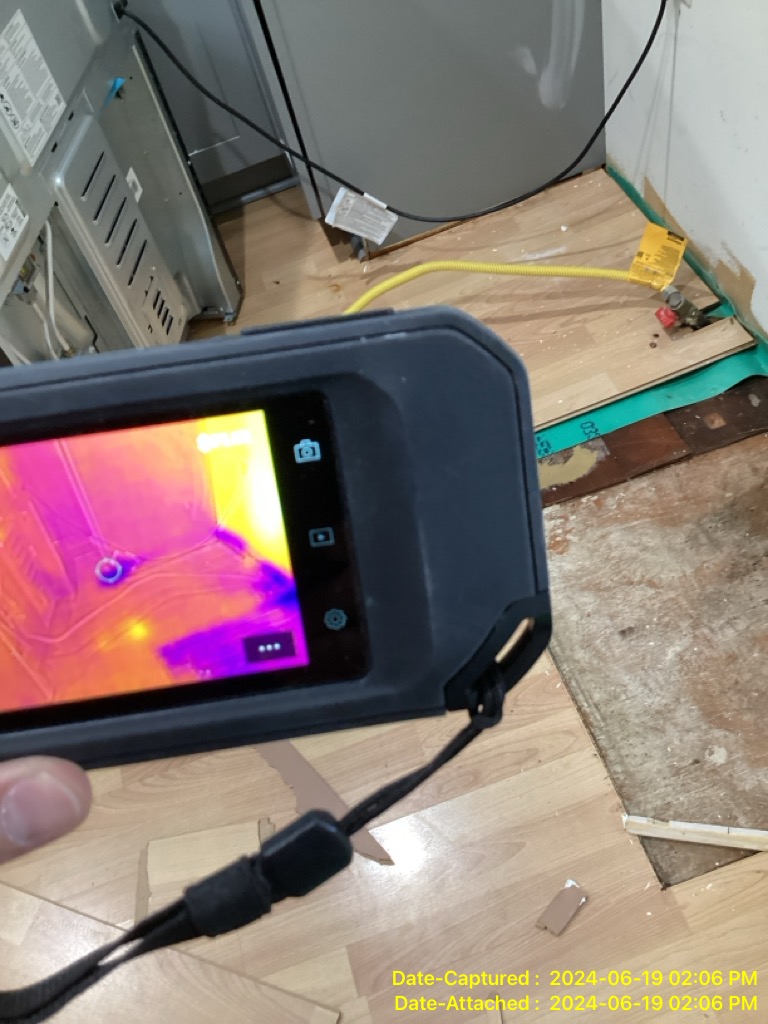
Moisture mapping uses thermal imaging cameras and non-invasive moisture meters to identify water migration patterns behind walls, under flooring, and inside ceiling cavities. In Indianapolis homes with plaster and lath construction or older drywall, water travels in unpredictable paths. Surface dryness is meaningless if wall cavities remain damp.
- Thermal imaging detects temperature differentials caused by evaporative cooling.
- Pinless moisture meters scan large areas without surface damage.
- Probe meters verify actual moisture content in wood framing and subfloors.
4. Remove Porous Materials That Cannot Be Salvaged
IICRC S520 establishes that porous materials saturated with Category 2 or 3 water generally cannot be restored. This includes drywall, insulation, carpet pad, and upholstered furniture. Attempting to dry these materials in place traps microbial reservoirs inside wall cavities.
- Cut and remove drywall at least 12 inches above the visible water line.
- Remove fiberglass batt insulation from flooded wall cavities.
- Dispose of contaminated materials following local biohazard protocols.
5. Establish Containment and Negative Air Pressure
Before any demolition or cleaning begins, containment barriers must isolate the affected area from clean zones. Negative air pressure machines (NAMs) with HEPA filtration prevent cross-contamination by drawing air out of the containment zone and filtering it before exhausting outdoors.
- Use 6-mil polyethylene sheeting for containment walls.
- Maintain negative pressure differential of at least 0.02 inches of water column.
- Seal HVAC registers in the containment zone to prevent duct contamination.
6. Apply Antimicrobial Biocides to Structural Surfaces
After cleaning and before rebuilding, EPA-registered antimicrobial biocides treat structural surfaces to inhibit mold regrowth. These products are not a substitute for drying, but they are a critical layer of protection in flood-affected environments where moisture history increases future risk.
- Apply only after surfaces are clean and visibly dry.
- Follow manufacturer dwell times for effective microbial kill.
- Use botanical or synthetic formulations based on occupant sensitivity profiles.
7. Deploy HEPA Filtration During and After Remediation
High-Efficiency Particulate Air (HEPA) filtration captures 99.97 percent of particles 0.3 microns in diameter, including mold spores, mycotoxins, and particulate debris. Air scrubbers with HEPA filtration should run continuously during demolition, cleaning, and the initial drying phase.
- Size air scrubber capacity to room volume and contamination level.
- Position units to create circular airflow patterns.
- Change pre-filters regularly to maintain airflow and filtration efficiency.
8. Monitor Psychrometric Conditions Until Equilibrium
Psychrometrics is the study of air and moisture relationships. True drying is not achieved until the structure reaches equilibrium moisture content (EMC), meaning the moisture content of building materials matches the ambient humidity conditions. This can take days or weeks depending on the flood severity and building envelope.
- Record daily readings of temperature, relative humidity, and dew point.
- Calculate grains per pound (GPP) to track moisture removal.
- Do not rebuild until EMC readings stabilize within acceptable ranges.
9. Inspect and Treat HVAC Systems for Contamination
Floodwater and airborne mold spores can infiltrate ductwork, coils, and air handlers. In Indianapolis, where HVAC systems run heavily during humid summers and cold winters, contaminated ductwork becomes a distribution system for mold throughout the home.
- Inspect ductwork with borescope cameras.
- Clean coils and drain pans with antimicrobial solutions.
- Consider duct sealing or replacement if contamination is extensive.
10. Address Crawl Space and Basement Vapor Intrusion
Indianapolis and Greenfield homes with crawl spaces or partial basements face elevated vapor intrusion risks. Allen County and Marion County building codes require vapor barriers in crawl spaces and below-grade walls, but many older properties predate these requirements.
- Install 6-mil or thicker vapor barriers over dirt crawl space floors.
- Seal foundation wall penetrations and rim joists with closed-cell spray foam.
- Ensure sump pumps discharge at least 10 feet from the foundation.
11. Test for Mycotoxins and Airborne Spore Counts
Not all mold is visible. Mycotoxins, the toxic secondary metabolites produced by certain mold species like Stachybotrys chartarum and Aspergillus, can persist in dust and on surfaces even after visible growth is removed. Air sampling and ERMI/HERSTMI dust analysis provide objective data on contamination levels.
- Collect air samples before and after remediation for comparison.
- Use spore trap sampling for viable and non-viable spore counts.
- Interpret results against outdoor baseline samples from the same day.
12. Document Everything for Insurance and Future Sale
Mold remediation can reduce home resale value by 20 to 37 percent if poorly documented. Maintain records of moisture readings, photos, disposal receipts, and certification documents. Indianapolis homeowners should also be aware that Marion County Housing and Neighborhood Health performs code enforcement for occupied and vacant structures, and documentation may be required for compliance.
Frequently Asked Questions
Does home insurance cover mold caused by high humidity in Greenfield or Indianapolis?
Standard homeowners insurance policies typically exclude mold damage caused by long-term humidity, condensation, or maintenance neglect. Coverage usually applies only when mold results from a sudden, accidental covered peril such as a burst pipe or storm damage. Flood insurance through the National Flood Insurance Program (NFIP) has separate mold coverage limits. Because Indianapolis operates a combined sewer system, sewer backup coverage is a critical endorsement that many homeowners lack. Review your policy with your agent and document all flood-related damage immediately.
How fast does mold grow after a basement flood in Indianapolis?
Mold colonization can begin within 24 to 48 hours of water intrusion. In Indianapolis, where summer humidity averages 69 percent and clay soils slow foundation drying, basements can remain damp for weeks after visible water is removed. This extended moisture window dramatically increases the risk of hidden mold in wall cavities, subflooring, and insulation.
Can I use bleach to kill mold after a flood?
Bleach is not recommended for porous mold contamination. It can discolor surfaces and add moisture without penetrating deep enough to kill mold roots (hyphae) in drywall, wood, or carpet. IICRC S520 recommends physical removal of contaminated porous materials followed by HEPA vacuuming and antimicrobial treatment of non-porous surfaces.
What are the health risks of flood-related mold exposure?
Exposure to mold spores and mycotoxins can cause respiratory irritation, allergic reactions, asthma exacerbation, and in immunocompromised individuals, serious fungal infections. Children, elderly residents, and those with pre-existing respiratory conditions face the highest risk. If anyone in your household experiences persistent coughing, wheezing, or skin irritation after a flood, seek medical evaluation promptly.
Do I need a professional for mold prevention after a small flood?
Any flood that affects drywall, insulation, or structural materials warrants professional assessment. Moisture mapping and psychrometric monitoring require specialized equipment and training. DIY efforts often miss hidden moisture, leading to costly remediation later. PuroClean Disaster Restoration provides free inspections and can determine whether professional intervention is necessary.
Protect Your Home and Family: Call the Experts
Flood damage is an emergency. Mold growth is a certainty if moisture is not controlled within 48 hours. If your home in Greenfield, Indianapolis, or surrounding neighborhoods has experienced water intrusion, do not wait.
Call PuroClean Disaster Restoration now at (317) 467-4436 for 24/7 emergency response, certified water extraction, and professional mold prevention services.