


Key Takeaways for Homeowners
- Water damage compounds by $2,000+ every 24 hours you delay professional response
- IICRC S500 standards classify water into three categories that determine safety protocols
- Indiana’s freeze-thaw cycles and clay-heavy soils in Marion and Hancock counties accelerate foundation seepage
- Mold colonization begins within 24-48 hours of moisture intrusion
- Your insurance claim can be denied if you fail to document damage properly or hire unlicensed contractors
- Calling a certified restoration professional within the first hour can reduce total restoration costs by up to 40%
What Is Water Damage Restoration and Why Does It Matter?
Water damage restoration is the professional process of returning a water-impacted structure to its pre-loss condition, governed by the Institute of Inspection, Cleaning and Restoration Certification (IICRC) S500 Standard and Reference Guide for Professional Water Damage Restoration. This is not a DIY project. The S500 standard establishes the scientific framework that certified technicians use to assess water category, determine structural drying goals, and execute safe microbial remediation.
For homeowners in Greenfield, Indianapolis, and surrounding Hancock and Marion County communities, water damage represents one of the most financially devastating property threats you can face. The National Flood Insurance Program reports that just one inch of water can cause over $25,000 in damage to a typical home. In Central Indiana, where seasonal weather patterns bring spring thunderstorms, summer humidity spikes, and winter pipe bursts from sub-freezing temperatures, the risk is constant.
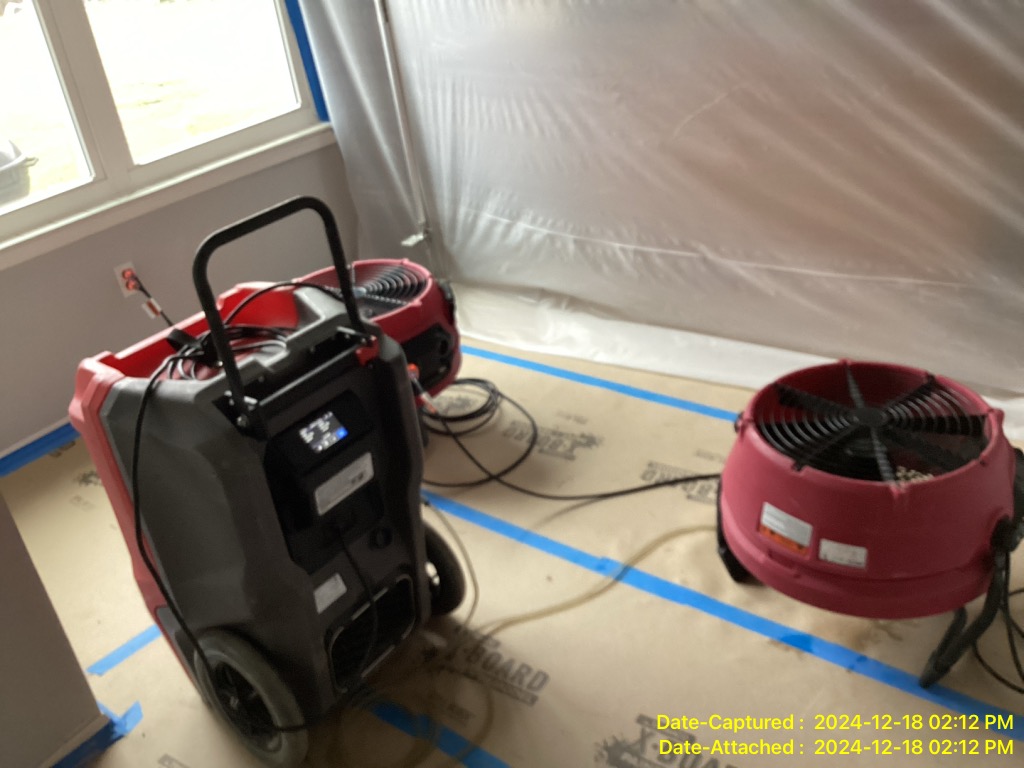
PuroClean Disaster Restoration operates under full IICRC S500 and S520 certification standards, deploying psychrometric science, moisture mapping technology, and negative air pressure containment systems to protect your property and your health. When every minute counts, our emergency response team is ready. Call (317) 467-4436 for immediate assistance.
Mistake 1: Waiting Too Long to Call a Professional
Time is the enemy of water damage. The IICRC S500 standard defines the “golden period” for water damage mitigation as the first 24 hours. After that window, secondary damage accelerates exponentially.
- Within minutes: Water spreads to adjacent areas through capillary action and wicking
- Within hours: Drywall begins to swell, wood floors cup and warp, furniture finishes bleed
- Within 24 hours: Mold spores activate and begin colonizing organic substrates
- Within 72 hours: Structural materials may require complete replacement rather than restoration
Many Indianapolis homeowners try to handle water extraction with shop vacuums and box fans. This is a catastrophic error. Consumer-grade equipment lacks the airflow volume (measured in cubic feet per minute, or CFM) and the water lift capacity (measured in inches of water column) necessary to achieve the drying goals established by psychrometric calculations.
What to do instead:
- Call an IICRC-certified restoration company immediately
- Shut off the water source if it is safe to do so
- Turn off electrical power to affected areas at the breaker panel
- Remove small valuables and documents from the water zone
- Take photographs for insurance documentation before any cleanup begins
Mistake 2: Underestimating Category 2 and Category 3 Water
The IICRC S500 standard classifies water damage into three categories based on contamination level. Misidentifying the category leads to improper safety protocols and health hazards.
Category 1 (Clean Water): Originates from a sanitary source like a broken supply line or overflowing sink. It poses minimal health risk initially but can degrade to Category 2 within 48-72 hours.
Category 2 (Gray Water): Contains significant contamination from sources like dishwasher discharge, washing machine overflow, or sump pump failures. May contain chemicals, microorganisms, and nutrients for bacterial growth.
Category 3 (Black Water): Grossly unsanitary water from sewage backups, flooding from rivers or streams, or water that has remained stagnant long enough to support bacterial and fungal growth. Contains pathogens, toxins, and potentially deadly contaminants.
In Greenfield and Indianapolis neighborhoods with aging municipal sewer infrastructure, heavy rainfall events can cause sewer line backups that flood basements with Category 3 water. Homeowners who attempt cleanup without personal protective equipment (PPE), antimicrobial biocide application, and proper containment protocols risk serious illness.
What to do instead:
- Never touch Category 2 or 3 water without full PPE including gloves, respirators, and eye protection
- Isolate the affected area to prevent cross-contamination
- Deploy negative air pressure containment if microbial growth is suspected
- Apply EPA-registered antimicrobial biocides per manufacturer specifications
- Dispose of porous materials that have absorbed Category 3 water
Mistake 3: Ignoring Hidden Moisture Behind Walls and Under Flooring
Water follows the path of least resistance. It travels behind baseboards, under vinyl flooring, inside wall cavities, and through subflooring. Surface drying creates a dangerous illusion of resolution while concealed moisture continues destroying your property.
Professional restoration requires moisture mapping using non-invasive and invasive detection tools:
- Thermal imaging cameras identify temperature differentials that indicate moisture presence
- Moisture meters with penetrating pins measure actual moisture content in wood, drywall, and concrete
- Hygrometers track relative humidity and vapor pressure in the drying environment
- Borescopes allow visual inspection inside wall cavities without destructive removal
In Indianapolis-area homes built before 1980, plaster and lath construction creates additional moisture trapping compared to modern drywall systems. Older homes in neighborhoods like Irvington, Fountain Square, and parts of Greenfield also may contain asbestos-containing materials that become friable when wet, requiring specialized abatement procedures.
What to do instead:
- Demand moisture mapping from your restoration contractor
- Establish drying goals based on dry standard readings from unaffected areas of the same structure
- Monitor moisture content daily until equilibrium is achieved
- Remove baseboards and create inspection ports in walls when moisture is suspected behind finishes
- Document all readings for insurance claim support
Mistake 4: Failing to Address Mold Within the Critical Window
Mold requires three conditions to colonize: moisture, organic food source, and time. Remove any one of these factors and colonization stops. The critical colonization window is 24 to 48 hours after water intrusion.
Common indoor molds like Stachybotrys chartarum, Aspergillus, and Penicillium produce mycotoxins that can trigger respiratory distress, allergic reactions, and neurological symptoms in sensitive individuals. The IICRC S520 Standard and Reference Guide for Professional Mold Remediation establishes the protocols for safe microbial remediation.
HEPA filtration is non-negotiable during mold remediation. High Efficiency Particulate Air filters rated at 99.97% efficiency at 0.3 microns capture mold spores and prevent cross-contamination to unaffected areas of the structure. Air scrubbers equipped with HEPA filtration should run continuously during remediation.
Central Indiana’s humid continental climate means summer relative humidity regularly exceeds 70%, creating ideal conditions for mold growth in water-damaged structures. Greenfield’s proximity to the White River and Indianapolis’s network of creeks and retention ponds means groundwater levels can remain elevated for days after storms, extending the moisture exposure window.
What to do instead:
- Begin drying operations within 24 hours of water intrusion
- Maintain indoor relative humidity below 60% during drying
- Apply antimicrobial biocides to affected surfaces per S520 protocols
- Install HEPA air scrubbers in contained work areas
- Conduct post-remediation verification testing including air sampling and surface sampling
Mistake 5: Using the Wrong Equipment for Structural Drying
Effective structural drying is a science, not a guess. Psychrometrics is the study of air and its properties, specifically temperature, humidity, and vapor pressure. Certified restoration technicians use psychrometric calculations to determine exactly how much dehumidification capacity and airflow are required to achieve target drying conditions.
Common homeowner mistakes include:
- Using household fans that recirculate humid air without removing moisture
- Opening windows during humid weather, introducing more moisture
- Running air conditioning alone without supplemental dehumidification
- Removing carpet pad without addressing subfloor moisture
- Failing to create airflow inside wall cavities
Low-grain refrigerant (LGR) dehumidifiers are the industry standard for residential water damage. These machines remove moisture from air more efficiently than conventional refrigerant dehumidifiers, especially as humidity levels drop during the drying process. Desiccant dehumidifiers may be required for specialty drying situations or in extremely cold environments.
What to do instead:
- Deploy commercial-grade LGR dehumidifiers sized to the cubic footage of the affected area
- Calculate air changes per hour (ACH) and position air movers to create turbulent airflow across wet surfaces
- Use injection drying systems for wall cavities and hardwood floors
- Monitor grain depression daily to track drying progress
- Adjust equipment placement based on daily moisture readings
Mistake 6: Neglecting Documentation for Insurance Claims
Your insurance policy is a contract with specific obligations on both sides. Failing to document damage properly can result in claim denial or underpayment.
Indianapolis and Greenfield homeowners should understand that Indiana operates under standard homeowners insurance frameworks, but coverage varies dramatically by policy. Most standard HO-3 policies cover sudden and accidental water damage from sources like burst pipes or appliance failures. However, they typically exclude:
- Gradual leaks and maintenance issues
- Flood damage from external rising water (requires separate flood insurance)
- Sewer backup (unless you have a specific rider)
- Mold remediation beyond the initial water damage restoration
What to do instead:
- Photograph and video all damage before any cleanup begins
- Keep a detailed inventory of damaged items with purchase dates and values
- Save all receipts for emergency mitigation services
- Request a written scope of work from your restoration contractor
- Obtain a certificate of completion documenting that drying goals were achieved
- Work with a restoration company experienced in insurance claim documentation and direct billing
Mistake 7: Hiring Unlicensed or Uncertified Contractors
The restoration industry has no federal licensing requirement, which means anyone can claim to be a water damage expert. Hiring an unqualified contractor puts your property, your health, and your insurance claim at risk.
IICRC certification is the gold standard. Certified technicians have completed rigorous training and passed examinations on water damage restoration, applied microbial remediation, fire and smoke restoration, and odor control. Certification requires continuing education to maintain.
In Indiana, contractors must also hold appropriate state licensing for construction work. Ask for proof of:
- IICRC WRT (Water Damage Restoration Technician) certification
- IICRC AMRT (Applied Microbial Remediation Technician) certification
- General liability insurance
- Workers compensation insurance
- State contractor license where applicable
What to do instead:
- Verify certifications through the IICRC online directory
- Request proof of insurance and bonding
- Ask for local references from recent jobs
- Confirm the company provides 24/7 emergency response
- Ensure they offer direct insurance billing and claim documentation support
Mistake 8: Overlooking Foundation and Basement Vulnerabilities
Indianapolis and Greenfield sit on clay-heavy soils that expand when wet and contract when dry. This seasonal soil movement creates foundation stress cracks that become water entry points during heavy rains. Combined with the region’s flat topography and aging stormwater infrastructure, basement water intrusion is one of the most common water damage scenarios in Central Indiana.
Homes in neighborhoods near Fall Creek, White River, or any of Indianapolis’s numerous tributaries face elevated groundwater risks. Greenfield’s newer developments may have better stormwater management, but older homes near the historic downtown area often lack modern foundation waterproofing.
Common foundation mistakes include:
- Ignoring hairline cracks in basement walls
- Failing to maintain sump pumps and battery backup systems
- Improper grading that directs water toward the foundation
- Clogged or missing gutter downspout extensions
- Sealing basement walls with paint instead of professional waterproofing
What to do instead:
- Inspect basement walls and floors quarterly for new cracks or efflorescence
- Test sump pumps monthly and install battery backup systems
- Maintain positive grading that slopes away from the foundation at 6 inches over 10 feet
- Extend downspouts at least 6 feet from the foundation
- Address foundation cracks with professional epoxy injection or polyurethane foam sealing
Mistake 9: Disregarding Electrical and Structural Safety Hazards
Water and electricity are a lethal combination. Yet in the panic of a water emergency, homeowners often wade into standing water without considering what lies beneath.
Electrical hazards in water-damaged structures include:
- Submerged electrical outlets and switches
- Energized appliances sitting in water
- Compromised electrical panels in flooded basements
- Damaged wiring inside walls that may not be immediately visible
Structural hazards include:
- Saturated drywall ceilings that can collapse without warning
- Warped subflooring that creates trip hazards
- Weakened floor joists from prolonged moisture exposure
- Compromised load-bearing walls in severe flooding
What to do instead:
- Turn off power at the main breaker before entering standing water
- Do not enter flooded basements if the electrical panel is submerged
- Wear rubber boots and gloves if you must enter the water zone
- Look for sagging ceilings and avoid standing beneath them
- Have a licensed electrician inspect the system before restoring power
Mistake 10: Assuming the Problem Is Fixed After Surface Drying
Perhaps the most expensive mistake of all is believing that dry-looking surfaces mean the problem is solved. Water damage has a long tail. Moisture trapped in wall cavities, under flooring, and inside insulation creates conditions for months or years of progressive damage.
Long-term consequences of incomplete drying include:
- Chronic mold growth inside walls that affects indoor air quality
- Wood rot in structural framing members
- Corrosion of metal fasteners and HVAC ductwork
- Delamination of plywood subflooring
- Musty odors that persist despite surface cleaning
- Reduced property value and failed home inspections
In Indianapolis’s humid climate, structures that are not dried to established standards will reabsorb moisture from the air, perpetuating the damage cycle.
What to do instead:
- Insist on post-drying verification using moisture meters and thermal imaging
- Request a written drying log documenting daily readings and equipment placement
- Conduct air quality testing if mold was present or suspected
- Address the original source of water intrusion to prevent recurrence
- Schedule follow-up inspections at 30 and 90 days
Frequently Asked Questions
Does home insurance cover mold caused by high humidity in Greenfield, Indianapolis?
Standard homeowners insurance policies in Indiana typically do not cover mold damage resulting from long-term humidity issues or maintenance neglect. However, mold that results from a covered peril such as a sudden pipe burst or storm damage is usually covered up to policy limits, which commonly range from $1,000 to $10,000. Some insurers offer mold riders for additional premium. The key factor is whether the mold resulted from a sudden, accidental event that is covered under your policy. Document everything and work with an IICRC-certified restoration company that understands insurance claim requirements.
How long does professional water damage restoration take in Indianapolis?
The timeline depends on water category, affected materials, and environmental conditions. A typical Category 1 water loss in a single room may achieve drying goals in 3-5 days. Category 2 or 3 losses involving multiple rooms, wall cavities, or flooring systems may require 7-14 days of active drying plus reconstruction time. Central Indiana’s summer humidity can extend drying times if not properly controlled with commercial dehumidification. Your restoration contractor should provide daily moisture readings and a projected completion timeline.
What are the signs of hidden water damage in older Indianapolis homes?
Watch for peeling paint or wallpaper, warped or buckling flooring, musty odors that persist after cleaning, stained ceiling tiles, efflorescence on basement walls, sudden increases in water bills, and condensation on windows or pipes. Homes in historic Indianapolis neighborhoods like Irvington, Broad Ripple, and parts of Greenfield built before 1950 may have plaster walls, balloon framing, or outdated plumbing that creates unique moisture pathways not found in modern construction.
Can I stay in my home during water damage restoration?
For Category 1 water losses confined to non-living areas, you may be able to remain in the home with some inconvenience. For Category 2 or 3 losses, or any situation involving mold remediation, temporary relocation is strongly recommended. Negative air pressure containment, HEPA air scrubbers, and antimicrobial applications create conditions that are not suitable for occupancy. Your restoration contractor will advise based on the specific scope of work and safety protocols required.
Protect Your Property: Call PuroClean Disaster Restoration Now
Water damage does not wait, and neither should you. Every minute of delay allows moisture to penetrate deeper into your home’s structure, multiplying repair costs and creating health hazards that can affect your family for years.
PuroClean Disaster Restoration serves Greenfield, Indianapolis, and all of Hancock and Marion Counties with IICRC S500 and S520 certified emergency response. We bring the scientific expertise, advanced equipment, and local knowledge to protect your property and your peace of mind.
If you are experiencing water damage right now, do not wait. Call PuroClean Disaster Restoration at (317) 467-4436 for immediate emergency assistance. Our team is standing by 24/7 to respond to your call and begin professional mitigation before the damage gets worse.