


Key Takeaways for Homeowners
- Hoarding cleanup is not a DIY project; improper handling exposes families to biohazards, structural collapse, and permanent property damage.
- IICRC S500 (water damage) and S520 (mold remediation) standards must anchor every professional hoarding cleanup protocol.
- Greenfield’s humid continental climate accelerates mold colonization and wood rot in cluttered spaces.
- Always verify certifications, local references, and insurance coverage before hiring any hoarding cleanup company.
- Call PuroClean Disaster Restoration at (317) 467-4436 for immediate, certified hoarding cleanup assistance in Greenfield and surrounding neighborhoods.
Hoarding disorder affects an estimated 2% to 6% of the population, yet most families in Greenfield, Indianapolis, do not realize the severity of cleanup risks until it is too late. When a loved one’s home has reached Level 3, 4, or 5 hoarding severity, the decision to clean is urgent. However, families who attempt to handle the situation without professional guidance often make devastating mistakes that cost thousands more in repairs, medical bills, and emotional trauma.
This guide outlines the seven most expensive hoarding cleanup mistakes families regret and explains how to select the best hoarding cleanup service in Greenfield to protect your family, property, and peace of mind.
What Is Hoarding Cleanup and Why Does It Require Professional Standards?
Hoarding cleanup is a specialized biohazard remediation service that goes far beyond standard house cleaning. The core entity of this service is defined by IICRC S500 and S520 standards, which govern water damage restoration and mold remediation protocols. These standards exist because hoarding environments frequently contain Category 3 water damage (sewage backup, standing water), airborne mycotoxins, and pathogenic contamination that demand scientific remediation methods.
When you hire a hoarding cleanup company in Greenfield, you are not hiring a cleaning crew. You are hiring a team trained in psychrometrics, moisture mapping, HEPA filtration, negative air pressure containment, antimicrobial biocide application, and structural drying. These are not optional add-ons. They are baseline requirements for safe remediation.
Mistake 1: Attempting DIY Cleanup Without Biohazard Protection
The first and most dangerous mistake families make is entering a hoarding environment without personal protective equipment (PPE) and biohazard training. Hoarded homes in Greenfield often contain decomposing organic matter, pet waste, rodent droppings, and hidden water damage beneath layers of clutter.
Without proper respiratory protection, workers risk inhaling airborne particulates, fungal spores, and volatile organic compounds. Without containment protocols, cross-contamination spreads pathogens to previously clean areas of the home. Without antimicrobial treatment, bacteria colonies survive surface cleaning and regrow within days.
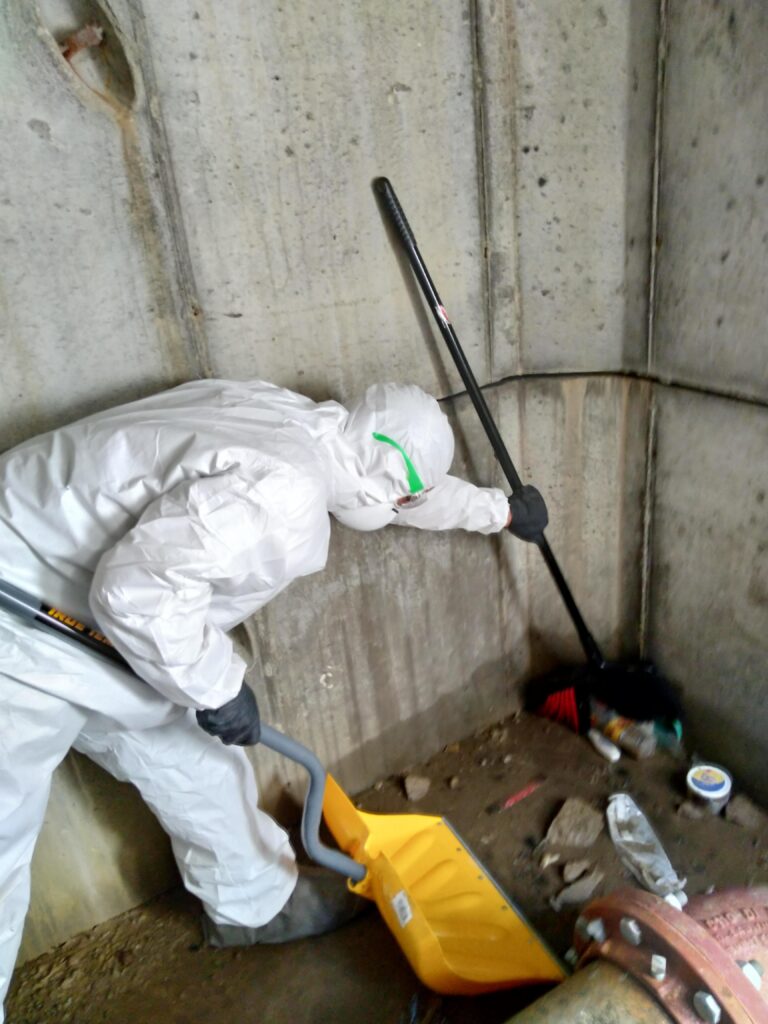
Professional hoarding cleanup teams deploy full-face respirators, Tyvek suits, and negative air pressure machines to isolate contamination zones. They follow OSHA bloodborne pathogen standards and EPA guidelines for biocide application. This level of protection is not available at a hardware store.
Mistake 2: Ignoring Hidden Water Damage and Mold Colonization
Greenfield sits within Marion County’s humid continental climate zone. Summers bring average relative humidity above 70%, and winter freeze-thaw cycles create condensation risks in poorly ventilated homes. In hoarding environments, blocked airflow and accumulated moisture create perfect conditions for mold colonization.
Families who focus only on visible clutter miss the critical water damage hiding behind walls, under flooring, and inside HVAC systems. By the time mold becomes visible, colonies have often released mycotoxins into the indoor air. These toxins trigger respiratory illness, neurological symptoms, and immune suppression.
A certified hoarding cleanup service uses thermal imaging and moisture meters to map hidden water intrusion. They establish containment barriers with negative air pressure to prevent spore migration during remediation. HEPA air scrubbers run continuously to capture airborne particles as small as 0.3 microns. This scientific approach is the only way to ensure a home is truly safe for reoccupancy.
Mistake 3: Failing to Address Structural Integrity Before Cleanup
Hoarding environments can add literal tons of weight to floors, joists, and load-bearing walls. In Greenfield’s older neighborhoods, such as the historic districts near downtown, homes built in the early 1900s were not designed to support extreme dead loads. Families who begin moving items without structural assessment risk floor collapse, injury, and catastrophic property damage.
Before any cleanup begins, a professional service evaluates structural integrity. They identify compromised subflooring, rotted joists, and weakened support beams. In some cases, an engineer’s assessment is required before heavy debris removal can proceed safely. Skipping this step turns a cleanup project into a construction emergency.
Mistake 4: Disposing of Items Without Documentation or Legal Considerations
Hoarding cleanup often involves sorting through decades of accumulated possessions. Families who rush to discard everything without proper documentation may destroy valuable items, important legal documents, or sentimental objects that the homeowner still values. In extreme cases, improper disposal of hazardous materials violates Indiana environmental regulations and results in fines.
Professional hoarding cleanup teams in Greenfield work with families to establish sorting protocols. They identify items for salvage, donation, recycling, and regulated disposal. They handle biohazardous waste according to IDEM (Indiana Department of Environmental Management) standards. This methodical approach respects the homeowner’s dignity while ensuring legal compliance.
Mistake 5: Choosing a General Cleaning Service Instead of a Certified Restoration Company
Not every cleaning company is qualified for hoarding cleanup. General maid services lack training in biohazard remediation, structural drying, and antimicrobial treatment. They may appear cheaper upfront, but their incomplete work leaves families facing recurring mold, persistent odors, and ongoing health risks.
When evaluating hoarding cleanup services in Greenfield, verify the following credentials:
- IICRC certification in Water Damage Restoration (S500) and Mold Remediation (S520)
- OSHA compliance for bloodborne pathogen handling
- EPA registration for antimicrobial product application
- Proper liability and workers’ compensation insurance
- Local references from Marion County and surrounding areas
- Experience with Level 4 and Level 5 hoarding scenarios
PuroClean Disaster Restoration meets all these requirements and maintains active certification in the latest IICRC protocols. Our technicians understand the unique challenges of Greenfield’s climate, housing stock, and local building codes.
Mistake 6: Neglecting Odor Remediation and Air Quality Restoration
Hoarding odors are not simply unpleasant smells. They are chemical signatures of active biological contamination. Pet urine crystallizes and releases ammonia. Mold produces microbial volatile organic compounds (MVOCs). Decomposing matter generates hydrogen sulfide and other toxic gases.
Families who mask odors with air fresheners or ozone generators without addressing the source waste money and endanger health. Proper odor remediation requires source removal, thermal fogging, hydroxyl generation, and activated carbon filtration. Professional hoarding cleanup services deploy industrial-grade equipment that neutralizes odor molecules at the chemical level, not just the perceptual level.
Mistake 7: Delaying Cleanup Until the Situation Becomes a Crisis
The most expensive mistake of all is waiting. Every day of delay in a hoarding environment allows mold to spread, water damage to worsen, and structural decay to advance. In Greenfield, where summer humidity peaks in July and August, a three-month delay can transform a manageable Level 3 hoard into a Level 5 structural emergency.
Families often delay because they feel embarrassed, overwhelmed, or hopeful that the situation will improve on its own. It will not. Hoarding disorder is a recognized mental health condition that requires compassionate intervention. Professional hoarding cleanup services work with mental health professionals, social workers, and family counselors to ensure the cleanup process supports the homeowner’s long-term wellbeing.
How to Choose the Best Hoarding Cleanup Service in Greenfield
Selecting the right hoarding cleanup partner requires more than a Google search. Use this step-by-step evaluation process:
Step 1: Verify IICRC Certification Confirm the company holds current S500 and S520 certifications. Ask for certificate numbers and verify them through the IICRC database.
Step 2: Request a Detailed Assessment A reputable company will conduct an on-site evaluation before providing a quote. Beware of phone estimates for complex hoarding scenarios.
Step 3: Review Insurance and Liability Coverage Ensure the company carries general liability, pollution liability, and workers’ compensation insurance. Request certificates of insurance.
Step 4: Ask About Local Experience Greenfield’s housing stock includes ranch-style homes, historic bungalows, and mid-century builds. Each presents unique challenges. Local experience matters.
Step 5: Evaluate Compassion and Communication Hoarding cleanup is emotionally difficult. The best companies train technicians in trauma-informed care and maintain clear communication with families throughout the process.
Step 6: Confirm Comprehensive Services The company should handle debris removal, biohazard remediation, structural drying, mold treatment, odor neutralization, and final sanitization. Fragmented services create gaps in remediation.
Step 7: Get Everything in Writing A professional hoarding cleanup proposal includes scope of work, timeline, cost breakdown, and warranty terms. Never proceed on a verbal agreement.
Frequently Asked Questions
Does home insurance cover hoarding cleanup in Greenfield, Indianapolis? Coverage depends on your policy and the cause of damage. Most standard homeowners policies exclude damage resulting from neglect or gradual deterioration. However, if hoarding-related water damage resulted from a sudden, covered peril such as a burst pipe, portions of the cleanup may be covered. We recommend reviewing your policy with your insurance agent and inviting a PuroClean estimator to document damage for your claim.
How long does professional hoarding cleanup take? Timeline varies by severity. A Level 3 hoarding cleanup may take 3 to 5 days. A Level 5 scenario with structural damage and mold colonization may require 2 to 4 weeks. Each project begins with a detailed assessment and customized remediation plan.
Is hoarding cleanup safe for family members to be present? During active remediation, family members should not occupy the home. Negative air pressure containment, HEPA filtration, and biocide application create temporary conditions that require professional monitoring. Families may visit during sorting phases with proper PPE and supervision.
What happens to items of sentimental value? Professional hoarding cleanup teams work with families to identify and preserve sentimental items. Salvageable belongings are cleaned, deodorized, and stored securely. This process is documented and communicated at every stage.
Can hoarding cleanup prevent future mold problems? Proper remediation eliminates existing mold colonies and addresses moisture sources. However, long-term mold prevention requires improved ventilation, humidity control, and ongoing maintenance. We provide recommendations for permanent environmental improvements.
Conclusion
Hoarding cleanup is one of the most consequential decisions a family can make. The seven mistakes outlined in this guide cost Greenfield families thousands of dollars in unnecessary repairs, medical expenses, and emotional hardship. The solution is clear: hire a certified, experienced, compassionate hoarding cleanup service that follows IICRC S500 and S520 standards from the first assessment to the final air quality test.
If your family is facing a hoarding situation in Greenfield, Indianapolis, or surrounding neighborhoods, do not wait for the crisis to worsen. Call PuroClean Disaster Restoration at (317) 467-4436 today. Our certified technicians are available for immediate response, comprehensive assessment, and compassionate remediation that restores your home and protects your family’s health.