


PuroClean Disaster Restoration | Greenfield and Indianapolis, Indiana | Call: (317) 467-4436
| KEY TAKEAWAYS FOR HOMEOWNERS |
| Water expands by up to 9% when it freezes, generating over 2,000 pounds per square inch of pressure inside concrete and soil. |
| Greenfield and Indianapolis experience an average of 25 to 40 freeze thaw cycles per winter, making local foundations especially vulnerable. |
| Early signs of freeze thaw damage include hairline cracks, spalling, heaving, and water intrusion in basements. |
| IICRC S500 and S520 certified professionals use moisture mapping and structural drying to stop secondary damage after freeze thaw events. |
| Proactive waterproofing, proper drainage, and annual inspections are the most effective prevention strategies for Central Indiana homeowners. |
| If you suspect foundation or driveway damage, call PuroClean Disaster Restoration at (317) 467-4436 for a professional assessment. |
Every winter across Greenfield and Indianapolis, Indiana, an invisible force silently wages war on your home. It does not announce itself with loud cracks or dramatic collapses. Instead, it works methodically, cycle by cycle, freeze by freeze, until one spring morning you find a two inch crack running through your foundation wall or a section of your driveway buckled beyond repair. This force is the freeze thaw cycle, and understanding its 7 most destructive mechanisms is the first step to protecting your most valuable asset.
What Is the Freeze Thaw Cycle and Why Does It Matter for Indianapolis Homeowners?
The freeze thaw cycle describes the repeated process by which water absorbed into porous materials like concrete, brick, and soil freezes and expands as temperatures drop below 32 degrees Fahrenheit, then thaws and contracts as temperatures rise above freezing. This expansion and contraction cycle generates enormous hydrostatic pressure within the material itself.
According to the IICRC S500 Standard for Professional Water Damage Restoration, moisture intrusion and cyclical freeze thaw stress represent two of the leading causes of structural compromise in residential properties. When combined with the psychrometrics of Central Indiana winters, where temperatures can swing 40 degrees in a single day, the risk to your home becomes acute.
Indianapolis and Greenfield sit in USDA Hardiness Zone 6a, where average winter temperatures range from minus 10 to 0 degrees Fahrenheit at their coldest. The Indianapolis metropolitan area typically records between 25 and 40 freeze thaw cycles per winter season, each one an opportunity for water to penetrate deeper into your home’s infrastructure.
The 7 Devastating Ways the Freeze Thaw Cycle Destroys Your Foundation and Driveway
1. Hydraulic Pressure Fracturing Inside Concrete
When water permeates the micropores of concrete and freezes, it expands by approximately 9%. This seemingly small percentage translates to pressures exceeding 2,000 pounds per square inch (PSI) within the concrete matrix. No standard residential concrete mix is engineered to withstand this repeated internal pressure.
The result is hydraulic pressure fracturing, where hairline cracks form first, then widen with each subsequent cycle. In Greenfield’s older ranch and split level homes, where concrete was often poured without modern air entraining agents, this process accelerates dramatically. Air entraining admixtures create microscopic voids that give freezing water room to expand, reducing crack formation. Homes built before the 1980s in Hamilton and Hancock Counties frequently lack this protection.
2. Frost Heave Beneath Your Foundation
Clay rich soils common throughout Marion and Hancock Counties in Indiana are highly susceptible to frost heave. When soil moisture freezes, it forms ice lenses that grow upward, physically lifting the soil and whatever structure rests on top of it. A foundation subjected to repeated frost heave experiences differential settlement, where one section of the foundation moves more than another.
This differential movement creates the stair step cracking pattern often seen in brick veneers and the diagonal cracks appearing in basement walls near corners. Moisture mapping conducted by IICRC certified technicians often reveals elevated moisture readings at these exact locations, confirming active water infiltration through damaged areas.
3. Spalling of Concrete Surfaces
Spalling refers to the flaking, chipping, and pitting of concrete surfaces caused by freeze thaw cycling. On driveways and walkways throughout the Greenfield area, spalling often begins at the surface where deicing salts are applied. Sodium chloride and calcium chloride, while effective at melting ice, accelerate moisture absorption into concrete and lower the freezing point of water within the pores, causing deeper and more damaging freeze thaw cycles within the slab itself.
Once spalling begins, the exposed aggregate creates pathways for water intrusion that compound with each winter cycle. What starts as cosmetic surface damage becomes a structural concern within three to five years without intervention.
4. Cove Joint Failure and Basement Water Intrusion
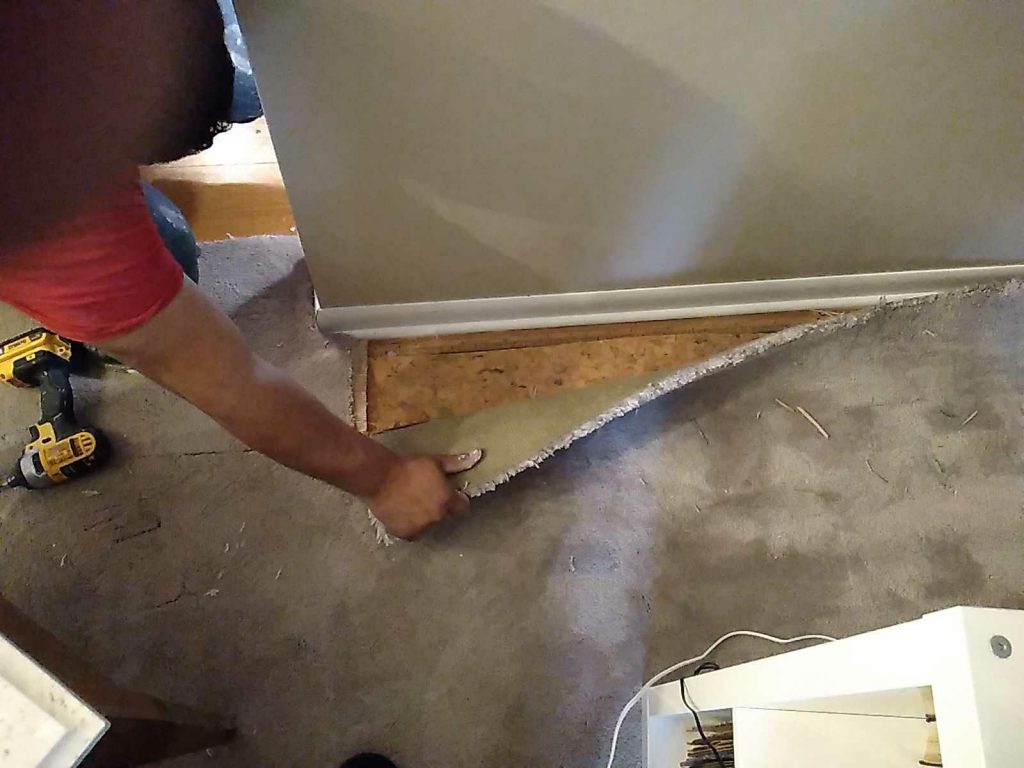
The cove joint, the seam where your basement floor meets the foundation wall, is one of the most structurally vulnerable points in any home. Freeze thaw cycling in the soil surrounding the foundation creates lateral hydrostatic pressure against basement walls. Over time, this pressure causes the cove joint to crack, allowing groundwater to seep into the basement.
The IICRC S500 standard classifies this type of water intrusion as Category 1 or Category 2 water damage depending on the contamination level of the incoming water. Left unaddressed, basement water intrusion creates ideal conditions for microbial growth, secondary structural damage, and the kind of environmental hazards addressed under IICRC S520 mold remediation protocols.
5. Efflorescence and Rebar Corrosion
Efflorescence, the white powdery mineral deposit that appears on concrete and masonry surfaces, is a visible symptom of water moving through your foundation walls. As water permeates the concrete, it dissolves soluble salts and deposits them on the surface as it evaporates. While efflorescence itself is not structurally dangerous, it confirms active water migration.
More critically, that same water reaches the steel reinforcing bars embedded in your foundation. In Indianapolis and Greenfield homes, where deicing salts wash into the soil from roads and driveways, chloride ion penetration causes rapid rebar oxidation. Corroding rebar expands by up to four times its original volume, cracking the concrete from within in a process called concrete cancer.
6. Driveway and Slab Cracking from Thermal Contraction
Concrete expands in heat and contracts in cold. In Greenfield and Indianapolis, where summers reach into the 90s Fahrenheit and winters drop well below freezing, the thermal contraction stress alone can exceed the tensile strength of unreinforced concrete slabs. When control joints, the intentional weak points designed to control where concrete cracks, are absent, improperly spaced, or have deteriorated, cracking occurs randomly and at structurally damaging locations.
Once cracking begins, the freeze thaw cycle exploits every millimeter of the crack, widening it with each cycle. A quarter inch crack becomes a half inch crack. Water penetrates, freezes, and the cycle continues.
7. Chimney and Step Deterioration
Freeze thaw damage is not limited to foundations and driveways. Chimneys, brick steps, and masonry retaining walls throughout Central Indiana neighborhoods suffer significant deterioration through a process called spalling mortar joints. As mortar absorbs moisture and freezes, it expands and breaks away from the brick face, a process called spalling. Once the mortar joint is compromised, the entire assembly becomes susceptible to water intrusion, further freeze thaw damage, and eventual structural failure.
How to Identify Freeze Thaw Damage Early: Warning Signs for Greenfield and Indianapolis Homeowners
Early identification is critical. The following warning signs warrant immediate professional inspection:
- Hairline or stair step cracks in foundation walls or brick veneer
- White efflorescence deposits on basement walls or exterior masonry
- Concrete spalling, pitting, or surface flaking on driveways and walkways
- Doors or windows that suddenly stick or no longer close properly
- Uneven or heaved sections of driveway, patio, or walkway
- Water seepage or wet spots at the cove joint in the basement
- Bowing or leaning basement walls
- Chimney mortar that crumbles when touched
The Science Behind the Damage: Psychrometrics and Moisture Dynamics
Understanding why Indianapolis winters are particularly destructive requires a basic grasp of psychrometrics, the study of air and moisture relationships. Central Indiana experiences a humid continental climate with significant temperature variability. The region averages over 41 inches of annual precipitation, much of it falling as snow and freezing rain during the winter months.
This moisture saturation combined with the rapid temperature fluctuations typical of Indiana winters creates ideal conditions for aggressive freeze thaw cycling. IICRC certified technicians use psychrometric calculations to assess the rate of moisture migration through structural components, a critical step in developing effective restoration and prevention strategies.
Moisture mapping, using infrared thermography and calibrated moisture meters, allows professionals to identify hidden moisture accumulation within walls, floors, and foundation assemblies before visible damage occurs. This diagnostic approach is foundational to both the IICRC S500 and S520 standards.
Prevention Strategies: Protecting Your Home Through an Indiana Winter
Waterproofing and Drainage
- Apply penetrating concrete sealers to driveways and walkways annually before the first freeze
- Ensure proper grading around the foundation so water drains away from the home at a minimum slope of 1 inch per foot for the first 6 feet
- Install or maintain functional gutters and downspout extensions directing water at least 4 feet from the foundation
- Consider interior or exterior drain tile systems if chronic basement moisture is present
Soil and Structural Management
- Have foundation cracks professionally injected with polyurethane or epoxy sealants before winter
- Test soil drainage around the foundation and amend clay heavy soils with gravel or sand to reduce frost heave potential
- Inspect and repoint chimney mortar joints every 10 to 15 years
Monitoring and Maintenance
- Schedule an annual pre winter structural inspection with a qualified contractor
- Document the size and location of any existing cracks with photographs to track progression
- Use calcium magnesium acetate instead of sodium chloride based deicers on driveways and walkways to reduce concrete spalling
When to Call a Professional: The Role of IICRC Certified Restoration
When freeze thaw damage has already occurred, particularly when water has entered the basement or structure, professional intervention following IICRC S500 and S520 standards is essential. DIY patch and seal approaches address symptoms, not causes, and often trap moisture within the structure, accelerating internal damage.
IICRC certified professionals bring specialized equipment and knowledge to restoration projects: structural drying systems using industrial dehumidifiers and air movers, negative air pressure containment to prevent cross contamination, antimicrobial biocide application to prevent mold colonization in water damaged areas, and comprehensive moisture mapping to verify that all affected materials have returned to acceptable moisture content levels.
Frequently Asked Questions About Freeze Thaw Damage in Greenfield and Indianapolis
Does homeowners insurance cover freeze thaw damage to my foundation in Indianapolis?
Standard homeowners insurance policies in Indiana typically exclude damage caused by gradual deterioration, earth movement, or flooding, categories under which most freeze thaw foundation damage falls. However, sudden and accidental water damage, such as a burst pipe caused by freezing temperatures, is generally covered. It is critical to review your specific policy and consult with a public adjuster or your insurance agent. PuroClean Disaster Restoration works directly with insurance companies and can help document damage for claims at (317) 467-4436.
How many freeze thaw cycles does Indianapolis experience in a typical winter?
The Indianapolis area typically experiences between 25 and 40 freeze thaw cycles per winter season, with the highest frequency occurring in November, December, February, and March when temperatures most frequently oscillate around the 32 degree Fahrenheit threshold. Greenfield, located slightly east of Indianapolis, experiences similar patterns due to its shared geographic and climatic characteristics.
How quickly can freeze thaw damage become a structural emergency?
A hairline crack can progress to a structurally significant fracture in as few as two to three winter seasons if left untreated, particularly in older homes with poured concrete or block foundations common in Hancock County. Water intrusion through even a small crack introduces moisture that accelerates both physical freeze thaw cycling and potential microbial growth. Early intervention is always more cost effective than emergency restoration.
What is the difference between surface spalling and structural cracking?
Surface spalling affects the top layer of concrete and while damaging, does not immediately threaten structural integrity. Structural cracking penetrates through the full depth of a foundation wall or slab and can compromise load bearing capacity. Any crack wider than a quarter inch or displaying displacement where one side of the crack is higher than the other should be evaluated by a structural professional immediately.
Can mold develop as a result of freeze thaw water intrusion in an Indianapolis basement?
Yes. Water intrusion from freeze thaw damage creates the moisture conditions that support microbial growth within 24 to 72 hours on porous organic materials like wood framing, drywall, and insulation. The IICRC S520 Standard for Professional Mold Remediation governs the proper assessment and remediation of such growth. HEPA filtration and negative air pressure containment are standard protocols to prevent mold spore cross contamination during remediation.
| Need Immediate Help in Greenfield and Indianapolis, Indiana? PuroClean Disaster Restoration is available 24/7 to assess and restore your property. Call Now: (317) 467-4436 |