


Key Takeaways for Homeowners
- Hidden mold thrives behind walls, under flooring, and inside HVAC systems where visual detection fails
- Musty odors, unexplained health symptoms, and persistent humidity indicate active microbial growth requiring professional moisture mapping
- Indianapolis climate patterns create year round condensation risks in crawl spaces and basements
- IICRC S520 mold remediation standards require containment, negative air pressure, and HEPA filtration
- Delayed intervention increases mycotoxin exposure risks and structural degradation costs
- PuroClean Disaster Restoration provides 24/7 emergency mold assessment and certified remediation in Greenfield, Indianapolis, and surrounding Marion County neighborhoods
Why Hidden Mold Represents a Silent Threat to Indianapolis Homes
Mold does not announce its presence with dramatic visual cues. In the restoration industry, we classify microbial growth into two categories: visible colonization and concealed contamination. The latter poses the greater risk because homeowners operate under false security while spore counts escalate behind building materials.
Indianapolis presents unique environmental pressures. Our humid continental climate generates summer relative humidity levels exceeding 75 percent, while winter temperature differentials drive condensation inside wall cavities. Homes in Greenfield and eastern Marion County face additional challenges: many properties built between 1960 and 1990 lack adequate vapor barriers in crawl spaces, creating ideal conditions for Stachybotrys chartarum and Aspergillus species proliferation.
The Institute of Inspection Cleaning and Restoration Certification (IICRC) establishes S500 and S520 standards as the definitive framework for water damage and microbial remediation. These protocols demand psychrometric analysis, antimicrobial biocide application, and engineering controls including negative air pressure containment. When PuroClean Disaster Restoration responds to mold concerns in the Indianapolis metro, every assessment begins with these standards as the authoritative anchor.
Understanding the seven signs below positions you to act before concealed contamination compromises your indoor air quality and property value.
Sign 1: Persistent Musty Odors Without Visible Source
What Your Nose Detects That Your Eyes Cannot
That earthy, damp smell permeating your basement or hallway is not normal. It indicates volatile organic compounds (VOCs) released during fungal metabolism. When you detect mustiness without locating visible growth, the source likely hides behind drywall, beneath carpet padding, or inside HVAC ductwork.
In Indianapolis, we encounter this scenario frequently in ranch style homes with slab foundations common to the Greenfield area. Ground moisture wicks through concrete, creating microclimates behind baseboards where Chaetomium and Penicillium colonies establish themselves.
What to do immediately:
- Isolate the affected area and increase ventilation if possible
- Do not mask odors with air fresheners, this delays necessary intervention
- Document odor locations, intensity variations, and seasonal patterns
- Contact PuroClean Disaster Restoration at (317) 467-4436 for moisture mapping and air quality assessment
Sign 2: Unexplained Respiratory Symptoms Among Household Members
When Your Body Becomes the Mold Detection System
Mycotoxins produced by toxigenic mold species trigger immunological responses before structural damage becomes apparent. If family members experience persistent coughing, nasal congestion, throat irritation, or worsening asthma without identifiable viral causes, hidden mold may be the culprit.
The Central Indiana allergy index compounds this issue. Pollen seasons mask mold related symptoms, leading residents to attribute respiratory distress to outdoor allergens. However, indoor spore concentrations exceeding 1,000 colony forming units per cubic meter (CFU/m³) indicate active contamination requiring professional assessment.
Health indicators specifically linked to hidden mold exposure:
- Symptoms that improve when leaving home for extended periods
- Increased asthma medication requirements without environmental trigger changes
- Unexplained fatigue, headaches, or cognitive fog in sensitive individuals
- Skin irritation or rashes without contact allergen exposure
PuroClean technicians utilize particle counters and spore trap analysis to quantify indoor air quality against outdoor baseline measurements. If your Greenfield or Indianapolis household experiences these symptoms, professional evaluation provides clarity and protects long term health.
Sign 3: Warping, Bubbling, or Discoloration of Wall Surfaces
Subsurface Moisture Migration Visualized
Paint bubbling, wallpaper peeling at seams, or drywall discoloration indicates moisture intrusion behind finished surfaces. These visual cues represent advanced stages of hidden mold growth, typically occurring 48 to 72 hours after moisture introduction.
Indianapolis building codes prior to 2000 often permitted interior vapor barriers that trap moisture within wall assemblies. During summer cooling seasons, warm humid exterior air contacts cooled interior drywall surfaces, creating condensation planes where Cladosporium thrives. Homes in the Broad Ripple and Irvington neighborhoods frequently exhibit this pattern due to aging infrastructure and mature landscaping that limits foundation drying.
Step by step surface assessment:
- Inspect baseboards and lower wall sections first, gravity drives moisture downward
- Press gently on suspected areas, soft or spongy drywall indicates saturation
- Check for symmetry, moisture intrusion often affects multiple walls in contiguous patterns
- Use a moisture meter if available, readings above 16 percent wood moisture equivalent require investigation
- Photograph progression weekly to document acceleration
- Contact certified remediation professionals before attempting removal
Sign 4: Sudden Increase in Energy Bills Without Usage Changes
HVAC Inefficiency as Mold Indicator
When mold colonizes within ductwork or air handler components, airflow restriction forces your heating and cooling system to work harder. An unexplained 15 to 30 percent increase in energy consumption often signals biofilm accumulation on coils, blower assemblies, or within flex duct runs.
Indianapolis experiences significant seasonal temperature swings, from subzero winters to 90 degree summers with high humidity. This thermal cycling creates condensation within ductwork, particularly in unconditioned attics common to homes in the Greenfield area. Once established, mold colonies restrict airflow and introduce spores throughout living spaces each time the system cycles.
HVAC specific warning signs:
- Visible dust accumulation around vent registers with musty odor when system activates
- Uneven cooling or heating distribution between rooms
- Frequent filter clogging despite regular replacement schedules
- Condensation on ductwork exterior during cooling season
PuroClean Disaster Restoration coordinates with licensed HVAC contractors to address contaminated systems using antimicrobial biocide treatments and HEPA vacuum extraction, ensuring remediation does not compromise mechanical warranties.
Sign 5: Persistent Pest Activity or Unusual Insect Behavior
The Mold Insect Connection Most Homeowners Miss
Certain insects, including fungus gnats, booklice, and specific beetle species, feed directly on mold hyphae. Their presence in unusual concentrations indicates active fungal growth hidden from view. Additionally, rodents and other pests attracted to moisture create entry points that introduce additional water sources, accelerating contamination.
In Indianapolis, termite swarming season (March through May) often coincides with moisture related issues. While termites themselves do not consume mold, the same damp conditions that attract wood destroying insects support fungal proliferation. If you notice increased insect activity in basements, crawl spaces, or utility rooms, the underlying moisture issue likely supports mold colonization.
Integrated pest and mold assessment protocol:
- Document insect species, quantities, and locations
- Identify moisture sources attracting both pests and supporting mold
- Seal entry points after remediation to prevent recurrence
- Implement dehumidification strategies maintaining relative humidity below 60 percent
- Schedule professional inspection combining pest management and mold assessment
Sign 6: Deterioration of Organic Materials in Specific Areas
When Possessions Become Mold Detectors
Leather shoes developing white film in closets, books emitting musty odors, or wooden furniture showing dark spotting indicate localized humidity levels supporting mold growth. These items function as organic substrates that reveal environmental conditions invisible on structural surfaces.
Indianapolis basements and crawl spaces frequently maintain relative humidity above 70 percent during summer months, creating preservation challenges for stored items. Homes without sump pump systems or with failed perimeter drainage in the Greenfield area face elevated risks, particularly in clay heavy soils that retain moisture against foundation walls.
Material specific indicators:
- Leather goods: white or green powdery coating indicating Aspergillus species
- Paper products: foxing (brown spots), warping, or musty odor
- Textiles: permanent staining despite cleaning, particularly on natural fibers
- Wood surfaces: darkening, softening, or fungal fruiting bodies
Sign 7: Foundation Cracks with Efflorescence or White Deposits
Mineral Deposits Signal Chronic Moisture
That white, chalky substance on basement walls is efflorescence, mineral salts left behind as moisture evaporates through concrete. While not mold itself, efflorescence proves chronic moisture migration that supports fungal colonization on adjacent organic materials. In Indianapolis, freeze thaw cycles exacerbate foundation cracking, creating pathways for groundwater intrusion.
Local geology compounds this issue. The glacial till soils underlying much of Marion County and Greenfield provide poor drainage, maintaining hydrostatic pressure against basement walls throughout wet seasons. Homes built without proper exterior waterproofing membranes or footing drains face continuous moisture loads.
Foundation assessment checklist:
- Map crack patterns, horizontal cracks indicate structural pressure while vertical cracks suggest settling
- Measure efflorescence distribution, widespread deposits suggest active groundwater contact
- Check for accompanying mold growth on wood framing, insulation, or stored materials
- Monitor during heavy precipitation events for active water entry
- Document with photographs for insurance and remediation planning
Why Professional Moisture Mapping Matters
DIY mold testing kits provide limited value. They confirm spore presence, which exists in every environment, but fail to identify moisture sources, contamination extent, or appropriate remediation scope. IICRC S520 certified professionals employ systematic approaches:
Professional assessment methodology:
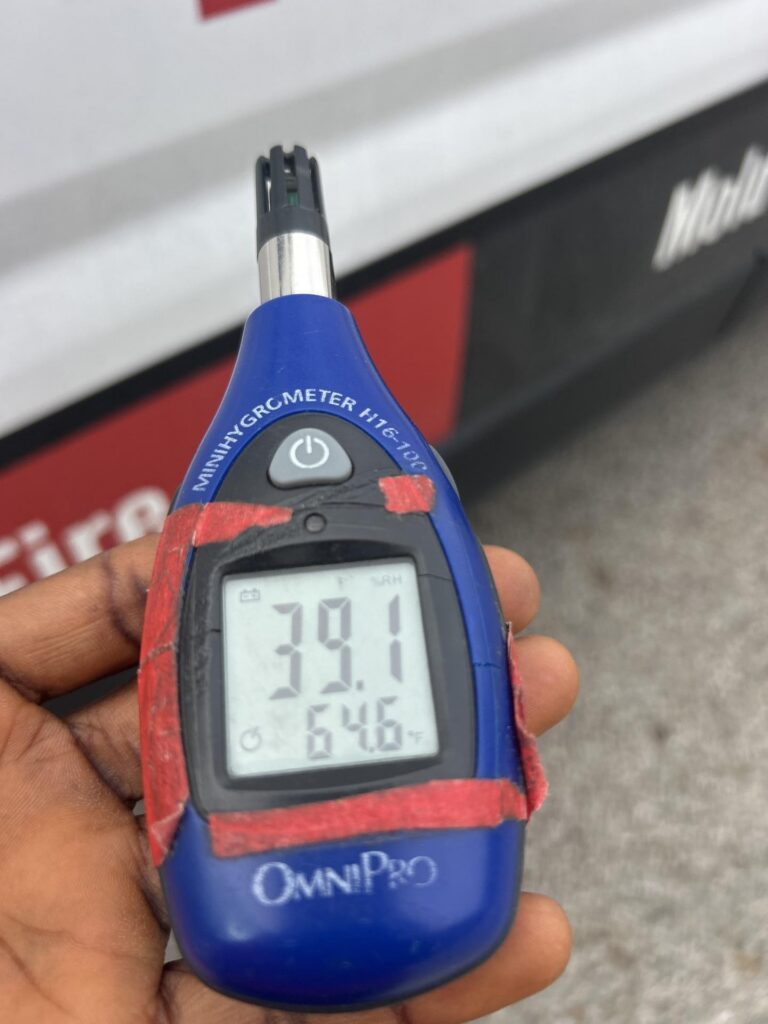
- Psychrometric analysis: Measuring temperature, relative humidity, and vapor pressure to identify moisture anomalies
- Thermal imaging: Infrared cameras reveal temperature differentials indicating moisture behind surfaces
- Moisture mapping: Grid based documentation of moisture content across all building materials
- Air sampling: Spore trap and cassette analysis comparing indoor and outdoor fungal ecology
- Bulk sampling: Laboratory analysis of contaminated materials for species identification and toxigenic potential
PuroClean Disaster Restoration technicians serving Greenfield and Indianapolis complete IICRC certification requirements and maintain continuing education in advanced moisture detection technologies.
FAQ:
Does home insurance cover mold caused by high humidity in Indianapolis?
Standard homeowners policies in Indiana typically exclude mold damage resulting from long term humidity or maintenance issues. However, mold secondary to covered perils, such as burst pipes or storm damage, may receive limited coverage. The Indiana Department of Insurance recommends reviewing policy endorsements for mold specific provisions, which often cap remediation at $10,000. Documentation proving sudden and accidental water intrusion significantly improves claim outcomes. PuroClean assists with claims documentation and direct insurance billing.
How does Indianapolis climate specifically contribute to hidden mold?
Our humid continental climate generates summer dew points exceeding 70 degrees Fahrenheit, creating condensation on cooled surfaces. Winter temperature inversions trap moisture indoors, while spring rainfall saturates foundations. The combination of clay rich soils, aging infrastructure in established neighborhoods, and modern airtight construction creates multiple moisture vectors that bypass visual detection.
What building code considerations affect mold risk in Greenfield homes?
Hancock County adopted the 2020 Indiana Residential Code, which enhanced ventilation requirements for crawl spaces and basements. However, homes constructed under previous code cycles may lack adequate mechanical ventilation or vapor barriers. Retrofitting these properties with conditioned crawl space systems and dehumidification infrastructure significantly reduces hidden mold risks.
Can hidden mold affect home resale value in Indianapolis?
Absolutely. Indiana disclosure laws require sellers to report known mold issues. Professional remediation with transferable warranties protects property values and prevents transaction delays. Undisclosed mold discovered during inspections typically reduces offers by 10 to 20 percent and may derail financing approval.
How quickly must I act upon discovering hidden mold signs?
Within 24 to 48 hours. Mold colonies double in size approximately every 24 hours under optimal conditions. Delay increases remediation costs exponentially, from surface treatment to full gut renovation. PuroClean Disaster Restoration provides emergency response throughout Indianapolis and Greenfield, arriving within hours to contain contamination and prevent further proliferation.
The PuroClean Disaster Restoration Difference
When hidden mold threatens your Indianapolis area home, generic cleaning services prove insufficient. PuroClean Disaster Restoration delivers IICRC S520 certified mold remediation utilizing:
- Engineering controls including negative air pressure containment and HEPA filtration
- Antimicrobial biocide application targeting specific fungal species
- Comprehensive moisture mapping and source elimination
- Post remediation verification testing with laboratory documentation
- Direct insurance coordination and claims advocacy
Do not wait until hidden mold compromises your health or property value.
Call PuroClean Disaster Restoration now: (317) 467-4436
Our certified technicians serve Greenfield, Indianapolis, and all surrounding Marion County neighborhoods with 24/7 emergency response, professional empathy, and scientifically grounded solutions that restore your home and peace of mind.