


| Key Takeaways for Homeowners Ice storms in Greenfield and the greater Indianapolis area create a hidden chain of structural and water damage that worsens rapidly if left unaddressed. IICRC S500 and S520 standards guide proper assessment and restoration of water and storm damage. The 7 warning signs covered in this guide include ice dam formation, roof stress, icicle overhang, soffit and fascia damage, interior ceiling stains, burst pipe indicators, and foundation seepage. Early moisture mapping and psychrometrics analysis can prevent secondary mold colonization. PuroClean Disaster Restoration serves Greenfield and surrounding Indianapolis neighborhoods. Call (317) 467-4436 for immediate assessment. |
When a severe ice storm sweeps through Greenfield, Indiana and the wider Indianapolis metro region, the damage it leaves behind is rarely limited to what you can see from the driveway. The real threat hides inside wall cavities, beneath roofing underlayment, and along the foundation perimeter. As temperatures cycle between freezing and thawing throughout a typical central Indiana winter, water migrates into microscopic gaps in your home’s building envelope and then expands as it refreezes, silently widening cracks, saturating insulation, and setting the stage for secondary damage including mold colonization.
Understanding what to inspect after a major winter weather event is not just practical; it is financially protective. According to IICRC S500 Standard for Professional Water Damage Restoration, unaddressed water intrusion escalates from Category 1 clean water to Category 3 grossly contaminated conditions within 24 to 72 hours under certain temperature and humidity conditions. The seven warning signs below are designed to help Greenfield homeowners act before that escalation occurs.
What Makes Ice Storm Damage Different From Other Winter Weather Events?
Unlike a standard snowstorm, an ice storm deposits a layer of freezing rain that encases every exterior surface of your property. This glaze ice adds enormous weight to roofing materials, tree limbs that hang over your home, gutters, and utility lines. The Greenfield and Indianapolis area typically experiences a continental climate with cold, wet winters, and homes in this region including the many older Craftsman bungalows and mid-century ranch-style houses common throughout Hancock County are particularly vulnerable because their rooflines and insulation systems were not always engineered to handle repeated ice loading.
The IICRC S520 Standard for Professional Mold Remediation becomes relevant almost immediately after ice storm water intrusion because saturated building materials reach the moisture content threshold required for mold spore germination, typically above 19 percent moisture content by weight, in as few as 48 hours under warm interior conditions.
Warning Sign 1: Ice Dam Formation Along the Roofline
Ice dams form when heat escaping through an inadequately insulated attic melts the snow sitting on the upper portion of the roof. That meltwater runs down toward the eaves, where the roof surface is colder because it sits above unheated soffit space, and refreezes into a ridge of ice. As this dam grows, subsequent meltwater has nowhere to drain and backs up beneath shingles, infiltrating the roof deck and entering the attic space.
What to look for:
- A visible ridge of ice along the lower roof edge or behind roof valleys
- Icicles that are unusually large or that grow from the middle of the roof rather than strictly from the eave edge
- Water staining on attic sheathing visible from an interior hatch inspection
- Elevated relative humidity readings in the attic space, which psychrometrics analysis can quantify
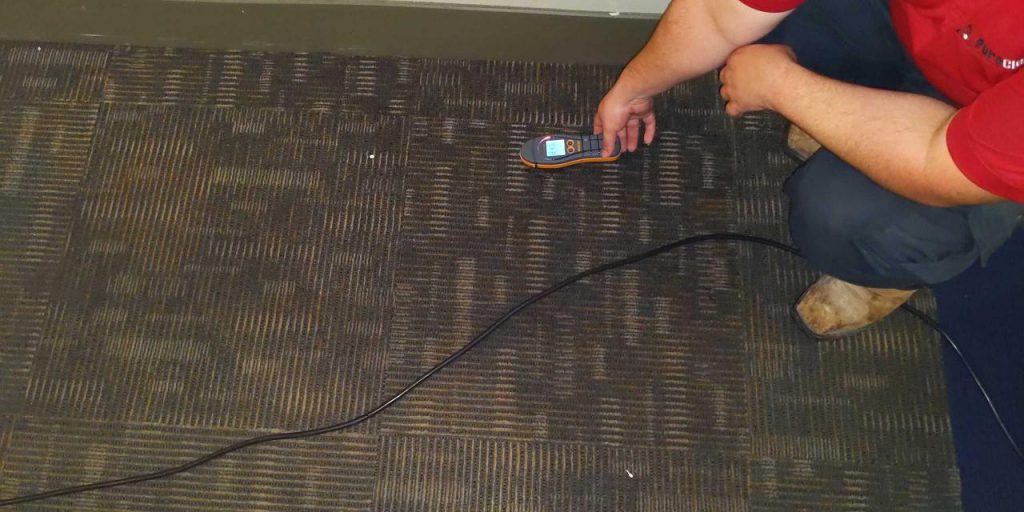
Moisture mapping using a calibrated pin and pinless moisture meter system will reveal the full lateral extent of saturation behind the dam, which frequently extends further than the visible staining suggests.
Warning Sign 2: Roof Structural Stress and Damaged Shingles
Glaze ice weighs approximately 57 pounds per cubic foot. Even a modest one-inch coating of clear ice across a 2,000 square foot roof represents well over 400 pounds of additional load. Older Indianapolis-area homes built prior to current Indiana Residential Code standards may have roofing systems that were never designed to accommodate this kind of dynamic loading.
What to look for:
- Shingles that are cracked, lifted, or completely missing after the thaw
- A visible bow or sag in the roofline, which can indicate rafter or truss compromise
- Granule accumulation in gutters beyond what is typical for your roof age
- Flashing that has pulled away from chimney bases, skylights, or dormers
Any breach in the roofing membrane creates a direct pathway for water infiltration. In Greenfield’s older housing stock, this water typically encounters wood sheathing, wood framing, and fiberglass batt insulation, all of which are hygroscopic materials that retain moisture and support biological growth.
Warning Sign 3: Dangerous Icicle Overhang and Gutter Separation
Large icicles hanging from gutters are more than a safety hazard. They are a visible indicator that your gutter system is either blocked with ice and debris, has separated from the fascia board under ice weight, or is channeling water in directions it should not be flowing. When gutters separate from the fascia, water that should drain away from the foundation instead spills directly against the foundation wall.
What to look for:
- Gutters visibly pulling away from the fascia or hanging at an angle
- Icicles forming from multiple points along a gutter run, indicating blockage
- Water staining on exterior siding beneath gutter joints
- Pooling water near the foundation during the thaw
Warning Sign 4: Soffit, Fascia, and Exterior Cladding Damage
The soffit and fascia system on a Greenfield home performs a critical moisture management function. Soffits provide ventilation to the attic, preventing the kind of condensation buildup that leads to mycotoxin-producing mold colonies. When ice storm damage compromises the soffit or fascia, this ventilation balance is disrupted and interior moisture levels rise.
What to look for:
- Cracked, buckled, or detached soffit panels
- Fascia boards that show surface splitting, rot, or paint failure
- Vinyl siding panels that have cracked under ice impact or thermal shock
- Gaps at window and door trim where ice has pried caulk away from the frame
Warning Sign 5: Interior Ceiling and Wall Staining
By the time you see a water stain on an interior ceiling or wall, water damage has already been occurring for some period of time. The stain itself represents the outer boundary of moisture migration through the assembly, and the actual wetted area behind the drywall is typically significantly larger. In the Indianapolis metro, many homes feature drywall that contains a paper facing, which is a cellulose-based substrate that supports mold growth under sustained wet conditions.
What to look for:
- Yellow, brown, or grey ring staining on ceilings, particularly near exterior walls or under bathroom and kitchen areas
- Bubbling or peeling paint on interior walls adjacent to exterior surfaces
- A musty odor in upper floors or attic-adjacent rooms, which may indicate active biological growth requiring HEPA filtration and antimicrobial biocide treatment
- Soft or spongy drywall texture when pressed gently
Warning Sign 6: Signs of Burst or Stressed Pipes
When outdoor temperatures in Greenfield drop below 20 degrees Fahrenheit, water supply pipes in exterior walls, unheated crawlspaces, and garage-adjacent spaces become vulnerable to freezing and bursting. Even pipes that do not fully burst during the cold snap may develop micro-fractures that leak slowly after the thaw, creating Category 1 water damage situations that can progress quickly.
What to look for:
- Unexplained drops in water pressure at faucets or fixtures
- Water staining on subfloor materials visible from the crawlspace
- Damp or wet wall cavities behind kitchen and bathroom cabinets along exterior walls
- A spike in the water meter reading when all fixtures are turned off, indicating an active leak
IICRC S500 classifies burst pipe water as Category 1 initially, but water that has been standing or has contacted building materials including insulation, subfloor, and framing is subject to rapid contamination classification change, making prompt extraction and structural drying critical.
Warning Sign 7: Foundation Seepage and Crawlspace Flooding
Ice storm conditions accelerate the freeze-thaw cycling that erodes foundation waterproofing systems. As ice in the soil adjacent to the foundation expands, it exerts lateral pressure on foundation walls. When that ice melts, the water released into the soil can overwhelm drainage systems and enter the basement or crawlspace through wall cracks, floor-wall joints, and floor cracks.
What to look for:
- Efflorescence, which appears as white chalky deposits on foundation walls, indicating water migration through the concrete or block
- Standing water or saturated soil in crawlspace areas
- Visible horizontal or stair-step cracks in block foundation walls
- A persistent damp or earthy odor in the basement, potentially indicating microbial growth
What to Do Immediately After Discovering Ice Storm Damage
- Document all visible damage with photographs and video before any cleanup
- Contact your homeowner insurance provider to initiate a claim
- Do not attempt to remove large ice masses from the roof without professional equipment, as this creates fall hazards
- Call a certified restoration professional to perform moisture mapping and a full damage assessment before making any repairs
- Avoid using portable generators indoors or in attached garages, as carbon monoxide risk increases during storm-related power outages
Frequently Asked Questions About Ice Storm Damage in Greenfield and Indianapolis
Does my homeowner insurance policy cover ice storm damage in Greenfield, Indiana?
Most standard homeowner insurance policies in Indiana do cover sudden and accidental ice storm damage including roof damage from ice weight, interior water damage from ice dams, and burst pipe damage. However, policies vary significantly in how they handle damage attributed to gradual deterioration or lack of maintenance. An IICRC-certified restoration professional can provide documented moisture mapping and damage assessment reports that support your claim.
How quickly does mold develop after ice storm water intrusion?
Under warm interior conditions, which are typical in Greenfield and Indianapolis homes during winter because heating systems remain active, mold spores can begin germinating on wet building materials within 24 to 48 hours. Full visible colony growth can occur within 3 to 10 days. Psychrometrics-guided structural drying that brings materials below the moisture threshold for biological growth is the primary prevention strategy.
Can I use a hair dryer or heat gun to remove an ice dam myself?
Using a hair dryer near a roofline involves significant personal safety risks including electrical hazard from melting water and fall risk from working at elevation. The more effective and safer approach is to call a professional who can use calcium chloride-based ice melt applications or professional steam equipment to remove ice dams without damaging the roofing membrane.
What does mycotoxin risk mean after ice storm water damage?
Certain mold species that colonize wet building materials including Stachybotrys chartarum and Aspergillus species produce mycotoxins, which are chemical compounds associated with respiratory and neurological health effects. Addressing water damage quickly, using HEPA filtration during remediation, applying antimicrobial biocide to affected surfaces, and maintaining negative air pressure in the work area are all IICRC S520-guided practices that reduce this risk.
How do I know if my roof structure was damaged and not just the surface shingles?
Structural roof damage typically manifests as visible sagging, a change in roofline profile, cracking sounds when walking in the attic, or fascia boards that are no longer flush with the roofline. A professional assessment that includes attic inspection and measurement of deflection in rafters or trusses is the most reliable method of evaluation.
If you are a homeowner in Greenfield, Indianapolis, or the surrounding Hancock County area and you have experienced an ice storm this season, do not wait for visible damage to worsen. PuroClean Disaster Restoration provides rapid response assessment, moisture mapping, structural drying, and full remediation services to properties throughout the region. Our team is trained to IICRC S500 and S520 standards and responds 24 hours a day, 7 days a week.
Call PuroClean Disaster Restoration now at (317) 467-4436 for immediate assistance. Serving Greenfield, Indianapolis, and all surrounding neighborhoods.