Reviewed by: This guide was reviewed for technical accuracy by PuroClean Disaster Restoration’s IICRC-certified restoration team.
Burst pipe water damage is the sudden release of pressurized supply water into a home, and professionals assess and dry it using the IICRC S500 Standard for Professional Water Damage Restoration. Time is the biggest factor. Clean water from a broken line can soak drywall, insulation, and subflooring within minutes. The longer it sits, the farther it spreads and the more risk it carries.
This guide walks Greenfield, Indiana homeowners through ten steps to take while help is on the way. It also explains what restoration crews do next and when a situation is too big for DIY. The advice follows the S500 standard and U.S. EPA mold guidance, which says wet materials should be dried within 24 to 48 hours.
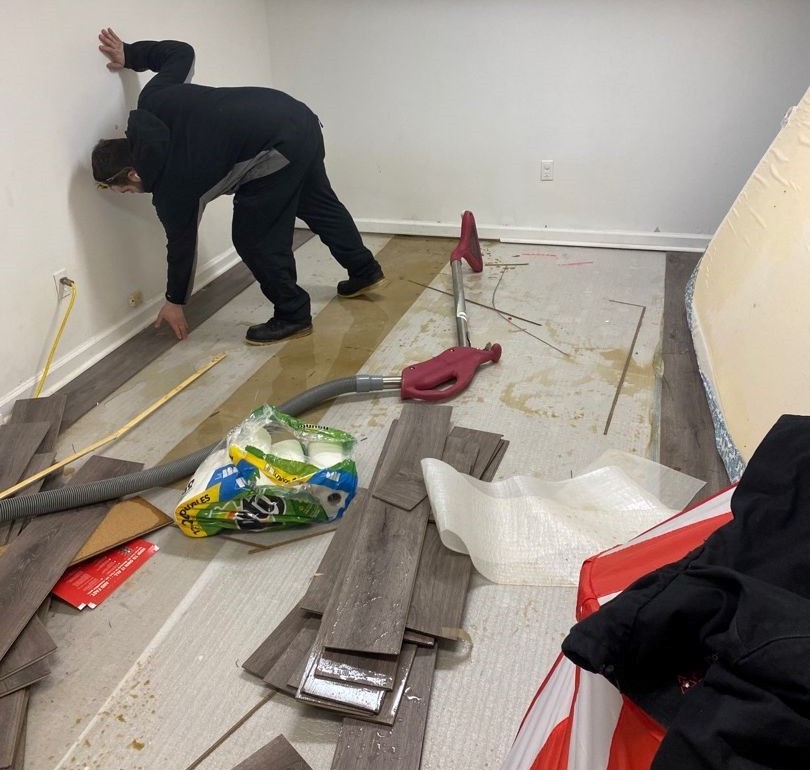
Key Takeaways for Homeowners
- Shut off the main water valve first. Every minute a broken supply line runs adds more water to the loss.
- Water from a burst supply line starts as Category 1 (clean) but can slip to Category 2 or 3 if it sits for roughly 48 to 72 hours or touches contaminated materials.
- EPA guidance says to dry wet materials within 24 to 48 hours to prevent mold growth.
- Photograph and film the damage before moving or discarding anything. Your insurance claim depends on it.
- Never use a household vacuum on water, and stay out of rooms where water meets live electrical.
- Call your insurer and a restoration company the same day. Moisture mapping finds water you cannot see.
Why Do Pipes Burst in Greenfield Homes?
Most burst pipes in Greenfield come from freezing. Water expands as it turns to ice, which builds pressure between the ice plug and a closed faucet. The pipe splits, often in a spot away from the ice itself. The leak usually shows up during the thaw, when water begins flowing again.
Greenfield has a humid continental climate, with hard January freezes followed by fast warm-ups. In the postwar ranch and split-level homes common across Hancock County subdivisions, supply lines often run through exterior walls, unheated crawl spaces, and garage ceilings. Those are the first places to freeze. Older brick homes near the historic downtown may still carry aging galvanized or early copper lines that thin and fail under normal pressure.
Then spring arrives. Snowmelt and rain raise the water table across the Indianapolis metro, pushing hydrostatic pressure against basement floors and walls. Poured concrete and block foundations can admit water through cracks. Fieldstone and aging block basements can seep through original mortar joints. A burst pipe in that setting can mix with groundwater, and a sump pump already working hard may not keep up. That overlap is why a simple pipe failure can turn into a much larger drying project.
Actionable takeaway: Before the first hard freeze, find your main shutoff valve, label it, and turn it once to confirm it works.
What Should You Do First When a Pipe Bursts?
Shut off the water at the main valve, cut power to wet areas only if you can reach the panel safely, and call for help. Those actions stop the source, reduce shock risk, and start professional response. The remaining steps protect your home and your claim while crews travel.
- Shut off the main water valve. Turn it clockwise until it stops. It is usually near the water meter or where the line enters the house. Every minute a ruptured line runs can release many gallons.
- Turn off electricity to the affected area. Switch off breakers only if the panel is on dry ground and you are not standing in water. If you cannot reach it safely, stay out and call an electrician or your utility.
- Drain the lines and protect the water heater. Open faucets on upper floors, then flush a toilet once. This relieves pressure on the damaged section. Switch off the water heater so its elements are not left running dry.
- Identify the type of water. Water from a clean supply line is Category 1. Water that came through a drain, toilet, or sewer line, or that has soaked insulation and carpet padding for days, is Category 2 or 3. If it looks cloudy or smells foul, avoid contact and wait for professionals.
- Document everything before you move it. Take wide shots, close-ups, and video of the broken pipe, wet walls, ceilings, and belongings. Write down the time you found the leak and the time you shut off the water.
- Move belongings to dry ground. Lift small furniture off wet carpet, set foil or plastic blocks under heavy legs, and pick up rugs, electronics, paper, and photos. Do not lift heavy items alone.
- Remove standing water in small amounts. Use towels, a mop, or a wet/dry shop vacuum made for water. Never use a household vacuum. If the water is not clean, stop and leave it for the crew.
- Get air moving and keep the heat on. Run box fans, open interior doors, and keep the thermostat at a normal setting so remaining pipes do not freeze. Run a dehumidifier if you own one. Skip the HVAC system if the water may be contaminated.
- Call your insurer and a restoration company. Your insurer opens the claim. The restoration crew starts extraction and drying. Ask whether the company bills insurance directly, and keep receipts for any temporary repairs.
- Hold off on demolition and risky fixes. Do not cut drywall, pull up flooring, aim a heat gun at wet carpet, or enter a room with a sagging ceiling. Hidden moisture needs equipment to find, and guessing can spread damage.
Actionable takeaway: Write down the exact time you shut off the water. It helps your adjuster and shapes the drying plan.
What Do Restoration Professionals Do After a Burst Pipe?
Professionals follow the IICRC S500 sequence: inspect and classify the water, extract standing water, set up structural drying equipment, monitor progress with daily moisture readings, and confirm the structure meets dry standards. Each step is documented, which also supports your insurance claim.
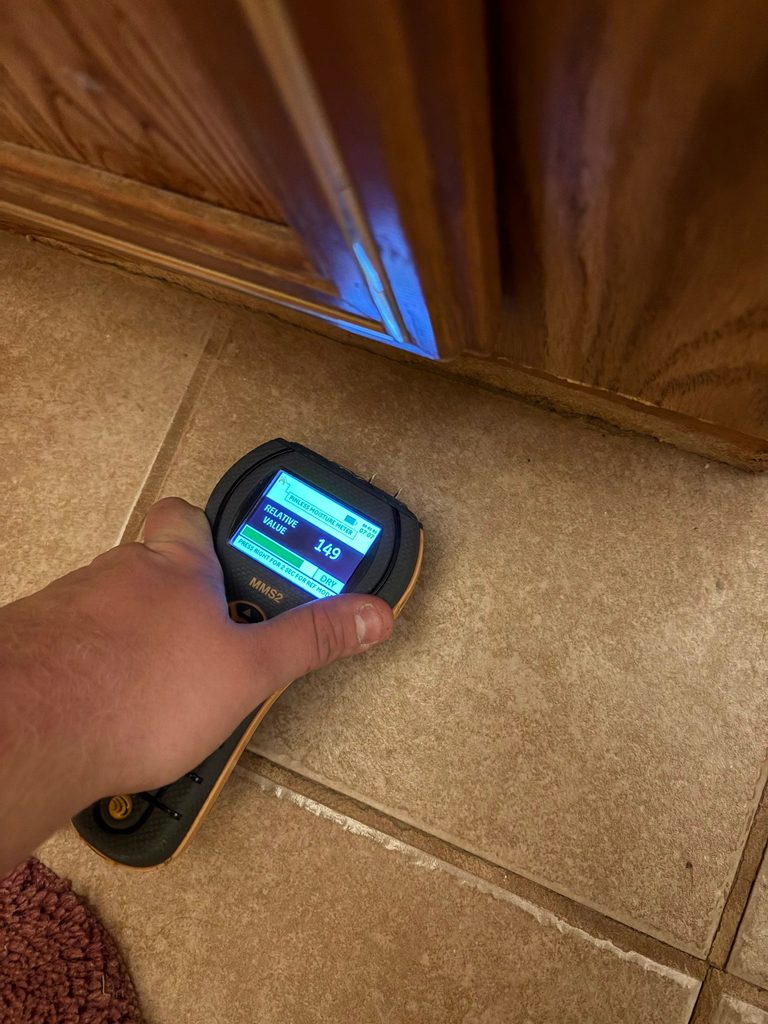
- Inspect and map moisture. Technicians use thermal imaging to spot cold, wet areas behind walls, then moisture meters to build a moisture map. They log hygrometer readings for temperature and relative humidity. Those numbers are the starting point for psychrometrics, the science of how heat, humidity, and air interact during drying.
- Extract standing water. Portable and truck-mounted extractors pull water from carpet, padding, and hard floors.
- Remove what cannot be saved. Saturated insulation, carpet padding, and the lower section of soaked drywall often come out in controlled cuts. Dense materials such as hardwood, plaster, and concrete can hold water deep inside. That is Class 4 water damage, and it calls for specialty drying.
- Dry the structure. Air movers push air across surfaces while low grain refrigerant (LGR) dehumidifiers pull moisture from the air. Wall cavities and subfloors get targeted airflow. This is structural drying.
- Control contamination. For Category 2 or 3 water, crews build a containment barrier from poly sheeting, run negative air pressure, and use HEPA air scrubbers to prevent cross-contamination. They apply an antimicrobial biocide to affected surfaces.
- Monitor and verify. Crews return daily, adjust equipment, and compare readings to unaffected reference materials. Many structural drying jobs take about three to five days, and larger losses take longer.
What separates PuroClean Disaster Restoration from a general handyman or a one-day cleanup crew is process and paperwork. You get IICRC-certified technicians, 24/7 emergency dispatch from our Greenfield location, and direct insurance billing so you are not left floating the cost of the claim.
Actionable takeaway: Ask any contractor for a written moisture log. It is your proof that drying actually finished.
How Fast Does Mold Start After a Burst Pipe?
Mold can begin growing on wet building materials within 24 to 48 hours, according to EPA guidance. Drywall paper, insulation, and wood framing give it plenty to feed on. A pipe that bursts overnight or while you are away can be well past that window before anyone notices.
Water also damages structure. Plywood and OSB subfloors can swell and lose strength, a condition called subfloor delamination, where the layers separate. Some molds release mycotoxins, which is one reason people with asthma, allergies, or weakened immune systems should stay out of wet areas. Bleach sprays do not fix porous materials that stayed wet too long. Mold that has already taken hold falls under the IICRC S520 standard, which uses containment and HEPA filtration to protect the rest of the home.
Actionable takeaway: Treat anything you cannot dry within 48 hours as a professional job.
What If the Burst Pipe Water Is Not Clean?
Water that touched sewage, passed through a drain, or sat long enough to carry bacteria is treated as Category 2 or Category 3 (black water) under S500. It needs protective equipment, containment, and removal of porous materials rather than simple drying in place.
Greenfield homeowners should pay special attention in spring. Saturated ground and an overloaded sewer system can send contaminated water into basements at the same time a pipe fails upstairs. In Indiana, the Indiana Department of Environmental Management (IDEM) oversees sewer overflow policy, and sewage-contaminated water is handled as Category 3 no matter what the source looked like at first. Do not walk through it barefoot, do not run fans that spread it, and keep children and pets out.
Actionable takeaway: If you smell sewage or see gray or brown water, leave it undisturbed and call a certified crew.
Frequently Asked Questions
Does homeowners insurance cover burst pipe water damage in Indiana?
Most standard homeowners policies cover sudden and accidental water discharge, such as a pipe that freezes and splits. They often exclude slow leaks, neglect, and groundwater or flood seepage, which usually need separate coverage. Read your policy and call your agent right away. The Indiana Department of Insurance offers consumer guidance on filing claims.
How much does burst pipe water damage restoration cost?
Cost depends on the water category, the square footage affected, the materials involved, and the drying time needed. A clean-water loss in one room costs far less than a multi-room loss with Category 3 water or Class 4 drying. A written estimate after moisture mapping is the only reliable number, and many insurers pay covered losses directly.
How long does it take to dry a home after a burst pipe?
Many structural drying projects take about three to five days with air movers and LGR dehumidifiers, followed by moisture verification. Larger losses, dense materials, and Category 3 water take longer. Reconstruction, such as new drywall or flooring, starts only after readings show the structure has reached its drying goals.
Can I handle a burst pipe myself?
You can stop the water, safely cut power, remove small amounts of clean standing water, and document damage. Call a professional if water has reached walls, ceilings, or more than one room, if it is not clean, or if materials have stayed wet longer than 24 hours. Hidden moisture is the main risk of going it alone.
What health risks come with a burst pipe in a Greenfield home?
Clean water poses little risk at first, but wet materials can grow mold within 24 to 48 hours, and Category 3 water carries bacteria and viruses. Spring groundwater can add contaminants in basements. People with asthma, allergies, or weakened immune systems should avoid affected areas until a certified crew has dried and cleared them.
Should I fix the pipe before calling a restoration company?
No. Shut off the water, then call both a plumber and a restoration company. The plumber repairs the pipe, and the restoration crew starts extraction and drying. Both can work the same day. Waiting for the repair before drying begins gives mold and subfloor damage extra hours to develop.
Need Help With a Burst Pipe in Greenfield?
PuroClean Disaster Restoration 625 S. State St., Greenfield, IN 46140 Phone: (317) 467-4436 Serving Greenfield and surrounding Indianapolis-metro neighborhoods in Hancock County.
Our IICRC-certified technicians are available 24/7 for emergency dispatch, and we can bill your insurance company directly. Call now, and we will walk you through next steps while a crew gets ready.