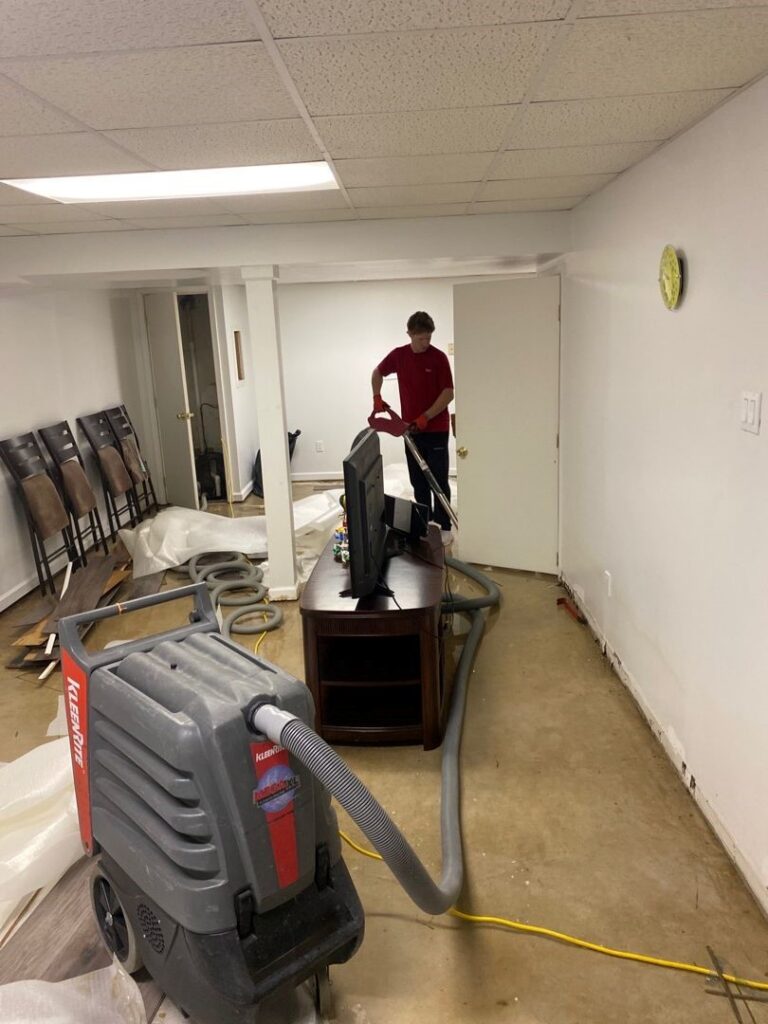
Reviewed for technical accuracy by PuroClean Disaster Restoration’s IICRC-certified restoration team.
Key Takeaways for Homeowners and Business Owners
- Commercial water damage restoration follows the IICRC S500 standard, which sets how water is classified, removed, dried, and verified dry before a space reopens.
- Every hour of standing water raises the odds of structural damage, contaminated materials, and a longer closure, so fast extraction protects revenue.
- Water from a sewer backup is Category 3 (black water). It must be treated as contaminated, and affected porous materials are usually removed.
- Photos, moisture readings, and written records taken early give your insurer what it needs to process a business income claim.
- A building is ready to reopen when moisture readings match dry standards for that material, not when surfaces look dry.
- In Greenfield and Hancock County, spring snowmelt raises the water table and presses groundwater against floors and walls, so spring is a peak risk period.
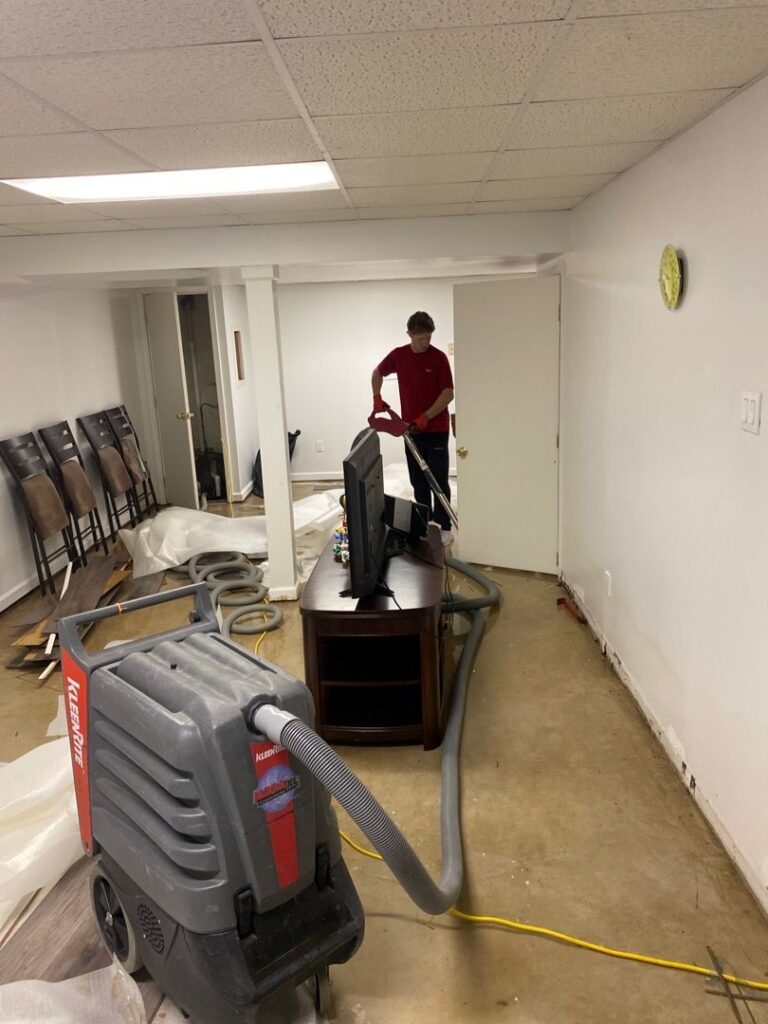
What Is Commercial Water Damage Restoration?
Commercial water damage restoration is the process of removing water, drying the structure, cleaning affected materials, and verifying dry conditions in a business property. Professionals follow the IICRC S500 Standard for Professional Water Damage Restoration, which classifies water by contamination level and by how much of the building it has soaked.
A restaurant, clinic, retail shop, office, or warehouse each has different equipment, inventory, and code needs. The standard stays the same. Technicians sort the loss into a category (how clean the water was) and a class (how much material absorbed it), then build a drying plan from that. Category 1 is clean supply water, Category 2 is gray water, and Category 3 is grossly contaminated water such as sewage or river water. Class 4 means deep saturation in low-evaporation materials like concrete, hardwood, and plaster.
For flood guidance, FEMA advises treating floodwater as contaminated and avoiding it until electrical power is confirmed safe. That advice applies to any business, large or small.
Takeaway: Before anyone touches the mess, find out whether the water is clean, gray, or black. The answer sets the entire plan.
Why Do Greenfield Businesses Get Water Damage?
Greenfield businesses most often face water damage from groundwater seepage in spring, failed sump pumps, roof or plumbing leaks, and sewer backups. The Indianapolis metro has a humid continental climate, and Hancock County sees heavy snowmelt runoff each spring.
Here is how the spring pattern works. Snow melts and rain soaks the ground faster than it can drain. Water collects underground, and the water table rises. That water pushes against basement floors and foundation walls, a force called hydrostatic pressure. It finds any crack, floor joint, or weak seam and comes through.
Building type matters. Older brick storefronts near Greenfield’s historic downtown often sit on fieldstone or aging block basements. Original mortar joints in those walls can let moisture seep through slowly, then quickly during a wet March. Newer commercial buildings and postwar structures in Hancock County usually have poured concrete or block foundations, which resist seepage better but still crack. Gutters and downspouts that dump water near the foundation, poorly graded soil, and sump pump overload during storms add to the problem. In heavy rain, an overloaded sewer system can also push water back up through floor drains.
Takeaway: Walk your building each February. Check downspout extensions, test the sump pump, and look at foundation walls for cracks before the thaw.
5 Ways to Reopen Fast After Commercial Water Damage
The fastest path to reopening is five connected moves: make the building safe, document the loss, identify the water, dry the structure with controlled equipment, and reopen in phases after verification. Skipping any one of them tends to add days.
1. How Do You Make the Building Safe First?
Make the building safe by stopping the water source, shutting off power to wet areas, and keeping people out of affected rooms. Standing water and live electricity are a serious combination, so do not enter flooded areas until a qualified person confirms power is off.
Once the scene is safe, follow this order:
- Shut off the water supply or close the main valve if a pipe or fixture is the source.
- Turn off electricity to affected areas at the breaker, only if you can reach the panel without standing in water.
- Move valuable inventory, records, and electronics to dry ground.
- Block off wet areas so staff and customers do not track water or contamination elsewhere.
- Call a restoration company for emergency dispatch.
Takeaway: Safety comes before salvage. Cutting power and stopping the source protects people and keeps the loss from growing.
2. How Do You Document the Loss and Protect Your Claim?
Document the loss by photographing and filming every affected area before cleanup, listing damaged equipment and inventory, and notifying your insurer quickly. Good records speed up payment, including business income coverage that replaces revenue lost while you are closed.
Take wide shots and close-ups. Record water lines on walls, wet ceiling tiles, damaged stock, and the failed source if you can see it. Keep receipts for emergency expenses. Ask your insurer what your policy says about business income and extra expense coverage, and what its time limits are. The Indiana Department of Insurance publishes consumer guidance on filing claims and on what to do if a claim is delayed or disputed.
A professional moisture assessment adds technical proof. Readings from moisture meters and thermal imaging show how far water traveled behind finished surfaces, which supports the scope of work you submit.
Takeaway: Start your photo log before the first fan turns on. Records taken after cleanup cannot show what was there.
3. How Do You Identify the Water Category and Class?
Identify the category by the water’s source and the class by how much of the structure absorbed it. A broken supply line is usually Category 1 at first, but it can degrade to Category 2 or 3 if it sits. Sewage and river water are Category 3 from the start.
Category 3 water, also called black water, carries bacteria, viruses, and other pathogens. When sewer overflow is involved, the Indiana Department of Environmental Management (IDEM) guidance on sewage contamination is a useful reference. In practice, Category 3 means porous materials such as carpet, pad, insulation, and wet drywall are generally removed rather than dried, and hard surfaces are cleaned and treated with an antimicrobial biocide. Technicians also set a containment barrier so cross-contamination does not spread into dry rooms.
Wet areas are then mapped. Moisture mapping records readings at set points across floors and walls and creates a baseline. Class 4 conditions, such as soaked concrete slabs or thick plaster, need specialty drying because the water leaves slowly.
Takeaway: If sewage, a storm drain, or river water is involved, stop all cleanup and call a certified team.
4. How Do You Dry the Structure Quickly and Correctly?
Dry the structure by removing standing water, then controlling temperature and humidity so moisture leaves the materials. Drying is a science called psychrometrics, which tracks how air holds water at different temperatures. Fans alone do not dry a building. They need dehumidification and monitoring.
A typical sequence looks like this:
- Extract standing water with truck-mounted or portable extractors.
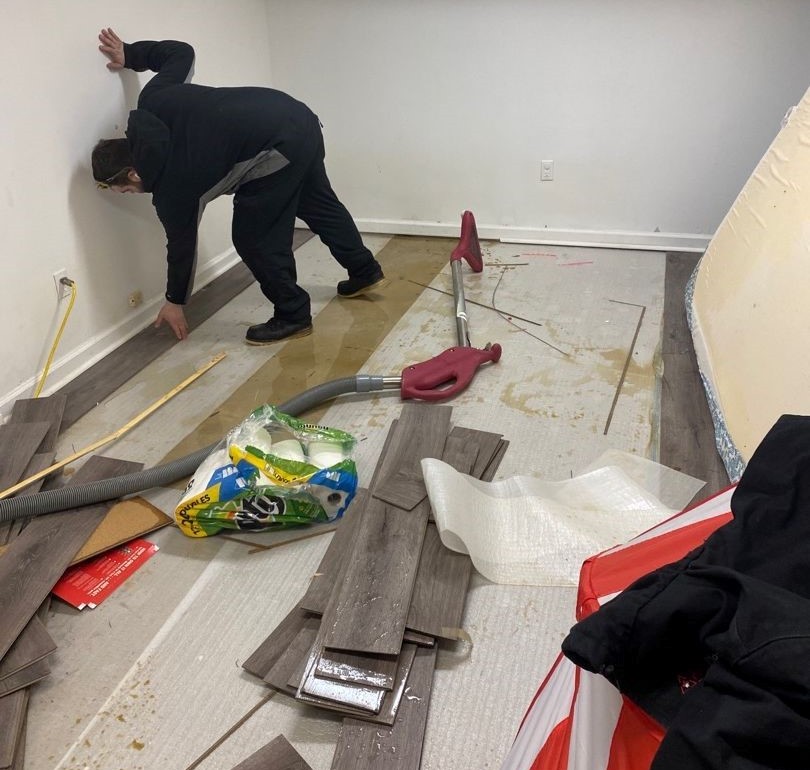
- Remove unsalvageable materials, such as soaked carpet pad, wet insulation, and swollen drywall, to open the structure to airflow.
- Place air movers to push dry air across wet surfaces.
- Run LGR (low grain refrigerant) dehumidifiers to pull moisture out of the air.
- Use thermal imaging and moisture meters to find hidden wet spots in walls and under floors.
- Take hygrometer readings for temperature and relative humidity each day and adjust equipment.
- Continue until structural drying goals are met in every material.
Watch for subfloor delamination, where plywood layers separate after soaking, and for buckled flooring, which signals deeper moisture. Where the water category or mold risk calls for it, technicians add air scrubbers with HEPA filtration and use negative air pressure so contaminated air is pulled away from clean areas.
Takeaway: Ask for daily moisture logs. They show that drying is working and give you proof for your insurer.
5. How Do You Reopen in Phases Without Risking a Setback?
Reopen in phases by releasing areas as each one tests dry and clean, rather than waiting for the entire building. A kitchen may need more time than a front counter, and a dry office wing may be usable while a basement is still being treated.
Before any area reopens, confirm three things: moisture readings meet dry standards for each material, odors and visible contamination are gone, and any needed repairs are scheduled. Mold can grow on damp materials within a day or two, so skipping verification can lead to a second closure. The EPA’s mold guidance stresses that moisture control is the key to preventing growth, which is why final readings matter more than appearance.
Coordinate with your general contractor and insurer so rebuilding starts as drying ends. A restoration company that provides a written scope and timeline makes that handoff smoother.
Takeaway: Ask your restoration team which rooms can open first. A phased plan can bring part of your revenue back sooner.
What Sets PuroClean Disaster Restoration Apart?
PuroClean Disaster Restoration offers 24/7 emergency dispatch, IICRC-certified technicians, and direct insurance billing, so Greenfield business owners can focus on customers instead of paperwork. Local response matters because the first hours decide how much of your building can be saved.
Frequently Asked Questions
Does business insurance cover commercial water damage? Coverage depends on your policy and the cause. Sudden events like a burst pipe are often covered under commercial property insurance, while flood and groundwater usually need separate flood coverage. Business income coverage may replace lost revenue during closure. Review your policy and contact the Indiana Department of Insurance with questions.
How much does commercial water damage restoration cost? Cost depends on square footage, water category, drying class, materials affected, and how many days equipment runs. Category 3 losses cost more because of removal and decontamination. A written scope after a moisture assessment gives the most reliable estimate, and many insurers pay restoration vendors directly.
How long until my business can reopen? Many clean-water losses reach drying goals in about three to five days, but timing varies. Category 3 contamination, Class 4 materials, and rebuilding extend it. Phased reopening can return some areas to use sooner. Daily moisture readings show real progress.
Can my staff clean up water damage themselves? Small, clean-water spills on hard floors may be handled in-house if power is off and the water is gone within hours. Anything involving sewage, wet drywall, ceiling damage, or large volumes needs a certified team. Hidden moisture and contamination are hard to detect without meters and training.
Can water damage cause health problems for employees and customers? Yes. Category 3 water can carry bacteria and viruses, and damp materials can support mold, which may trigger allergy and breathing symptoms in sensitive people. In Hancock County’s wet springs, prompt drying and cleaning limit exposure. Keep people out of affected areas until the space is verified.
What should I do first when water enters my Greenfield business? Stop the water source, shut off power to wet areas if it is safe, and move valuables out of harm’s way. Photograph everything, then call a restoration company and your insurer. Avoid walking through standing water, and never use household vacuums on wet floors.
Need Help Now?
If water has reached your Greenfield or Hancock County business, a fast call can shorten your closure. PuroClean Disaster Restoration, 625 S. State St., Greenfield, IN 46140, (317) 467-4436. Our IICRC-certified technicians are available 24/7 and can bill your insurance directly. We can start with a free conversation about your next step.