


Reviewed for technical accuracy by PuroClean Disaster Restoration’s IICRC-certified restoration team.
Crawl space mold is fungal growth on the wood framing, insulation, and vapor barrier beneath a home. Professionals address it under the IICRC S520 Standard for Professional Mold Remediation, which sets the rules for containment, air filtration, cleaning, and verification. The U.S. Environmental Protection Agency (EPA) adds guidance on when mold becomes a health concern and when a homeowner should hand the job to a professional.
Mold under your floors is not just a cosmetic problem. Air moves upward through a house, so spores and musty odors from the crawl space can reach the rooms where your family eats, works, and sleeps. This guide explains nine health risks tied to mold exposure, why Greenfield crawl spaces are prone to it, and how a certified team removes it safely. It is educational information, not medical advice.
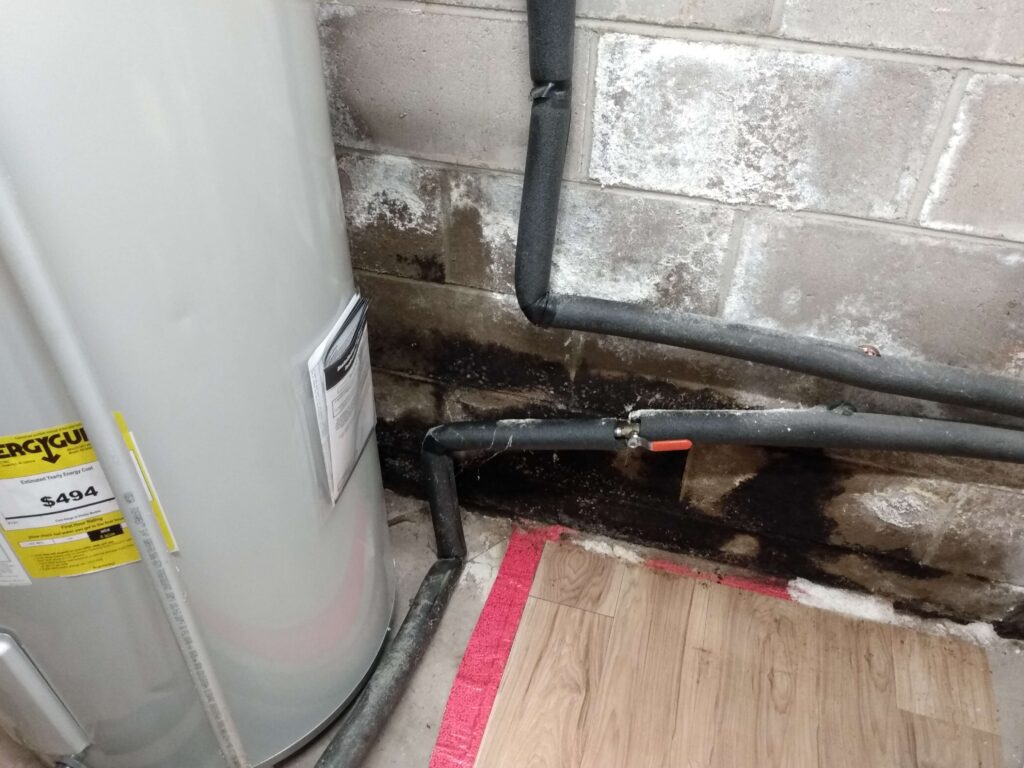
Key Takeaways for Homeowners
- Crawl space mold is remediated under IICRC S520, which requires containment, HEPA filtration, and post-work verification, not a bleach wipe-down.
- The EPA notes mold can begin growing within 24 to 48 hours of a moisture event, so fast action limits both damage and exposure.
- Common effects include nasal congestion, coughing, wheezing, and eye and skin irritation. People with asthma, allergies, or weakened immune systems face higher risk.
- Air rises from a crawl space into living areas, so mold you never see can still affect the rooms you use.
- In Greenfield, spring snowmelt and a rising water table are the most common triggers for crawl space moisture.
- Visible growth, a persistent musty odor, or standing water under the home are signs to schedule a professional inspection.
Water and mold do not wait. If you have had standing water, a plumbing leak, or a musty smell from your floor vents in the past few days, call PuroClean Disaster Restoration at (317) 467-4436. Moisture problems get harder to reverse after the first 48 hours, and a quick inspection can tell you whether you have a damp space or active growth.
Why Do Greenfield Crawl Spaces Grow Mold?
Greenfield crawl spaces grow mold because groundwater rises every spring as snow melts and rain soaks the soil, pushing moisture through foundation walls, floors, and vents. Mold needs only a food source, such as wood, and lasting dampness. The EPA advises keeping indoor humidity below 60 percent, and a wet crawl space rarely stays under that number.
Hancock County sits in the Indianapolis metro with a humid continental climate. Each spring, meltwater and rain build up underground and create hydrostatic pressure against foundations. Postwar ranch and split-level homes in local subdivisions usually have poured concrete or block foundations, and cracks in those walls let groundwater in. Older brick homes near the historic downtown often have fieldstone or aging block foundations, where water seeps through original mortar joints.
Other causes stack on top of the seasonal one. Gutters that overflow, downspouts that empty too close to the house, and soil that slopes toward the foundation all feed the problem. So do sump pump failures during storms. In summer, warm humid air condenses on cool ducts and pipes and keeps the space damp long after the ground dries.
Practical takeaway: After each spring thaw, look under the house with a flashlight for damp soil, wet insulation, and condensation, and confirm downspouts discharge at least four to six feet from the foundation.
What Are the 9 Serious Health Risks of Crawl Space Mold?
Crawl space mold is linked to nine main health concerns: allergic reactions, asthma flare-ups, breathing irritation, eye and skin irritation, sinus problems, hypersensitivity pneumonitis, fungal infections, headaches and fatigue, and greater danger for vulnerable people. Reactions vary widely, and not everyone exposed becomes ill. Talk with a doctor about any symptoms.
1. Allergic Rhinitis
Mold spores act as allergens, so breathing them can cause sneezing, a runny nose, congestion, and itchy eyes that look like seasonal hay fever. A useful clue is timing. If symptoms ease when you leave the house and return once you are home, an indoor source may be involved.
2. Asthma Attacks
The EPA and the CDC both identify mold as an asthma trigger. Spores and fragments can inflame the airways, causing chest tightness, wheezing, and shortness of breath. A person with asthma living above a damp crawl space may notice more frequent flare-ups, especially overnight and in humid weather.
3. Coughing, Wheezing, and Throat Irritation
Even people without allergies can develop a cough, a scratchy throat, or wheezing after breathing mold particles. The irritation comes from spores, fragments, and airborne compounds acting directly on the lining of the nose, throat, and lungs. It is usually mild in healthy adults but can linger while exposure continues.
4. Eye and Skin Irritation
Airborne mold can leave eyes red, watery, and itchy. Skin contact can cause rashes or irritation, which matters for anyone who handles wet insulation or damp framing without gloves and eye protection. Both symptoms tend to fade once the contact stops.
5. Chronic Sinus Problems
Repeated exposure can keep nasal passages inflamed, leading to stuffiness, facial pressure, and sinus infections that keep returning. Some people develop allergic fungal sinusitis, a specific condition a physician must diagnose. If sinus treatment keeps failing, ask about your indoor air.
6. Hypersensitivity Pneumonitis
Hypersensitivity pneumonitis is an immune reaction in the lungs to inhaled particles, and mold is one known cause. Symptoms include cough, fever, chills, and breathlessness. It is uncommon, but it is serious, and it usually improves only when the exposure is removed.
7. Fungal Infections in People With Weak Immune Systems
Healthy people rarely get infections from household mold. People with weakened immune systems, such as those undergoing chemotherapy or taking immune-suppressing drugs, face a real risk of lung infections from molds like Aspergillus. For these households, crawl space mold is a medical concern, not a nuisance.
8. Headaches, Fatigue, and Trouble Concentrating
Some occupants report headaches, tiredness, and foggy thinking in moldy homes. Musty odors come from airborne compounds that molds release, and some species produce mycotoxins. Research on how much mycotoxin exposure indoor air delivers is still developing, so clinicians focus on the symptoms you actually have.
9. Added Risk for Children, Older Adults, and People With Lung Disease
Infants, older adults, and people with COPD or other chronic lung conditions tend to react more strongly to poor air quality. If one of them lives in your home, treat any suspected crawl space mold as a priority.
Practical takeaway: Keep a simple log of symptoms, where and when they occur, and share it with your doctor.
Stop and call a professional. If you see dark, fuzzy growth on the underside of your subfloor, or the floor above feels soft or springy, do not go under the house to scrape it off. That can point to subfloor delamination and heavy contamination. Call PuroClean Disaster Restoration at (317) 467-4436 for an inspection. Disturbing mold without containment spreads spores into the rest of the home.
How Do Professionals Remove Crawl Space Mold?
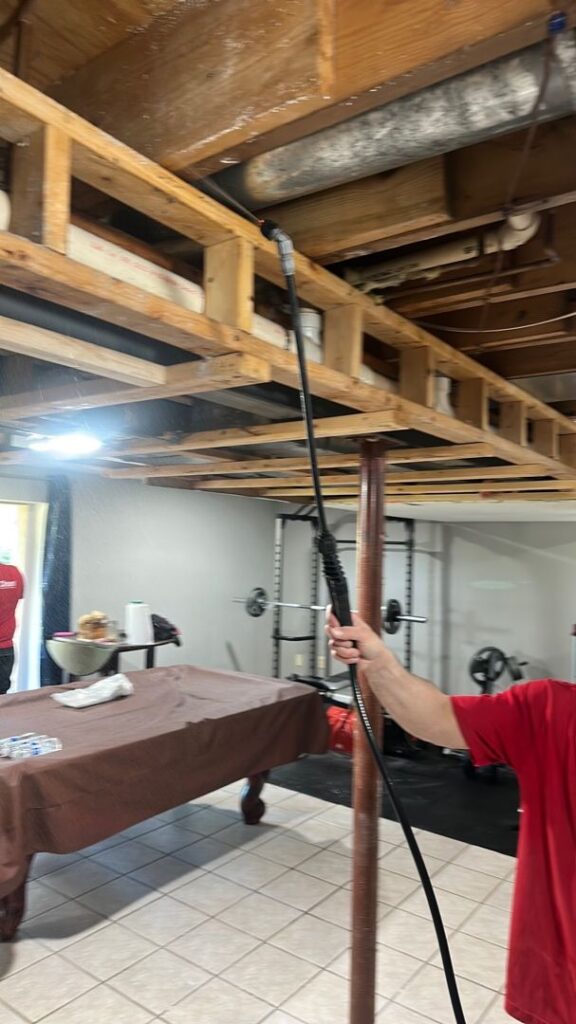
Certified technicians remove crawl space mold by mapping moisture, sealing off the area, filtering the air under negative pressure, cleaning or removing affected materials, applying antimicrobial treatment, drying the space, and verifying the result. The steps follow IICRC S520 so spores stay contained instead of spreading upstairs.
- Inspect and map. Technicians use a moisture meter, a thermal imaging camera, and a hygrometer to find wet materials and record temperature and humidity. Psychrometric readings show how much moisture the air can hold.
- Find the source. Growth returns if the water source stays. Crawl space vents, plumbing, grading, and foundation cracks all get checked.
- Build a containment barrier. Six-mil polyethylene sheeting with a zippered entry seals the work zone from the living space.
- Set negative air pressure. A negative air machine with HEPA filtration exhausts air from the work area, and air scrubbers capture airborne spores.
- Remove what cannot be saved. Contaminated insulation, torn vapor barrier, and heavily damaged wood are bagged and removed.
- Clean the framing. Technicians HEPA vacuum surfaces, then sand, brush, or damp-wipe them to remove growth.
- Apply antimicrobial biocide. An EPA-registered product is applied to treated surfaces, followed by encapsulation where appropriate.
- Dry and verify. LGR dehumidifiers and fans handle structural drying until readings reach target levels. Post-remediation verification confirms the cleanup worked.
If floodwater or a sewer backup reached the space, the water may be Category 3 (black water), which raises cross-contamination risk. The Indiana Department of Environmental Management (IDEM) treats sewer overflow as a public health matter, so that scope changes. Deeply saturated framing or masonry may qualify as Class 4 water damage, which needs specialty drying.
Unlike a general contractor, PuroClean Disaster Restoration dispatches IICRC-certified technicians around the clock, responds locally in Greenfield, and bills insurance carriers directly.
Practical takeaway: Ask any contractor for their containment plan and verification method in writing before work begins.
Frequently Asked Questions
Can crawl space mold make my family sick in Greenfield? Yes, it can. Mold spores and fragments can travel upward into living areas and trigger allergy symptoms, asthma flare-ups, and airway irritation. Effects range from mild to serious depending on the person. Children, older adults, and people with immune or lung conditions are more vulnerable, so early inspection matters.
Does Indiana homeowners insurance cover crawl space mold? Coverage depends on the cause. Policies often cover mold that follows a sudden, covered event like a burst pipe, but usually exclude long-term seepage, humidity, and groundwater flooding. Review your policy and contact your agent or the Indiana Department of Insurance. PuroClean can bill carriers directly and document the loss.
How much does crawl space mold remediation cost? Cost varies with square footage, access, and how far growth has spread. Small contained jobs may cost under a thousand dollars, while whole crawl spaces with insulation removal and moisture correction can reach several thousand. A written inspection and estimate is the only reliable way to know your number.
How long does remediation take? An average crawl space cleanup often takes one to three days. Structural drying adds more time, depending on moisture readings, and repairs to the water source may extend the schedule. Technicians track hygrometer and moisture meter readings to confirm drying is complete.
Can I clean crawl space mold myself? Small, isolated spots on non-porous surfaces may be manageable with protective gear. The EPA suggests professional help for areas larger than about 10 square feet, and for any growth tied to sewage, hidden moisture, or a soft subfloor. DIY scrubbing without containment can spread spores.
Should I test the air before calling anyone? Testing is not required to justify remediation. Visible growth or a persistent musty odor plus a moisture source is enough reason for an inspection. Air sampling can help document conditions before and after cleanup, but the priority is fixing moisture and removing growth.
Get Help With Crawl Space Mold in Greenfield
If you suspect mold beneath your home, you do not have to guess. PuroClean Disaster Restoration, 625 S. State St., Greenfield, IN 46140, serves Greenfield and surrounding Indianapolis-metro neighborhoods in Hancock County. Call (317) 467-4436 to schedule an inspection. Our IICRC-certified technicians are available 24/7 for emergencies, and we can bill your insurance directly.