


Key Takeaways for Homeowners
- Waiting even 24 hours to begin restoration allows acidic soot to permanently etch surfaces and corrode metals.
- DIY cleanup without IICRC S500/S520 certified protocols often drives smoke particles deeper into porous materials.
- Central Indiana’s humid continental climate accelerates secondary damage when fire-damaged structures are not properly sealed and climate-controlled.
- Improper deodorization methods mask odors temporarily while allowing volatile organic compounds to continue off-gassing.
- Calling a certified restoration professional within the first hours after a fire dramatically improves recovery outcomes and reduces total restoration costs.
A house fire is one of the most traumatic events a homeowner can experience. In the chaos that follows, it is natural to want to begin cleanup immediately. However, the decisions made in those first critical hours and days will determine whether your property recovers fully or suffers permanent, compounding damage. Smoke damage is not merely a surface issue. It is a complex chemical event that continues long after the flames are extinguished. When cleanup is handled incorrectly, the damage worsens, costs escalate, and health risks multiply.
This guide outlines eight costly errors that homeowners in Greenfield, Indianapolis, and surrounding Marion County neighborhoods frequently make after a fire. Each mistake is grounded in IICRC S500 (Water Damage Restoration) and IICRC S520 (Fire and Smoke Damage Restoration) standards, the authoritative benchmarks that govern professional restoration science. Understanding these errors empowers you to protect your property, your health, and your financial investment.
Error 1: Delaying the Emergency Response
Time is the enemy after any fire. Within minutes, acidic soot begins etching glass, metal, and plastic surfaces. Within hours, smoke residues penetrate porous materials like drywall, upholstery, and wood framing. Within days, permanent discoloration, corrosion, and odor embedding become inevitable.
Many homeowners delay calling professionals because they are overwhelmed, waiting for insurance adjusters, or attempting to assess the damage themselves first. This hesitation is one of the most expensive mistakes possible.
Why It Makes Smoke Damage Worse:
- Soot is highly acidic. When combined with moisture from fire suppression or humidity, it accelerates corrosion of HVAC systems, electronics, and structural components.
- Smoke particles are microscopic, ranging from 0.1 to 4.0 microns. They infiltrate wall cavities, insulation, and ductwork where they remain invisible yet active.
- Delay allows secondary water damage from fire suppression to compound the problem, creating conditions for microbial growth.
What You Should Do Instead:
- Contact an IICRC certified fire restoration company immediately. Certified technicians deploy within hours to begin emergency pre-cleaning, corrosion mitigation, and content stabilization.
- Document the scene with photographs for insurance purposes, but do not wait for an adjuster before initiating emergency services.
- Turn off HVAC systems to prevent circulation of contaminated air throughout the structure.
Error 2: Attempting DIY Soot Removal Without Proper Equipment
Homeowners often grab household cleaners, sponges, and vacuums to tackle visible soot. This approach is not only ineffective; it actively worsens the damage.
Standard household vacuums lack HEPA filtration and will expel fine particulate matter back into the air. Wet cleaning with improper chemicals can drive soot deeper into porous surfaces or cause chemical reactions that set stains permanently.
Why It Makes Smoke Damage Worse:
- Dry soot smears when wiped with water-based cleaners, embedding carbon particles into paint and finishes.
- Wet soot on electrical components creates conductivity risks and can cause short circuits.
- Without HEPA air scrubbers and negative air pressure containment, cleaning activities aerosolize toxic particles, spreading contamination to previously unaffected areas.
What You Should Do Instead:
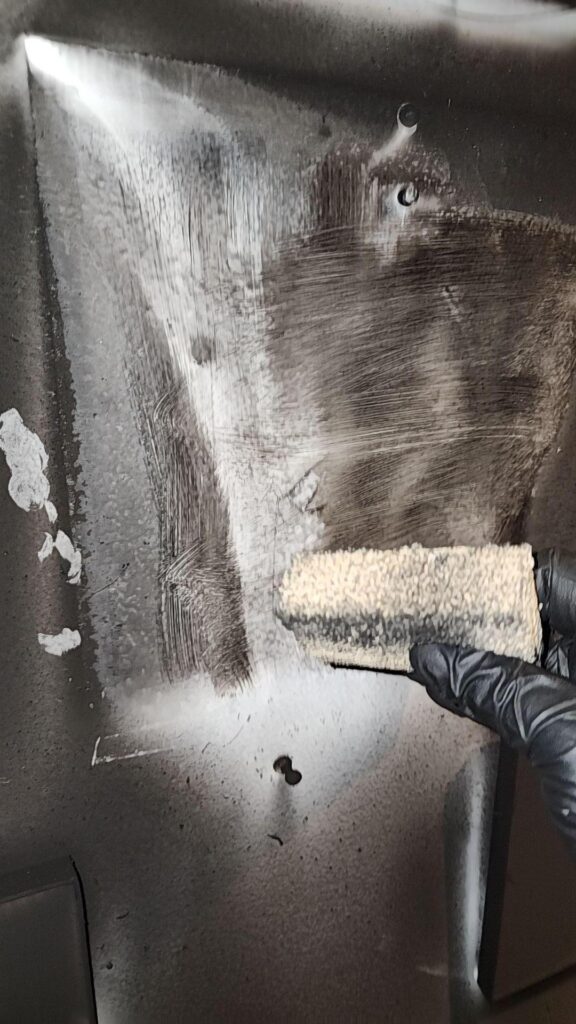
- Allow certified technicians to perform dry soot removal using specialized sponges, HEPA vacuums, and controlled air pressure systems.
- Understand that IICRC S520 protocols require assessment of soot type (dry, wet, protein, or fuel oil) before selecting cleaning agents.
- Professional restoration teams use thermal fogging, ozone treatment, and hydroxyl generators based on the specific contamination profile.
Error 3: Ignoring Hidden Smoke Damage in HVAC Systems
Your heating, ventilation, and air conditioning system is the respiratory system of your home. After a fire, smoke particles infiltrate ductwork, filters, coils, and blower compartments. Ignoring this hidden contamination guarantees that odors will persist and that particulates will recirculate every time the system operates.
In Greenfield and Indianapolis, where seasonal temperature swings demand year-round HVAC use, this error is particularly consequential. Homes in neighborhoods like Irvington, Broad Ripple, and Fountain Square often have older ductwork with accumulated dust that acts as a sponge for smoke residues.
Why It Makes Smoke Damage Worse:
- Smoke particles settle on duct lining and are re-aerosolized with every heating or cooling cycle.
- Soot accumulation on evaporator coils reduces HVAC efficiency and creates a persistent odor source.
- Contaminated ductwork distributes acidic residues to rooms untouched by the original fire.
What You Should Do Instead:
- Have a certified technician inspect the entire HVAC system before it is reactivated.
- Professional duct cleaning following NADCA (National Air Duct Cleaners Association) standards removes embedded particulates.
- In severe cases, duct replacement may be necessary to achieve complete restoration.
Error 4: Failing to Address Water Damage from Fire Suppression
Firefighters do an extraordinary job saving lives and property. The water they use, however, introduces a secondary disaster that cannot be ignored. Water left standing in a fire-damaged structure creates ideal conditions for microbial proliferation, wood rot, and structural compromise.
Indianapolis and Greenfield experience humid continental climates with average summer relative humidity exceeding 70 percent. When fire suppression water combines with this ambient humidity, drying becomes a scientific challenge requiring professional intervention.
Why It Makes Smoke Damage Worse:
- Moisture activates dormant soot acids, accelerating corrosion of metal fixtures and electrical systems.
- Waterlogged drywall and insulation become breeding grounds for mold and bacteria within 24 to 48 hours.
- Smoke odors bind more tightly to damp materials, making deodorization exponentially more difficult.
What You Should Do Instead:
- Immediate water extraction using truck-mounted extraction systems.
- Deployment of commercial dehumidifiers and air movers following psychrometric principles to achieve targeted drying goals.
- Moisture mapping with infrared cameras and penetrating meters to identify hidden pockets of saturation.
- Application of antimicrobial treatments where microbial growth risk exists.
Error 5: Using Improper Deodorization Techniques
Smoke odor is not a simple smell. It is caused by volatile organic compounds (VOCs) and semi-volatile organic compounds (SVOCs) that have chemically bonded with surfaces at the molecular level. Masking these odors with air fresheners, candles, or ozone generators used improperly is like painting over rust.
Why It Makes Smoke Damage Worse:
- Masking agents do not neutralize odor molecules; they merely add another scent layer that eventually fades.
- Improper ozone use can damage rubber, plastics, and certain textiles while posing respiratory hazards if occupancy is not properly managed.
- Without source removal, odors will resurface seasonally as temperature and humidity fluctuations reactivate bonded compounds.
What You Should Do Instead:
- Professional odor removal follows a systematic approach: source removal, deep cleaning, and neutralization.
- Thermal fogging recreates the conditions of the fire, allowing deodorizing agents to penetrate the same pathways smoke traveled.
- Hydroxyl generators safely neutralize odors while the structure remains occupied.
- Sealing of structural elements with specialized encapsulants when complete removal is not feasible.
Error 6: Overlooking Content Restoration
Your personal belongings, furniture, electronics, and documents are not automatically total losses after a fire. However, improper handling or storage of fire-damaged contents can convert salvageable items into permanent losses.
Many homeowners move damaged items to garages, basements, or outdoor storage without proper documentation, cleaning, or climate control. In Indianapolis, where summer heat and humidity are intense, this error accelerates deterioration.
Why It Makes Smoke Damage Worse:
- Soot continues to corrode electronics, photographs, and metal items when left untreated.
- Improper packing causes cross-contamination between clean and affected items.
- Documents and textiles exposed to humidity without controlled drying develop mold and irreversible staining.
What You Should Do Instead:
- Professional contents restoration begins with detailed inventory and pack-out services.
- Ultrasonic cleaning restores smoke-damaged items with precision.
- Electronics restoration using specialized cleaning agents removes conductive residues.
- Document drying and deodorization through freeze-drying and desiccant dehumidification.
Error 7: Neglecting Structural Integrity Assessments
Fire damage is not always visible. Heat can compromise load-bearing walls, roof trusses, and foundation elements without leaving obvious char marks. In older Indianapolis neighborhoods like Lockerbie Square or Fletcher Place, where historic balloon framing is common, fire can travel rapidly through wall cavities and cause hidden structural weakening.
Local building codes in Marion County and Hancock County, including Indiana Residential Code (675 IAC 14-4.3), govern structural repair standards for fire-damaged properties. Restoration work must comply with these codes to ensure safety and insurance compliance.
Why It Makes Smoke Damage Worse:
- Compromised structural elements can fail during restoration work, endangering workers and occupants.
- Unaddressed heat damage to wiring creates fire risks long after the original incident.
- Insurance claims may be denied if repairs do not meet local code requirements.
What You Should Do Instead:
- Engage a restoration company that coordinates with structural engineers and building code officials.
- Comprehensive assessment includes thermal imaging to identify heat damage in framing and sheathing.
- All reconstruction follows current Indiana building codes with proper permitting and inspections.
Error 8: Choosing Restoration Based on Price Alone
After a fire, homeowners are vulnerable to predatory contractors who offer low bids without proper certifications, insurance, or equipment. Selecting a restoration provider based solely on cost is a decision that frequently leads to incomplete restoration, code violations, and recurring problems.
Why It Makes Smoke Damage Worse:
- Unqualified contractors may skip critical steps like HEPA air filtration, moisture mapping, or proper deodorization.
- Incomplete restoration leaves hidden smoke residues that continue off-gassing and causing health issues.
- Insurance companies may refuse to cover subsequent damage caused by improper initial restoration.
What You Should Do Instead:
- Verify IICRC certification, proper licensing, and insurance before hiring any restoration company.
- Request a detailed scope of work that references S500 and S520 standards.
- Choose a company with local experience in Greenfield and Indianapolis, familiar with regional building codes, climate factors, and insurance requirements.
Frequently Asked Questions
How long do I have before smoke damage becomes permanent?
Soot begins causing permanent etching within hours. Metal surfaces show corrosion within 24 hours. Upholstery and textiles can become permanently stained within days. Immediate professional intervention is essential.
Does my homeowners insurance cover professional fire damage restoration in Indianapolis?
Most standard homeowners policies cover fire damage restoration, including smoke and soot removal, water damage mitigation, and content restoration. However, coverage limits and deductibles vary. Document all damage thoroughly and work with a restoration company experienced in insurance claim documentation.
Can I stay in my home during fire damage restoration?
This depends on the severity of the damage and the restoration methods being used. For extensive smoke damage or when ozone treatment is applied, temporary relocation is often recommended. Your restoration professional will assess air quality and structural safety before authorizing reoccupancy.
How does Indianapolis humidity affect fire damage restoration?
Central Indiana’s humid continental climate complicates drying and increases the risk of secondary microbial growth. Professional restoration must account for local humidity levels and adjust equipment accordingly. Seasonal weather patterns, including spring thunderstorms and summer humidity spikes, can also affect drying timelines.
What are the health risks of smoke damage exposure?
Smoke residues contain carbon particles, toxic gases, heavy metals, and VOCs. Exposure can cause respiratory irritation, headaches, eye irritation, and exacerbation of asthma or other conditions. Individuals with compromised immune systems, children, and elderly residents are particularly vulnerable.
If you have experienced a fire in Greenfield, Indianapolis, or any surrounding Marion County or Hancock County neighborhood, do not let these costly errors compound your loss. Smoke damage is a time-sensitive emergency that demands certified expertise.
Call PuroClean Disaster Restoration now at (317) 467-4436 for immediate assistance. Our IICRC certified technicians are available 24/7 to begin emergency fire and smoke damage restoration, protect your property from further harm, and guide you through every step of the recovery process.