Reviewed for technical accuracy by PuroClean Disaster Restoration’s IICRC-certified restoration team.
Key Takeaways for Homeowners
- Report the fire to your insurance company as soon as it is safe, and ask what your policy requires for documentation and deadlines.
- Photos, video, and a written inventory taken before cleanup begins are the strongest evidence you can give an adjuster.
- Emergency steps like boarding up openings and tarping the roof protect your home, and most policies expect you to take them.
- Fire loss usually includes smoke, soot, and firefighting water, and each one needs its own scope of work.
- Keep every receipt for hotels, meals, and emergency purchases, because policies often reimburse additional living expenses.
- Do not throw away damaged items or approve repairs until you understand what the adjuster has documented.
What Is Fire Damage Restoration, and How Does It Connect to Your Claim?
Fire damage restoration is the process of stabilizing a property, removing soot and smoke residue, and repairing or replacing what the fire, smoke, and firefighting water affected. The IICRC S700 Standard for Professional Fire and Smoke Damage Restoration is the industry reference for this work. Your insurance claim depends on clear records of that scope.
The Indiana Department of Insurance publishes consumer guidance on filing claims and understanding your rights, and it is a good place to confirm what an insurer must do. A well-documented loss gives your adjuster less to question and gives you less to dispute later.
Takeaway: Treat the claim and the restoration as one project, and keep the paperwork from the first hour.
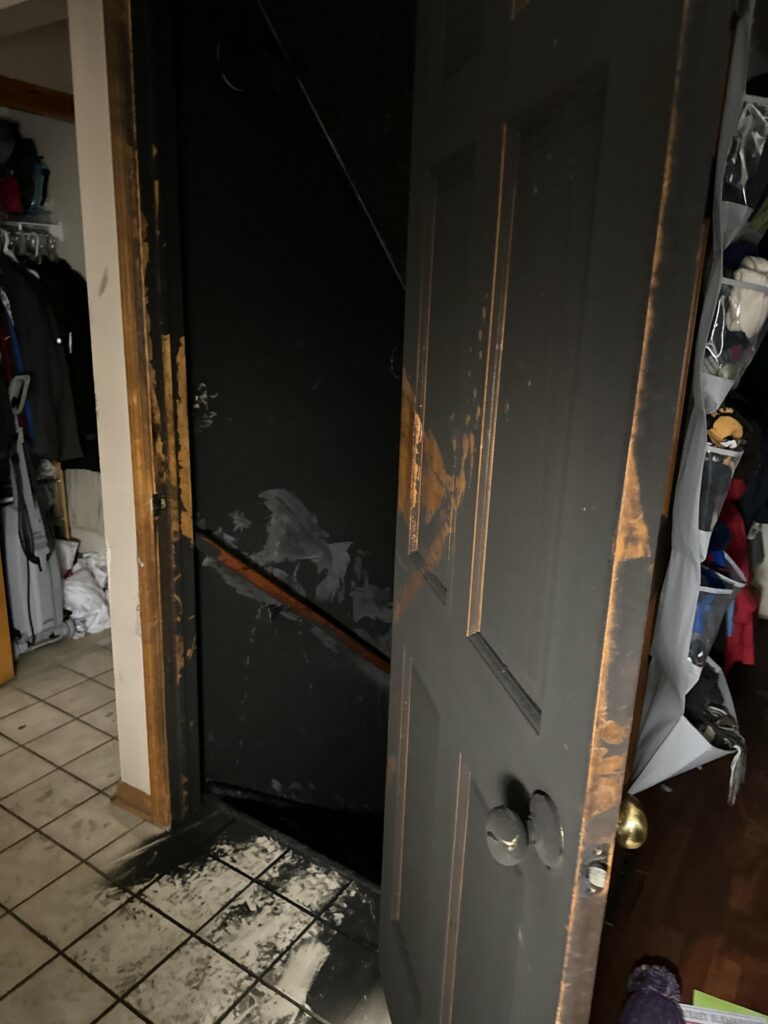
Why Do Fire Claims Get Complicated in Greenfield?
Fire claims in Greenfield get complicated because fire rarely arrives alone. Firefighting water soaks floors and walls, and Greenfield’s spring thaw can raise the water table, so a basement that was already damp can take on even more moisture. Wet drywall, subfloor, and carpet then need structural drying on top of smoke cleanup.
The housing stock shapes the scope. Postwar ranch and split-level homes across Hancock County often have open layouts, so smoke travels through the whole floor plan. Older brick homes near the historic downtown have plaster, original woodwork, and tight wall cavities that trap odor. Each needs a different cleaning approach.
Heating season adds risk for cooking and equipment fires, and summer storms bring lightning. Either way, the claim should separate fire, smoke, and water so nothing is missed.
Takeaway: Ask your adjuster to list fire, smoke, and water damage as separate line items.
10 Tips That Make Fire Damage Insurance Claims Easier
1. Wait for the All-Clear Before You Go Inside
Enter only after the fire department says the structure is safe. Weakened floors, live wires, and hot spots can remain. Your local fire marshal can provide a fire report, which insurers often request.
2. Call Your Insurance Company Promptly
Report the loss as soon as you safely can and get a claim number. Ask about the proof-of-loss deadline and what documents are needed. Write down the name of everyone you speak with and the date.
3. Document Everything Before Cleanup
Take wide shots and close-ups of every room, including ceilings, closets, and the attic if safe. Record a slow video walkthrough while you narrate. Do this before anyone moves or discards anything.
4. Protect the Property From Further Damage
Most policies expect reasonable steps to prevent more loss. That can include boarding windows, tarping the roof, and shutting off utilities. Keep the receipts, because these costs are often reimbursable.
5. Do Not Discard Damaged Items Too Soon
Set damaged belongings aside and photograph them. The adjuster may want to see them. If an item is a health hazard, photograph it and ask your insurer before disposal.
6. Build a Detailed Inventory
List each damaged item with a description, age, and approximate value. Use receipts, bank records, and photos. Go room by room so nothing is forgotten, and be honest, because accuracy builds credibility.
7. Track Additional Living Expenses
If you cannot stay in your home, many policies cover hotels, meals above normal cost, and similar expenses. Ask your insurer what is covered and keep every receipt.
8. Understand Your Policy Terms
Read the sections for dwelling, personal property, and additional living expenses. Learn whether contents are paid at replacement cost or actual cash value. Ask for clarification in writing.
9. Get a Professional Scope of Work
A restoration company can document smoke and soot damage, moisture, and cleaning methods in a written estimate. A scope that follows IICRC S700 gives your adjuster a common technical language to review.
10. Keep a Communication Log and Review Offers Carefully
Save emails, estimates, and notes from calls. If an offer seems low or leaves items out, ask the adjuster to explain it. You can submit additional documentation or a contractor’s estimate.
Takeaway: Evidence plus quick action is the best way to make a claim easier.

How Do Professionals Restore a Home After a Fire?
Professionals restore a fire-damaged home by stabilizing it, removing residue and moisture, and then cleaning and deodorizing in a set order. A typical sequence follows IICRC S700 and S500.
- Secure the property. Board up openings and tarp damaged roofing.
- Assess and map moisture. Moisture meters and thermal imaging find wet materials left by firefighting water, and technicians log hygrometer readings.
- Set containment. A containment barrier separates damaged areas to prevent cross-contamination.
- Filter the air. Air scrubbers with HEPA filtration run under negative air pressure.
- Remove debris and unsalvageable materials. Charred and saturated items come out first.
- Dry the structure. LGR dehumidifiers and air movers handle structural drying while technicians track psychrometrics.
- Clean soot and smoke residue. Dry sponging, HEPA vacuuming, and wet cleaning are chosen by the surface type.
- Treat and deodorize. An antimicrobial biocide may be applied where water caused mold risk, followed by odor control.
- Verify. Final readings confirm drying before reconstruction.
Takeaway: Ask for photos and moisture logs at each stage to support your claim.
What Makes PuroClean Different?
PuroClean Disaster Restoration provides 24/7 emergency dispatch, IICRC-certified technicians, and direct insurance billing, with local response across Greenfield and Hancock County.
Frequently Asked Questions
Does homeowners insurance cover fire damage in Indiana?
Most standard homeowners policies cover fire and smoke damage, subject to limits, deductibles, and exclusions. Coverage can include the structure, belongings, and additional living expenses. Review your policy and ask your agent to confirm in writing. The Indiana Department of Insurance offers consumer guidance.
How much does fire damage restoration cost?
Cost depends on the size of the loss, the amount of smoke and soot, water damage from firefighting, and how many materials need replacement. A professional inspection gives the most reliable estimate. Insurance often pays for covered work, so ask your insurer what applies.
How long does fire restoration take?
Small smoke-damage jobs may take days, while major fires can take weeks or months once rebuilding is included. Drying, cleaning, and deodorizing come first, followed by repairs. Your restoration team can provide a schedule after assessing the structure and the extent of damage.
Can I clean smoke and soot damage myself?
Light cleaning of hard surfaces may be possible, but soot can smear and set into porous materials. Improper cleaning can make claims harder. Call a professional for heavy soot, odor in walls or HVAC, or any water damage. Wear protective gear if you must enter.
Is smoke damage a health risk?
It can be. Smoke and soot particles can irritate the eyes, throat, and lungs, and wet materials may grow mold. People with asthma, young children, and older adults should avoid the home until it is cleaned. Professionals use HEPA filtration and protective equipment under OSHA safety rules.
Should I be worried about mold after a Greenfield house fire?
Yes, if materials stayed wet. Firefighting water and spring groundwater can leave drywall, subfloor, and carpet damp, and mold can begin within about 24 to 48 hours. Fast drying with LGR dehumidifiers and moisture mapping lowers the risk. Ask your restoration company to document readings.
Need Help With a Fire Claim in Greenfield?
If your home has fire, smoke, or water damage, you do not have to sort out the next steps alone. PuroClean Disaster Restoration, 625 S. State St., Greenfield, IN 46140, serves Greenfield and surrounding Hancock County and Indianapolis-metro neighborhoods. Call (317) 467-4436 any time. We are available 24/7, and our IICRC-certified technicians can bill your insurance company directly.