


Fire damage restoration is the professional process of making a home safe and clean again after fire, smoke, soot, and the water used to put the fire out. The IICRC S700 Standard for Professional Fire and Smoke Damage Restoration is the industry reference for how that work is done, from safety checks to soot removal to odor control. For Greenfield homeowners, S700 offers a clear way to sort belongings into three groups: items that can be cleaned and kept, items that need a specialist, and items that should go. This guide walks through each group and explains how to choose the right team in 2027.
Reviewed by: This guide was reviewed for technical accuracy by PuroClean Disaster Restoration’s IICRC-certified restoration team.
Time matters after a fire. Soot and smoke residue keep working on your belongings every hour, and firefighting water can start mold growth in damp materials. Once the fire marshal clears your home, call PuroClean Disaster Restoration at (317) 467-4436 to schedule an assessment before more damage sets in.
What Is the Difference Between Fire, Smoke, and Soot Damage?
Fire damage is the burning, charring, and heat distortion of materials. Smoke damage is the odor and film left when burning materials release particles and gases. Soot damage is the fine, often acidic residue that settles on surfaces and can stain, etch, and corrode. Each type needs a different cleaning method.
The kind of fire changes the soot. A burnt-food kitchen fire leaves a nearly invisible, greasy protein film with a sharp odor. A fast, hot paper-and-wood fire leaves dry, powdery soot. A slow, smoldering fire of plastics or rubber leaves wet, smeary soot that spreads when touched. Technicians test small areas first so they pick the right cleaner.
Greenfield’s housing matters here. Postwar ranch and split-level homes have open attic spaces and wall cavities that let smoke travel far from the fire. Older brick homes near the historic downtown have plaster walls and original woodwork that soak up smoke deeply.
Practical takeaway: Do not wipe soot. Photograph each affected room first, then wait for a professional assessment.
Which Items Can Usually Be Saved After a House Fire?
Items made of glass, metal, ceramic, finished wood, and many washable fabrics can often be saved because their surfaces are hard or cleanable. Items that sat farther from the fire and were not soaked, melted, or deeply charred have the best odds. A professional should confirm each item before you decide.
- Dishes, glassware, and cookware: Degreasing detergents and ultrasonic cleaning remove soot film. Food-contact items are washed and sanitized.
- Metal tools, fixtures, and jewelry: These should be cleaned quickly, before acidic soot causes corrosion or tarnish.
- Solid wood furniture: Dry sponges and specialty cleaners often lift soot, and many pieces can be refinished.
- Clothing, linens, and drapes: Smoke-only items can often be laundered or dry-cleaned. Heat-scorched fibers cannot be restored.
- Electronics: Never power them on. A technician must clean and test them first.
- Photos, papers, and books: Dry soot can be removed with dry sponges. Wet paper can be vacuum freeze-dried, which should start fast to head off mold.
Most restorers handle this through a contents pack-out. Items are inventoried, taken to a cleaning facility, and returned after the structure is ready.
Practical takeaway: Set aside sentimental items and ask the restoration team to evaluate them first.
Which Items Should Be Thrown Out After a Fire?
Throw out food, drinks, medicine, cosmetics, and anything that melted, charred deeply, or soaked in dirty firefighting water. Mattresses, pillows, and foam cushions that absorbed smoke usually cannot be cleaned deeply enough to remove odor and particles. When health safety is in doubt, discard the item.
- Food and drinks: Heat and smoke gases can pass through packaging, and heated cans and jars can lose their seals. Food that lost refrigeration is unsafe too.
- Medicine and cosmetics: Heat breaks down active ingredients. Ask your pharmacist about replacements.
- Mattresses, pillows, and foam: Deep fibers trap smoke particles.
- Melted or warped plastics: These can release residue and cannot be reshaped.
- Carpet pad and particleboard furniture: These materials swell and break down when soaked.
Safety comes first. Wait for the local fire marshal to clear the structure before you enter. OSHA’s general industry standards in 29 CFR 1910 require protective equipment and respiratory protection for workers in hazardous conditions, and homeowners should follow the same logic with gloves, eye protection, and a properly fitted particulate respirator.
Practical takeaway: Photograph and list every discarded item, with its approximate age and value, before it leaves the house.
How Does Professional Fire Damage Restoration Work, Step by Step?
Professional restoration follows a set order: make the structure safe, stop further damage, dry what is wet, remove soot, clean contents, remove odors, and repair. The order matters because cleaning soot before drying can trap moisture and spread contamination into clean areas.
- Emergency dispatch and safety assessment. After fire marshal clearance, technicians check for structural weakness, electrical hazards, and air quality.
- Board-up and roof tarping. This keeps out rain, snow, and intruders.
- Water extraction and structural drying. Crews find hidden moisture with moisture mapping and thermal imaging, then place LGR dehumidifiers and air movers. They track hygrometer readings and psychrometrics (temperature, humidity, and vapor in the air) until materials reach drying goals. Dense, deeply soaked plaster or hardwood may qualify as Class 4 water damage and needs specialty drying.
- Containment and air control. A containment barrier and negative air pressure with HEPA air scrubbers keep soot from drifting into clean rooms and prevent cross-contamination.
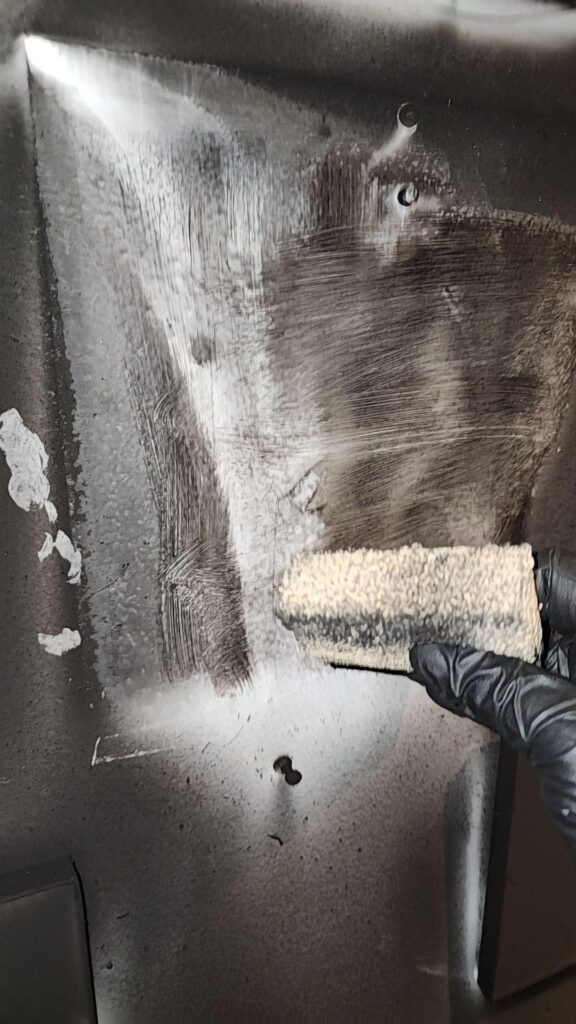
- Dry soot removal. Technicians work from ceilings down, using HEPA vacuums and dry sponges before any wet cleaning.
- Wet cleaning and antimicrobial treatment. Surfaces are cleaned with the right solution, and an antimicrobial biocide goes on where moisture lingered.
- Contents pack-out and cleaning. Items are inventoried, then cleaned with ultrasonic tanks, dry-cleaning methods, or specialty processes.
- Deodorization. Thermal fogging, hydroxyl generators, and air scrubbing remove smoke odor, and odor-holding surfaces are sealed before paint.
- Final verification and rebuild coordination. Readings are documented and repairs are scheduled.
Practical takeaway: Ask for the moisture and drying records. A good team documents them.
Stop and call a professional if you see a sagging or bulging ceiling, standing water near outlets or the electrical panel, or soot that smears when touched. These signs point to hidden water or unstable materials. Call PuroClean Disaster Restoration at (317) 467-4436 before anyone goes further.
Why Does Greenfield’s Spring Weather Make Fire Cleanup Harder?
Greenfield’s spring snowmelt raises the water table and saturates the ground, so a basement already holding firefighting water can also take on groundwater from below. A fire that opens a roof in this season lets rain and melting snow reach insulation and subfloors, which speeds mold growth.
Hancock County has a humid continental climate. In spring, snowmelt and rain collect underground and push hydrostatic pressure against basement walls. Poured concrete and block foundations in postwar subdivisions can admit water through cracks. Fieldstone and older block basements near downtown can seep through original mortar joints. Water from firefighting that carries soot and debris may be treated as Category 2 or Category 3 (black water) under IICRC S500 guidance, which widens the cleanup scope. Soaked plywood can also suffer subfloor delamination, and some molds produce mycotoxins, so wet areas should not sit untreated.
Practical takeaway: Ask the crew to tarp the roof the same day and to check the basement for standing water.
How Do You Choose the Best Fire Damage Restoration Company in 2027?

Choose a company with IICRC-certified technicians, 24/7 emergency dispatch, in-house contents cleaning, a written scope based on S700, and direct insurance billing. Ask for proof of certification and a written inventory process before you sign anything.
- Is the firm and its crew IICRC certified?
- Does it dispatch 24/7, and how fast can it reach Hancock County?
- Does it clean contents itself or send them out?
- Will it give a written, itemized restore-or-replace list?
- Does it bill your insurer directly and work with your adjuster?
- Does it document drying and cleaning results?
PuroClean Disaster Restoration pairs 24/7 emergency dispatch, IICRC-certified technicians, and direct insurance billing with local response from its Greenfield office at 625 S. State St., so crews can reach homes across Greenfield and the Indianapolis metro quickly. The Indiana Department of Insurance also offers consumer guidance if you have questions about how your insurer handles a claim.
Practical takeaway: Get the scope in writing and compare it with the adjuster’s estimate line by line.
Frequently Asked Questions
Does homeowners insurance cover fire damage restoration in Indiana? Most standard homeowners policies cover sudden fire damage to the structure and belongings, including smoke and soot cleanup. Limits, deductibles, and whether contents are paid at replacement cost or actual cash value depend on your policy. Read your declarations page, document every loss, and contact the Indiana Department of Insurance with questions about how your claim is handled.
How much does fire damage restoration cost? Cost depends on the size of the fire, how far smoke traveled, how much water was used, and how many belongings need cleaning. A light smoke cleanup costs far less than a structural fire needing drying, demolition, and rebuilding. A written, room-by-room estimate is the only reliable number, and your adjuster will usually review it.
How long does fire damage restoration take? Board-up, stabilization, and water extraction happen in the first day. Drying usually takes several days, and soot removal, contents cleaning, and deodorization can take one to several weeks. Rebuilding structural damage adds weeks or months. Delays lengthen the process because soot etches surfaces and moisture invites mold.
Can I clean fire and smoke damage myself? After the fire marshal clears the home, you can lightly wipe hard, nonporous items with a dry cloth, but stop there. Call a professional for soot on walls or ceilings, smoke odor, wet drywall, damaged wiring, or porous items. Wet cleaning before dry removal can smear soot deeper and spread contamination.
Is it safe to stay in or return to a home after a fire? Do not return until the fire marshal says the structure is safe. Smoke residue carries fine particles that can irritate lungs, eyes, and skin, and people with asthma face higher risk. Homes built before the 1980s, including older brick houses near downtown Greenfield, may also contain legacy materials such as lead paint or asbestos that fire and demolition can disturb.
How do I decide whether an item is worth restoring or replacing? Compare the cleaning cost with the replacement cost, then add sentimental value. Hard items and irreplaceable keepsakes are usually worth professional cleaning. Cheap, porous, or heavily smoked items are often cheaper to replace, and insurance may pay for either. Ask for an itemized restore-or-replace list your adjuster can review.
Get Fire Damage Help in Greenfield Today
You do not have to sort through the damage alone. PuroClean Disaster Restoration serves Greenfield and surrounding Hancock County and Indianapolis-metro neighborhoods from 625 S. State St., Greenfield, IN 46140. Call (317) 467-4436 to talk with a team that is available 24/7 for emergency fire and smoke damage response.