


Key Takeaways for Homeowners
- Delaying water extraction beyond 24 to 48 hours triggers Category 2 or Category 3 contamination and accelerates mold colonization.
- Using household bleach on porous materials drives moisture deeper and fails to eliminate mycotoxin-producing fungal colonies.
- Running standard fans without dehumidification raises indoor relative humidity, creating ideal conditions for secondary microbial growth.
- Ignoring hidden moisture in wall cavities, subfloors, and insulation voids leads to structural rot and costly reconstruction.
- Professional IICRC S500 and S520 certified restoration is the only path to psychrometric drying, antimicrobial treatment, and safe property recovery.
Why DIY Flood Cleanup in Greenfield and Indianapolis Often Backfires
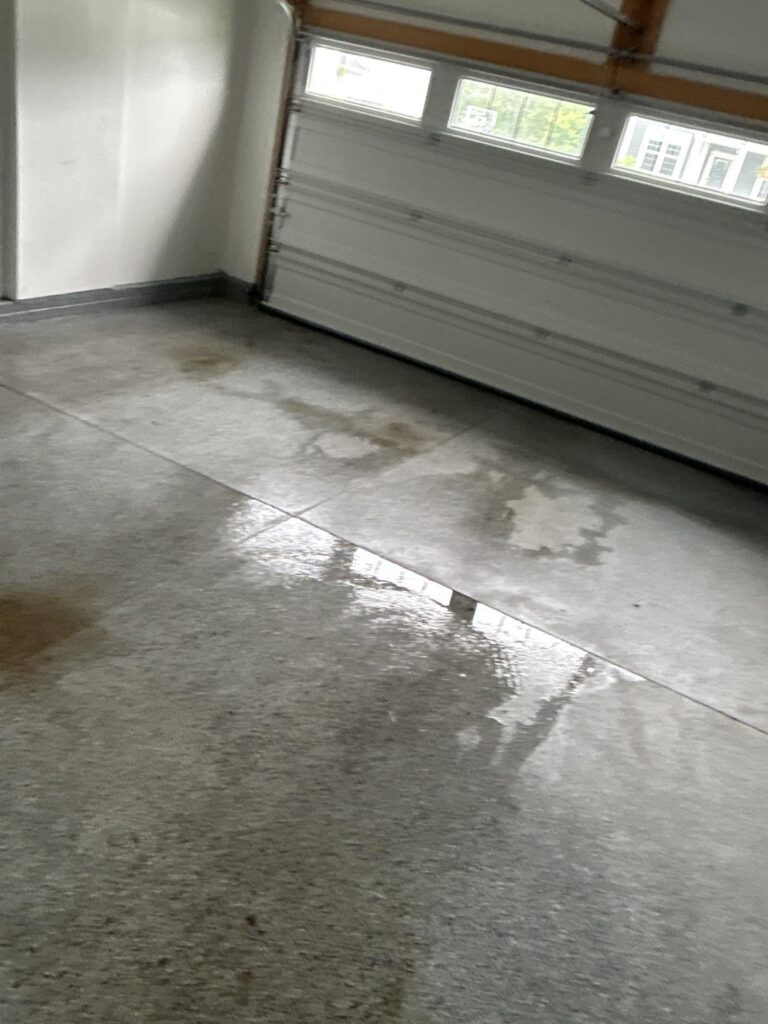
When severe storms sweep across Hancock County and the greater Indianapolis metro, homeowners in Greenfield face a dangerous temptation: grab a wet/dry vacuum, open some windows, and assume the job is done. This impulse is understandable. Flood damage is overwhelming. But it is also one of the most expensive mistakes a property owner can make.
The Institute of Inspection, Cleaning and Restoration Certification (IICRC) establishes the S500 standard for professional water damage restoration and the S520 standard for mold remediation. These are not arbitrary guidelines. They represent the scientific consensus on how water behaves in building materials, how microbial organisms colonize, and how structural systems degrade when moisture is mismanaged. Every mistake described in this guide violates one or more principles within these standards. Understanding these violations is the first step toward protecting your property, your health, and your financial investment.
Greenfield sits within the humid continental climate zone of central Indiana. Summers bring high relative humidity, often exceeding 70 percent, while spring and summer storms deliver rapid, heavy rainfall that overwhelms drainage systems and saturates soil. Many homes in the area, particularly older ranch-style and split-level residences common in Hancock County neighborhoods, were not built with modern vapor barriers or sealed crawl spaces. When floodwater enters these structures, it does not simply pool on the surface. It wicks upward through drywall, migrates laterally through baseboards, and seeps downward into subfloor assemblies and crawl space joists.
Mistake 1: Waiting Too Long to Begin Water Extraction and Structural Drying
Why the First 24 to 48 Hours Define Your Restoration Outcome
Water damage is a time-dependent event. The IICRC S500 standard categorizes water damage based on contamination level and elapsed time. Category 1 water, or clean water from a broken supply line, can degrade to Category 2 (gray water) within 24 to 48 hours as microbial activity accelerates. Within 72 hours, it often becomes Category 3 (black water), contaminated with pathogenic organisms, endotoxins, and chemical pollutants.
Homeowners in Greenfield and Indianapolis who wait for insurance adjusters, attempt to source rental equipment, or simply hope the water will evaporate on its own are making a catastrophic error. By the time visible water is gone, hygroscopic materials such as drywall, carpet padding, and oriented strand board (OSB) subflooring have already absorbed significant moisture. This hidden moisture does not dry passively. It requires controlled, aggressive drying using industrial air movers, low-grain refrigerant (LGR) dehumidifiers, and continuous psychrometric monitoring.
Professional restoration teams deploy moisture mapping using thermal imaging cameras and non-penetrating moisture meters to identify saturation boundaries invisible to the naked eye. Without this technology, homeowners leave pockets of moisture behind walls and beneath flooring, creating the perfect environment for mold proliferation, wood rot, and insect infestation.
Mistake 2: Using Household Cleaners Like Bleach on Porous Flood-Damaged Materials
The Science Behind Why Bleach Fails and Actually Makes Mold Problems Worse
One of the most persistent myths in flood cleanup is that bleach kills mold. This is dangerously false when applied to porous building materials. Chlorine bleach is primarily water. When applied to drywall, carpet backing, or unsealed wood, the chlorine evaporates quickly, but the water component soaks deeper into the material. This additional moisture feeds dormant fungal spores rather than eliminating them.
The IICRC S520 standard for mold remediation specifies the use of antimicrobial biocides formulated for restoration applications, not consumer-grade disinfectants. Effective mold remediation requires physical removal of contaminated materials, followed by HEPA vacuuming, negative air pressure containment, and the application of EPA-registered antimicrobial agents. Bleach does none of this.
In Greenfield homes with basements or crawl spaces, where humidity levels already run high during Indiana summers, adding bleach to flood-damaged surfaces creates a false sense of security. Homeowners smell the chlorine and believe the area is sanitized. Meanwhile, mycotoxin-producing species such as Stachybotrys chartarum and Aspergillus continue colonizing behind walls, releasing volatile organic compounds (VOCs) that degrade indoor air quality and pose respiratory risks, particularly to children, elderly residents, and individuals with compromised immune systems.
Mistake 3: Running Standard Fans Without Professional Dehumidification
The Psychrometrics of Drying: Why Air Movement Alone Is Insufficient
Psychrometrics is the study of air and moisture relationships. It is the foundation of professional structural drying. Simply placing box fans or household dehumidifiers in a flooded room ignores the complex interplay between temperature, relative humidity, vapor pressure, and dew point.
When floodwater evaporates from wet surfaces, it raises the humidity of the surrounding air. If that humid air is not actively removed, the moisture simply redeposits on cooler surfaces such as windows, ductwork, and wall cavities. This is why homeowners who use only fans often notice condensation, musty odors, and eventually visible mold growth days or weeks after they believed the area was dry.
Professional restoration uses LGR dehumidifiers capable of removing moisture at low specific humidity levels, combined with high-velocity air movers positioned to create laminar airflow across wet surfaces. Technicians monitor grain depression (the difference between the moisture content of incoming and outgoing air) and adjust equipment placement daily based on moisture meter readings. This precision is impossible to achieve with consumer equipment and untrained operators.
In Indianapolis and Greenfield, where summer dew points frequently climb into the upper 60s, uncontrolled evaporation without dehumidification is a recipe for secondary damage. Homes with forced-air HVAC systems are especially vulnerable, as moisture can be distributed throughout the duct network, contaminating previously dry areas of the property.
Mistake 4: Ignoring Hidden Moisture in Wall Cavities, Subfloors, and Insulation
The Invisible Threat That Destroys Structural Integrity From the Inside Out
Floodwater does not respect visible boundaries. It travels through capillary action, gravity, and vapor diffusion into areas that appear completely dry. Wall cavities behind baseboards, insulation batts within stud bays, subfloor assemblies beneath vinyl or laminate flooring, and crawl space environments all serve as moisture reservoirs that sustain microbial growth long after surface water is gone.
The IICRC S500 standard mandates invasive inspection when moisture meters indicate elevated readings in adjacent materials. This often requires removing baseboards, drilling inspection holes, or cutting flood cuts in drywall to expose the interior of wall cavities. Homeowners understandably resist this level of intrusion, but failing to do so guarantees progressive damage.
In Greenfield neighborhoods, many homes feature fiberglass batt insulation in exterior walls. Once saturated, fiberglass loses its R-value, compacts, and becomes a breeding ground for mold. It cannot be dried in place. It must be removed, the cavity treated with antimicrobial agents, and the insulation replaced. Similarly, OSB subflooring common in newer Indianapolis-area construction swells and delaminates when wet. If drying is not initiated rapidly, the subfloor must be replaced, turning a water mitigation project into a full reconstruction.
The Professional Restoration Process: What Certified Technicians Do Differently
Step-by-Step IICRC S500 Water Damage Restoration Protocol
- Step 1: Emergency Contact and Rapid Response. Certified restoration companies operate 24/7. Every hour of delay increases the scope and cost of restoration.
- Step 2: Inspection and Moisture Mapping. Technicians use infrared thermal imaging, penetrating and non-penetrating moisture meters, and hygrometers to map the full extent of water migration.
- Step 3: Water Extraction. Truck-mounted extraction systems remove standing water far more efficiently than portable units, reducing drying time by days.
- Step 4: Controlled Demolition. Flood cuts, carpet pad removal, and contaminated insulation disposal are performed to expose wet structural materials to airflow.
- Step 5: Psychrometric Drying. LGR dehumidifiers and axial air movers are positioned based on daily moisture readings to achieve target equilibrium moisture content (EMC).
- Step 6: Antimicrobial Treatment. EPA-registered biocides are applied to prevent microbial growth on treated surfaces.
- Step 7: HEPA Air Filtration. Air scrubbers with HEPA filtration remove airborne particulates, spores, and odors during the drying process.
- Step 8: Verification and Documentation. Final moisture readings, thermal imaging, and photographic documentation confirm that materials have returned to pre-loss moisture content before reconstruction begins.
FAQ: Answering Complex Questions Greenfield Homeowners Ask
Does home insurance cover mold caused by high humidity in Greenfield, Indiana?
Standard homeowners insurance policies in Indiana typically cover mold remediation only when the mold is the direct result of a covered peril, such as a sudden pipe burst or storm damage that enters through a compromised roof or window. Mold caused by long-term humidity, poor ventilation, or gradual seepage is generally excluded as a maintenance issue. However, if you experience flooding in Greenfield or Indianapolis and your insurer covers the initial water damage, mold that develops as a secondary consequence of that covered event may be included in your claim. Always document the initial damage with photos, moisture readings, and professional assessments to support your claim.
How do local building codes in Hancock County affect flood damage restoration?
Hancock County follows the Indiana Residential Code, which includes provisions for flood-resistant construction in designated flood hazard areas. If your Greenfield property is located within a Special Flood Hazard Area (SFHA), building codes may require flood-resistant materials below the Base Flood Elevation, including pressure-treated lumber, closed-cell insulation, and water-resistant flooring. During restoration, any reconstruction must comply with current code requirements, which may be more stringent than when the home was originally built. Working with a restoration contractor familiar with local permitting and code compliance ensures that repairs meet legal standards and protect your property against future events.
Can I stay in my home during flood damage restoration?
This depends on the category of water damage, the extent of contamination, and whether the HVAC system is affected. Category 1 water damage localized to a single room may allow occupants to remain with precautions. Category 2 or 3 damage, or any situation involving mold contamination or compromised electrical systems, typically requires temporary relocation for safety. Professional restoration companies conduct indoor air quality assessments and can advise on occupancy safety.
How long does professional flood damage restoration take in Greenfield?
A typical residential water mitigation project in the Greenfield area takes 3 to 5 days for drying, assuming Category 1 or 2 water and prompt initiation. Category 3 contamination, extensive mold growth, or structural damage requiring reconstruction can extend the timeline to several weeks. The key variable is how quickly professional intervention begins after the initial damage occurs.
Protect Your Greenfield Property: Call the Certified Experts Today
Flood damage does not fix itself. Every hour you wait, moisture penetrates deeper, microbial colonies expand, and repair costs multiply. The four mistakes outlined in this guide are not hypothetical risks. They are the exact errors PuroClean Disaster Restoration encounters when homeowners in Greenfield, Indianapolis, and surrounding Hancock County neighborhoods call us after DIY cleanup has failed.
PuroClean Disaster Restoration is IICRC certified in water damage restoration (S500) and mold remediation (S520). Our technicians deploy industrial-grade extraction equipment, LGR dehumidifiers, thermal imaging moisture mapping, and HEPA air filtration to restore your property to pre-loss condition safely and efficiently. We understand the unique challenges of central Indiana’s humid climate, the building materials common in Hancock County homes, and the insurance documentation requirements that protect your financial interests.
If your home or business in Greenfield, Indianapolis, or the surrounding area has experienced flood damage, do not gamble with your property’s future. Call PuroClean Disaster Restoration now at (317) 467-4436 for immediate emergency response, 24 hours a day, 7 days a week. Our certified team is ready to stop the damage, protect your health, and restore your peace of mind.