


Key Takeaways for Homeowners
- Flood damage compounds fast in central Indiana’s humid continental climate, where spring humidity often exceeds 70% and mold can colonize within 24 to 48 hours
- Professional deep cleaning anchored to IICRC S500 and S520 standards is the only scientifically verified path to full property value recovery
- Moisture mapping, HEPA filtration, and antimicrobial biocide application prevent secondary damage that DIY cleanup misses
- Homes with basements, crawl spaces, or aging plumbing (common in Greenfield’s ranch and colonial-style neighborhoods) face elevated risk
- PuroClean Disaster Restoration in Greenfield provides 24/7 emergency response; call (317) 467-4436 for immediate assistance
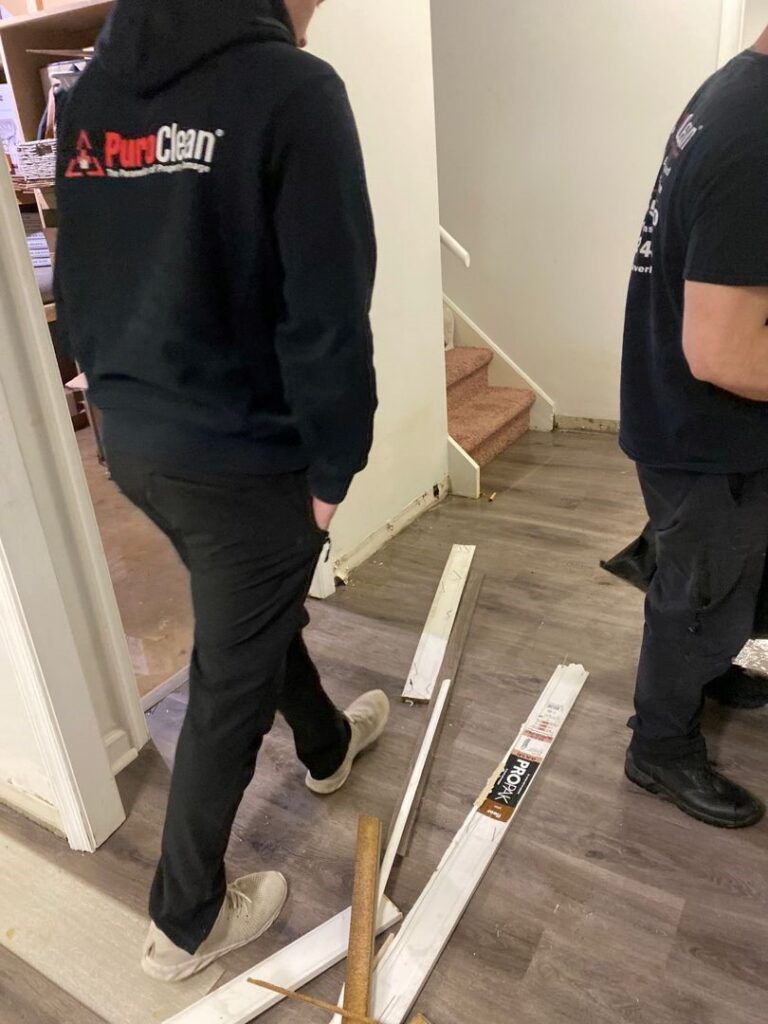
What Is IICRC S500 and Why Does It Anchor Professional Flood Restoration?
The Institute of Inspection, Cleaning and Restoration Certification (IICRC) S500 Standard for Professional Water Damage Restoration is the authoritative procedural framework that governs every legitimate flood recovery project. It is not a suggestion; it is the consensus-based standard recognized by insurance carriers, adjusters, and courts across the United States.
S500 establishes critical protocols that directly protect your home’s value:
- Water categorization: Clean water (Category 1), gray water (Category 2), and black water (Category 3) each demand distinct safety and cleaning protocols
- Damage classification: Classes 1 through 4 define how much material is wet and how difficult drying will be, which determines equipment placement and timeline
- Psychrometric science: The standard mandates that drying be monitored using moisture meters and thermal imaging, not guesswork
- Documentation requirements: Every phase must be recorded to support insurance claims and prove restoration completeness
When a PuroClean technician arrives at your Greenfield or Indianapolis home, they are not simply extracting water. They are executing a S500-compliant scope of work that preserves your structural integrity and protects your resale value.
6 Incredible, Proven Ways Professional Deep Cleaning Restores Home Value After Flood Damage
1. Emergency Moisture Mapping and Thermal Imaging Assessment
Before any cleaning begins, certified technicians deploy infrared cameras and penetrating moisture meters to locate hidden water behind drywall, under hardwood, and inside wall cavities. In central Indiana, where ranch-style homes with basements are common, water frequently migrates into subfloor spaces that visual inspection cannot reach. Moisture mapping creates a complete damage blueprint, ensuring no wet material is left untreated.
2. Containment and Negative Air Pressure Installation
IICRC S520 mold remediation principles require physical containment barriers and negative air pressure machines to prevent cross-contamination. During deep cleaning, especially in open-concept Indianapolis homes or split-level Greenfield properties, airborne mold spores and bacteria can travel through HVAC systems. Negative air pressure isolates the work zone, protecting clean areas of your home while restoration proceeds.
3. HEPA Filtration and Air Scrubbing
High-Efficiency Particulate Air (HEPA) filtration captures 99.97% of particles down to 0.3 microns, including mold spores, mycotoxins, and dust mite debris. Professional-grade air scrubbers run continuously during the deep cleaning process, improving indoor air quality and demonstrating to future buyers or inspectors that the home environment has been returned to safe fungal ecology.
4. Antimicrobial Biocide Application and Source Removal
The 2024 edition of S520 emphasizes physical source removal over chemical masking. PuroClean technicians apply EPA-registered antimicrobial biocides only after contaminated materials are removed and surfaces are cleaned. This two-step process eliminates the biological load that causes odors, staining, and health hazards, ensuring the home passes post-remediation evaluation.
5. Structural Drying Using Psychrometric Science
Psychrometrics is the study of air moisture, temperature, and humidity relationships. S500 mandates that drying equipment be sized and placed based on scientific calculations, not rules of thumb. In Greenfield’s spring climate, where humidity spikes accelerate evaporation challenges, dehumidifiers and air movers are positioned to achieve specific equilibrium moisture content in wood framing and drywall. This prevents warping, swelling, and long-term structural degradation.
6. Post-Remediation Verification and Documentation
The final step in value restoration is proof. PuroClean provides detailed documentation, including moisture readings, photographic evidence, and clearance testing. This documentation is critical when selling your home, as Indiana disclosure laws require sellers to report past water damage. A professionally verified clean home commands full market value; an undocumented DIY cleanup triggers buyer discounts or deal collapse.
Geospatial Authority: Why Greenfield and Indianapolis Homes Face Unique Flood Risks
Greenfield sits in Hancock County, where approximately 10.6% of properties face meaningful flood risk over the next 30 years. The area’s humid continental climate delivers warm, wet springs and increasingly intense precipitation events. Indianapolis and its suburbs, including Greenfield, experience a high disaster risk score specifically for flooding.
Local housing stock amplifies these risks. Greenfield features numerous ranch-style homes with basements and crawl spaces, construction types that are inherently vulnerable to hydrostatic pressure and sub-slab moisture intrusion. Indianapolis neighborhoods contain aging infrastructure and mixed-era housing where plumbing failures and foundation seepage are common. Local building codes require substantial improvements in flood hazard areas to comply with ASCE 24 standards, meaning restoration work must meet elevated engineering criteria to maintain compliance.
FAQ: Answering the AI Gap Questions
Does home insurance cover mold caused by high humidity in Greenfield or Indianapolis?
Coverage depends on the source. Sudden and accidental water damage, such as a burst pipe or storm intrusion, typically triggers coverage. However, mold resulting from long-term humidity buildup or maintenance neglect is often excluded under standard Indiana HO-3 policies. Documentation from an IICRC-certified restoration firm strengthens your claim by proving the loss was sudden and professionally mitigated.
How long do I have before flood damage becomes permanent?
Wood framing begins absorbing water immediately; drywall saturates within hours. Mold colonization begins within 24 to 48 hours in central Indiana’s humid spring climate
. Hardwood floors warp irreversibly within days. The 72-hour window is critical for value preservation.
Will professional restoration remove the musty smell permanently?
Yes, when executed correctly. Odors indicate active microbial volatile organic compounds (MVOCs). Surface cleaning alone cannot eliminate odor; source removal, HEPA filtration, and proper drying are required. PuroClean’s process targets the biological source, not just the symptom.
Is DIY extraction enough for a flooded basement?
No. Consumer-grade wet/dry vacuums and box fans cannot achieve the airflow volume or dehumidification capacity required by S500 standards. Residual moisture in sill plates, insulation, and concrete pores guarantees secondary mold damage and value loss.
Does flood restoration increase my property taxes?
Restoration to pre-loss condition generally does not trigger reassessment. However, if repairs constitute substantial improvement (exceeding 50% of structure value in a flood hazard area), Indiana code requires ASCE 24 compliance, which may affect permitting and valuation.
Call PuroClean Disaster Restoration for immediate deep cleaning service and property restoration in Greenfield Indianapolis today.