


PuroClean Disaster Restoration | Serving Greenfield, Indianapolis and Surrounding Areas | Call (317) 467-4436
| Key Takeaways for Homeowners |
| Spring flooding in Greenfield and greater Indianapolis introduces serious biohazard threats that are often invisible to the naked eye. |
| IICRC S500 and S520 standards define the professional protocols required to safely remediate flood-damaged properties. |
| Sewage contamination, mold growth, chemical runoff, structural bacteria, and airborne pathogens are the five primary risks. |
| Symptoms of exposure can appear hours to days after contact, making early professional assessment critical. |
| PuroClean Disaster Restoration is available 24/7 at (317) 467-4436 to protect Greenfield homeowners. |
Why Spring Flooding in Greenfield Creates Unique Biohazard Conditions
Greenfield, Indiana sits within the broader Indianapolis metropolitan area, a region that experiences considerable precipitation variability each spring. The combination of clay-heavy soils common to Hancock County, aging residential infrastructure dating back several decades, and Indiana’s wet spring cycle creates conditions where floodwater does not merely damage property. It transforms it into a contaminated environment.
Floodwater is rarely clean. Once water breaches a home’s foundation, crawl space, or lower floors, it carries with it whatever it has passed through on its journey: agricultural runoff, municipal stormwater overflow, decomposed organic material, and in many cases, raw or partially treated sewage. The result is what restoration professionals classify under IICRC S500 standards as Category 3 water, also known as black water, the most dangerous classification in the water damage restoration framework.
Understanding what is hiding in your home after a flood is not just important for property protection. It is a matter of public health and family safety.
Biohazard Risk 1: Sewage Contamination and Fecal Coliform Bacteria
When Greenfield neighborhoods experience heavy spring rains, combined sewer systems and aging municipal infrastructure frequently become overwhelmed. This results in sewage backing up into basements and low-lying living areas. The presence of fecal coliform bacteria, including E. coli and Enterococcus species, transforms your home into a genuine biohazard zone.
Exposure to sewage-contaminated floodwater can cause gastrointestinal illness, skin infections, respiratory distress, and in vulnerable populations such as children, elderly residents, and immunocompromised individuals, potentially life-threatening systemic infections. Direct contact is not required. Aerosolized particles from drying contaminated surfaces can be inhaled.
IICRC S500 standards mandate that any Category 3 water intrusion be treated with EPA-registered antimicrobial biocide solutions, followed by structured drying protocols using industrial-grade dehumidification equipment. DIY cleanup with household products is not sufficient and may spread contamination further.
- Fecal coliform bacteria survive on porous surfaces like drywall and wood for extended periods.
- Carpeting, insulation, and upholstered furnishings exposed to sewage water must be removed and disposed of properly.
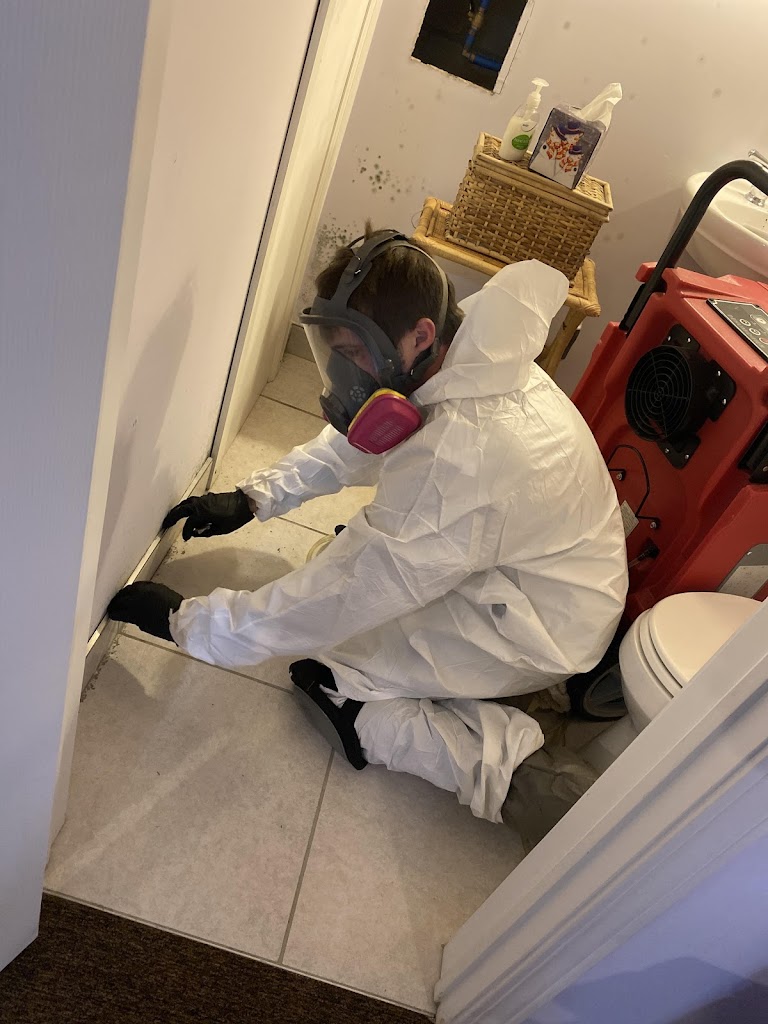
- Personal protective equipment including gloves, eye protection, and N95 respirators is required during all contact with affected areas.
Biohazard Risk 2: Rapid Mold Colonization and Mycotoxin Production
One of the most insidious post-flood threats is mold. In the humid spring climate of central Indiana, mold can begin colonizing wet surfaces within 24 to 48 hours of initial water exposure. Greenfield homes, many of which feature older construction with wood framing and cellulose-based insulation, provide ideal substrates for fungal growth.
Certain mold species produce mycotoxins, secondary metabolites that are biologically active and harmful to human health. Stachybotrys chartarum, commonly called black mold, along with Aspergillus and Cladosporium species, are frequently found in flood-damaged Indiana homes. Mycotoxin exposure has been linked to respiratory inflammation, neurological symptoms, chronic fatigue, and immune system disruption.
Professional mold remediation following IICRC S520 standards employs containment barriers with negative air pressure to prevent spore migration to unaffected areas. HEPA filtration air scrubbers actively capture airborne mold spores during the remediation process. Moisture mapping technology is used to identify hidden moisture pockets behind walls and under flooring where mold thrives unseen.
- Musty odors are a strong indicator of hidden mold growth within wall cavities or under flooring.
- HEPA filtration during remediation captures particles as small as 0.3 microns, including mold spores.
- Negative air pressure containment prevents cross-contamination to clean areas of the home.
- Psychrometrics, the science of air moisture relationships, guides professional drying strategies to achieve conditions that stop mold growth.
Biohazard Risk 3: Chemical and Agricultural Runoff Contamination
Greenfield’s location within Hancock County, a predominantly agricultural region, means that spring floodwater frequently carries pesticides, herbicides, fertilizers, and other agricultural chemicals. These compounds can saturate soil around your foundation and leach into lower-level living spaces through cracks and porous concrete.
Petrochemical contamination from nearby roadways, fuel storage areas, and industrial properties also poses a significant risk. Certain volatile organic compounds (VOCs) present in these chemicals can off-gas from saturated building materials, creating indoor air quality hazards that persist long after visible water has been removed.
Professional restoration teams conduct air quality testing and material sampling to identify chemical contamination. Affected building materials may require specialized disposal under Indiana Department of Environmental Management guidelines. Standard cleaning protocols are inadequate for chemical contamination and can create additional health hazards if the wrong cleaning agents are combined with residual chemicals.
Biohazard Risk 4: Waterborne Pathogens and Viral Contamination
Floodwater in urban and suburban areas like Greenfield can carry a wide spectrum of waterborne pathogens beyond bacteria. Hepatitis A virus, norovirus, and in some cases Leptospira bacteria, which causes leptospirosis, have all been documented in flood-contaminated environments. These pathogens contaminate not just the water itself but any surface, object, or material the water touches.
Food preparation surfaces, children’s toys, bedding, clothing, and household items that have been submerged or splashed with floodwater must be considered potentially contaminated. The risk is not limited to the flood event itself. As materials dry, pathogens can concentrate on surfaces and remain viable for extended periods under certain conditions.
Thorough cleaning, disinfection with EPA-registered products, and in many cases complete removal of porous materials is required to address pathogen contamination adequately. Professional restoration technicians receive specialized training in cross-contamination prevention and proper disinfection protocols.
Biohazard Risk 5: Structural Bacteria and Biofilm Formation
A less commonly discussed but genuinely dangerous post-flood biohazard is the development of bacterial biofilm within your home’s structural components. When water saturates wood framing, subfloor materials, and wall cavities, complex bacterial communities can establish themselves within these materials. Biofilm-producing bacteria are significantly more resistant to standard cleaning and disinfection than planktonic bacteria.
Indiana’s older housing stock, particularly in established Greenfield neighborhoods, often features original framing lumber that absorbs moisture readily and is slow to dry. Once biofilm establishes in structural lumber, it can persist and continue to generate biohazardous conditions even after visible drying appears complete. Structural bacterial contamination is another reason why professional moisture mapping and psychrometric monitoring are essential components of proper restoration.
Advanced antimicrobial biocide treatments formulated for penetrating wood and porous structural materials are required to adequately address this risk. These products are not available to consumers and must be applied by certified restoration professionals.
What to Do Immediately After a Flood in Greenfield or Indianapolis
Step-by-Step Emergency Response
- Do not re-enter the home until local authorities confirm it is structurally safe.
- Shut off electrical power at the main breaker before entering any flooded area.
- Do not use tap water for drinking or food preparation until water quality is confirmed safe by your municipality.
- Photograph and document all damage thoroughly for insurance purposes before any cleanup begins.
- Contact a certified water damage restoration company such as PuroClean Disaster Restoration at (317) 467-4436 immediately.
- Do not use fans or HVAC systems, as these can spread mold spores and aerosolized contaminants throughout unaffected areas.
- Remove and bag any visibly contaminated porous materials such as carpeting and cushions using heavy-duty plastic bags.
- Avoid all contact with floodwater without full personal protective equipment.
Frequently Asked Questions About Flood Biohazard Risks in Greenfield, Indianapolis
Does homeowners insurance cover biohazard cleanup after spring flooding?
Standard homeowners insurance policies typically do not cover flooding caused by external water sources. Flood damage is generally covered under separate National Flood Insurance Program (NFIP) policies or private flood insurance riders. However, if the biohazard contamination resulted from a covered event such as a burst sewer line, your standard policy may provide some coverage. Always contact your insurance provider and document all damage before beginning any cleanup. PuroClean Disaster Restoration works directly with insurance companies and can assist you with documentation and claims.
How quickly does mold become a serious health risk after flooding?
Under the warm and humid conditions typical of Indiana springs, mold can begin colonizing within 24 to 48 hours of water exposure. Active mold growth producing mycotoxins can develop within 72 hours to one week depending on temperature, humidity, and the type of materials affected. This timeline underscores why professional drying and remediation must begin as quickly as possible after a flood event.
Can I clean up flood biohazards myself?
For Category 1 water damage, meaning clean water from a supply line break, limited DIY cleanup may be appropriate for small areas. However, spring floodwater in Greenfield almost always qualifies as Category 2 or Category 3 under IICRC S500 standards due to the sources of contamination described in this article. Category 3 black water remediation requires professional certification, specialized equipment, EPA-registered antimicrobial biocide products, and proper disposal protocols. Attempting DIY cleanup of Category 3 water contamination can spread contamination, void insurance claims, and expose your family to serious health risks.
What is negative air pressure and why is it used during mold remediation?
Negative air pressure is a containment strategy employed during mold remediation where the affected area is sealed with plastic sheeting and industrial air movers create a pressure differential that draws air out of the contaminated zone. This prevents mold spores disturbed during remediation from migrating to clean areas of the home. Air exhausted from the containment zone passes through HEPA filtration to capture spores before being exhausted outdoors.
How long does professional flood remediation take in a Greenfield home?
The duration of remediation depends on the extent of water intrusion, the presence of mold or sewage contamination, the size of the affected area, and the types of building materials involved. Minor water damage can be addressed in three to five days. Extensive Category 3 contamination with mold remediation may require two to four weeks. PuroClean Disaster Restoration provides a detailed scope of work and timeline assessment during the initial inspection.
| Act Now: Protect Your Home and Family If you are in Greenfield or the Indianapolis area or nearby and your home has experienced spring flooding, do not wait. Call PuroClean Disaster Restoration now at (317) 467-4436 Available 24/7. Certified. Local. Trusted. |