Reviewed for technical accuracy by PuroClean Disaster Restoration’s IICRC-certified restoration team.
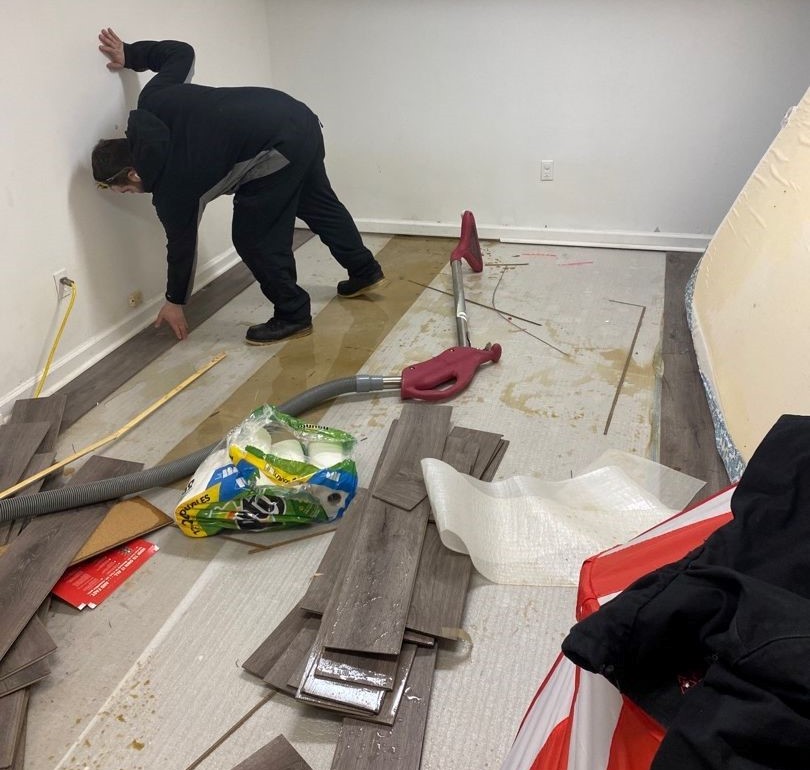
Water damage under hardwood floors follows the inspection and restoration protocols of the IICRC S500 Standard for Professional Water Damage Restoration, the industry’s primary reference for identifying moisture intrusion, classifying water categories, and structuring a safe drying process. In Greenfield, Indiana, that standard matters more than most homeowners realize, because damage to hardwood floors rarely starts with a flood. It starts quietly, underneath the finish, weeks before anyone notices a problem on the surface.
Key Takeaways for Homeowners
- Cupped, crowned, or gapped boards are early visual signs that moisture has reached the subfloor, not just the surface finish.
- A musty odor near baseboards or interior walls often signals hidden moisture before any visible staining appears.
- Hancock County’s rising spring water table and hydrostatic pressure are a leading cause of basement and lower-level moisture intrusion in Greenfield homes.
- Sticky or soft spots underfoot can indicate subfloor delamination, which weakens the structural layer beneath your hardwood.
- Category 3 water (sewage backup or contaminated groundwater) requires professional decontamination, not DIY cleanup.
- Waiting more than 24 to 48 hours after discovering moisture significantly increases the risk of mold colonization.
Water intrusion under a hardwood floor is a race against time. Once moisture reaches the subfloor, mold spores can begin colonizing within 24 to 48 hours under the right temperature and humidity conditions. If you suspect a leak or flooding event has affected your floors, calling a restoration professional immediately gives you the best chance of saving the wood and avoiding a costlier structural repair later.
Why Greenfield Hardwood Floors Are Especially Vulnerable
Greenfield’s biggest hidden threat to hardwood floors is not a burst pipe. It is groundwater. Each spring, snowmelt combines with seasonal rainfall to raise the water table across many Hancock County neighborhoods, building hydrostatic pressure against basement walls and slab foundations. That pressure pushes moisture through hairline cracks, porous block, and aging mortar joints, often with no visible puddle to alert homeowners.
The local housing stock plays a role too. Postwar ranch and split-level homes common throughout Hancock County subdivisions typically sit on poured concrete or block foundations that can develop small cracks over decades of freeze-thaw cycles. Older brick homes near Greenfield’s historic downtown often have fieldstone or aging block basements with original mortar joints, which are more prone to slow seepage than modern poured walls. In both cases, moisture can migrate upward into subflooring and hardwood above without an obvious source, which is exactly why hidden signs matter so much.
Overflowing gutters, downspouts draining too close to the foundation, poorly graded soil, sump pump failure during heavy storms, and sewer system overload can all compound the water table problem. When several of these mechanisms overlap during a wet spring, hardwood floors on the level above a damp basement absorb ambient moisture even without direct water contact.
Takeaway: If your home sits in a Hancock County neighborhood with a history of damp basements, treat spring as your highest-risk season for hidden hardwood floor damage.
The 7 Hidden Signs of Water Damage in Hardwood Floors

1. Cupping Along the Board Edges
Cupping happens first, before most other visible signs appear. It looks like the edges of each board are slightly higher than the center, creating a shallow trough down the length of the plank.
Cupping occurs because the underside of the board absorbs moisture faster than the top, causing it to expand unevenly. A trained technician uses moisture mapping with a penetrating meter to compare readings across the room and confirm whether the cupping is isolated or spreading, which tells you whether the source is a small local leak or broader groundwater intrusion.
2. Crowning or Convex Boards
Crowning is the opposite of cupping. The center of the board rises higher than the edges, usually appearing after a floor has been sanded while still wet or after a cupped floor dries unevenly.
This sign often means the wood already went through one drying cycle without professional intervention. Left alone, repeated wet-dry cycles accelerate warping and can permanently weaken the tongue-and-groove joints between boards.
3. Persistent Musty or Earthy Odor
A musty smell near baseboards, closets, or low-traffic corners is frequently the first sign homeowners notice, often before any visual damage. That smell is a byproduct of microbial activity feeding on damp wood and the paper backing of subfloor materials.
Restoration technicians use hygrometer readings and thermal imaging cameras to locate the moisture source behind walls or beneath flooring without removing materials first. Thermal imaging shows temperature differences that correlate with wet zones, allowing for targeted, less invasive investigation.
4. Soft, Spongy, or Sticky Spots Underfoot
If a section of your floor feels slightly soft or tacky when you walk across it, the subfloor beneath the hardwood may already be experiencing delamination, meaning the layers of the subfloor material have begun separating due to prolonged moisture exposure.
Subfloor delamination is a structural concern, not just a cosmetic one. It typically requires removing the affected hardwood section to assess and dry or replace the subfloor before any new flooring is installed.
5. Discoloration or Dark Staining Between Boards
Dark lines forming between individual boards, especially near exterior walls or below-grade rooms, usually indicate moisture has been sitting in the seams long enough to begin staining the wood fibers or promoting mold growth in the gaps.
If the staining traces back to a groundwater event, technicians assess whether the water falls into Category 2 or Category 3 water classification under the IICRC S500 framework, since contaminated groundwater or sewer backup requires antimicrobial biocide treatment and a different cleanup protocol than clean water intrusion.
6. Gapping Between Boards During Dry Months
Some seasonal gapping is normal in Indiana’s humid continental climate as wood contracts in drier months. Hidden damage is more likely when gaps appear unevenly, worsen from one season to the next, or fail to close back up when humidity returns.
This pattern often means the wood has lost structural integrity from a prior moisture event and is no longer expanding and contracting predictably. It is a strong argument for a professional moisture assessment, not just cosmetic refinishing.
Stop and call a professional if you notice a strong sewage odor, standing water, or staining that appeared suddenly after a storm. These are signs of possible Category 3 water intrusion, which carries contamination risk that should not be handled without proper containment and PPE.
7. A Sagging or Bouncy Feel When Walking
A noticeable bounce or sag underfoot, especially near exterior walls or in a room above a damp basement, often signals Class 4 water damage, the IICRC’s designation for moisture that has saturated low-permeance materials like hardwood and requires extended, specialized drying time.
This is typically the most advanced of the seven signs and the one most likely to require structural drying equipment rather than surface-level dehumidification.
How Professionals Confirm and Treat Hidden Hardwood Water Damage
- Moisture mapping. Technicians use penetrating and non-penetrating meters across the affected room to chart moisture levels board by board, establishing a drying goal and baseline.
- Thermal imaging and hygrometer readings. These tools locate hidden wet zones behind walls and under flooring, and track ambient humidity throughout the drying process.
- Containment barrier setup. If contamination or mold is suspected, technicians install a containment barrier and use negative air pressure with HEPA filtration to prevent cross-contamination into unaffected rooms.
- Category and class classification. Following IICRC S500 protocols, the water is classified by contamination level (Category 1 through 3) and the material saturation is classified by drying difficulty (Class 1 through 4), which determines the equipment and timeline needed.
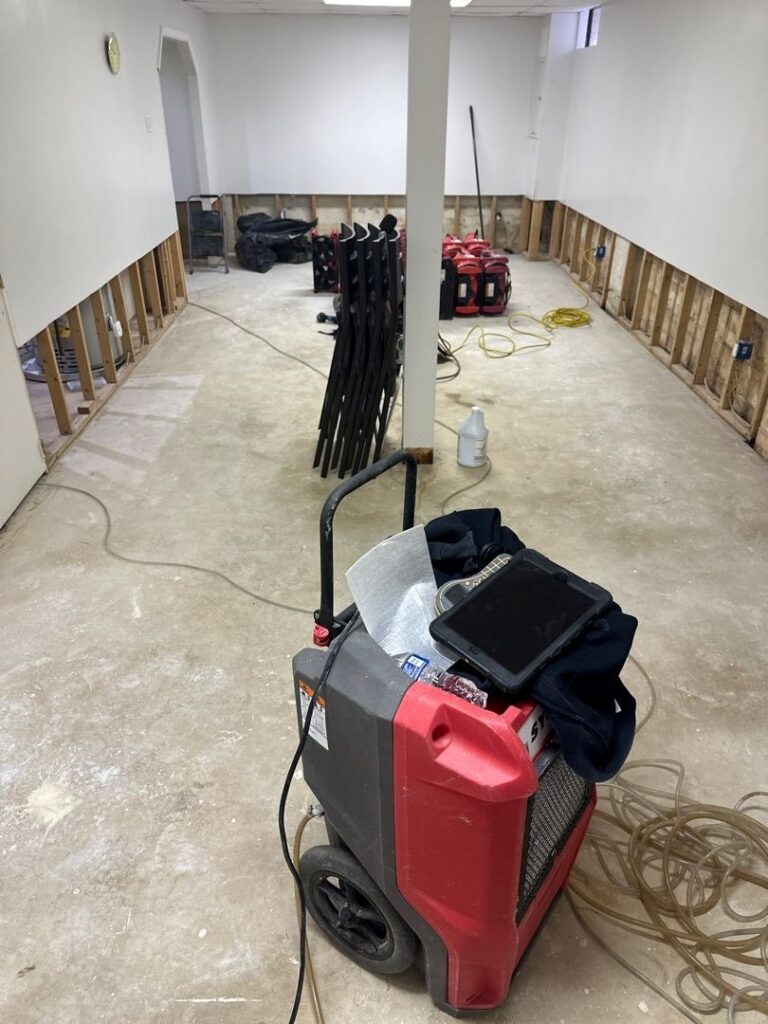
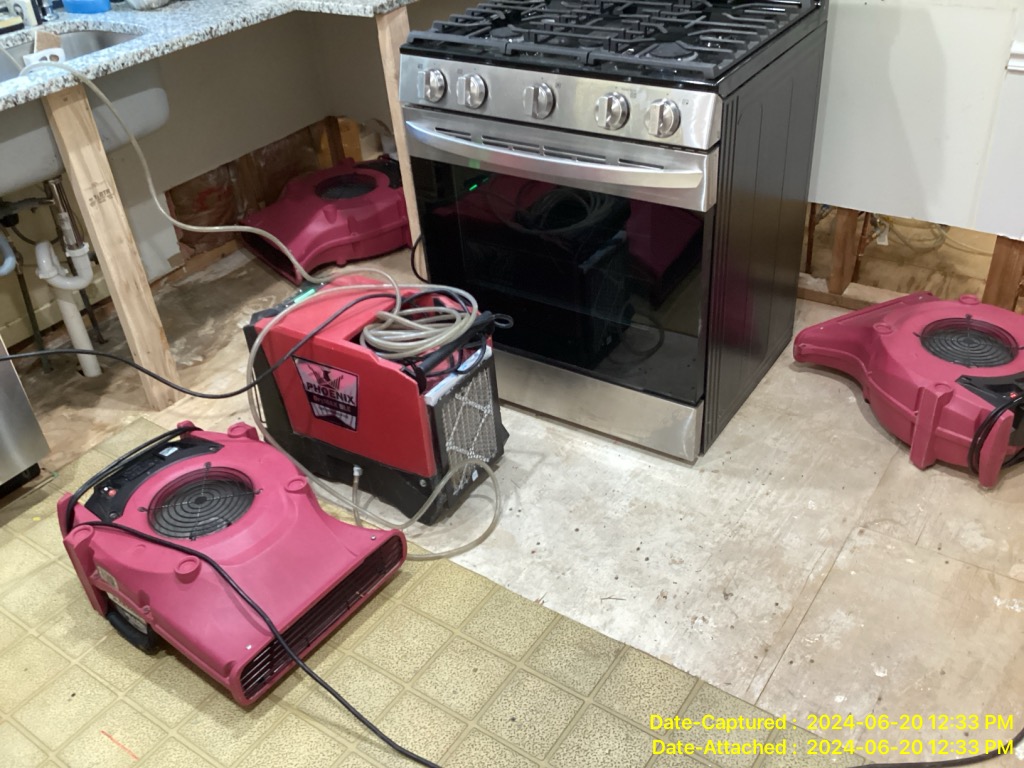
- Structural drying with LGR dehumidification. Low-grain refrigerant dehumidifiers, air movers, and air scrubbers work together to pull moisture out of the wood and subfloor using calculated psychrometrics, the science of air temperature and humidity relationships that governs how fast materials can safely dry.
- Antimicrobial biocide application when needed. If Category 2 or 3 water was involved, technicians apply an EPA-registered antimicrobial biocide to affected surfaces to address mold spores and mycotoxins before they can spread further.
- Final verification. Moisture readings are rechecked against dry standard benchmarks before any refinishing or board replacement begins.
Takeaway: Attempting to dry hardwood floors with household fans alone almost never reaches the moisture content needed to stop warping and mold growth. Professional structural drying equipment is calibrated to the wood itself, not just the room air.
PuroClean Disaster Restoration provides 24/7 emergency dispatch to Greenfield and surrounding Hancock County neighborhoods, works directly with insurance carriers through direct billing, and sends IICRC-certified technicians rather than general contractors to assess hardwood floor damage. That distinction matters because floor drying decisions made in the first few hours often determine whether boards can be saved or need replacement.
Frequently Asked Questions
Does homeowners insurance cover hardwood floor water damage in Indiana? Coverage depends on the cause. Sudden and accidental water damage, like a burst pipe, is typically covered under most Indiana homeowners policies. Gradual leaks, groundwater seepage, and flooding are often excluded unless you carry separate flood insurance. Check your policy’s water damage and flood exclusion language, or ask your restoration company to help document the cause for your claim.
How much does hardwood floor water damage restoration cost in Greenfield? Costs vary widely based on the extent of moisture penetration, whether the subfloor needs replacement, and the water category involved. Minor cupping caught early may only require drying equipment and monitoring, while advanced Class 4 damage with subfloor delamination often requires board removal and replacement. A restoration company can provide a specific estimate after moisture mapping.
How long does it take to dry hardwood floors after water damage? Structural drying typically takes three to seven days with professional LGR dehumidification and air movers, though Category 3 water or extensive subfloor delamination can extend that timeline. Drying continues until moisture readings match a dry standard, not just until the floor looks or feels dry.
Can I dry hardwood floors myself with fans and a dehumidifier? Small, isolated spills caught immediately may respond to household fans and a consumer dehumidifier. Once cupping, odor, or soft spots appear, the moisture has usually reached the subfloor, which requires professional-grade equipment and moisture verification to prevent hidden mold growth.
Is mold a health risk after hardwood floor water damage in Hancock County? Yes, particularly with prolonged moisture exposure. Mold colonization can begin within 24 to 48 hours and may produce mycotoxins that affect indoor air quality. The EPA recommends addressing moisture sources promptly and having visible or suspected mold assessed by a qualified professional rather than treated with surface cleaning alone.
What is the difference between Category 2 and Category 3 water damage? Category 2 water, sometimes called gray water, contains some contamination, such as water from a washing machine overflow. Category 3 water, or black water, includes sewage backup or floodwater with significant contamination and requires stricter PPE, containment, and antimicrobial treatment under IICRC S500 guidelines.
If you’re seeing any of these signs in your Greenfield home, don’t wait for the floor to get worse. Call PuroClean Disaster Restoration at (317) 467-4436 for a moisture assessment. Our IICRC-certified technicians are available 24/7, work directly with your insurance company through direct billing, and serve Greenfield and the surrounding Hancock County and Indianapolis-metro area with fast local response.