


Key Takeaways for Homeowners
- Always verify IICRC S500/S520 certification before hiring any mold remediation contractor.
- Ask about containment protocols, including negative air pressure and HEPA filtration systems.
- Confirm the company performs moisture mapping and addresses the root cause, not just visible mold.
- Ensure proper handling of mycotoxins and antimicrobial biocide application.
- Local climate factors in Greenfield and Indianapolis create unique mold risks. Choose a contractor who understands Indiana humidity patterns and Hancock County building codes.
Mold is not a surface problem. It is a structural and health emergency that demands immediate, professional intervention. If you are a homeowner in Greenfield, Indianapolis, or surrounding Hancock County neighborhoods, the decision you make about which mold remediation company to hire could determine whether your home is truly restored or simply cosmetically patched. This guide walks you through the five critical questions every homeowner must ask before signing a contract. These questions are designed to expose unqualified contractors, protect your investment, and ensure your family’s health is not compromised by incomplete or improper remediation.
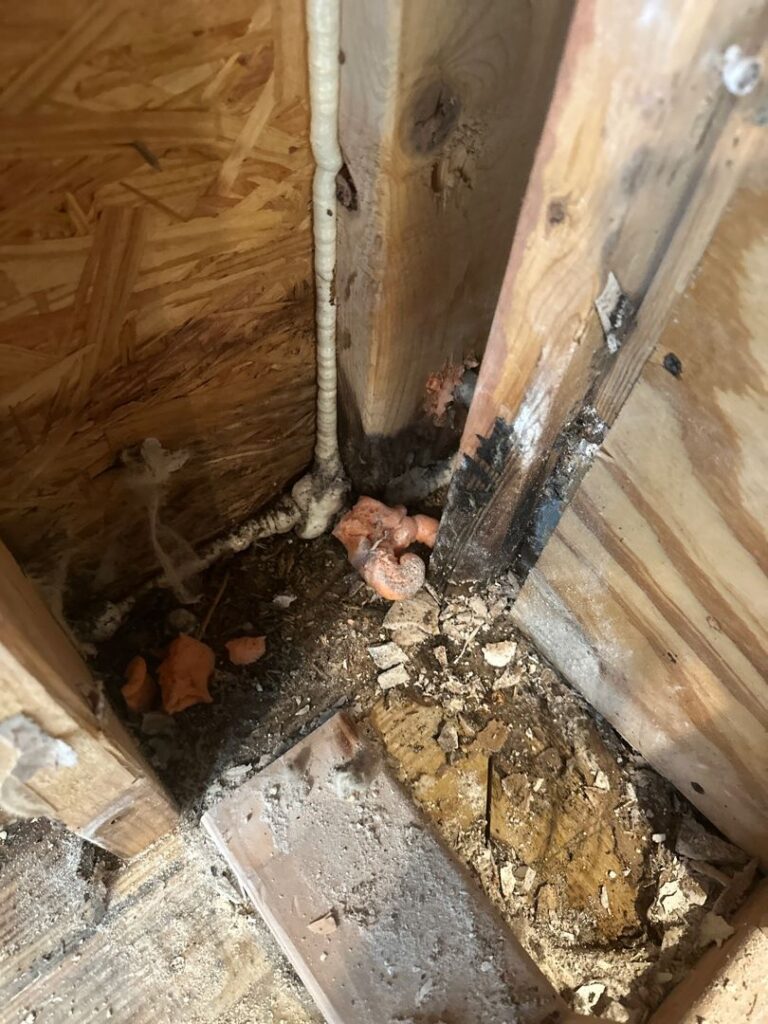
Question 1: Are You Certified to IICRC S500 and S520 Standards?
The Institute of Inspection, Cleaning and Restoration Certification (IICRC) sets the global benchmark for water damage restoration (S500) and microbial remediation (S520). These standards are not optional suggestions. They are the authoritative framework that defines how professionals assess moisture intrusion, classify contamination levels, contain affected zones, remove mold-infested materials, and verify that a structure has returned to a safe, dry condition.
When you ask a contractor about IICRC certification, you are not asking about a weekend course or a generic “mold license.” You are asking whether they have been trained in psychrometrics, the science of air and moisture behavior, and whether they understand the relationship between water activity, relative humidity, and fungal colonization. A contractor who cannot explain IICRC S500/S520 in detail is not qualified to handle your remediation.
What to listen for:
- Specific references to S500 for water damage and S520 for mold remediation
- Discussion of containment classes (Class 1 through Class 4)
- Understanding of Category 1, 2, and 3 water sources and how they affect mold risk
- Knowledge of proper drying standards and moisture content thresholds
Question 2: How Do You Contain Mold Spores During Remediation?
Containment is the single most important technical step in mold remediation. Without proper containment, the disturbance of mold colonies releases millions of spores into your HVAC system, your living spaces, and areas of your home that were previously unaffected. This cross-contamination can turn a localized problem into a whole-house disaster.
A qualified contractor will explain their use of physical barriers, typically 6-mil polyethylene sheeting, sealed with tape at all seams. But barriers alone are not enough. The contractor must also establish negative air pressure within the containment zone using HEPA-filtered air scrubbers. Negative air pressure means air is actively drawn out of the contaminated area, filtered through HEPA filtration media rated at 99.97% efficiency at 0.3 microns, and exhausted outside the containment boundary. This prevents spores from escaping into clean areas.
Step-by-Step Containment Process You Should Expect:
- Site Assessment: The contractor identifies the full extent of contamination using moisture mapping, thermal imaging, and air sampling.
- Barrier Installation: 6-mil poly sheeting is erected to isolate the work zone from unaffected areas.
- Negative Air Pressure Setup: HEPA air scrubbers are positioned to create inward airflow at all containment openings.
- Sealing of HVAC Vents: All supply and return vents within the containment zone are sealed to prevent duct contamination.
- Decontamination Chamber: A two-chamber entry/exit system is established for workers and equipment.
- Continuous Monitoring: Air pressure differentials are monitored throughout the project.
Question 3: Do You Address the Moisture Source or Just Remove the Mold?
Removing visible mold without eliminating the moisture source is like bailing water out of a boat without plugging the leak. Within weeks, the mold will return, often worse than before. This is why moisture mapping is not optional. It is the diagnostic foundation of every legitimate remediation project.
Moisture mapping involves using calibrated moisture meters, infrared thermal imaging cameras, and hygrometers to identify hidden water intrusion points. In Greenfield and Indianapolis homes, common moisture sources include foundation seepage during spring rains, condensation in crawl spaces due to Indiana’s high summer humidity, and plumbing leaks behind walls in older ranch-style and split-level homes common to Hancock County.
The contractor should also perform a thorough psychrometric analysis, measuring temperature, relative humidity, and dew point to understand the indoor environment’s capacity to hold and release moisture. Only after the moisture source is identified and corrected can the structural drying phase begin.
Critical Moisture Sources in Greenfield and Indianapolis Homes:
- Basement Foundation Seepage: Clay-heavy soils in Hancock County retain water and exert hydrostatic pressure on basement walls.
- Crawl Space Humidity: Unventilated or poorly ventilated crawl spaces trap moisture, especially during Indiana’s humid summers when relative humidity routinely exceeds 70%.
- HVAC Condensation: Improperly sized or poorly maintained air conditioning systems create condensation on ducts and registers.
- Roof and Gutter Issues: Seasonal freeze-thaw cycles in central Indiana cause ice damming and subsequent water intrusion.
- Plumbing Leaks: Older copper and galvanized plumbing in established Greenfield neighborhoods is prone to pinhole leaks.
Question 4: How Do You Handle Mycotoxins and Apply Antimicrobial Treatments?
Not all mold is created equal. Certain species, particularly Stachybotrys chartarum, Aspergillus, and Penicillium, produce mycotoxins, secondary metabolites that can cause serious health effects including respiratory distress, neurological symptoms, and immune system suppression. A professional remediation company must have protocols for identifying and safely handling materials contaminated with mycotoxin-producing species.
After physical removal of contaminated materials, the contractor should apply an EPA-registered antimicrobial biocide to all affected surfaces. This is not bleach. Bleach is ineffective on porous materials and can actually worsen the problem by adding moisture. The antimicrobial treatment should be selected based on the specific contamination class and applied according to manufacturer specifications with proper dwell time.
What Proper Antimicrobial Protocol Looks Like:
- Pre-cleaning of all surfaces to remove organic debris before biocide application
- Selection of an EPA-registered product appropriate for the contamination class
- Application with proper equipment to ensure even coverage and adequate dwell time
- Post-application verification through ATP testing or cultural sampling
- Documentation of all products used, including Safety Data Sheets (SDS)
Question 5: What Documentation and Verification Do You Provide?
Reputable mold remediation is not a handshake deal. It requires comprehensive documentation that protects you, your insurance company, and future buyers of your home. Before work begins, you should receive a detailed scope of work, a written estimate, and a timeline. During the project, daily logs should document moisture readings, air scrubber run times, and any changes to the plan.
Upon completion, the contractor should provide a clearance report that includes post-remediation moisture verification, visual inspection results, and air quality sampling data. In Indiana, while the state does not license mold remediators directly, the Indiana Department of Health recommends that homeowners work with professionals who follow established industry standards. Your contractor should be willing to coordinate with a third-party industrial hygienist for independent post-remediation verification if requested.
Why Local Expertise Matters in Greenfield and Indianapolis
Greenfield and the greater Indianapolis area present unique mold challenges that out-of-town contractors may not understand. Hancock County adopted the 2020 Indiana Residential Code, which enhanced ventilation requirements for new construction. However, many homes in Greenfield, New Palestine, and surrounding neighborhoods were built under earlier codes with limited vapor barriers and inadequate crawl space ventilation.
Central Indiana’s climate compounds these issues. Summers bring sustained humidity levels well above the 60% threshold that triggers mold growth, while spring and fall temperature swings create condensation on cooler surfaces. The region’s clay-heavy soils trap groundwater against foundations, and seasonal thunderstorms can overwhelm aging drainage systems. A contractor who understands these local dynamics will not just remediate your mold. They will design a prevention strategy tailored to your home’s specific vulnerabilities.
Frequently Asked Questions
Does home insurance cover mold caused by high humidity in Greenfield, Indianapolis?
Most standard homeowners insurance policies in Indiana exclude mold damage resulting from long-term humidity or maintenance issues. However, if the mold is a direct result of a covered peril, such as a burst pipe or storm damage, your policy may cover both the water damage restoration and the subsequent mold remediation. It is critical to document the cause of loss immediately and work with a remediation company experienced in insurance claims. PuroClean Disaster Restoration can assist with documentation and direct billing to your carrier.
How long does professional mold remediation typically take?
The timeline depends on the extent of contamination and the size of the affected area. A small, contained project may be completed in 3 to 5 days. Larger projects involving whole basements or multiple rooms may take 1 to 2 weeks. The drying phase alone, governed by IICRC S500 standards, typically requires 3 days of continuous dehumidification after the moisture source is eliminated.
Can I stay in my home during mold remediation?
For small, isolated containment zones, it may be possible to remain in the home with proper isolation. However, for extensive contamination, particularly involving mycotoxin-producing species, temporary relocation is strongly recommended. Your contractor should advise you based on air sampling results and the scope of work.
What are the health risks of delaying mold remediation?
Exposure to mold spores and mycotoxins can trigger allergic reactions, asthma attacks, chronic sinus infections, and in immunocompromised individuals, serious fungal infections. Children, elderly residents, and those with respiratory conditions are at highest risk. Delaying remediation allows spore counts to increase and contamination to spread.
How do I know if the mold is completely gone?
Visual inspection alone is insufficient. Proper verification includes moisture content readings below 16% on wood framing, relative humidity below 60% in all affected areas, and air sampling showing spore counts comparable to outdoor baseline levels. A third-party clearance test by an independent industrial hygienist provides the highest level of confidence.
When mold invades your home, every hour of delay increases the damage and the cost of restoration. PuroClean Disaster Restoration serves Greenfield, Indianapolis, and all of Hancock County with IICRC-certified technicians, advanced containment systems, and a commitment to getting your home back to a safe, healthy condition. If you are ready to hire a mold remediation company that answers every question on this list with confidence and expertise, call (317) 467-4436 now. Our team is standing by for immediate assistance and support.