


Key Takeaways for Homeowners
- Mold always returns when the underlying moisture source is never eliminated
- DIY bleach cleaning only kills surface mold and leaves hidden mycelium intact
- Central Indiana’s humid continental climate creates year round mold pressure
- Professional IICRC S520 certified remediation addresses root causes, not just symptoms
- PuroClean Disaster Restoration serves Greenfield and Indianapolis with 24/7 emergency response at (317) 467 4436
Why Your Mold Problem Never Truly Goes Away
You scrubbed the black spots off your bathroom grout. You sprayed bleach on the drywall stain. You even ran a dehumidifier for a week. Yet three months later, the musty smell returns. The dark patches creep back. Your family starts coughing again.
This is not a cleaning failure. It is a moisture failure. Mold is not a surface problem. It is a building science problem. And until you address the seven root causes that fuel persistent fungal growth, you are fighting a battle you cannot win.
As IICRC S500 and S520 certified restoration professionals, PuroClean Disaster Restoration treats mold as a structural and health emergency, not a household chore. Our technicians serving Greenfield, Indianapolis, and surrounding Marion County neighborhoods understand that lasting mold control requires precision moisture mapping, containment protocols, and post remediation verification. If you are tired of the cycle, call (317) 467 4436 now. But first, understand exactly why your mold keeps returning.
Reason 1: Surface Cleaning Never Reaches Hidden Mycelium
Mold is not just the dark spots you see on your shower wall. That visible growth is the fruiting body, the reproductive structure. Beneath it lies an invisible network of hyphae, threadlike filaments that penetrate deep into porous materials. When you wipe drywall with bleach or vinegar, you kill the surface colony. You leave the mycelium alive inside the substrate.
Within days, that hidden root system regenerates new spores. The cycle repeats. This is why mold returns to the exact same spot after cleaning. Professional remediation requires removal of contaminated porous materials, not just surface treatment. IICRC S520 standards mandate that materials with significant fungal growth be physically removed and properly disposed of, not merely cleaned.
Reason 2: Moisture Mapping Reveals the Real Enemy
Mold needs moisture to survive. Not standing water. Not floods. Just sustained relative humidity above 60 percent or a moisture content in building materials above 16 percent. Central Indiana experiences humid continental climate conditions with summer relative humidity frequently exceeding 70 percent. Greenfield and Indianapolis homes built before modern vapor barrier standards face constant moisture pressure.
Without professional moisture mapping using calibrated moisture meters and thermal imaging cameras, you cannot locate the hidden water sources feeding your mold. Common concealed moisture reservoirs in Indianapolis area homes include:
- Condensation inside wall cavities from poorly insulated HVAC ductwork
- Foundation seepage through aging mortar in pre 1980s brick homes common in Irvington and Broad Ripple
- Plumbing leaks behind shower surrounds in ranch style homes built during the 1960s and 1970s housing boom
- Attic moisture from bathroom exhaust fans venting into soffits rather than through the roof
- Crawlspace humidity rising through unsealed vapor barriers in homes near White River floodplains
Moisture mapping is not optional. It is the diagnostic foundation of every successful remediation.
Reason 3: Inadequate Containment Spreads Spores During Cleanup
Every time you disturb a mold colony, you release thousands of spores into the air. Without proper containment, those spores travel through your HVAC system and settle in new locations. The mold you cleaned in the bathroom now appears in the bedroom closet. This cross contamination is one of the most common reasons mold seems to spread after cleanup.
IICRC S520 protocols require negative air pressure containment during remediation. This means sealing the affected area with polyethylene sheeting and using HEPA filtered air scrubbers to create inward airflow that prevents spore escape. Only certified professionals have the equipment and training to execute proper containment. DIY attempts almost always worsen contamination.
Reason 4: Psychrometrics Controls the Indoor Environment
Psychrometrics is the study of air water vapor relationships. It is the science behind why your home feels clammy in July and dry in January. It is also the key to preventing mold recurrence.
Indianapolis area homes face unique psychrometric challenges. Summer outdoor dew points regularly reach 70 degrees Fahrenheit. When that humid air enters your cooled home, it can condense on cold surfaces. Winter brings the opposite problem. Cold outdoor air holds little moisture, but when you heat it, relative humidity drops. Many homeowners over humidify, creating condensation on windows and exterior walls.
Proper mold prevention requires year round psychrometric management:
- Maintain indoor relative humidity between 30 and 50 percent
- Ensure adequate ventilation rates per ASHRAE 62.1 standards
- Use air conditioning systems sized correctly for dehumidification, not just cooling
- Install whole house dehumidification in basements and crawlspaces
- Monitor humidity with digital hygrometers in multiple locations
Without this environmental control, even professional remediation will eventually fail.
Reason 5: Building Envelope Deficiencies in Older Indianapolis Homes
Greenfield and Indianapolis feature a rich architectural heritage, from Victorian homes in Lockerbie Square to mid century ranch homes in Castleton and Warren Township. Many of these structures were built before modern moisture management standards.
Common building envelope deficiencies that trap moisture include:
- Single pane windows with metal frames that sweat during temperature differentials
- Unvented crawlspaces with dirt floors and no vapor barrier
- Brick veneer homes without weep holes or proper drainage planes
- Flat roof additions on post war homes with inadequate slope and poor membrane sealing
- Knee wall attics in Cape Cod style homes with insufficient insulation and air sealing
Indianapolis building codes have evolved significantly, but existing homes are not required to upgrade unless major renovations occur. This means thousands of local properties operate with moisture vulnerabilities that modern construction would never permit.
Reason 6: HVAC Systems Become Mold Distribution Networks
Your heating and cooling system is designed to move air. When mold grows inside ductwork, on evaporator coils, or in condensate pans, the HVAC system becomes a spore delivery mechanism. Every time the fan runs, it pushes contaminated air into every room.
Central Indiana’s heavy reliance on air conditioning creates perfect conditions for HVAC mold. The evaporator coil operates below the dew point, producing condensation. If the condensate drain clogs or the pan overflows, water accumulates. Dust on the coil provides organic nutrients. The result is a hidden mold factory that distributes spores throughout the home.
Professional remediation must include HVAC inspection and cleaning. HEPA filtration upgrades, UV light installation on coils, and proper condensate management are essential components of a comprehensive mold control strategy.
Reason 7: No Post Remediation Verification Means No Guarantee
How do you know the mold is really gone? Visual inspection is not enough. Air sampling is not enough. True verification requires a combination of:
- Visual inspection showing no visible mold growth
- Moisture readings confirming building materials are below 16 percent moisture content
- Air sampling showing spore counts comparable to outdoor baseline levels
- Surface sampling confirming no residual fungal contamination
- Odor assessment verifying no musty smells remain
Without this multi point verification, you are simply hoping the problem is solved. PuroClean Disaster Restoration provides documented post remediation verification for every project, giving homeowners in Greenfield, Indianapolis, and surrounding communities the confidence that mold will not return.
The PuroClean Difference: IICRC Certified Mold Remediation
Mold remediation is not cleaning. It is a controlled demolition and reconstruction process governed by ANSI/IICRC S520 standards. Our process includes:
- Emergency response and containment within hours of your call
- Full moisture mapping and thermal imaging inspection
- Negative air pressure containment with HEPA filtration
- Removal of contaminated porous materials per S520 guidelines
- Application of antimicrobial biocide on non porous surfaces
- HEPA vacuuming and detailed cleaning of all affected areas
- Structural drying using commercial dehumidification and air movement
- Post remediation verification with air and surface sampling
- Reconstruction and restoration of removed materials
- Documentation for insurance claims and real estate disclosures
Frequently Asked Questions
Does home insurance cover mold caused by high humidity in Greenfield or Indianapolis?
Standard homeowner’s insurance policies typically exclude mold damage resulting from long term humidity or maintenance issues. However, if mold results from a covered peril such as a burst pipe, storm damage, or appliance failure, remediation may be covered. Indiana law requires insurers to provide clear policy language regarding mold coverage. Document all moisture events with photos and maintenance records. PuroClean Disaster Restoration works directly with insurance adjusters to document cause and origin, maximizing your claim potential.
Why does mold keep returning to the same spot in my Indianapolis basement?
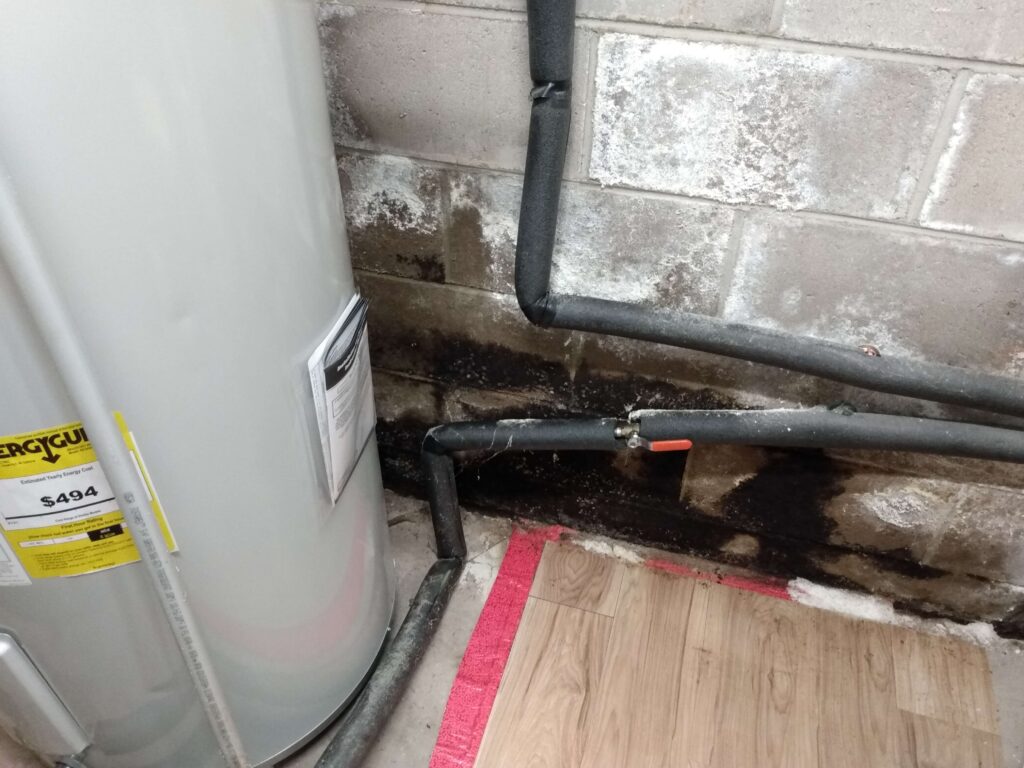
Basements in Central Indiana are particularly vulnerable due to clay rich soils that retain water, seasonal freeze thaw cycles that stress foundation walls, and the common practice of finishing basements without proper vapor barriers. If your basement mold returns, the cause is almost always ongoing moisture intrusion through foundation walls or floor slabs, not inadequate cleaning.
Can I use bleach to kill mold permanently?
No. Bleach is primarily water. On porous materials like drywall and wood, the chlorine evaporates while the water soaks in, potentially worsening the moisture problem. Bleach also fails to penetrate deep enough to kill mycelium. IICRC S520 explicitly discourages bleach for mold remediation on porous surfaces.
How long does professional mold remediation take?
Most residential projects in the Indianapolis area require 3 to 7 days from containment to clearance testing. Larger losses or those requiring extensive reconstruction may take longer. PuroClean provides daily progress updates and works to minimize disruption to your family.
Is mold in my crawlspace dangerous if I never go down there?
Yes. Air in your crawlspace communicates with your living space through stack effect and HVAC return pathways. Studies show that up to 40 percent of first floor air originates in the crawlspace. Mold spores and mycotoxins from crawlspace contamination directly impact indoor air quality throughout your home.
If you live in Greenfield, Indianapolis, Lawrence, Beech Grove, or any Marion County neighborhood and mold keeps coming back, stop the cycle. Call PuroClean Disaster Restoration at (317) 467 4436 for mold remediation today. Our IICRC certified technicians are available 24 hours a day, 7 days a week.