


Reviewed for technical accuracy by PuroClean Disaster Restoration’s IICRC-certified restoration team.
Key Takeaways for Homeowners
- Mold can start growing on wet carpet within 24 to 48 hours, so drying speed matters more than any cleaning product.
- Visible mold on carpet usually means the pad and subfloor underneath are also wet, where you cannot see or reach them.
- Carpet touched by sewage or contaminated groundwater is Category 3 (black water) and generally cannot be saved.
- Bleach and store-bought sprays do not remove mold growing deep inside porous carpet fibers and padding.
- In Greenfield, spring snowmelt raises the water table and pushes moisture through basement floors and walls, so March through May is peak risk season.
- Mold covering more than about 10 square feet, or any growth after sewage contact, calls for a certified professional.
What Is Mold on Wet Carpet, and Why Does It Matter?
Mold on wet carpet is fungal growth that develops when carpet, padding, and the subfloor stay wet for more than a day or two. The IICRC S520 Standard for Professional Mold Remediation is the industry reference for removing it safely. The IICRC S500 Standard for Professional Water Damage Restoration governs the drying that prevents it in the first place.
The EPA’s mold guidance makes the same basic point: moisture control is the key to mold control, and mold cannot be eliminated from a home while the moisture source remains. Carpet is a perfect food and water reservoir. The fibers, the backing, and the foam pad all hold moisture long after the surface feels dry.
Takeaway: Treat any carpet that stayed wet past 48 hours as a mold risk, even if it looks clean.
Why Are Greenfield Homes at Risk for Wet Carpet?
Greenfield homes face wet carpet risk mainly from groundwater pressure each spring. As snow melts and rain soaks into the ground, the water table rises and pushes against basement floors and walls. This is called hydrostatic pressure, and it forces water through cracks, floor-wall joints, and porous masonry.
The housing stock matters here. Many postwar ranch and split-level homes around Hancock County have poured concrete or block foundations. Hairline cracks and cove joints let seepage through. Older brick homes near the historic downtown often have fieldstone or aging block basements, where original mortar joints can weep water slowly for weeks.
Other local causes add up: gutters and downspouts that empty too close to the foundation, poorly graded soil, sump pumps that fail or get overwhelmed during storms, and sewer backups when systems overload.
Takeaway: Walk your foundation in March, extend downspouts, and test your sump pump before the thaw.
8 Dangerous Reasons Mold on Wet Carpet Should Never Be Ignored
1. The Growth You See Is Only the Surface
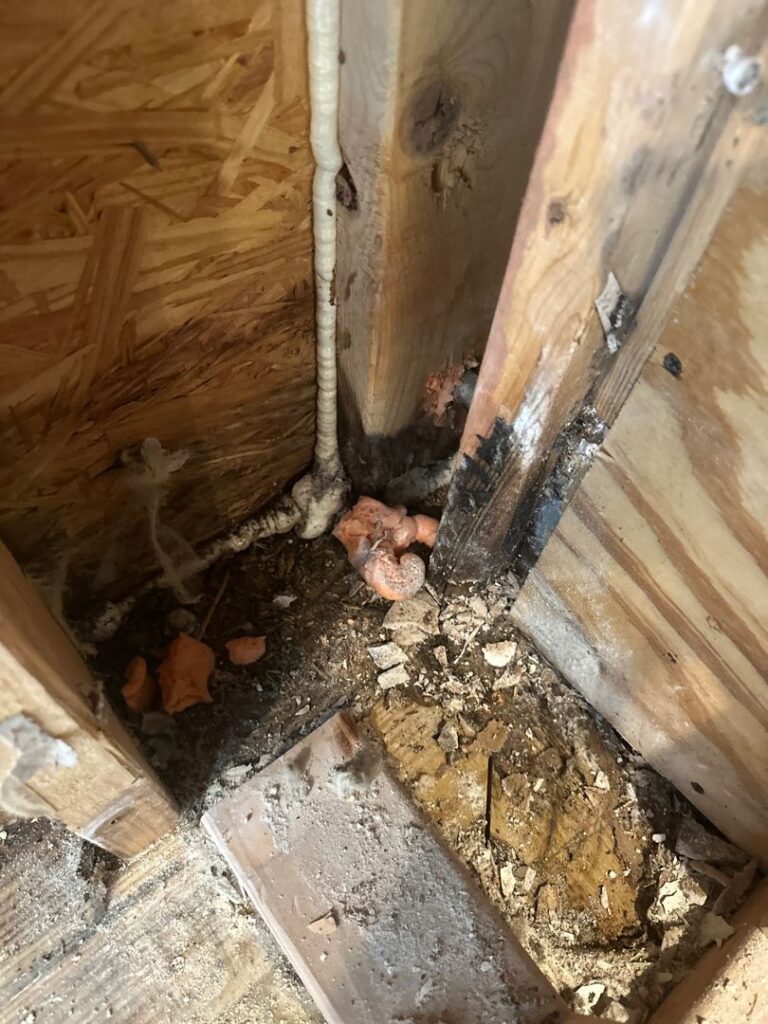
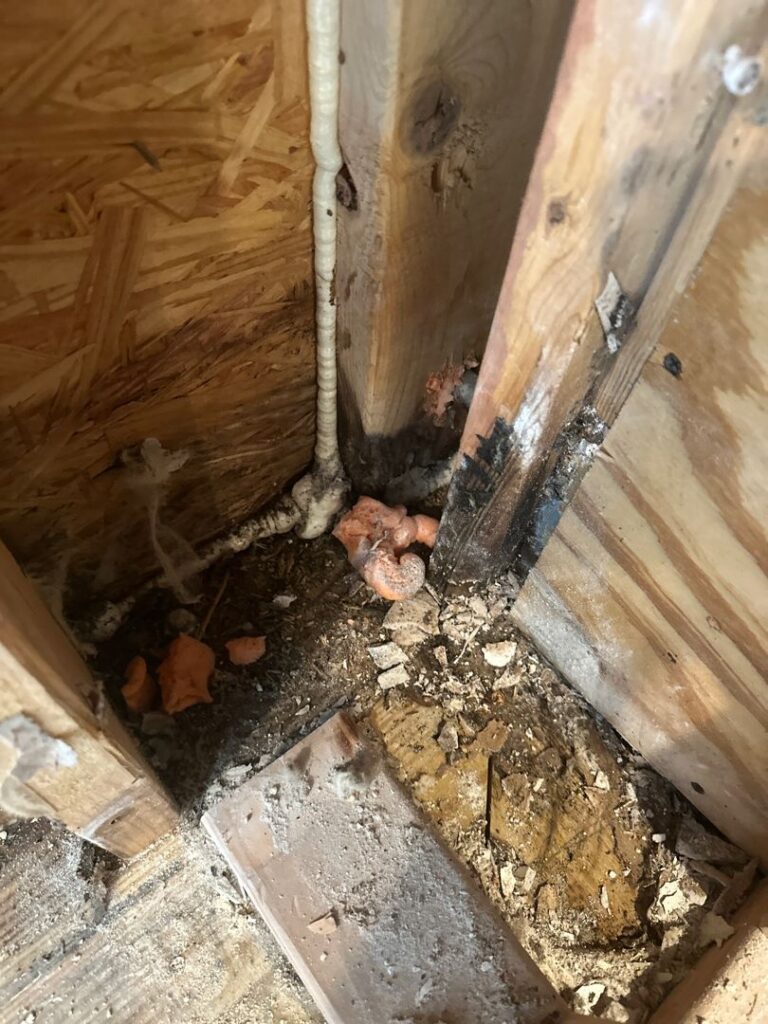
Visible mold on carpet is rarely the whole problem. It usually spreads into the pad and onto the subfloor, where moisture lingers. A spot the size of a coin on top can sit above a much larger colony underneath. Moisture mapping with a meter and thermal imaging finds the true footprint.
2. Spores Can Cross-Contaminate the Rest of Your Home
Disturbing mold by scrubbing, vacuuming, or pulling carpet releases spores into the air. Those spores travel through ductwork and settle in clean rooms. This cross-contamination turns a one-room problem into a whole-house problem. Professionals use a containment barrier to stop it.
3. It Can Affect Your Breathing and Allergies
The EPA lists nasal stuffiness, eye irritation, wheezing, and skin irritation among common reactions to mold, and people with asthma or allergies may react more strongly. Some molds can also produce mycotoxins. Living above a damp basement carpet can mean breathing these particles daily.
4. The Water May Have Been Contaminated
Basement carpet that got wet from a sewer backup or contaminated groundwater is Category 3 water, also called black water. It carries bacteria and other pathogens. Indiana’s IDEM guidance on sewer overflows treats this water as a health hazard. Mold on top of contamination makes the job more serious, and the carpet and pad must be removed.
5. It Damages the Structure Under the Carpet
Long-term moisture causes subfloor delamination, where plywood layers separate and swell. Wood framing, tack strips, and baseboards can rot. In severe cases, wet materials deep in the structure can reach Class 4 water damage, which needs specialty drying equipment and longer drying times.
6. DIY Cleaning Rarely Works on Porous Materials
Bleach and household sprays may lighten stains on the surface, but they do not reach roots inside the pad. The mold returns, often within weeks. Porous materials like carpet padding generally cannot be cleaned to the standard IICRC S520 expects and are removed and discarded.
7. Delays Can Complicate Insurance Claims
Many policies expect you to limit damage promptly after a loss. Waiting weeks while mold spreads can raise questions about whether the damage was preventable. Photos, moisture readings, and a professional scope of work help your claim. Coverage varies by policy, so confirm yours with your agent.
8. It Keeps Coming Back and Hurts Home Value
If the moisture source is not fixed and the materials are not dried to a verified standard, mold returns. A recurring musty smell can also surface during a home inspection and complicate a sale. Fixing the water source and drying the structure the first time is cheaper than repeated cleanups.
Takeaway: Photograph the damage before touching anything, then call a certified team before you start pulling carpet.
How Do Professionals Remove Mold From Wet Carpet?
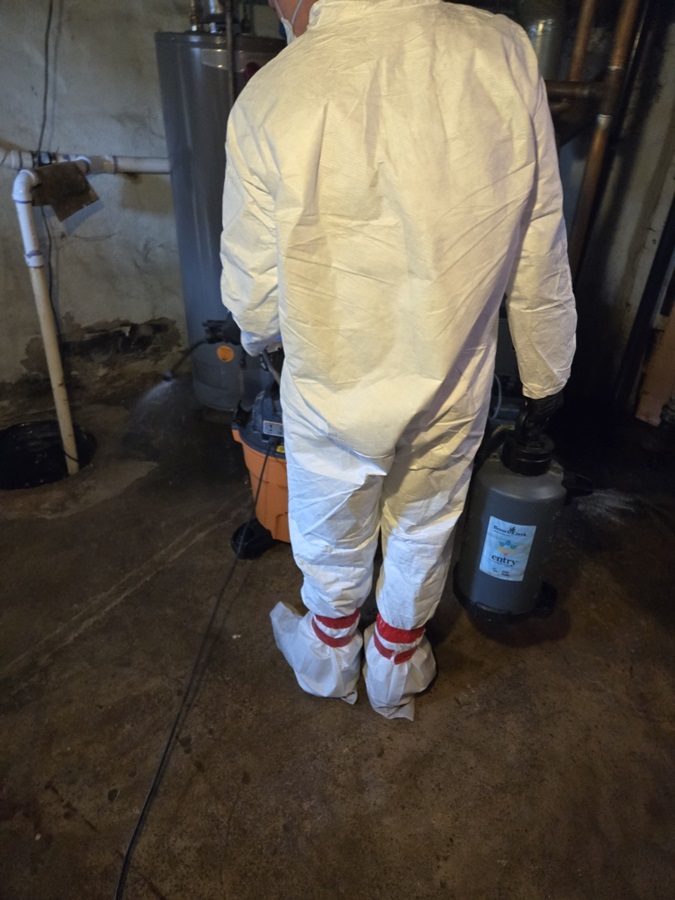
Professionals follow a sequence that contains the mold, removes contaminated material, and dries the structure before rebuilding. The steps below reflect the approach outlined in IICRC S520 and S500.
- Inspect and map moisture. Technicians use moisture meters and thermal imaging to find wet areas and record baseline hygrometer readings.
- Set up containment. Plastic sheeting forms a containment barrier around the work area.
- Create negative air pressure. An air scrubber with HEPA filtration pulls air out of the contained zone so spores do not drift into the house.
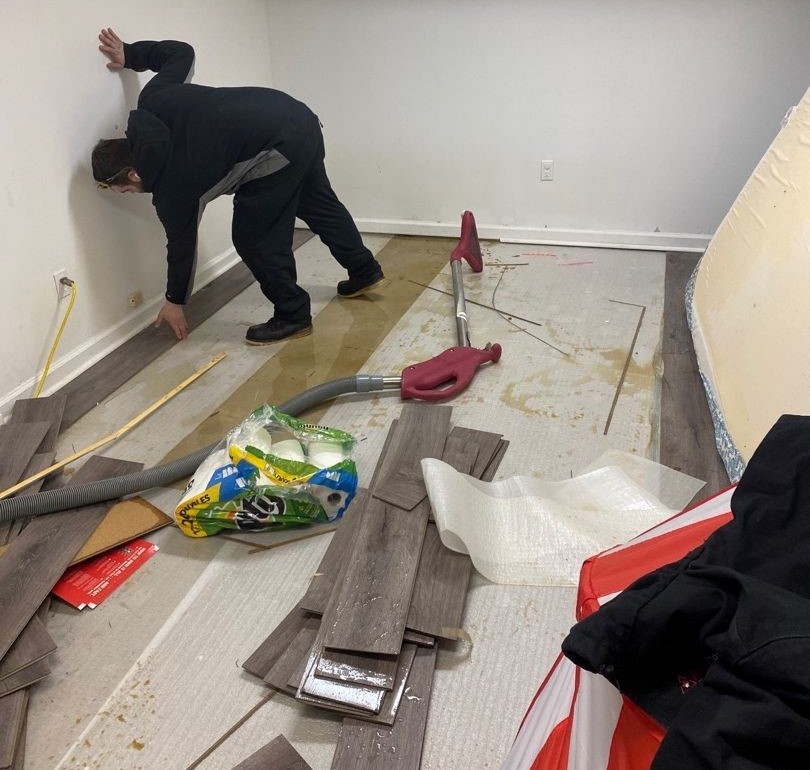
- Remove affected materials. Carpet and pad are cut, rolled, bagged, and removed. Subfloor is evaluated.
- Clean the surfaces. HEPA vacuuming and damp wiping remove settled spores and debris.
- Apply antimicrobial biocide. Approved products treat the subfloor and framing.
- Dry the structure. Low grain refrigerant (LGR) dehumidifiers and air movers handle structural drying while technicians track psychrometrics, the relationship between temperature, humidity, and moisture in the air.
- Verify the result. Final moisture readings confirm materials are dry before new flooring goes in.
Takeaway: Ask any contractor how they will contain the area and verify dryness before you approve work.
What Makes PuroClean Different?
PuroClean Disaster Restoration offers 24/7 emergency dispatch, IICRC-certified technicians, and direct insurance billing, with local response across Greenfield and Hancock County.
What Should You Do in the First 48 Hours?
In the first 48 hours, stop the water, remove standing water safely, and start airflow. Fast action reduces the chance that mold takes hold.
- Turn off the water source if it is a plumbing leak, and shut off power to wet areas if it is unsafe.
- Photograph the damage for your records.
- Move furniture and small items off the carpet.
- Run fans and a dehumidifier to lower humidity.
- Do not use a household vacuum on wet carpet.
- Call a restoration professional if carpet stays wet or smells musty.
Takeaway: Speed and airflow matter, but hidden moisture still needs professional detection.
Frequently Asked Questions
Does homeowners insurance cover mold on wet carpet?
Coverage depends on the cause. Policies often cover mold that follows a sudden, accidental water loss, such as a burst pipe, but may exclude flooding, groundwater seepage, or long-term leaks. Sewer backup usually requires a separate endorsement. Review your policy and contact your agent promptly.
How much does mold removal on carpet cost?
Cost depends on the size of the affected area, whether the subfloor is involved, the water category, and how much drying is needed. A professional inspection with moisture readings is the only way to get an accurate estimate. Small surface cases cost far less than structural ones.
How long does it take to remove mold from wet carpet?
Removal of carpet and pad and containment setup often takes a day or two. Structural drying commonly runs several days, depending on materials and humidity. Final verification confirms dryness before rebuilding. Larger or Class 4 cases take longer.
Can I clean mold on carpet myself?
For a very small, surface-level patch on a hard material, DIY cleaning may be reasonable. On carpet and padding, it usually is not. Call a professional if the area exceeds about 10 square feet, if water was contaminated, or if anyone in the home has asthma or a weakened immune system.
Is mold on wet carpet dangerous to my health?
It can be. The EPA notes that mold exposure may cause allergy-type symptoms, irritation, and worsened asthma. Reactions vary by person. Infants, older adults, and people with respiratory or immune conditions should avoid the area until a professional evaluates it.
Why does my Greenfield basement carpet get wet every spring?
Spring snowmelt and rain raise the water table, which creates hydrostatic pressure against your foundation. Water enters through cracks, floor joints, or old mortar. Poor grading, short downspouts, and sump pump failure make it worse. A professional can help identify the entry point.
Need Help With Wet or Moldy Carpet in Greenfield?
If your carpet has been wet for more than a day, smells musty, or shows spots of growth, do not wait for it to get worse. PuroClean Disaster Restoration, 625 S. State St., Greenfield, IN 46140, serves Greenfield and surrounding Hancock County and Indianapolis-metro neighborhoods. Call (317) 467-4436 any time. Our IICRC-certified technicians are available 24/7 and can bill your insurance company directly.