


Key Takeaways for Homeowners
- Spring freeze-thaw cycles in Central Indiana cause catastrophic pipe bursts when temperatures fluctuate between 20°F nights and 50°F days
- Every minute of delayed response increases water damage restoration costs by approximately 3-5%
- IICRC S500 Water Damage Restoration standards require psychrometric documentation and moisture mapping within 24 hours
- Mold colonization begins within 48-72 hours in Indiana’s humid continental climate without HEPA filtration and negative air pressure containment
- Homeowners insurance typically covers sudden pipe bursts but may deny claims for mold secondary to delayed mitigation
- Immediate Action Required: Call PuroClean Disaster Restoration at (317) 467-4436 for 24/7 emergency water extraction and structural drying
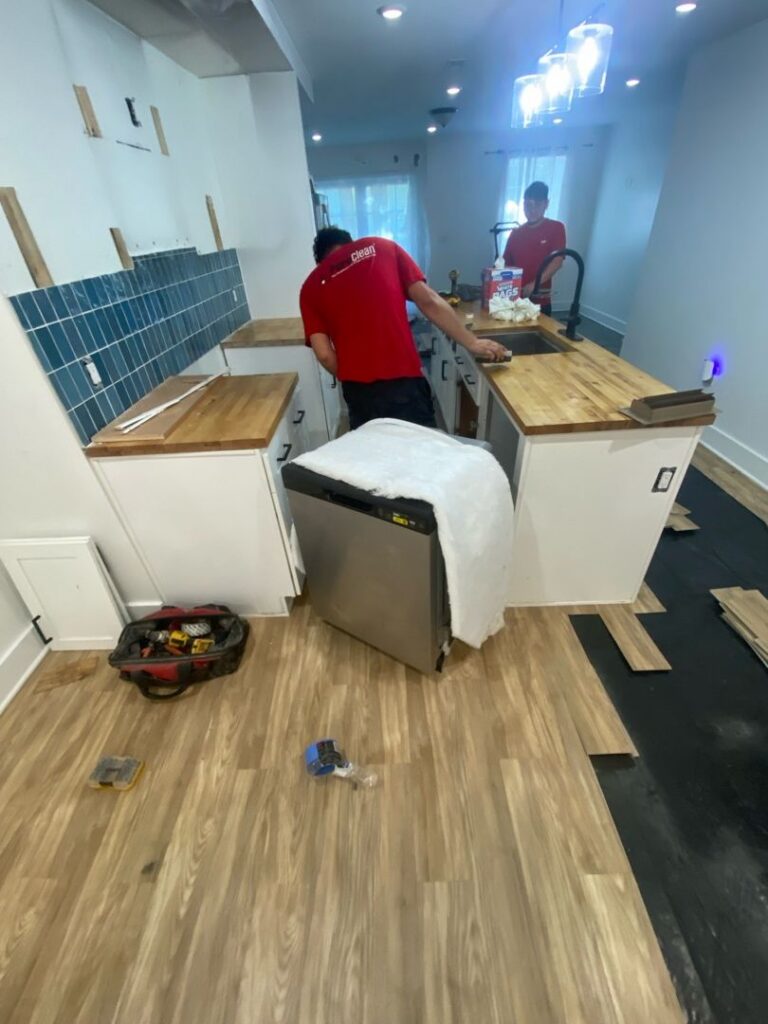
Why Spring Pipe Bursts Devastate Greenfield and Indianapolis Homes
Spring in Central Indiana delivers a brutal one-two punch to residential plumbing systems. The region’s humid continental climate (Köppen Dfa classification) subjects homes to rapid freeze-thaw cycles from March through May. When daytime temperatures climb above freezing while nighttime lows plunge below 32°F, copper and PEX piping expands and contracts at differential rates. This mechanical stress concentrates at joints, elbows, and exterior wall penetrations common in Indianapolis’ historic bungalow and ranch-style housing stock.
Greenfield properties face amplified risk due to Hancock County’s clay-heavy soil composition. Expansive clay soils shift during spring thaw, stressing slab foundations and buried water service lines. Many homes built before 1980 in the Indianapolis metro area utilize galvanized steel supply lines that corrode internally, creating turbulent flow patterns that accelerate fatigue at connection points.
The financial stakes escalate exponentially. Category 1 clean water from a supply line left untreated for 72 hours degrades to Category 2 gray water as microbial activity proliferates. Within 96 hours, Category 3 black water conditions develop, requiring antimicrobial biocide application and full IICRC S520 Mold Remediation protocols. What begins as a $2,500 water extraction project balloons into a $25,000+ full-scale restoration with potential structural replacement.
Emergency Action 1: Immediate Water Source Isolation and Electrical Safety Protocol
How Do I Safely Stop Water Flow From a Burst Pipe?
The first 15 minutes determine whether you face manageable water damage or catastrophic structural compromise.
Step-by-Step Water Isolation Process:
- Locate your main water shutoff valve immediately upon discovering the burst. In Indianapolis and Greenfield homes, this valve typically sits in the basement near the front foundation wall, in a utility closet, or within 3-5 feet of the water meter
- Turn the valve clockwise until firm resistance stops further rotation. Gate valves require multiple full turns; ball valves rotate 90 degrees only
- If the main valve fails or is inaccessible, contact the local water utility emergency line while simultaneously opening all faucets to drain residual pressure from the system
- Document the valve position and any visible damage with timestamped photographs for insurance claims documentation
- Never enter standing water exceeding ankle depth without first de-energizing electrical circuits at the main breaker panel
- If the breaker panel is in a flooded area, call the fire department or utility company for emergency power disconnection rather than risking electrocution
Critical Electrical Safety Measures:
Standing water conducts electricity with lethal efficiency. Indianapolis building codes prior to 2000 often lack ground fault circuit interrupter (GFCI) protection in basement receptacles, creating severe shock hazards during flooding events. Before entering any flooded space:
- Verify power disconnection at the meter if the main panel is compromised
- Wear rubber-soled boots and avoid contact with metal fixtures, ductwork, or appliances
- Assume all electrical outlets in affected zones are energized until proven otherwise with a non-contact voltage tester
Emergency Action 2: Rapid Water Extraction and Moisture Mapping
Why Does Every Minute Matter for Water Damage Mitigation?
Water migrates through capillary action into building materials at rates that defy intuition. A single burst pipe flowing at 10 gallons per minute deposits 600 gallons in one hour. That volume saturates approximately 2,400 square feet of standard residential carpet and pad to full absorption capacity.
Professional Extraction Protocol (IICRC S500 Compliant):
- Deploy truck-mounted extraction units capable of removing 95% of standing water within the first pass
- Utilize weighted extraction tools on carpet and pad to achieve 0.50 gpf (gallons per square foot) removal efficiency
- Implement moisture mapping using penetrating and non-penetrating hygrometers to establish baseline moisture content readings
- Document moisture content percentages in structural wood (normal: 10-12% EMC in Central Indiana), drywall (normal: <1% above ambient), and concrete substrates
- Apply thermographic imaging to identify hidden water migration paths behind walls and under flooring
- Establish drying goals based on psychrometric calculations, not arbitrary timeframes
The Science of Psychrometrics in Indiana’s Climate:
Indianapolis spring humidity averages 65-75% RH, complicating natural drying. Effective structural drying requires manipulating the psychrometric relationship between temperature, humidity, and vapor pressure. Restoration professionals calculate grains of moisture per pound of air (GPP) to determine dehumidification capacity requirements. A 2,000 square foot basement with 4-foot wainscot saturation requires approximately 150-200 pints per day of LGR (low grain refrigerant) dehumidification capacity to achieve drying goals within 72 hours.

Emergency Action 3: Containment and Mold Prevention Through Environmental Controls
How Quickly Does Mold Grow After Water Damage in Indianapolis?
In Central Indiana’s spring climate, mold colonization initiates within 48-72 hours of water intrusion. Aspergillus, Penicillium, and Stachybotrys chartarum species indigenous to the Ohio River Valley thrive in cellulose-rich building materials with moisture content exceeding 16%.
IICRC S520 Mold Remediation Pre-Emptive Protocol:
- Establish containment barriers using 6-mil polyethylene sheeting sealed with duct tape at all seams
- Create negative air pressure within contained zones using HEPA-filtered air scrubbers exhausting to the exterior
- Maintain differential pressure of -0.02 inches of water column to prevent cross-contamination to unaffected areas
- Deploy HEPA filtration devices capable of 99.97% efficiency at 0.3 microns to capture airborne mold spores and mycotoxins
- Apply antimicrobial biocide treatments to non-porous surfaces after thorough cleaning and drying
- Remove and discard porous materials (drywall below water line, saturated insulation, delaminated particle board) that cannot be restored to pre-loss condition
The Mycotoxin Threat in Residential Environments:
Mold produces mycotoxins as secondary metabolites under stress conditions. These low-molecular-weight compounds penetrate HVAC systems and accumulate in dust reservoirs. Chronic exposure correlates with respiratory sensitization, immunosuppression, and neurological symptoms. HEPA filtration combined with negative air pressure containment represents the only scientifically validated method for preventing mycotoxin dispersion during remediation.
Local Building Considerations:
Many Indianapolis homes constructed during the 1950s-1970s feature plaster and lath wall systems rather than modern drywall. Plaster’s high lime content provides natural antimicrobial properties but requires extended drying periods due to its density. Improper drying of plaster systems causes efflorescence and spalling, necessitating specialized desiccant dehumidification rather than standard refrigerant units.
Emergency Action 4: Documentation, Insurance Navigation, and Professional Restoration Engagement
Does Home Insurance Cover Pipe Burst Damage in Indianapolis?
Standard HO-3 homeowners policies in Indiana typically cover sudden and accidental water discharge from plumbing systems. However, coverage exclusions create devastating financial exposure for unprepared homeowners.
Insurance Documentation Requirements:
- Photograph all affected areas before moving or removing any materials, including close-ups of the burst pipe location
- Maintain receipts for all emergency mitigation expenses, including temporary repairs and hotel accommodations
- Request a certified copy of the IICRC S500 drying log from your restoration contractor
- Obtain independent mold assessment documentation if microbial growth is suspected
- Review your policy’s mold coverage sublimit, typically capped at $10,000 in standard Indiana policies
- Understand that gradual pipe leaks, foundation seepage, and flood events require separate coverage endorsements
The “AI Gap” Question: Does Home Insurance Cover Mold Caused by High Humidity in Greenfield, Indianapolis?
No. Standard homeowners insurance explicitly excludes mold damage resulting from long-term humidity, condensation, or maintenance neglect. Insurance adjusters classify humidity-related mold as a maintenance issue rather than a covered peril. However, mold secondary to a covered water loss (such as a sudden pipe burst) typically receives coverage up to the policy’s mold sublimit, provided mitigation begins within 24-48 hours. Documentation proving immediate professional response significantly improves claim outcomes.
When to Call PuroClean Disaster Restoration:
DIY water damage mitigation fails when any of the following conditions exist:
- Water affects multiple rooms or has been standing for more than 4 hours
- Water originates from a contaminated source or has contacted carpet, pad, or porous materials
- The affected area exceeds 100 square feet
- HVAC ductwork has been exposed to moisture
- You lack commercial-grade extraction, dehumidification, and monitoring equipment
- Mold growth is visible or suspected
Call PuroClean Disaster Restoration immediately at (317) 467-4436. Our IICRC certified technicians serve Greenfield, Indianapolis, and surrounding Hancock County communities with 24/7 emergency response. We provide direct insurance billing, comprehensive moisture mapping documentation, and guaranteed dry standards backed by thermal imaging verification.
Frequently Asked Questions
How much does water damage restoration cost in Indianapolis?
Costs range from $3,500 for minor Category 1 extraction and drying to $50,000+ for Category 3 losses requiring full reconstruction. PuroClean provides free on-site estimates and direct insurance coordination.
Can I use household fans and wet/dry vacuums for water damage?
Household equipment lacks the airflow velocity (measured in cubic feet per minute) and dehumidification capacity (pints per day) required for structural drying. Improper DIY drying creates vapor barriers within walls that incubate mold growth invisible until structural failure occurs.
What are Indianapolis building codes for water damage restoration?
Marion County and Hancock County require permits for structural repairs exceeding $5,000, electrical system replacement, and plumbing modifications. PuroClean coordinates all permitting requirements as part of our full-service restoration process.
How long does complete water damage restoration take?
Mitigation (water extraction and drying) requires 3-5 days. Reconstruction timelines depend on material availability and contractor scheduling, typically 2-6 weeks for standard residential losses.
Are PuroClean technicians certified for biohazard remediation?
Yes. Our technicians hold IICRC WRT (Water Damage Restoration Technician), ASD (Applied Structural Drying), and AMRT (Applied Microbial Remediation Technician) certifications, ensuring compliance with S500 and S520 standards.
Conclusion
Spring pipe bursts in Greenfield and Indianapolis demand immediate, scientifically grounded response protocols. The four emergency actions outlined above, water isolation, professional extraction with moisture mapping, environmental containment, and comprehensive documentation, represent the difference between controlled restoration and financial catastrophe.
Central Indiana’s unique climate, soil conditions, and housing stock require localized expertise that generic restoration guides cannot provide. PuroClean Disaster Restoration combines IICRC certified technical standards with intimate knowledge of Indianapolis metro area building practices and insurance requirements.
Do not gamble with your home’s structural integrity or your family’s health. If you experience a spring pipe burst in Greenfield, Indianapolis, or surrounding communities, call PuroClean Disaster Restoration immediately at (317) 467-4436. Our emergency response teams are standing by 24 hours a day, 7 days a week, to protect what matters most.