


Key Takeaways for Homeowners
- Smoke odor penetrates porous materials at the molecular level; surface cleaning alone will not eliminate it
- IICRC S500 and S520 certified restoration protocols require thermal fogging, ozone treatment, and hydroxyl radical generation for complete odor neutralization
- Indianapolis area homes with forced-air HVAC systems and humid continental climates face accelerated odor absorption into drywall, insulation, and ductwork
- Professional restoration must address source removal, chemical neutralization, and particulate filtration in sequence
- PuroClean Disaster Restoration provides 24/7 emergency smoke odor remediation in Greenfield and Indianapolis: Call (317) 467-4436 now
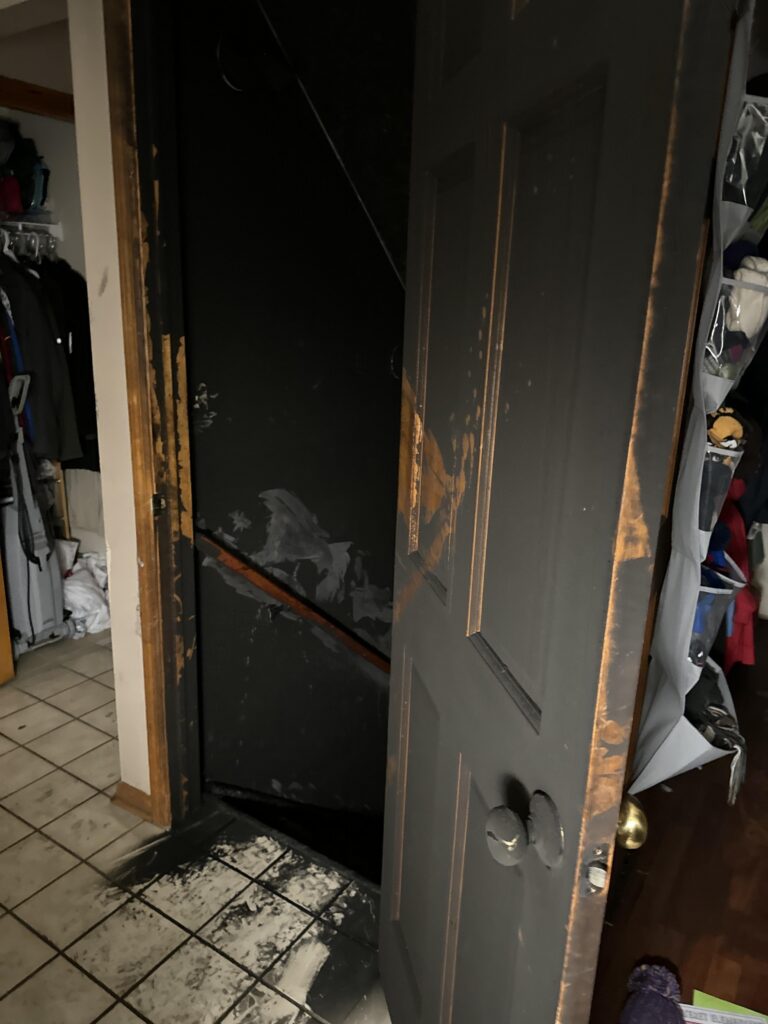
Why Smoke Odor Persists: The Science Behind Fire Damage Restoration
Fire damage restoration represents one of the most technically demanding disciplines within the restoration industry. When synthetic materials, wood, plastics, and organic matter burn, they release complex volatile organic compounds (VOCs), polycyclic aromatic hydrocarbons (PAHs), and acidic soot residues that penetrate building materials at the molecular level. The IICRC S500 Standard for Professional Water Damage Restoration and S520 Standard for Professional Mold Remediation establish the foundational protocols that certified technicians apply to fire and smoke damage scenarios, though smoke odor removal specifically demands additional specialized interventions.
The primary challenge facing homeowners in Greenfield and Indianapolis stems from the region’s humid continental climate. Summer humidity levels frequently exceed 70 percent, creating conditions where hygroscopic soot particles absorb atmospheric moisture and embed more deeply into porous substrates. Indianapolis metropolitan area homes, particularly those built between 1950 and 1990 with lath-and-plaster or early drywall construction, present unique restoration challenges. These older structures often contain horsehair plaster, cellulose insulation, and unsealed ductwork that act as odor reservoirs long after visible fire damage has been addressed.
Understanding the core entity of fire damage restoration requires recognizing that smoke odor elimination is not a cleaning task but a chemical and physical remediation process. The IICRC certification framework emphasizes that restoration professionals must identify the fire classification (natural, protein, synthetic, or electrical) because each produces distinct odor signatures requiring targeted neutralization strategies.
Technique 1: Thermal Fogging and Counteractant Penetration
Thermal fogging represents the first game-changing technique for comprehensive smoke odor removal. This process utilizes a specialized thermal fogging device that heats petroleum-based or water-based deodorizing counteractants to approximately 1500 degrees Fahrenheit, creating a dry fog with particle sizes between 0.5 and 25 microns. These microscopic droplets mimic the behavior of smoke particles during the original fire, following identical penetration pathways into wall cavities, insulation layers, and HVAC ductwork.
The scientific principle underlying thermal fogging involves counteractant chemistry. Professional-grade thermal fogging solutions contain pairing agents, residual odor counteractants, and masking agents that chemically bind with odor molecules through several mechanisms:
- Oxidation: Breaking down odor compounds through oxygen transfer reactions
- Adsorption: Trapping odor molecules within porous counteractant particles
- Chemical neutralization: Altering the molecular structure of malodorous compounds
- Enzymatic breakdown: Deploying biological agents that digest organic odor sources
For Indianapolis area homes with forced-air heating and cooling systems, thermal fogging must be coordinated with HVAC decontamination. The ductwork in typical Greenfield ranch-style homes and Indianapolis colonial revival properties often contains decades of accumulated dust that combines with soot to create persistent odor reservoirs. IICRC-certified technicians seal the HVAC system during fogging, then deploy mechanical agitation and contact vacuuming within duct runs before reintroducing treated air.
The step-by-step thermal fogging protocol follows this sequence:
- Source removal: Eliminate all charred materials, unsalvageable contents, and heavy soot deposits through detailed cleaning
- Containment establishment: Seal unaffected areas with 6-mil polyethylene sheeting and create negative air pressure using HEPA-filtered air scrubbers
- Pre-conditioning: Apply solvent-based or water-based pre-treatments to heavy contamination zones
- Thermal fog application: Systematically fog all affected structural elements, contents, and cavities at calculated application rates
- Dwell time allowance: Maintain sealed containment for 2-4 hours to maximize counteractant penetration
- Post-fog evaluation: Conduct sensory assessment and air quality testing to verify odor elimination
- HVAC reintegration: Clean and verify ductwork before system restoration
Technique 2: Ozone Generation and Molecular Oxidation
Ozone treatment constitutes the second powerful technique for smoke odor elimination. Ozone generators produce O3 molecules through corona discharge or ultraviolet radiation, creating a highly reactive oxidizing agent that destroys odor compounds at the molecular level. Unlike thermal fogging, which primarily masks and counteracts odors, ozone treatment permanently alters the chemical structure of smoke-related VOCs through oxidation reactions.
The effectiveness of ozone treatment depends on concentration, exposure duration, and environmental controls. Professional restoration requires ozone concentrations between 1,000 and 10,000 parts per million, maintained for periods ranging from several hours to several days depending on contamination severity. Critical safety protocols mandate that no humans, pets, or plants remain in treated spaces during ozone application, as O3 is a respiratory irritant at therapeutic concentrations.
For Indianapolis and Greenfield homeowners, ozone treatment addresses specific regional challenges. The area’s seasonal temperature fluctuations cause building materials to expand and contract, creating micro-fractures in drywall and plaster that trap odor molecules. Ozone’s small molecular size (0.3 nanometers) enables penetration into these microscopic spaces where larger counteractant particles cannot reach. Additionally, ozone treatment effectively neutralizes odors in basements and crawl spaces common in Indianapolis area homes, where humidity and poor ventilation create persistent odor conditions.
Integration with related entities enhances ozone treatment effectiveness:
- HEPA filtration: Operating HEPA air scrubbers during and after ozone treatment removes oxidized particulate matter
- Negative air pressure: Maintaining containment prevents ozone migration to unaffected areas
- Psychrometric control: Dehumidifying treatment spaces to 40-50 percent relative humidity optimizes ozone reaction rates
- Hydroxyl generators: Sequential or simultaneous hydroxyl radical treatment targets water-soluble odor compounds that ozone alone may not fully address
The step-by-step ozone treatment protocol includes:
- Space preparation: Remove all rubber, elastic, and certain plastics susceptible to ozone degradation; seal HVAC returns
- Humidity adjustment: Deploy dehumidifiers to achieve optimal 45 percent relative humidity
- Ozone generator placement: Position multiple generators for uniform distribution based on cubic footage calculations
- Concentration monitoring: Use ozone meters to verify target concentrations throughout treatment
- Exposure maintenance: Maintain treatment for calculated duration based on contamination assessment
- Aeration and verification: Ventilate space thoroughly and conduct air quality testing before re-occupancy
- Content treatment: Ozone-treat salvageable contents in dedicated chambers with controlled exposure parameters
Technique 3: Hydroxyl Radical Generation and Advanced Oxidation
Hydroxyl radical technology represents the newest game-changing advancement in smoke odor remediation. Hydroxyl generators replicate nature’s atmospheric cleaning process by producing hydroxyl radicals (OH) through ultraviolet irradiation of titanium dioxide catalysts or advanced photocatalytic oxidation. These radicals possess even greater oxidizing potential than ozone while remaining safe for occupied spaces, allowing continuous treatment during restoration activities.
The scientific advantage of hydroxyl treatment lies in its selectivity and safety profile. Hydroxyl radicals react with smoke odor compounds through hydrogen abstraction and electron transfer mechanisms, breaking down complex VOCs into water vapor and carbon dioxide without producing harmful byproducts. This technique proves particularly valuable for Indianapolis area homes where families cannot vacate during extended restoration periods, or where businesses require minimal downtime.
Hydroxyl generators integrate naturally with other restoration technologies:
- Antimicrobial biocide application: Following hydroxyl treatment, applying EPA-registered antimicrobial agents prevents secondary microbial growth on fire-damaged materials
- Moisture mapping: Infrared thermography identifies hidden moisture pockets that could reactivate odor compounds
- Air scrubber coordination: HEPA-filtered negative air machines remove particulate debris generated during oxidation processes
- Thermal fogging sequencing: Combining hydroxyl treatment with thermal fogging addresses both water-soluble and petroleum-based odor compounds
For Greenfield and Indianapolis properties, hydroxyl treatment addresses local building characteristics. Many homes in the area feature finished basements with paneling and drop ceilings that trap smoke odors in inaccessible cavities. Hydroxyl radicals, being gaseous and highly reactive, penetrate these spaces without requiring demolition. The technique also proves effective for odor elimination in attached garages and utility rooms common in Indianapolis suburban developments, where furnace and water heater combustion events can create secondary odor issues.
Geospatial Authority: Indianapolis and Greenfield Fire Restoration Considerations
Indianapolis and Greenfield present distinct restoration challenges rooted in local geography, climate, and building stock. The region’s humid continental climate subjects structures to significant seasonal humidity variations, with July averages reaching 75 percent relative humidity. This moisture load causes hygroscopic soot expansion and deeper substrate penetration.
Local building codes and construction practices create specific restoration requirements. Indianapolis metropolitan area homes built during the post-war expansion (1945-1970) frequently contain asbestos-containing materials in flooring, insulation, and textured ceilings. Fire damage in these properties requires asbestos abatement coordination before odor remediation can commence. Greenfield’s historic district properties, including Victorian and Craftsman-style homes, feature original plaster walls, hardwood finishes, and balloon framing that demands specialized restoration approaches preserving architectural integrity while eliminating odors.
The area’s soil composition, primarily clay and glacial till, affects foundation moisture management. Basements in both Greenfield and Indianapolis commonly experience hydrostatic pressure and seasonal water intrusion, creating conditions where smoke odors in foundation materials interact with moisture to produce persistent musty-smoke combinations requiring dual remediation protocols.
FAQ: Answering Complex Long-Tail Questions
Does home insurance cover smoke odor removal in Indianapolis and Greenfield?
Homeowners insurance policies in Indiana typically cover smoke odor remediation when the odor results from a covered peril, such as accidental fire, lightning strike, or electrical malfunction. Coverage extends to professional restoration services, content cleaning, and temporary relocation expenses. However, policies may limit coverage for odor caused by gradual accumulation (such as long-term cigarette smoke) or exclude damage from intentional acts. Indianapolis area homeowners should verify their specific policy provisions, as Indiana does not mandate smoke damage coverage as a standard requirement. PuroClean Disaster Restoration works directly with major insurers including State Farm, Allstate, and Farmers to document restoration protocols and secure coverage approval.
How long does professional smoke odor removal take in Indianapolis homes?
Duration varies based on fire classification, square footage, and structural complexity. Light smoke damage in a single room may resolve in 2-3 days using thermal fogging and air scrubbing. Moderate damage affecting multiple rooms with HVAC contamination typically requires 5-7 days incorporating ozone and hydroxyl treatments. Severe structural fires with extensive cavity contamination may demand 2-3 weeks including demolition, reconstruction, and sequential deodorization. Indianapolis’s humidity extends treatment times by 20-30 percent compared to arid climates, as moisture-saturated materials require extended drying before effective odor treatment.
Can I remove smoke odor myself using retail products?
Retail deodorizers, ozone machines, and cleaning products address surface odors only. Smoke odor penetration into drywall, insulation, and structural cavities requires professional-grade equipment, IICRC-certified protocols, and moisture-controlled environments that homeowners cannot replicate. Attempting DIY restoration often drives odors deeper through improper cleaning techniques, potentially increasing professional remediation costs by 40-60 percent when initial efforts fail.
Why does smoke odor return months after cleaning?
Odor recurrence indicates incomplete source removal or moisture reactivation. Soot particles trapped in wall cavities, attic insulation, or HVAC systems may remain dormant until seasonal humidity fluctuations or temperature changes release them. Professional moisture mapping and cavity inspection during initial restoration prevents this phenomenon. Indianapolis’s freeze-thaw cycles and summer humidity spikes particularly exacerbate latent odor release.
Does smoke odor affect property value in Indianapolis?
Untreated smoke odor can reduce property values by 10-20 percent and extend time-on-market by 60+ days. Disclosure requirements in Indiana mandate that sellers report known fire damage, and persistent odors trigger buyer inspections that may reveal hidden structural issues. Professional restoration with documented IICRC protocols preserves property value and provides transferable warranties.
When Smoke Odor Threatens Your Home, Act Immediately
Smoke odor after fire damage demands professional intervention within the first 24-48 hours to prevent permanent substrate penetration and secondary damage. Every hour of delay allows acidic soot residues to etch surfaces and embed deeper into structural materials. PuroClean Disaster Restoration serves Greenfield, Indianapolis, and surrounding communities with IICRC-certified technicians, advanced thermal fogging, ozone generation, and hydroxyl radical technology.
If you smell smoke in your home, do not wait. Call PuroClean Disaster Restoration now at (317) 467-4436 for immediate emergency response, 24 hours a day, 7 days a week. Our local teams arrive fully equipped to stop odor progression and restore your property to pre-loss condition.