Reviewed for technical accuracy by PuroClean Disaster Restoration’s IICRC-certified restoration team.
Removing smoke odor from furniture is part of fire and smoke damage restoration, and the IICRC S700 standard is the industry reference for it. S700 explains how trained technicians inspect, test, clean, and deodorize contents so residue is removed at the source instead of covered up. Greenfield and Hancock County homeowners can use the same logic at home for light damage. For heavier damage, OSHA general industry rules under 29 CFR 1910 cover respirators and protective gear, and the local fire marshal must clear a structure before anyone goes back inside.

Key Takeaways for Homeowners
- Smoke odor comes from soot particles and gases trapped in porous materials, so sprays that only mask the smell will fail.
- Do not wipe soot with a wet cloth. Water can push residue deeper into fabric and wood.
- Light odor on hard surfaces often responds to airing, HEPA vacuuming, and dry sponges.
- Deep odor in upholstery, cushion foam, and raw wood usually needs professional equipment.
- Firefighting water can start mold growth in soaked furniture within a day or two.
- Ozone and thermal fogging are professional tools that require an empty, prepared space.
Do not wait on this one. Soot keeps working on fabric and finishes after the fire is out, and damp furniture invites mold. A quick call to PuroClean Disaster Restoration at (317) 467-4436 can tell you which pieces are worth saving before the window closes.
Why does smoke smell stay in furniture after a fire?
Smoke smell stays in furniture because burning material releases microscopic soot particles and odor gases that settle into porous surfaces such as fabric, foam, and raw wood. Those particles keep releasing odor, especially when humidity rises. Sprays only cover the smell, so it returns until the residue is physically removed.
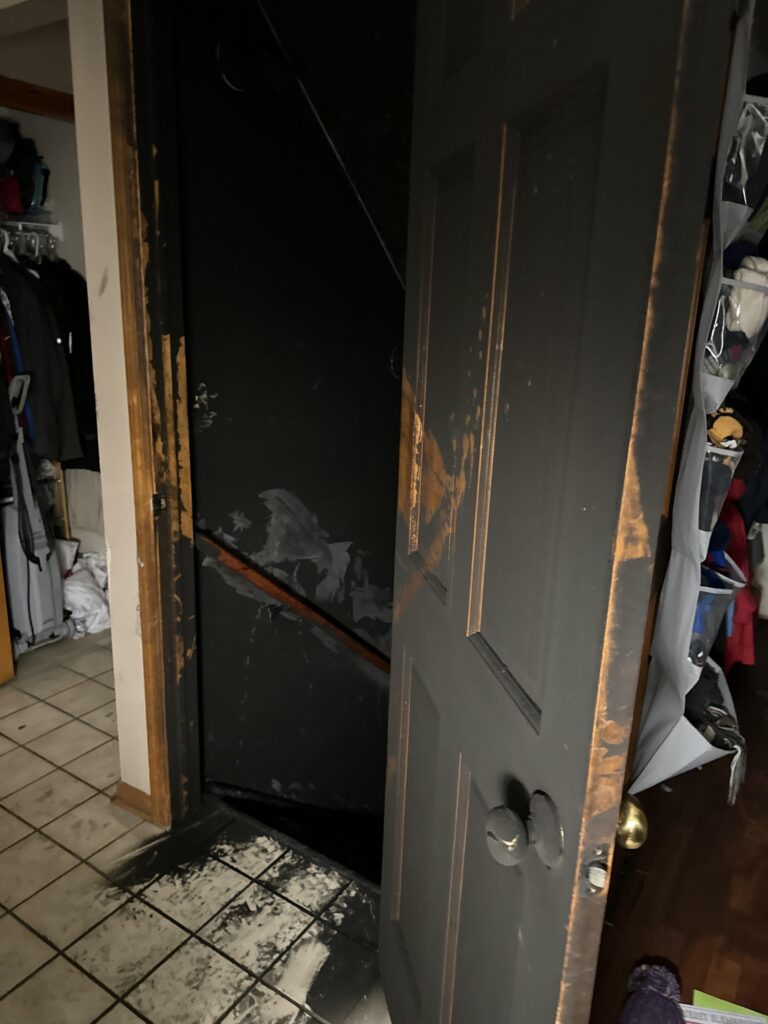
Different fires leave different residue. Wood fires leave dry, powdery soot. Burned plastics and synthetics leave sticky, smearing residue. Kitchen grease fires leave a thin film that is almost invisible but smells strong. The residue type decides the cleaning method, which is why one home remedy never works on every piece.
Action step: Touch a hidden spot with a dry cloth. If it smears, stop and treat the piece as professional work.
What are the best ways to remove smoke smell from furniture?
The most effective approach is layered. Remove loose soot first, clean each surface with a method that suits the material, then neutralize the odor left in the air and in porous fibers. These 11 methods run from safe first steps to professional treatments.
1. Confirm it is safe, then sort your pieces
Wait for fire marshal clearance before entering. Wear a fitted respirator and nitrile gloves, then sort furniture into keep and clean, professional care, and replace. Charred frames and foam soaked with dirty firefighting water usually belong in the replace pile.
2. Ventilate and control humidity
Open windows on dry days and run fans to push air outside. Smoke residue holds odor tighter in damp air, so use a hygrometer and keep indoor humidity well under 60 percent. A dehumidifier helps in humid Indiana summers.
3. HEPA vacuum loose soot
Use a HEPA-filtered vacuum with a soft brush, holding the nozzle just above the surface. A standard vacuum blows fine particles back into the room. Work from top to bottom, and never press soot into the weave.
4. Lift soot with a dry chemical sponge
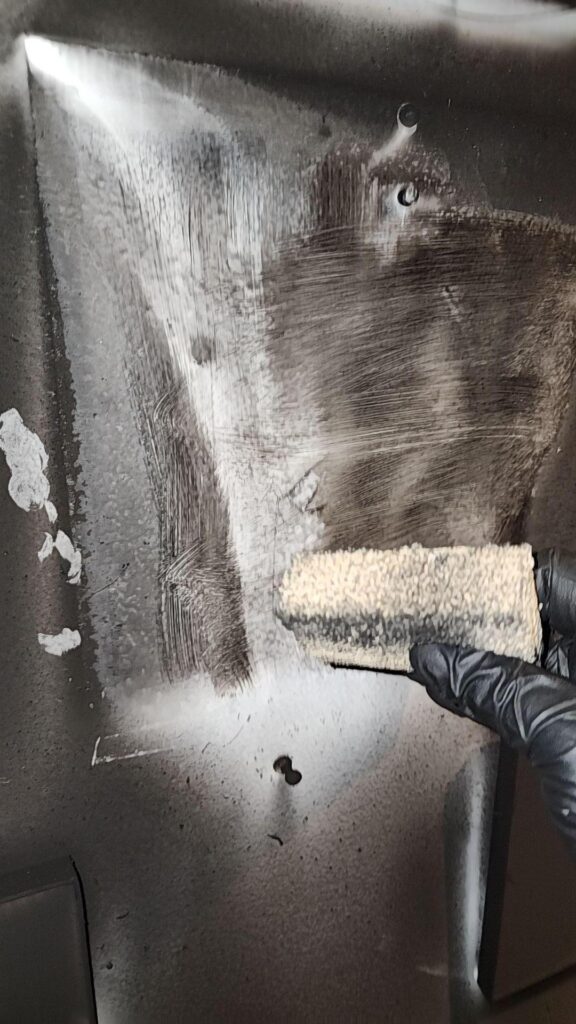
A dry chemical sponge, often called a soot sponge, lifts dry soot from wood, vinyl, and fabric without water. Wipe in one direction rather than circles, and cut a fresh face when the sponge turns black. It struggles with greasy residue.
5. Try baking soda on light odor
Sprinkle baking soda generously over upholstery, wait 24 hours, then HEPA vacuum it up. It absorbs mild odor but does not remove soot. Test a hidden area first, since some fabrics react to powders.
6. Use activated charcoal
Activated charcoal adsorbs odor gases. Place open containers near furniture, or seal cushions and small items in a bin with charcoal for several days. It works best in closed spaces and on light odor.
7. Run HEPA air scrubbers with carbon filters
Air scrubbers capture airborne soot and odor while you work. Professionals set them up with negative air pressure and a containment barrier so contaminated air is pulled out and cleaned rooms stay clean, which prevents cross-contamination.
8. Have upholstery professionally cleaned
Technicians test the fabric, then choose hot water extraction or dry-cleaning solvents to match the fiber. Wet cleaning soot-covered fabric without pre-treatment can set stains. Removable covers and drapes often go to a specialty cleaner.
9. Clean and refinish wood
Wood pores absorb odor. Technicians clean with a wood-safe cleaner, dry the piece, and verify moisture with a meter. If odor persists, light sanding and refinishing, or a sealer, may lock in what remains.
10. Ask about thermal fogging or hydroxyl treatment
A thermal fogger turns deodorizer into a fog with particles about the size of smoke, so it reaches the same crevices smoke did. Hydroxyl generators break down odor molecules over time. Both are professional tools.
11. Use ozone only under controlled conditions
Ozone oxidizes odor molecules, but it irritates lungs and can damage rubber and some fabrics. People, pets, and plants must be out of the sealed space, and it must be fully aired afterward. Leave this one to trained technicians.
Action step: Try methods 1 to 3 today, then hand anything that still smells to a professional.
Stop and call a professional if: cushions feel damp, a musty smell sits under the smoke, or you see black or green spotting. That combination means mold may be growing, and scrubbing can spread spores. Call PuroClean Disaster Restoration at (317) 467-4436 before you clean any further.
How do Greenfield conditions affect smoke-damaged furniture?
Greenfield conditions matter because moisture and smoke damage often arrive together. Spring snowmelt and rain raise the water table across Hancock County, pushing groundwater against basement walls and floors, so damp storage can quickly add mold to smoke odor.
Many postwar ranch and split-level homes in Greenfield subdivisions sit on poured concrete or block foundations, while older brick homes near the historic downtown often have fieldstone or aging block basements that seep through original mortar joints. Clogged gutters, downspouts that drain near the foundation, and sump pump overload during storms add to the problem. Firefighting water plus a damp basement is a poor place to park rescued furniture.
Action step: Move salvaged pieces to a dry room above grade, and check basement humidity before storing anything.
What does professional smoke odor removal look like, step by step?

Professional smoke odor removal follows a documented order: inspect and test, remove loose soot, clean by material, deodorize, dry, and verify. Each step follows IICRC S700 principles so odor is eliminated rather than masked, and pieces are protected from cross-contamination.
- Inspect each piece and test for residue type and colorfastness.
- Photograph and inventory items for your insurance claim.
- Pack out furniture that can be treated off-site, and set up containment and negative air pressure for pieces that stay.
- HEPA vacuum, then dry sponge or clean by material.
- Deodorize with thermal fogging, hydroxyl, or controlled ozone, with air scrubbers running.
- Dry contents completely, using LGR dehumidification and moisture mapping where water was involved, and confirm with hygrometer and meter readings.
Unlike a general cleaning crew, PuroClean Disaster Restoration offers 24/7 emergency dispatch, IICRC-certified technicians, and direct insurance billing for Greenfield and Hancock County homeowners.
Action step: Ask any company how it verifies odor removal and moisture levels before it returns your furniture.
Frequently Asked Questions
Does homeowners insurance cover smoke damage to furniture in Indiana?
Most standard homeowners policies cover personal property damaged by a covered fire, including smoke damage to furniture. Limits, deductibles, and replacement cost terms vary by policy. Photograph everything and list each item before cleaning, then contact your insurer promptly. The Indiana Department of Insurance can explain your rights as a policyholder.
How much does smoke odor removal for furniture cost?
Cost depends on the size of the piece, the fabric or wood, the type of smoke residue, and the method needed. Cleaning a chair costs far less than treating a full sectional. Ask for an itemized estimate that compares professional cleaning with replacement, since quality pieces are often worth restoring.
How long does it take to get smoke smell out of furniture?
Light odor on hard surfaces can fade in a few days with cleaning, airing, and absorbents. Upholstered and porous pieces that need professional cleaning, deodorizing, and drying commonly take several days to a couple of weeks. Heavy protein or synthetic residue may need repeat treatment before the odor is gone.
Can I remove smoke smell from furniture myself, or should I call a professional?
You can handle light odor on hard surfaces with HEPA vacuuming, dry sponges, and baking soda. Call a professional if odor has soaked into upholstery, foam, or wood, if the piece got wet, or if residue smears when touched. Never run an ozone generator in an occupied home.
Is smoke residue on furniture bad for my health?
Smoke residue contains fine particles and irritants that can cause coughing, eye and throat irritation, and asthma flare-ups, especially for children, older adults, and people with lung conditions. If fire-damaged furniture also got wet, mold growth adds more concern, including spores and possible mycotoxins.
Should I store smoke-damaged furniture in my Greenfield basement?
Avoid it, especially in spring. Rising groundwater and humidity in many Greenfield basements can add mold to smoke damage within days. Store salvageable furniture in a dry, climate-controlled space, or let a restoration company pack out and store it while cleaning is underway.
Get Help With Smoke-Damaged Furniture in Greenfield
If smoke odor is still hanging in your furniture, you do not have to guess what will work. PuroClean Disaster Restoration, 625 S. State St., Greenfield, IN 46140, serves Greenfield and the surrounding Indianapolis-metro neighborhoods in Hancock County. Call (317) 467-4436 any time, day or night. Our IICRC-certified technicians are available 24/7 and can bill your insurance company directly, so you can focus on your family.